With an abundance of historical sites, Turkey has countless antiquities buried underground, making the country a hotspot for excavators. Like many origin countries, Turkey has undertaken the struggle against illegal excavations and artefact smuggling and is striving to repatriate its historical and cultural heritage. Nevertheless, this is not an easy task.
In the 19th century, established museums like the British, Metropolitan, and Louvre began taking in artefacts from around the world.
The first legislation about historical artifacts on Turkish land was the 1906 Law of Antiquities of the Ottoman Empire. It was put into effect by Osman Hamdi Bey, the founder of Turkish museology. This law asserted that historical artifacts were in the ownership of the state and prohibited the transit of cultural heritages abroad.
“Turkey has never been passive when it came to the repatriation of cultural heritage. But we became stronger and more assertive as global awareness increased,” Zeynep Boz, the head of the anti-smuggling department of the Turkish General Directorate for Cultural Heritage and Museums, told TRT World.
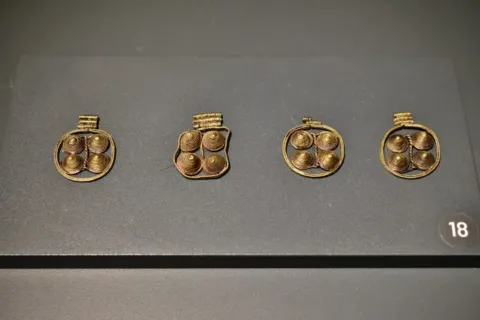
Troy Gold returned from the Penn Museum in exchange for an exhibit about Gordion, capital of the ancient Kingdom of Phrygia.
“Encyclopaedic museums profess they are available for people worldwide. That is true, only if I have the means to travel thousands of kilometres and stay in your country to see my cultural heritage,” Boz said.
Moreover, removing artifacts from their context hinders scientific progress. It prevents scientists from seeing the big picture as removing one piece from a site can prevent correct scientific analysis. And the artifacts lose scientific value, becoming reduced to mere objects.
“Global conditions were in line with the extraction of historic artifacts and their arrival in the West in the 19th century. But there has been a change in circumstances. In the modern World, it has become increasingly clear that the artifacts belong in their places of origin. Artifacts should be repatriated to their own context,” said Gorkay.