After a period of tension over the restitution of archaeological objects and cultural appropriation, the two countries are marking the bicentennial of their diplomatic relations with a desire for reconciliation.
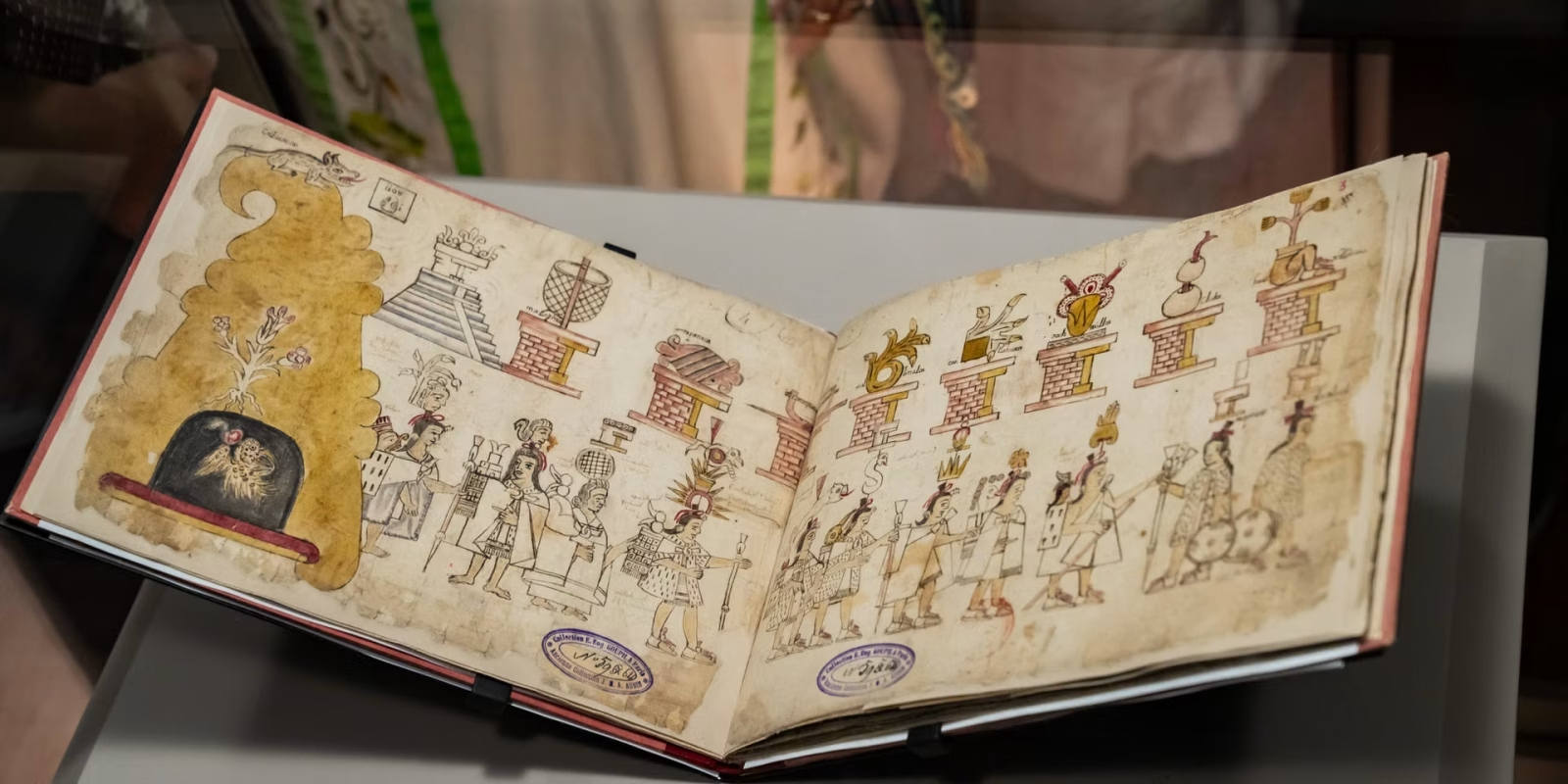
The Mesoamerican manuscript, produced between the 16th and 17th centuries, retraces the journey of the Mexica people, from their mythical origins to the founding of their new capital, Tenochtitlan, on the site of present-day Mexico City, and through to the earliest days of Spanish colonization.
As a highlight of the bicentenary of Franco-Mexican diplomatic relations, the exhibition celebrates the renewed understanding between the two nations. At the same time, it seeks to defuse the thorny debate over the return of the document, which Mexico has requested.
The document left Mexico in 1840 and remained in Europe through a succession of private and institutional collections. It has been held by the National Library of France since the 1890s, making its temporary return a rare cultural and diplomatic event for Mexico.
The loan is not a repatriation — unlike Mexico’s 2024 recovery of three 16th-century codices and Spain’s 2023 return of a Tlaquiltenango Codex fragment, which was expected to fetch more than US $100,000 at auction before Spain’s Civil Guard withdrew it.
But it comes as Mexico continues to seek the return of pre-Hispanic and colonial-era objects that left the country in earlier centuries, and after President Claudia Sheinbaum described codices in France as a top priority for recovery before French President Emmanuel Macron’s 2025 visit.
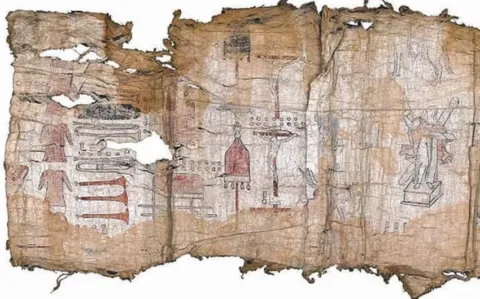
Detail of a recovered Codices of San Andrés Tetepilco. The amate bark paper shows the inventory of a church in San Andrés Tetepilco (INAH)