For decades, the descendants of the Senegalese Muslim mystic, scholar, and military commander Omar Saïdou Tall have been trying to retrieve the “treasure of Ségou” (looted in 1890) from the French state. The new French restitution law offers new hope.
The most important is the Quran of Samory Touré, one of Guinea's leading figures of resistance against the French colonial conquest. It is Guinea's first restitution request since 1968.
The rejection by the city of Bordeaux of a private donation of 53 art objects allows for the direct repatriation of these works to their countries of origin, especially Gabon, which will receive 33 pieces from the collection. The other recipients are Nigeria, Niger, Ivory Coast, the Democratic Republic of Congo, Burkina Faso, and Togo.
Earlier, the French government supported a bill allowing for the remains of people who were exhibited in colonial-era “human zoos” in Paris to be returned to their ancestral lands in French Guiana. Now senators have also declared their support for the law. It meets a long-standing demand of Indigenous communities in France’s overseas territories, acknowledging a dark chapter from the country’s past. The association Moliko Alet+Po has played a crucal role.
[in French] With the law on the restitution of cultural property adopted, CNRS researcher Catharine Titi questions, in Le Monde, the legal and archaeological issues related to this question through a reflection on the fragments of the Parthenon at the Louvre. France could draw inspiration from the examples of the Vatican, Italy and Germany.
During his visit to Kenya, French President Emmanuel Macron said the process of returning African artworks looted during the colonial era had become "unstoppable". But, despite a growing number of restitution requests, France has returned only a handful of artefacts to its colonies.
France has officially returned the sacred Djidji drum to Ivory Coast. It is among 148 cultural belongings claimed by the Africab country in 2018. The text of the special law is included.
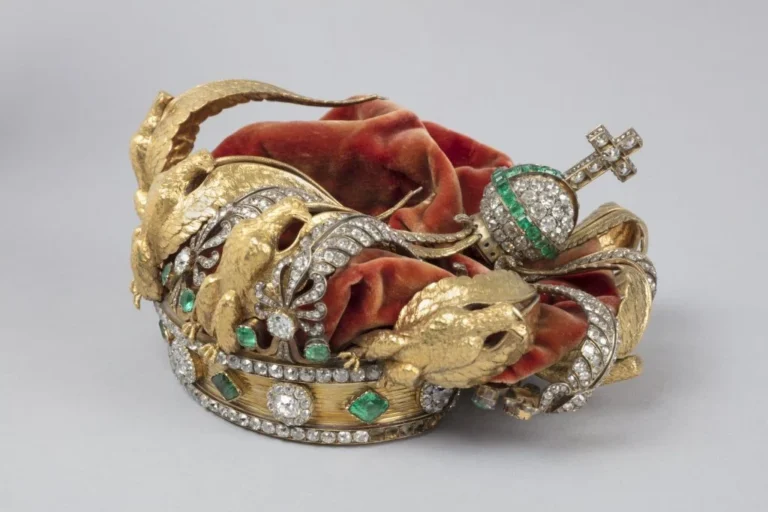
The Louvre will restore Empress Eugénie’s crown, which was damaged during the $102 million heist in October 2025. Experts found the diamond-and-emerald crown deformed, but most stones remain intact after violent theft.
The French Senate on Wednesday adopted a draft legislation to facilitate the return of artworks and other prized artefacts looted during the country’s colonial era. This new procedure could help address requests already submitted by various countries, including Morocco, Mali, Algeria and Benin.
Eight years after French president Emmanuel Macron pledged to return African heritage to the continent, his government has adopted a bill facilitating the deaccession of cultural items plundered from former colonies. The text will be submitted for a vote in the senate on 24 September.
An indigenous Mexican nation, the Nahñu people in the central Mexican state of Hidalgo, has written to the Assemblée Nationale in France seeking the return of its codex, arguing that the centuries-old manuscript describes traditions it still continues.
The fact that the government and elected representatives are unable to reach a consensus on large restitutions raises questions about the future of a framework bill designed to facilitate such transfers, writes columnist Michel Guerrin.
The Ayôkwé djidji or talking drum, confiscated in 1916 by the French army from the Ebrié community, will be exposed in its home country, but France has yet to pass legislation allowing for it to be formally restituted.