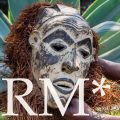
On 10 September 2020, Mwazulu Diyabanza picked up a funerary object that was on display at the Wereldmuseum site near Nijmegen, and walked out. “We came to recuperate what is rightfully ours,” Diyabanza said in the live video of the action. “They have pillaged, humiliated, stolen.”
Four months later the Congolese-born restitution activist and four fellow protestors were in court in nearby Arnhem. They could hardly say they hadn’t done it. They had recorded the whole thing and put it on Facebook. Diyabanza was fined €250 (£216) and given a two-month suspended prison sentence, including two years’ probation. The tomen and men who helped him were each fined €100.
The Africa Museum announced that it “understands the motives of the activists, but disapproves of the way in which they made their statement”.
A descendant of Ntumba Mvemba, one of the royal families that founded the Kingdom of Kongo in 1390, he is the great-grandson of the governor of Mpangu, second-in-line to the throne and a leader of one of the 12 provinces of the Kingdom of Kongo. His revolutionary father and a mother raised him on stories of Patrice Lumumba.
Diyabanza insists the restitution campaign was not inspired by Black Lives Matter even if it did complement it. While the relationship between the two may not have been causal, it was certainly contextual.
Also in 2020, Diyabanza went into Paris’s Musée du Quai Branly – Jacques Chirac, and later the Museum of African, Oceanian and Native American Art in Marseille. Similarly, he entered the AfricaMuseum in Brussels and visited the MAS in Antwerp.
To describe these acts as criminal is literally true and only partially relevant. For they are political acts clearly and explicitly curated to highlight bigger, more pervasive and sinister crime in which so many museums are implicated.
Diyabanza is not shoplifting. His actions are a clear and calculated act of civil disobedience, executed for maximum political impact without engaging in violence or damaging property. Apart from a slight tussle at Berg en Dal, he says the actions have resulted in no physical altercation and, he says, nothing in the museums has been broken.

