The Chanzo, Tanzanian digital- first media initiative writes:
In early 2025, the Slovene Ethnographic Museum (SEM) acquired a significant collection of artifacts and photographs from Tanzania. These were collected by Stanko Grom. Grom arrived in the country as early as 1937, working first on a sisal plantation near Tabora, then at a lead mine in Mpanda, and later in the construction industry in Chunya. Upon his return home in the 1960s, he brought with him more than 4,000 photographs and approximately 150 objects.

Photograph by Stanko Grom. Pictures Courtesy SEM
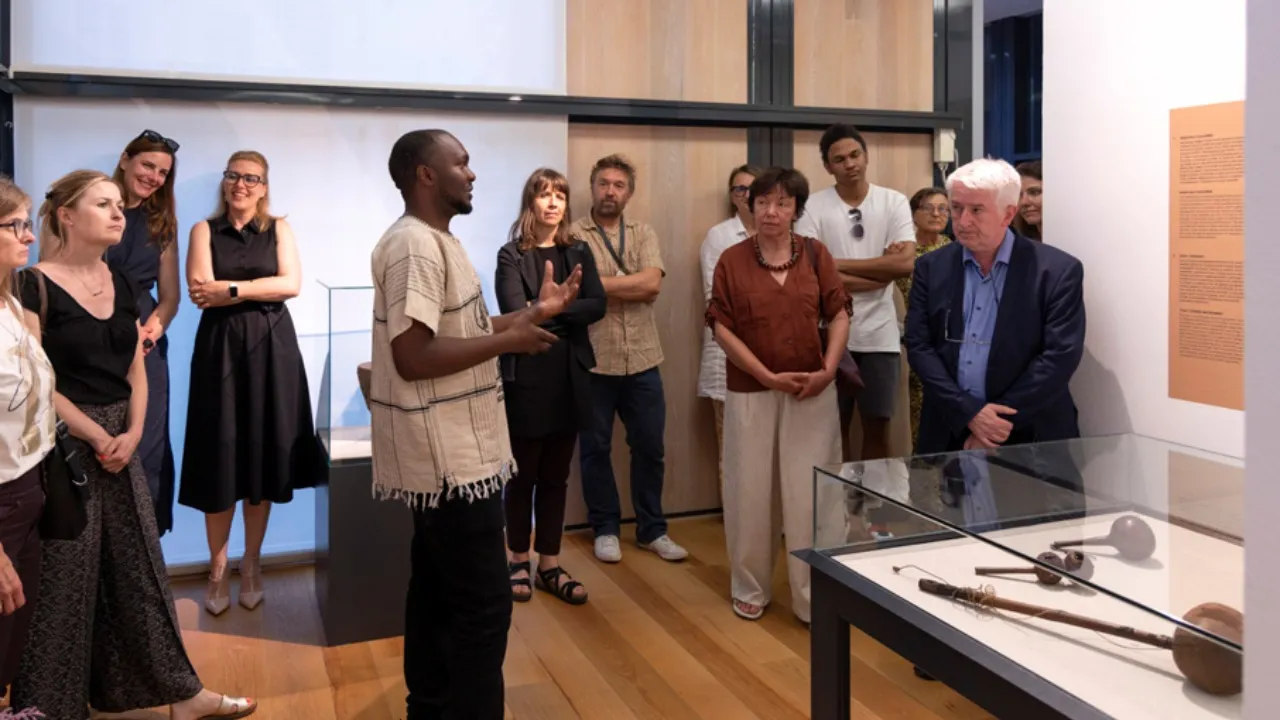
The exhibition features a selection of over 150 cultural objects from Grom’s collection, alongside selected archival images drawn from his archive of over 4,000 photographs.
The global scatter of Tanzanian history in foreign museums highlights that history is never just about the past. Instead, it acts as a living force that shapes how a society understands itself, directly dictating what communities choose to proudly remember or quietly forget.
Tanzanian museum educator and curator Eliabu Mbonimpa argues that the issue extends far beyond Slovenia. Cultural objects and archival photographs held abroad are not merely museum exhibits; they embody Tanzania’s history, identity, and indigenous knowledge. They preserve memories of communities, traditions, and experiences that risk disappearing if access remains limited.
His observation shifts the conversation away from the politics of possession to memory. During his research, Mbonimpa expected museum archives to provide the most revealing insights into colonial Tanzania.
For him, the immediate goal is not simply repatriating artefacts but repatriating knowledge and ensuring that communities connected to these collections can access, understand, and eventually reclaim the histories embedded within them.
A returned object without a returned story achieves little.