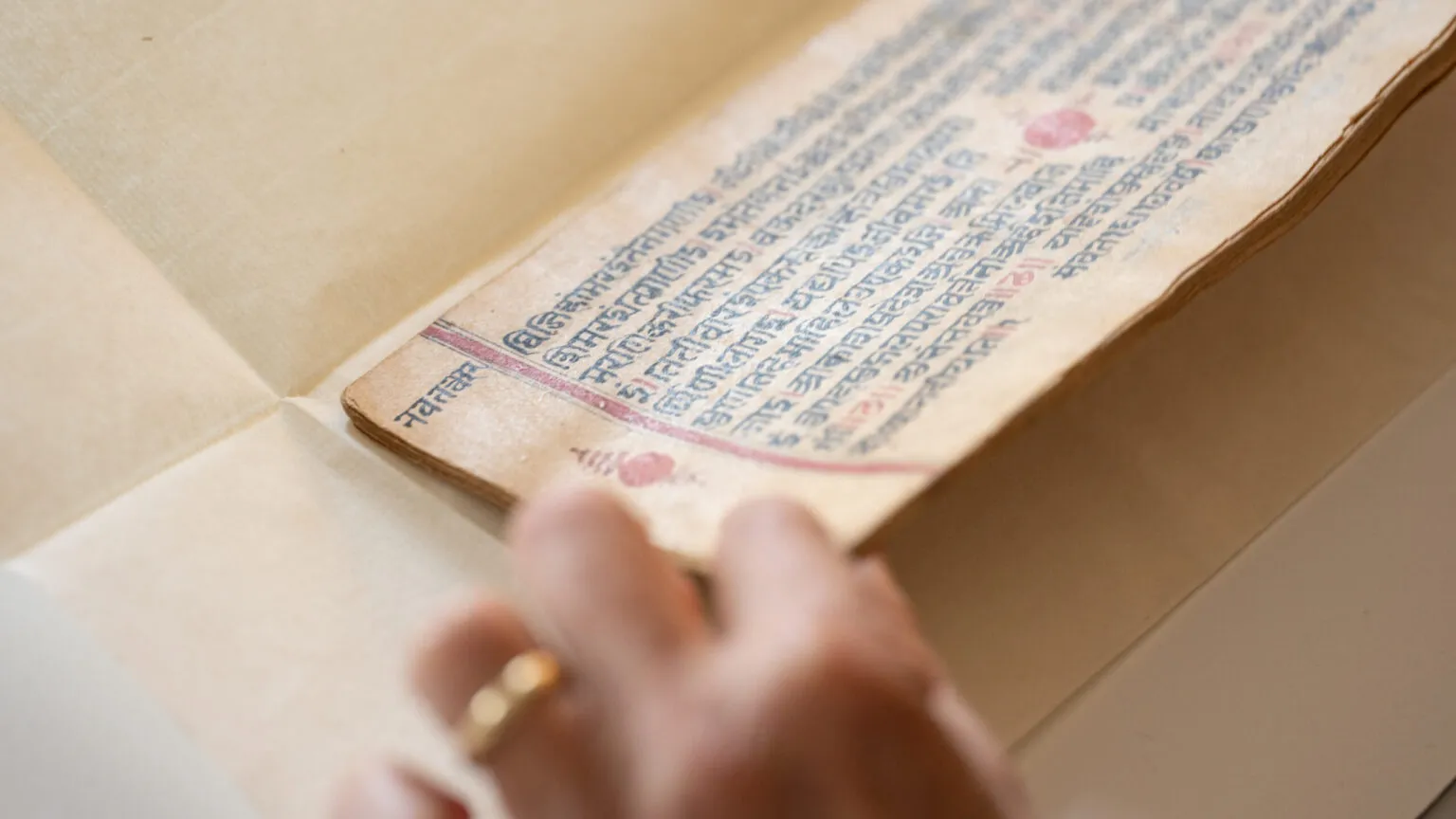
Jainism is an ancient Indian religion that emphasises spiritual purity, self-discipline and non-violence. The Wellcome holds what is believed to be the largest collection of Jain manuscripts outside South Asia.
More than half of the manuscripts were acquired by the museum’s 19th-century founder Henry Wellcome from a single Jain temple that no longer exists in Punjab, in what is now Pakistan.
According to the Hindustan Times, it is the largest collection of Jain manuscripts outside South Asia. Among the manuscripts is the formulation of the ethical tenets of the Indian independence movement that Gandhi later drew on and made famous (picture).
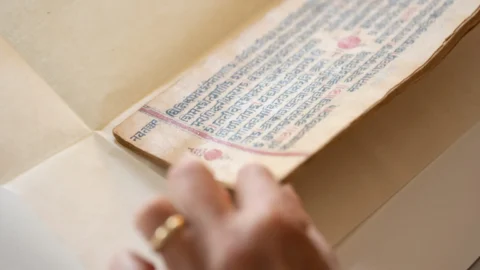
Ancient Jain manuscript 1688 – Courtesy Welcome collection
The manuscript collection spans 15th-century illustrated manuscripts to texts from the 19th century covering religion, literature, medicine and culture, from Prakrit and Sanskrit to Gujarati, Rajasthani and early Hindi. The museum said the manuscripts provide “an important window onto the history of health and human experience”.
The collection will initially be moved to the Dharmanath Network in Jain Studies at the University of Birmingham, which plans to “open the collection to those researchers and faith communities who are best placed to read, interpret and translate their content for a global audience”.
The agreement is the result of five years of dialogue and collaboration with Wellcome and the Institute of Jainology. The collections research was supported by a Headley Fellowship from the Art Fund.
Courtesy Welcome Collection
A Memorandum of Understanding was signed in the House of Commons yesterday (14 May) between the Wellcome Trust for the Wellcome Collection, the Institute of Jainology and the University of Birmingham. A full legal agreement will now be drawn up in accordance with the memorandum.