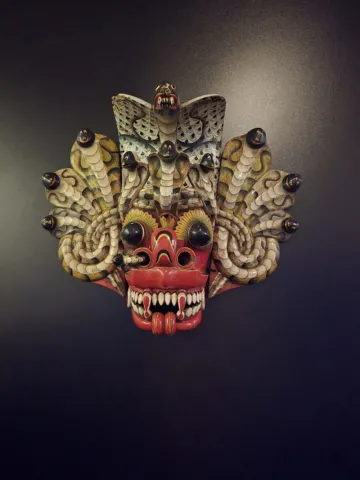
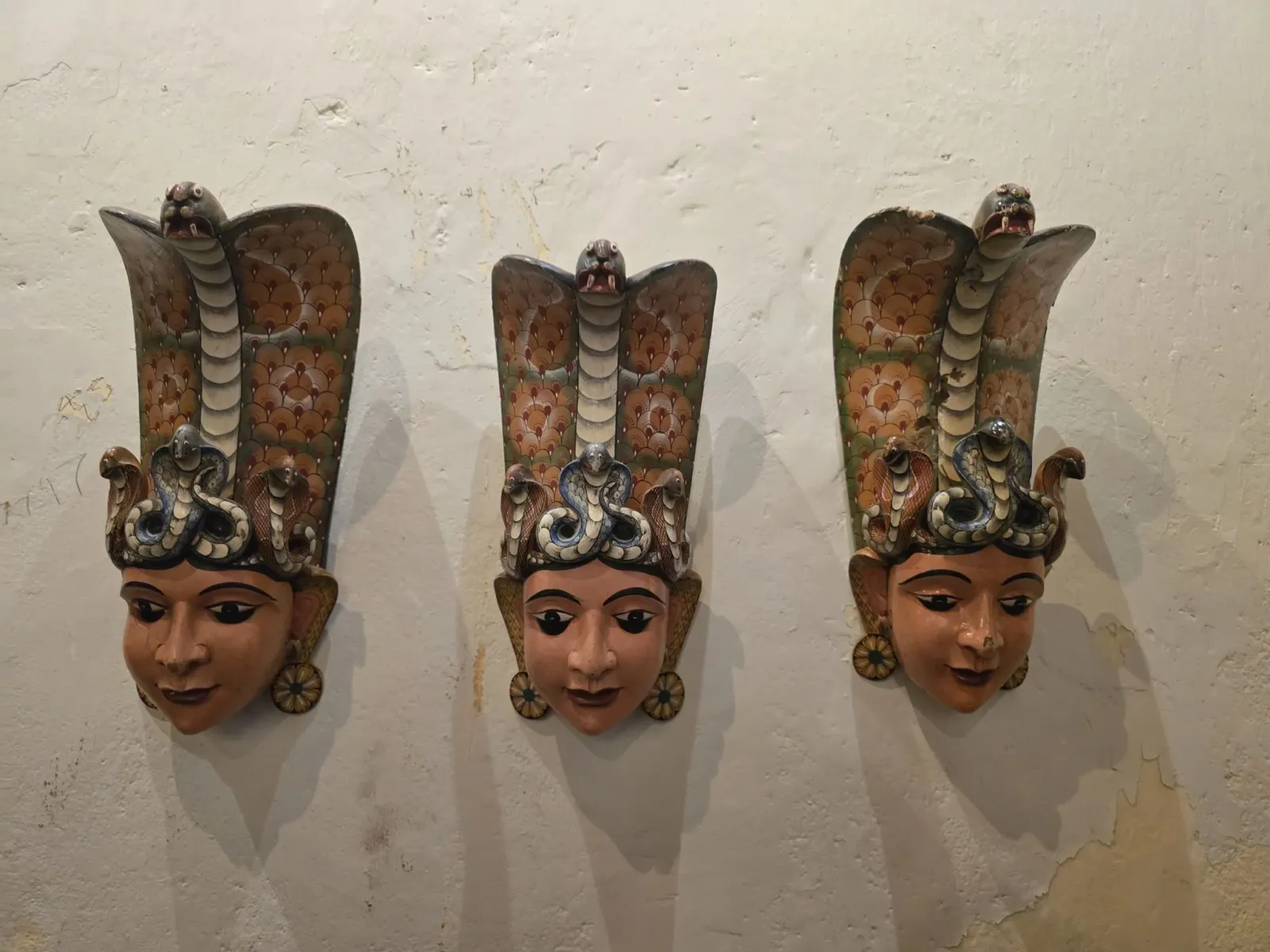
No one field can restore what a commercial transaction stripped away. Provenance research follows the paper.
Archaeology and Heritage studies reads the object. Ethnography listens to the practice that made it. Carving traditions, pigment and material analysis, Kolam and Thovil knowledge held in Sri Lanka, archives in Cologne, Hamburg and Colombo: each supplies a fragment the others cannot see.

Pictures courtesy Rautenstrauch-Joest Museum
So we are asking the questions the ledger foreclosed. Were objects catalogued as ritual masks ever danced? Do objects dismissed as decorative carry ritual histories?
The work is ongoing and the results are not yet in. But a mask identified correctly is more than a corrected label.
About Sri Lankan masks (added by RM*)
The history of Sri Lankan masks actually dates as far back as the 15th century, with strong links to devil-worship. In the coastal town Ambalangoda, there is the Mask Museum.