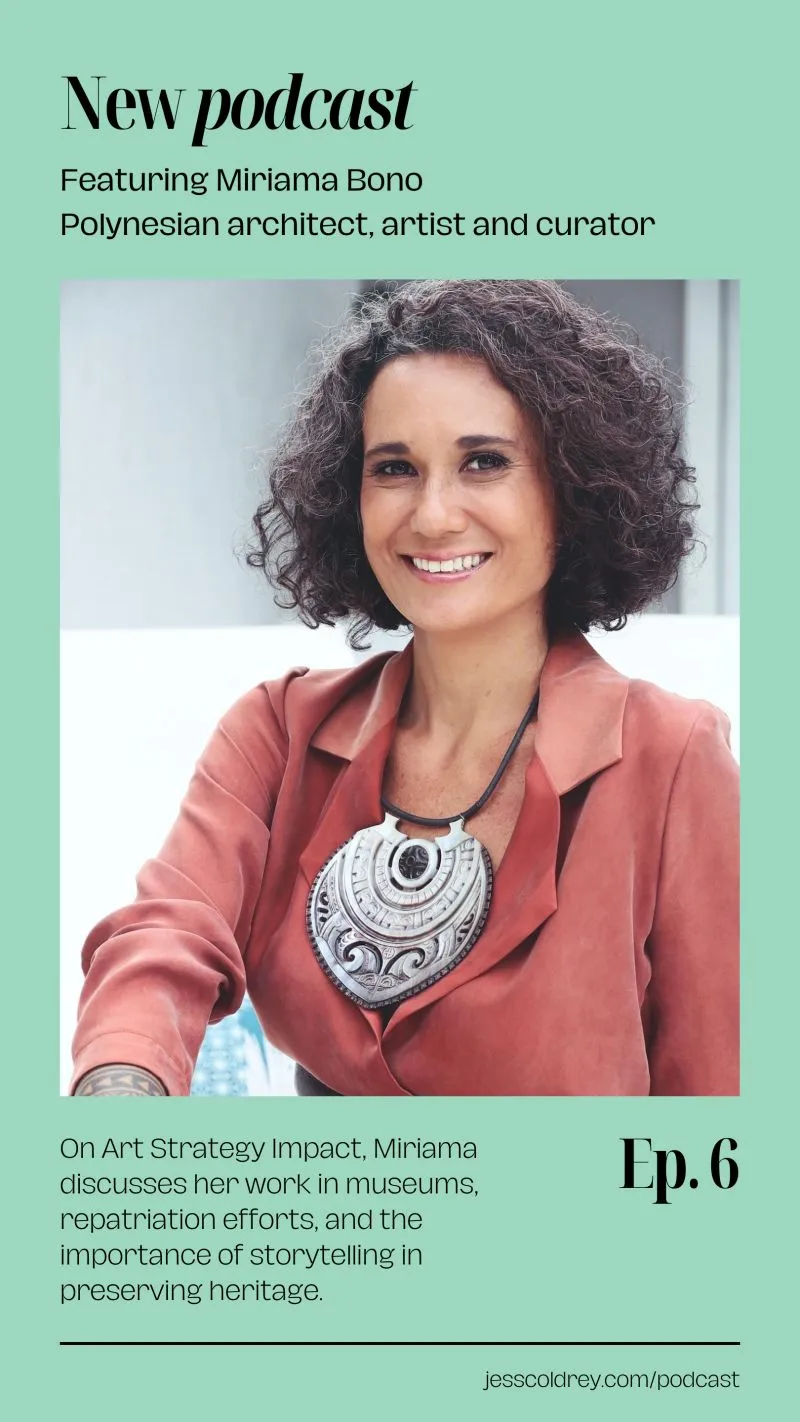
Miriama Bono is a Tahitian artist, architect, and former director of Te fare Ia Manaha, Musée de Tahiti et des Îles.
She dives into questions such as
- Should museums be designed for tourists and academics, or the community the artefacts came from?
- Do museum display methods, such as glass cases, impact viewer’s ability to spiritually connect with ancestral objects?
- What’s the significance of Polynesian artworks being repatriated or loaned back from the international museums that own them, and what sparks these acts of diplomacy?
Repatriation was a long process involving a lot of people and involving also politics. You cannot do it without a very strong political support for lots of reasons. One of the most evident one is because it costs a lot of money so you have to need to have the support of the politic. But also because I mean it’s not just something you know asking for return. It’s not just something like museum can do. It’s something like that we can do as a community as a collective to ask for return. it was of course very challenging.
We went to Europe, to London and to Paris.
So we had in French Polynesia for the reopening of the museum, we have 20 objects coming back. Most of them were in long term loan, meaning that it’s not a repatriation but a return for six years. And we choose those objects through, for an example, the sacred purpose of the object or also through, for some of them, they were done with specific knowledge that we have lost.