For centuries, Nepal was isolated from the outside world by its rugged geography and policies that, until the 1950s, restricted entry of foreigners. This barrier served as protection for Nepal’s sacred heritage. Stone Deities, wood and metal icons, paubhas (traditional paintings) and murals remained safely enshrined in their rightful abodes.
This changed when Nepal opened its doors to the world. First-time visitors arriving in the ancient city of Kathmandu on special permits encountered a sacred landscape unlike anything they had known.
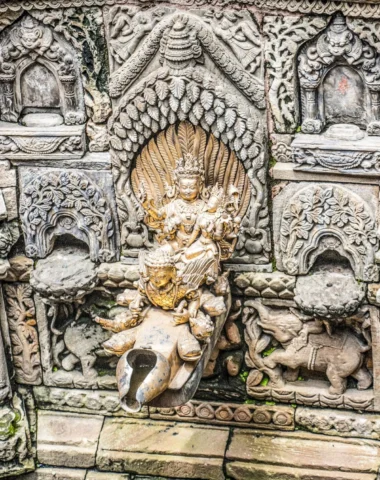
This is a replica. Photo: Nikki Thapa
In 1964, Dr. Stella Kramrisch, one of the first scholars to present Nepals spiritual and artistic legacy, organised an exhibition of Nepali art at Asia House in New York, and documented the artifacts in a landmark catalogue. In 1966, the Department of Archaeology of His Majesty’s Government of Nepal presented Nepali art in Western Europe, which further deepened international admiration. Scholarly articles and publications soon followed, bringing Nepal’s sacred arts and crafts to global attention.
Kanak Mani Dixit, a Nepali publisher, editor, writer, vice chair of the NHRC and founder of the magazine Himal Southasian, in his article Gods in Exile, writes that sacred images taken from Kathmandu Valley and now housed in the West are not commodities but displaced Deities. Their rightful place is among the communities that worship them. Until their return, current holders stand merely as custodians, not owners.
Sanjay Adhikari, heritage activist and legal advocate, emphasises that Nepal’s sacred objects have always been part of active worship. He says, They are not merely metal or stone objects but living embodiments of our Gods and Goddesses that we have been venerating for generations and need to continue the tradition revered by generations to come.