The Senegalese philosopher Souleyman Bachir Diagne has a ‘theory of mutation’, claiming that looted African artefacts should stay in France because they are supposedly rooted there.
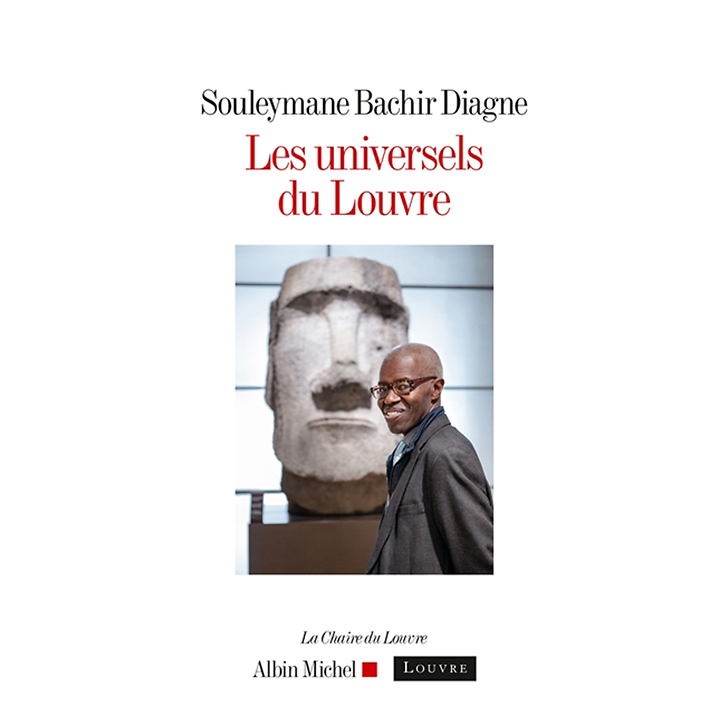
Opoku had hoped that Diagne had provided concrete evidence and rigorous arguments to defend this concept. Yet in his recent book, Les universels du Louvre, based on a number of
Louvre Lectures, he offers no substantive or logically sound justifications for the contested theory.
Diagne takes the subtitle of the Sarr-Savoy report, The Restitution of African Cultural Heritage: Toward a New Relational Ethics, to mean that the objects involved in these new relations, and thus objects of provenance research, should be seen in their metamorphosis.
He sees them as playing a mediatory role, becoming mediators in a dialogue between the works, between the cultures they represent, and eventually between humans from the global south and the global north.
In Diagne’s view, relations between France and her former colonies should henceforth be based on mutual respect and agreement, rather than on the use of force, as it was in the colonial system that enabled the taking of African cultural property without consent.
The new relationship was intended to be guided by ethical principles. There is nothing in the report that could justify extensive provenance research when there is already ample evidence for restitution.
Provenance research functions primarily as a stalling tactic, delaying rightful restitution by prolonging the examination of thousands of African artefacts in Western museums.
Many looted African artefacts in France do not need further provenance research beyond the Sarr-Savoy report. The report argues there is already sufficient evidence of how these objects were acquired—often without the consent of African owners.