First, some background information. After 1868, when Emperor Meiji dissolved the country’s feudal system of government, Japan became a major colonial power. It invaded Korea, Taiwan and parts of China for longer periods of time. It annexed Okinawa, an island located between Taiwan and Japan. And during the Second World War, it occupied French Indochina, the Dutch East Indies, the Philippines and Myanmar.
The fact that these conquests were accompanied by extensive plundering of cultural and historical treasures is mainly known from sources from former colonised areas. There must be literature on this in Japanese, but not in European languages.
Ancestral remains and a royal shrine
Two recent news items prove that the discussion is also gaining momentum in Japan.
One is about a repatriation of ancestral remains. In May 2025, Kyoto University repatriated the remains of 26 individuals to Okinawa. Japanese researchers had taken these from a medieval tomb on the island in the early 20th century.
The second concerns the return of a shrine. In June 2025, Japan transferred a royal shrine from the Joseon Dynasty (1392-1910) to South Korea. The wooden structure, known as Gwanwoldang, had been removed nearly a century ago and kept in a Buddhist temple in Kamakura, Japan. The handover took place on the occasion of the 60th anniversary of the normalisation of diplomatic relations between the two countries.
The first return is internal – Japan had annexed Okinawa in 1879 – and is comparable to repatriations in Australia and the USA to Aboriginal peoples and First Nations. The second return is an international one and more comparable to restitutions by European countries.
The two news items show a Japanese-style restitution: a mixture of domestic and foreign activities.
Colonial loot from Korea
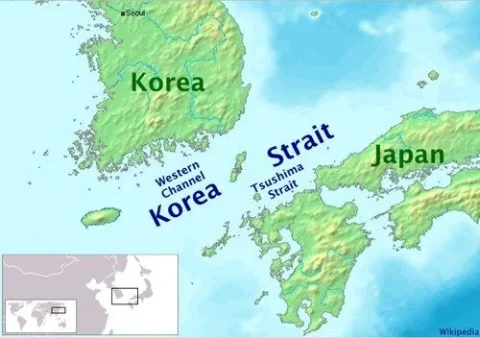
Another characteristic is that Japan – unlike European colonial powers and their distant colonies – bothers a lot about its relation with a former neighbouring colony, South Korea. The closest distance between the two is less than 200 kilometres. In the current global power struggle, they are doomed to each other.
South Korea has a well-developed restitution policy. In 2012, the government established the Overseas Korean Cultural Heritage Foundation [OKCHF]. The OKCHF has catalogued South Korean items outside the country.
© Wikipedia
Currently, the OKCHF has found a total of 247,718 pieces, spread across 81 locations in 29 countries. At the top of the list are:
- Japan 43,8 %
- USA 26,5 %
- Germany 6,2 %
- China 5,7 %
- Great Britain 5,1 %
Since not all of these items were acquired in a contestable manner, the South Korean organisation uses purchases in addition to claims and legal proceedings.
The OKCHF approaches both foreign governments and their institutions as well as private parties. In 2020, for example, it persuaded a private collector in Japan to return a rare mother-of-pearl lacquer box from the Goryeo Kingdom (918-1392).
To date, 12.637 pieces have been returned to South Korea, most of these have come from Japan. These include 1,205 ancient Koran manuscripts looted between 1910 and 1945.
Jongsok Kim (2018, City University London), who has researched both plunder and restitutions, concluded on the basis of the OKCHF website that more than half of the returned items from Japan were donations, almost half were handed over after negotiations, less than ten percent came from individuals and private organisation in Japan and less than five percent was purchased by the OKCHF.
Deep wounds in China
Exchanges between Japan and neighbouring China are different. I have not found any recent restitution from Japan to China, nor any news about ongoing negotiations between the two giant countries.
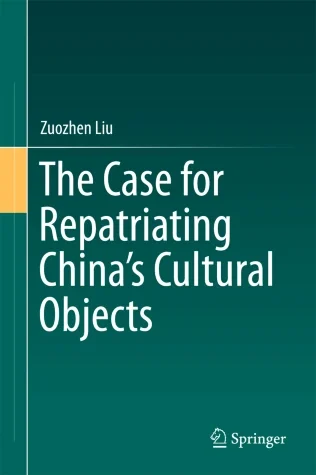
And yet, the number of cultural collections moved from the one to the other is hard to count. Chinese expert Zuozhen Liu offers a glimpse into this. The migration of collections began late in the nineteenth century and continued until the end of the Second World War.
To be precise:
- Sino-Japanese Wars During two Sino-Japanese Wars (1894-1895) (1937-1945), ‘public museums, libraries, and private houses were all targets of pillage […] Of the 37 large museums, only 18 survived the war. Three quarters of the university museums and libraries were destroyed’. The Palace Museum in Beijing has listed 15,245 rare Chinese cultural artifacts and 1,879 crates of Chinese cultural relics that entered Japan during that period.
- Eight Nations Alliance Liu notes that the Japanese army, as a member of the Eight Nations Alliance that defeated the Boxer Rebellion in 1900, participated in the pillage of innumerable ‘ancient books, paintings, curios, and national rare treasures’ in Beijing and surroundings.
- Silk Road Expeditions Western explorers – Swedes, British, French and Germans – dominate the stories about the immense looting from Buddhist caves and other locations along the Silk Road in Chinese Central Asia. Read Peter Hopkirk’s book on this, or visit the International Dunhuang Programme’s website. While European explorers were known for their greediness, Japanese experts were also driven by religious motives. They participated in thirteen expeditions.
Copyright Tokyo National Museum
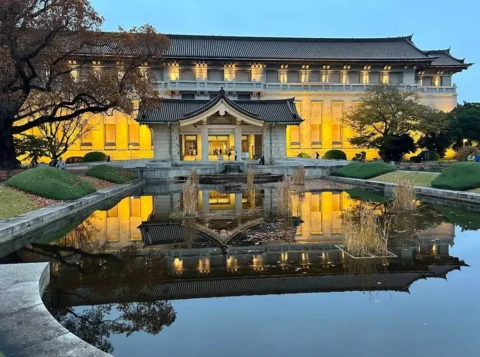
The best-known participant is Japanese Count Kozui Otani, who collected hundreds of objects, manuscripts, paintings and calligraphs between 1902 and 1910. Many of these disappeared at the end of the Second World War, but the Tokyo National Museum still has a collection.
China is actively looking for the restitution of lost relics. China’s National Cultural Heritage Administration (NCHA) has set up a project to catalogue Chinese lost relics. So far, it has retrieved around ten thousand items. It is unknown how many of these have come from Japan.
Global News (China) reports that a civic group in Japan is actively pushing for restitutions of looted cultural relics to China: The Movement for the Repatriation of Chinese Cultural Properties, set up in 2021.
Plundering of temporary colonial possessions
There is one more group of colonial areas controlled by Japan: French Indochina, the Dutch East Indies, the Philippines and Myanmar. The Japanese invaded these areas during the Second World War.
These invasions were accompanied by looting and destruction of cultural and historical treasures. Some Japanese museums may have some of these in their possession. Many more may have passed from Japanese military and administrators and their descendants to intermediaries who made good money out of them.
After the Second World War, the United States ordered Japan to hand over looted works of art, paintings, drawings, sculptures, tapestries and pottery to special storage facilities. However, this yielded little. Most that was handed in originated from China.
- In Buit (Booty), Dutch historian Louis Zweers uncovers demands of works of art taken from the Dutch East Indies. A few dozen expropriated private collectors submitted claims, but in most instances the objects could no longer be found. Confiscated gold and silver jewellery had been melted down into bars. Captured diamonds had mainly disappeared into industry.
Among the claimants was the Jewish community in Surabaya that asked for the return of objects from their synagogue. It is not known whether any of these were ever found.
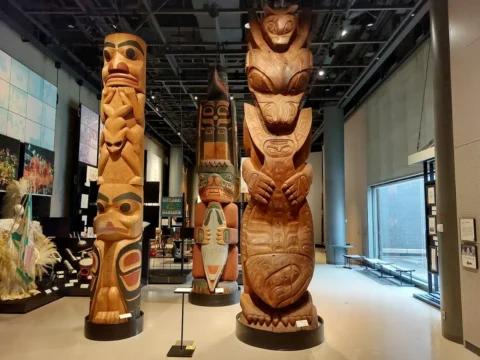
Copyright National Museum of Ethnology, Osaka
Final word: Japan and Europe
Research into the provenance of treasures looted by Japan during its colonial period is in its infancy. In addition to political unwillingness and disinterest, a factor is that Japanese soldiers took very little documentation with them, and much of the information that did come along has since disappeared.
Many objects never entered the public domain but remained in private hands, where they often changed owners.
So far, South Korea and China in particular have submitted claims. Political considerations and circumstances play an important role in the positive response from the Japanese authorities.
All in all, I believe there are many similarities between Japan’s dealings with its colonial possessions and those of the European powers. In some European countries, the restitution discussion is more advanced.
* Thank you very much for some inspiring conversations, Eisei Kurimoto, professor at Osaka University and former curator of the National Museum of Ethnology in Osaka. 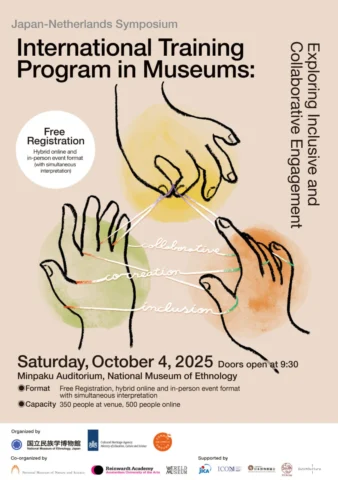
* A Japan-Netherlands Symposium on October 4, where heritage experts will discuss opportunities for collaboration, is an additional reason to write this Blog.
Literature:
- Zuozhen Liu (2016), The case for repatriating China’s cultural objects, Springer
- Peter Hopkirk (1980), Foreign Devils on the Silk Road, Murrray
- Louis Zweers (2020), Buit – De roof van Nederlands-Indisch cultureel erfgoed 1942-1950, Boom
- Peggy Seagrave and Sterling Seagrave (2020), Gold Warriors: America’s Secret Recovery of Yamashita’s Gold, Verso

