Salinan Tribal Councilmember Robert Piatti remembers when he realized that what was sitting beneath a university campus wasn’t just archival material—it could also be people. “I was a reporter at Cal State Long Beach,” he said. “In the humanities building, down in the basement, there were boxes and boxes of bodies. And it was awful, really awful.”
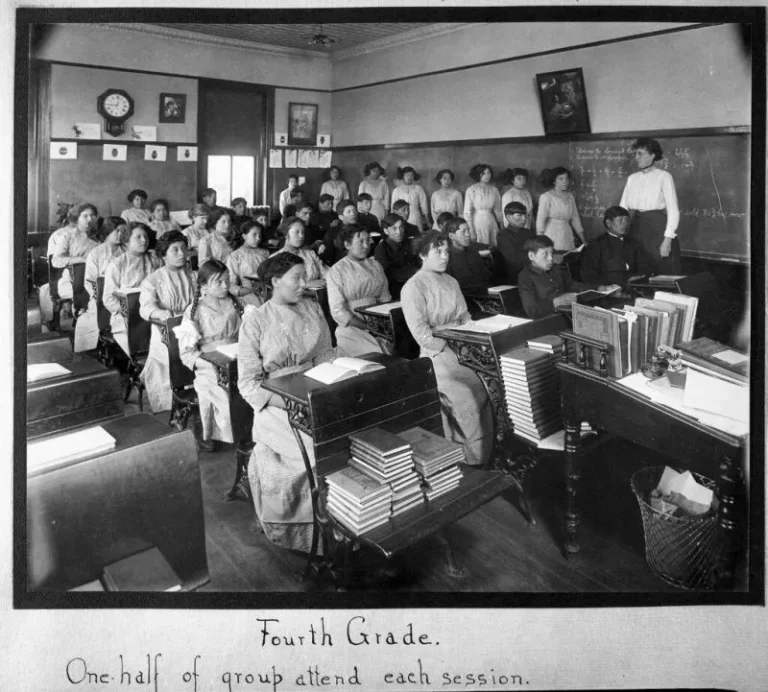
The Winnebago Tribe of Nebraska celebrates the decision by the U.S. Court of Appeals for the Fourth Circuit vacating the lower court’s dismissal and holding that the Native American Graves Protection and Repatriation Act (NAGPRA) applies in Winnebago v. Department of the Army. The ruling allows the Tribe to proceed with its lawsuit against the U.S. Army seeking repatriation of the remains of Samuel Gilbert and Edward Hensley, two Winnebago boys who died at the Carlisle Indian Industrial School more than 125 years ago.
Ahmad Mohammad writes: As a wave of NAGPRA repatriation filings hit the Federal Register, this article asks what repatriation cannot reach, and why the limit is not accidental.
Sierra Kinsey-Lawton takes the Musauem of Us in San Diego, California, as a case study: the Museum of Us hired a decolonization team because it was fashionable. Every museum was doing it. But the moment the team pushed for something larger—a major repatriation, a public apology, a shift in governance—the discomfort became too great. The team became a problem. And problems are easier to eliminate than to solve. Budget shortfalls became the perfect excuse. They are neutral and impersonal. They allow the museum to avoid saying what it really means: we no longer wish to fund this work.
The landscape of cultural property restitution has undergone a fundamental transformation over the past three decades. What was once a world governed by gentlemanly agreements between dealers, collectors, and museum curators has become a forensic battleground where digitized trafficking archives, scientific testing, and aggressive legal enforcement determine the fate of objects. This document provides a comprehensive analysis of the current state.
Two looted West African musical instruments languishing at the Fowler Museum in Los Angeles are creating a restitution challenge, because they have human skulls attached to them.
'Cultural Capital: African Art, Repatriation, and Restitution', a critical documentary by Reilly Clark on art from Africa in western museums, will be released on 19 May 2026.
Makana Eyre thinks that the exhibit at The British Museum, “Hawaiʻi: a kingdom crossing oceans,” poses questions that have historically been uncomfortable for museums. Many items, though certainly not all, are sacred, intrinsically linked to ceremony, community, even Hawaiian sovereignty.
The Center for Art Collection Ethics (ACE) at the University of Denver (DU) announces a hybrid training program: Provenance Research Today: Issues, Resources, and Networks. The program is geared toward graduate students and emerging museum and art market professionals.
Reilly Clark writes: Two Benin plaques were among the ones looted by the British from the palace of the oba in Benin. Later, they were given to the British Museum and later still, to the Nigerian National Museum in Lagos. The plaques were removed without permission from the Nigerian National Museum between 1950 and 1991.
Vishakha N. Desai writes: The return of looted artworks shows India is no longer treating restitution as a zero-sum recovery, but as a negotiating tool that asserts ownership while deploying art as soft power.
In 2025, the Museum of Fine Arts in Boston (MFA) achieved two significant ownership resolutions. First, the museum was asked to rescind and return the long-term loan of Benin Kingdom artwork to the private collection of Robert Owen Lehman. Both of these resolutions speak to the facts that (1) restitution does not have to be a zero-sum game, and (2) museum restitution has expanded beyond what the letter of the law dictates.
Susan Tallman writes: What does a fair policy of museum repatriation look like? A new book considers the issue in terms of human rights, cultural sovereignty, and stewardship.
The agreement represents the first major case of art restitution involving works created by an enslaved person in the U.S. — a process traditionally associated with families seeking the return of art looted by the Nazis in World War II.
Colonial powers have long used museums to collect, display and contain the suffering of subjugated peoples, transforming trauma into spectacle and erasure into curation. Armenia, like so many small nations whose history was stolen, remains entangled in this architecture of memory.
Join the Association on American Indian Affairs virtually for the 11th Annual Repatriation Conference! The summary agenda for the Conference is available at https://www.indian-affairs.org/11thannualagenda.html
Kulasumb Kalinoe (East Sepik area, Papua New Guinea; currrently James Cook University, Australia) focuses on the collection and removal of cultural material from Papua New Guinea (PNG) during the colonial era. She discusses views among the Papua New Guinean diaspora in Australia on museums and PNG collections, and argues that cultural heritage issues must be addressed before the work of decolonisation can begin.
Nearly five centuries after Spanish conquistador Hernán Cortés signed it and decades after someone swiped it from national archives, a priceless manuscript page has been returned by the FBI to Mexico.
The Museum of Fine Arts, Boston (MFA), today returned two works of art from the Benin Kingdom to His Royal Majesty Omo N’Oba Ewuare II, Oba of Benin, in a ceremony at the Nigeria House in New York City.
The Tsilhqot’in National Government has launched its first major repatriation exhibit at the Museum of Vancouver, following the return of over 60 ancestral belongings—including baskets, tools, and cultural items—that had been held in museums and private collections for more than a century.
Gov. Greg Gianforte last week finalized Montana’s two-year budget, which contains several new investments for Indian Country, including a historic increase in funding for tribal colleges and money devoted to repatriation efforts.
Tamara Lanier, who sued the school in 2019 over daguerreotypes of her enslaved ancestors held in its museum, called the outcome “a turning point in American history.”
Half of the 11 returned objects to the Larrakia community in Northern Australia first arrived at the Fowler Museum in 1965 through a large donation from the Wellcome Trust.
In a historic handover event at the Fowler Museum in California, USA, a collection of 11 objects of deep cultural significance were unconditionally returned to the Larrakia Community of the Northern Territory in Australia.
The Museum of Fine Arts (MFA) in Boston returned 27 Benin objects to Robert Lehman, from whom it had received them on loan. Kwame Opoku: The museum's attempt to keep up an ethical image is not convincing.
In an unprecedented move for a United States arts institution, the Museum of Fine Arts, Boston, will return a promised gift of Benin Bronzes to collector Robert Owen Lehman and close the collection’s dedicated gallery on April 28.
The Mexican Ministries of Foreign Affairs and Culture, through the Legal Advisor’s Office and the National Institute of Anthropology and History (INAH), welcome the restitution of 915 cultural artifacts belonging to the nation's heritage.
Te Papa collection manager and kaitiaki taonga Moana Parata brings home a precious taonga, a raranga vest collected by Carl Freeze, an American Mormon missionary in the early 1900s.
How are museum objects valued and who decides? Trevor Engel explores the relationship of perceived scientific value to the idea of hoarding applied to colonial institutions' holdings.
US President Donald Trump has signed an executive order targeting the Smithsonian Institution, which operates more than 20 museums and research centres visited by millions yearly in Washington DC and New York City. It also affects the Smithsonian's restitution policy. J.D. Vance will lead the purge.
Geraldine Kendall Adams delves into the moral and ethical arguments that surround the highly sensitive issue of human remains held in British museum collections.
Until 25 May 2025, the Louvre Abu Dhabi unveils 'Kings and Queens of Africa: Forms and Figures of Power', an exhibition celebrating 350 works of African art and majesty, most of them on loan from Musée Du Quai Branly-Jacques Chirac. Is this a manner to postpone their restitution?
RM* saw reports from AP, Hyperallergic, DutchNews, Jerusalem Post, ArtDependence, Punch, Arise, Voice of Alexandria, Devdiscours, Pinnacle Gazette and AllAfrica.
According to a recent ProPublica investigation of the failure to bring about the expeditious return of human remains by federally funded universities and museums, over 110,000 ancestral remains are held by institutions in the U.S., from Harvard to Berkeley.
South Africa's Department of Sports, Arts and Culture is preparing to repatriate human remains which were allegedly stolen from graves in Port Alfred, in the Eastern Cape and other places. They currently are in the US and Europe.
This book examines the ways in which law can be used to structure the return of indigenous sacred cultural heritage to indigenous communities, referred to as repatriation in this volume. In particular, it aims at developing legal structures that align repatriation with contemporary international human rights standards.
The 1990 Native American Graves and Protection Act (NAGPRA) is generally presented as a breakthrough in favour of First Nations. NAGPRA set up a process by which Native American tribes can request the return of human remains and cultural objects from museums and government agencies, including federally funded universities. How successful has it been in California?
After receiving a letter from the Thai government, it was not difficult for the Asian Art Museum in San Francisco to determine it was showing looted objects. Before their return the museum holds an exhibition. Is this becoming a trend?
Who owns stolen art? Today on the show, the bloody journey of a Benin Bronze from West Africa to the halls of one of England's most elite universities — a tale of imperialism, betrayal, and the making of the modern world.
Modern treaties and statutes protecting cultural property apply only prospectively to items stolen or illegally exported after their effective dates. But while the United States does not have a law concerning looted cultural objects taken from formerly colonized peoples overseas, it does have a statute governing the repatriation of Native American cultural items and human remains.
A civil rights group in New York, USA, Restitution Study Group, has petitioned the United Kingdom’s Charity Commission to reject the repatriation of looted Benin objects to Nigeria because the West African nation also “profited from slavery.”
Crania from a Nordic 'golden age' sit in a Harvard museum basement, and now researchers on both sides of the Atlantic want to reunite them with their bodies.
The Rochester Museum in New York and Harvard University return ancestral remains of Native Americans and funerary artifacts to the Oneida Indian Nation.
Archaeology in its formative years was often less a meticulous science than an exercise in vandalism. A little-known horror unfolded in the Southwestern United States.
Isabella Walsh, an Irish woman, has contacted embassies and consulates in Dublin and London to repatriate 10 African and Aboriginal objects that her father wanted to be returned
What’s in a name? The language we use tells us who is speaking, from what perspective, and (implicitly), who controls the narrative. Names, in short, have power.
For Indigenous museum visitors, long-prevalent display methods like ‘wonder cabinets’ or ‘white cubes’ can be an alienating way to encounter their cultural heritage. This article will illustrate how exhibition designers are influenced by the colonial imagination, a term we use for the settler mythology behind imperial ambition, both historical and contemporary.
The American Alliance of Museums has brought out a special issue Museum as part of a larger project exploring the next horizon of museum practice with regard to voluntary repatriation, restitution, and reparations. The articles in this issue provide a window into practices regarding the Benin-objects, lost items of the Yaqui, voluntary returns, and the application of NAGPRA.
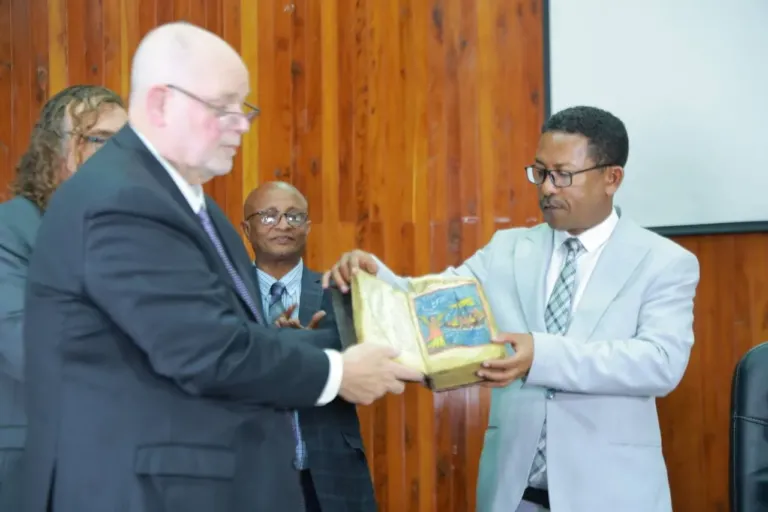
The Rosenbach Museum & Library in Philadelphia voluntarily transfers to the custody of the FBI a 16th-century manuscript for return to the Archivo General de la Nación del Perú, the Peruvian national archives.
Three decades after legislation pushed for the return of Native American remains to Indigenous communities, many of the nation’s top museums and universities still have the remains of thousands of people in their collections.
Rachel Ama Asaa Engmann of the Christiansborg Archaeoogical Heritage Project helps to understand how the agreement with one American and two British museums was reached.
An exhibition at the Foreign Ministry Museum in Mexico City is displaying more than 100 stolen pieces that have been recovered, thanks to intense work by the country’s diplomats.
Over the past several weeks, museums across the United States have been covering up and removing displays of Native American ancestors and cultural objects.
Chief Charles Taku has made an impassioned call for the “urgent and unconditional restitution of the Bangwa Queen in Dapper Foundation in France, the Bangwa King in Metropolitan Museum in New York, USA and the cultural heritage artefacts which are in the National Ethnological Museum in Berlin and Municipal Museums in Germany, in the Netherlands and other parts of the world.”
Earlier in 2024, David Nolan Gallery in New York mounted the exhibition Fort Marion and Beyond: Native American Ledger Drawings, 1865–1900, gathering over 100 works on paper by Native artists from the Arapaho, Cheyenne, Hidatsa, Kiowa, and Lakota tribes.
At a formal repatriation ceremony at the Okinawa Prefectural Museum and Art Museum in Naha, the Federal Bureau of Investigation and the Embassy of the United States in Tokyo returned 22 historic artifacts that were looted following the Battle of Okinawa and had been missing for almost 80 years.
There are obvious similarities between the episode in 1874 and 1896 (Asante Kingdom) and 1897 (Benin Kingdom). Both kingdoms have been asking for restitutions for decades. Barnaby Philips explores why is it taking Nigeria so long to put its returned treasures on display?
The Federal Government has vowed to pursue all necessary measures, including legal action in international courts, to recover cultural artefacts stolen from Nigeria.
The Department of Antiquities of the State of Libya and the Cleveland Museum of Art have announced an agreement in principle for the transfer of a Ptolemaic statue of a man to the State of Libya. It was lost in 1941, during the Second World War.
The contents were two skulls molded with mud and three large effigies, called rambaramp, each containing the skull of a man, uniquely painted to depict the final stages of his life.
The American Museum of Natural History (AMNH) institution holds the bodies of 12,000 individuals from communities within and outside the United States. The majority of which lack identification.
Six years ago, AIATSIS set up the Return of Cultural Heritage (RoCH) programme, and began looking at collections worldwide that might have holdings to return. Among the 200 institutions it first contacted, 74 responded positively, among these the Fowler museum in Los Angeles
The Fine Arts Museums of San Francisco (FAMSF), which stewards the De Young Museum and the Legion of Honor, has begun consulting with Native tribes on how to return remains that were gifted, in some cases, over a century ago.
More than 128,000 Native American ancestors and 4.5 million sacred objects have been identified in collections across museums, universities and government agencies. Those numbers don't include more than an estimated 90,000 ancestors and 700,000 associated funerary objects that have not yet been identified in collections.
The contents were two skulls molded with mud and three large effigies, called rambaramp, each containing the skull of a man, uniquely painted to depict the final stages of his life.
Claim of the Restitution Study Group: The Supreme Court has denied certiorari in the case Deadria Farmer-Paellmann v. Smithsonian Institution, allowing the return of 29 Benin Bronzes to Nigeria to proceed without further legal challenge.
The Pennsylvania Museum’s Cultural Center in Philadelphia is launching a study that examines 450 museum collections, collecting policies and practices in the US and formulates a collection framework.
In July 2020, the Australian Government announced the introduction of the RoCH program with funding until June 2024. The research and community work continued and at the end of this period RoCH identified 383 overseas collecting institutions holding 126,000+ Aboriginal and / or Torres Strait Islander cultural heritage items.
The Department of Antiquities of the State of Libya and the Cleveland Museum of Art have announced an agreement in principle for the transfer of a Ptolemaic statue of a man to the State of Libya.