The Association on American Indian Affairs is seeking proposals for panels, workshops, training and other sessions that will support the 12th Annual Repatriation Conference theme “Tending the Fire – Sustaining the Journey Home.” The Conference will be completely virtual and take place Thursdays and Fridays in the month of February 2027.
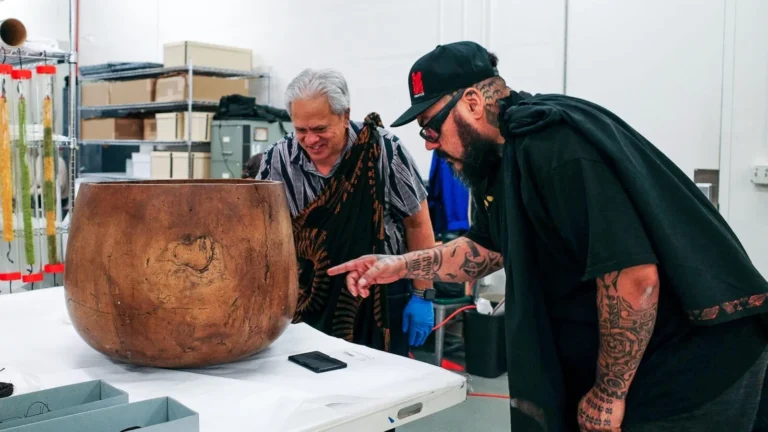
For Native Hawai‘ian advocate Edward Halealoha Ayau, caring for the dead has been a lifelong duty. It has also been a matter of steadily increasing legal traction.
For many years, the American museum community has been pursuing jars, created by enslaved potter David Drake (1800-1870). However, now the Museum of Fine Arts (MFA), Boston, has made a necessary and bold move: it has recognised the jars as stolen objects.
Over 2,000 ancestral remains and sacred objects belonging to the Santa Ynez Band of Chumash Indians have gone home. Dating back thousands of years, they were long confined to wood trays and boxes at Yale and Harvard’s Peabody museums. Chumash representatives called this treatment of their ancestors “cruel and inhumane.”
Decades Late, Museum Scrambles to Return 2,700 Native Remains - The American Museum of Natural History said it would repatriate hair clippings that must be returned to tribes under a 1990 federal law.
The hair clippings were originally collected by anthropologists for an installation at the 1893 World’s Columbian Exposition in Chicago.
The Windsor Shades estate in Virginia has been sold to the Pamunkey Indian Tribe, reconnecting one of Virginia’s most significant colonial and Revolutionary War landmarks with the people who originally inhabited and stewarded the land centuries before English settlement.
Salinan Tribal Councilmember Robert Piatti remembers when he realized that what was sitting beneath a university campus wasn’t just archival material—it could also be people. “I was a reporter at Cal State Long Beach,” he said. “In the humanities building, down in the basement, there were boxes and boxes of bodies. And it was awful, really awful.”
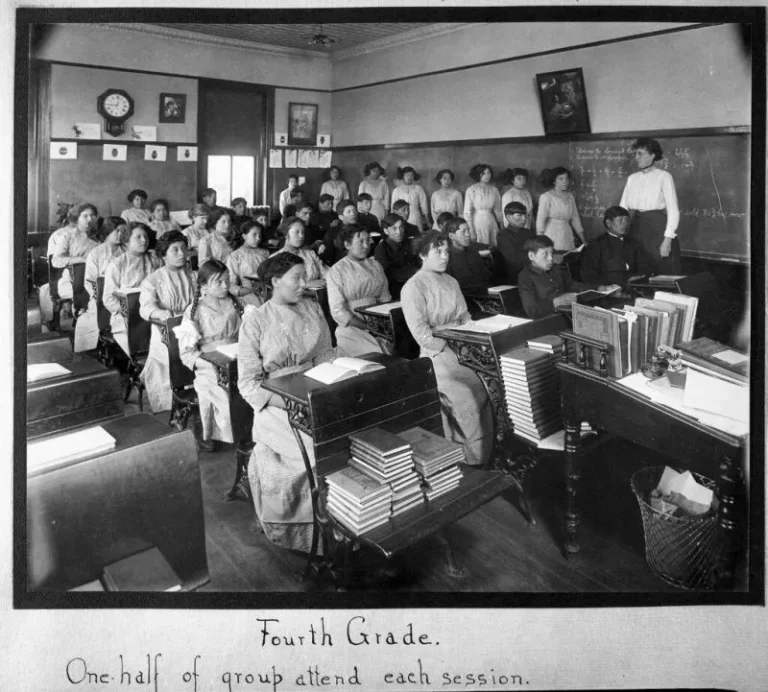
The Winnebago Tribe of Nebraska celebrates the decision by the U.S. Court of Appeals for the Fourth Circuit vacating the lower court’s dismissal and holding that the Native American Graves Protection and Repatriation Act (NAGPRA) applies in Winnebago v. Department of the Army. The ruling allows the Tribe to proceed with its lawsuit against the U.S. Army seeking repatriation of the remains of Samuel Gilbert and Edward Hensley, two Winnebago boys who died at the Carlisle Indian Industrial School more than 125 years ago.
Sierra Kinsey-Lawton takes the Musauem of Us in San Diego, California, as a case study: the Museum of Us hired a decolonization team because it was fashionable. Every museum was doing it. But the moment the team pushed for something larger—a major repatriation, a public apology, a shift in governance—the discomfort became too great. The team became a problem. And problems are easier to eliminate than to solve. Budget shortfalls became the perfect excuse. They are neutral and impersonal. They allow the museum to avoid saying what it really means: we no longer wish to fund this work.
The agreement represents the first major case of art restitution involving works created by an enslaved person in the U.S. — a process traditionally associated with families seeking the return of art looted by the Nazis in World War II.
Join the Association on American Indian Affairs virtually for the 11th Annual Repatriation Conference! The summary agenda for the Conference is available at https://www.indian-affairs.org/11thannualagenda.html
The Tsilhqot’in National Government has launched its first major repatriation exhibit at the Museum of Vancouver, following the return of over 60 ancestral belongings—including baskets, tools, and cultural items—that had been held in museums and private collections for more than a century.
Gov. Greg Gianforte last week finalized Montana’s two-year budget, which contains several new investments for Indian Country, including a historic increase in funding for tribal colleges and money devoted to repatriation efforts.
Since 2018, the Association on American Indian Affairs has monitored 1,159 auction houses worldwide and provided auction alerts regarding the sale of sensitive cultural heritage. The Association’s work to monitor domestic and international auctions help fill this gap by identifying and reporting items that may warrant repatriation. The alerts have been shown to stop improper sales and support the return of important items.
A first activity will be the hosting of a Memorial Service to honor 19 individuals whose crania were taken from New Orleans in the 1880s and sent to Leipzig, Germany.
Tamara Lanier, who sued the school in 2019 over daguerreotypes of her enslaved ancestors held in its museum, called the outcome “a turning point in American history.”
A ceremony took place in the Leiden World Museum around the restitution of the heritage of the Ysleta del Sur Pueblo tribe. It is the first time the Netherlands has returned objects to the United States. „The healing process can now begin.”
This article presents recent provenance research on the Indigenous ancestral human remains gathered by Alphonse Louis Pinart (1852-1911) during his journey in Oceania on board the French navy cruiser Le Seignelay.
According to a recent ProPublica investigation of the failure to bring about the expeditious return of human remains by federally funded universities and museums, over 110,000 ancestral remains are held by institutions in the U.S., from Harvard to Berkeley.
This book examines the ways in which law can be used to structure the return of indigenous sacred cultural heritage to indigenous communities, referred to as repatriation in this volume. In particular, it aims at developing legal structures that align repatriation with contemporary international human rights standards.
The 1990 Native American Graves and Protection Act (NAGPRA) is generally presented as a breakthrough in favour of First Nations. NAGPRA set up a process by which Native American tribes can request the return of human remains and cultural objects from museums and government agencies, including federally funded universities. How successful has it been in California?
Objects from the Wereldmuseum Leiden collection to be returned to indigenous tribe in the US. This item contains the announcement by the Dutch government, the report by the Dutch advisory Committee Colonial Collections and reactions from local news stations in El Paso, Texas.
Modern treaties and statutes protecting cultural property apply only prospectively to items stolen or illegally exported after their effective dates. But while the United States does not have a law concerning looted cultural objects taken from formerly colonized peoples overseas, it does have a statute governing the repatriation of Native American cultural items and human remains.
The Rochester Museum in New York and Harvard University return ancestral remains of Native Americans and funerary artifacts to the Oneida Indian Nation.
Archaeology in its formative years was often less a meticulous science than an exercise in vandalism. A little-known horror unfolded in the Southwestern United States.
What’s in a name? The language we use tells us who is speaking, from what perspective, and (implicitly), who controls the narrative. Names, in short, have power.
For Indigenous museum visitors, long-prevalent display methods like ‘wonder cabinets’ or ‘white cubes’ can be an alienating way to encounter their cultural heritage. This article will illustrate how exhibition designers are influenced by the colonial imagination, a term we use for the settler mythology behind imperial ambition, both historical and contemporary.
The American Alliance of Museums has brought out a special issue Museum as part of a larger project exploring the next horizon of museum practice with regard to voluntary repatriation, restitution, and reparations. The articles in this issue provide a window into practices regarding the Benin-objects, lost items of the Yaqui, voluntary returns, and the application of NAGPRA.
Three decades after legislation pushed for the return of Native American remains to Indigenous communities, many of the nation’s top museums and universities still have the remains of thousands of people in their collections.
Over the past several weeks, museums across the United States have been covering up and removing displays of Native American ancestors and cultural objects.
Earlier in 2024, David Nolan Gallery in New York mounted the exhibition Fort Marion and Beyond: Native American Ledger Drawings, 1865–1900, gathering over 100 works on paper by Native artists from the Arapaho, Cheyenne, Hidatsa, Kiowa, and Lakota tribes.
The American Museum of Natural History (AMNH) institution holds the bodies of 12,000 individuals from communities within and outside the United States. The majority of which lack identification.
The Fine Arts Museums of San Francisco (FAMSF), which stewards the De Young Museum and the Legion of Honor, has begun consulting with Native tribes on how to return remains that were gifted, in some cases, over a century ago.
More than 128,000 Native American ancestors and 4.5 million sacred objects have been identified in collections across museums, universities and government agencies. Those numbers don't include more than an estimated 90,000 ancestors and 700,000 associated funerary objects that have not yet been identified in collections.