‘Bring Me Home’ festival in Nepal

For decades, stone and bronze deities stolen from centuries-old shrines across the Kathmandu Valley have surfaced thousands of miles away in Western museums and private collections. A few have been repatriated but hundreds, if not thousands, are still away. Diplomats, conservationists and local heritage custodians gathered to confront the loss and to debate what bringing those artifacts home truly means.

Organisers said the title ‘Bring Me Home’ reflects the longing of displaced deities to return to the neighbourhoods where their spiritual identities remain alive.

Yet for the traditional community trusts, or guthis, that have guarded Nepal’s shrines for generations, repatriation is only half the battle. Many recovered statues end up locked behind museum glass in Kathmandu rather than restored to active worship.

“For us, the true home of a deity is the temple or shrine,” said Prashant Mali, an advisor to the Navadurga Bhawani Devi Guthi based in Thecho, Lalitpur. “Keeping them safe in a museum is not bad, but deities require daily worship—nitya puja and aarti.”

Because they are the centre of devotees’ faith, placing them back in their sacred sites with proper security and surveillance is vital, he added.
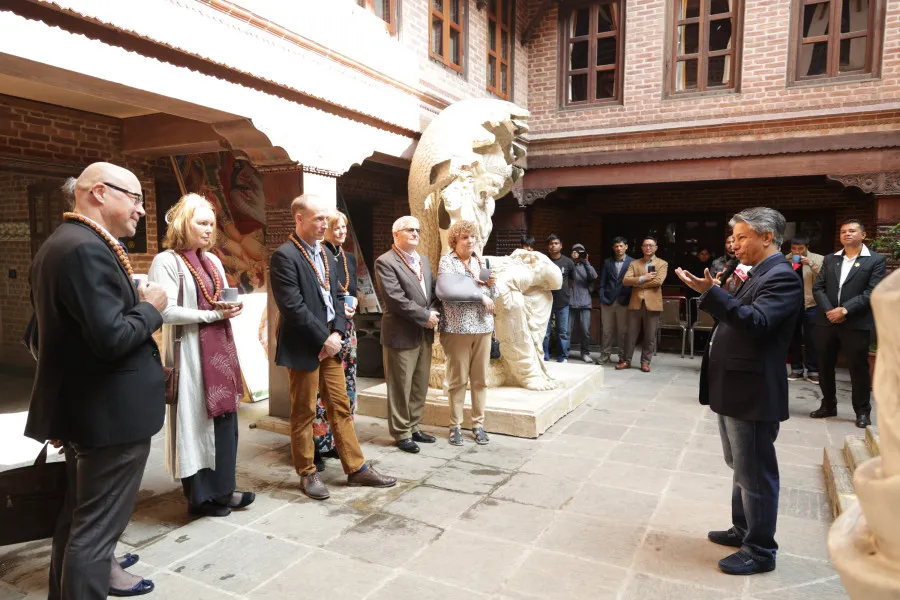

When an idol vanishes, Mali said, communities improvise by installing replicas or continuing rituals before an empty plinth, though in some neighbourhoods, festivals and daily worship have ground to a halt. Preserving what remains, he added, depends on pairing the elder’s memories and guthi records with modern safeguards like surveillance cameras and stronger diplomatic coordination.

That gap between museum preservation and living faith is central to the festival curated by Shreena Nepal, programme coordinator at Namuna Foundation, under the guidance of Rabindra Puri, who began working in heritage conservation in 2003.