The museum’s director, Mohamed Abdallah Ly:
It was in the 2010s with the rise of movements calling for the decolonisation of knowledge, the fight against systemic racism, and the digital activism of younger generations, that the issue came back with vigor.
In recent years, attempts to physically seize African artefacts and objects from European museums, have attracted global media attention.
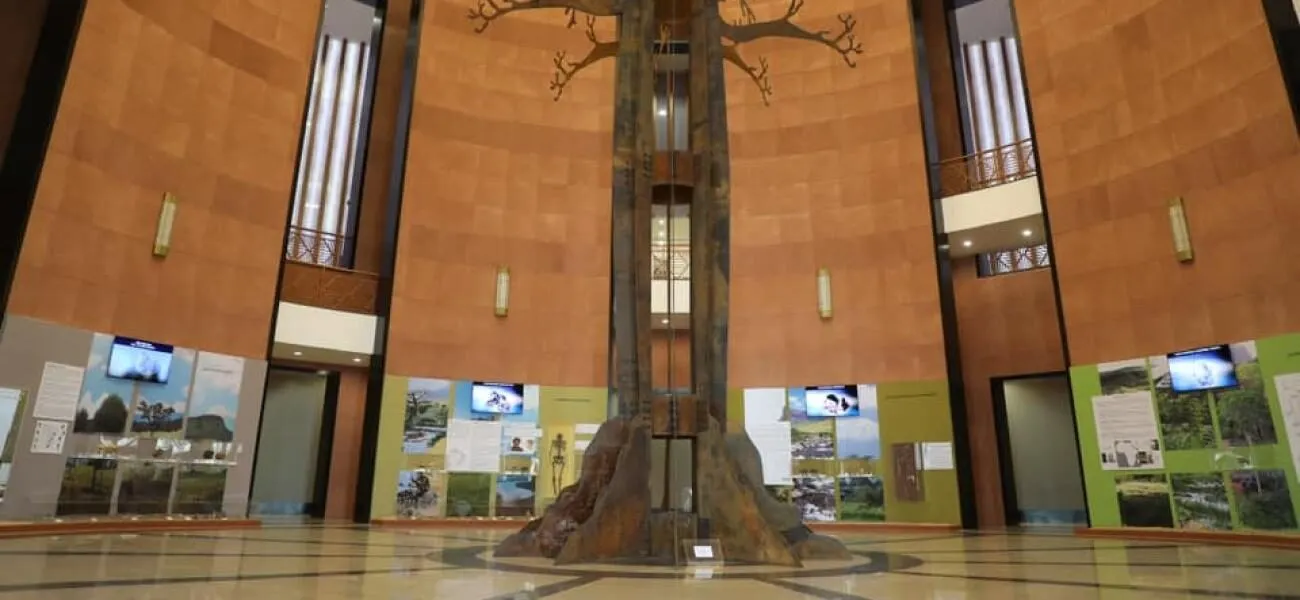
The Museum of Black Civilisations in Dakar aims to demonstrate that Africa has capable infrastructure to house and protect its rediscovered treasures.
Yet, six years after opening its doors, the results remain thin. Only one major object has officially entered its collection via restitution — The Sabre (also known as The Sword) of El Hadj Omar Tall, the 19th-Century anti-colonial resistance leader.
The Sabre’s return and arrival in Dakar in 2019, was celebrated widely across Senegal.
However, the item was returned on a renewable five-year ‘loan’. The Sword, now on display in a secluded room in the museum, raises a number of questions: Why have so few objects been returned, despite promises made?
Why a loan rather than a final return?
Looking ahead, the Museum of Black Civilisations is preparing to welcome additional objects, including manuscripts and other historical treasures linked to El Hadj Omar Tall’s sword, claimed by his descendants.
But the museum also aims to deepen its roots—locally and internationally, by forging scientific partnerships and mobilising the younger generation to learn more about their history through these artefacts.