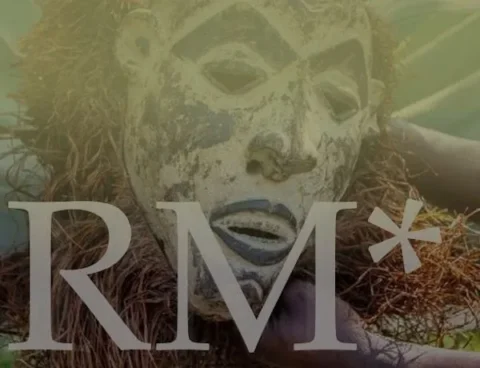
Artefacts carry meaning of their own.
As opposed to the European conception of artefacts, Achilles Mbembe points to African modes of thinking, where spiritual meaning and autonomy are embedded in these objects.
In European ways of thinking, human beings, specifically white human beings, were viewed as completely separate from objects and animals. Mbembe surmises that “in a world set on objectifying everybody, everything becomes a profit.”
Underlying this objectification is what Mbembe terms ‘necropolitics,’ where “sovereignty is to exercise control over mortality and to define life as the deployment and manifestation of power.”
Mbembe describes how the spatial relations of colonisation were needed to reconfigure social hierarchies. Belgium’s power over human life was translated into the economy: Congolese people were treated as instruments of slave labor and production, losing their homes, bodily autonomy, and political enfranchisement.
Belgium presented their colonial agenda as a war between a state and an “uncivilised” group of people, dehumanised so as to not legitimate Congolese sovereignty.
These philosophies transferred to the cultural artefacts of the Congolese: the art objects became subsumed to the narrative of the Belgians. Artefacts are equal to human beings in terms of spiritual significance. Their necropolitical position in these museums—reduced to commodities for consumption—mirror the exploitation actual Congolese people experience as a form of violence.
Source: Lia Iannarilli and Malaika Bunzigiye / Art, Colonialism, International Politics, Philosophy / March 30, 2026 / Features, Volume 68, Volume 68 Issue 9