In colonial Cameroon, ivory was considered “white gold”. The trade in the coveted raw material led to violent conflicts at the end of the 19th century. One of them was the so-called “Wute-Adamaua Campaign” of the German colonial troops.
Under the leadership of Captain Oltwig von Kamptz, the city of Tibati was conquered in 1899 and the city and the palace of the ruler Mohamman Laamou were plundered. The ivory stolen during the campaign was sold, and the proceeds were used to finance the campaign.
In 1902, part of the loot of the ethnographic objects ended up in the collection of the Übersee-Museum Bremen.
As early as 2012, the Übersee-Museum sought contact with the then Lamido of Tibati, Hamidou Bello. From 2018 onwards, the direct exchange began.
In 2022, the late Lamido Hamidou Bello travelled to Bremen. In addition to discussions about the future of the collection, concrete ideas for joint projects were developed together with the University of Bremen: For example, the establishment and cultivation of a vitamin-rich yellow cassava variety, an important source of vitamin A in the area, and a project on sustainable beekeeping with wild bees.

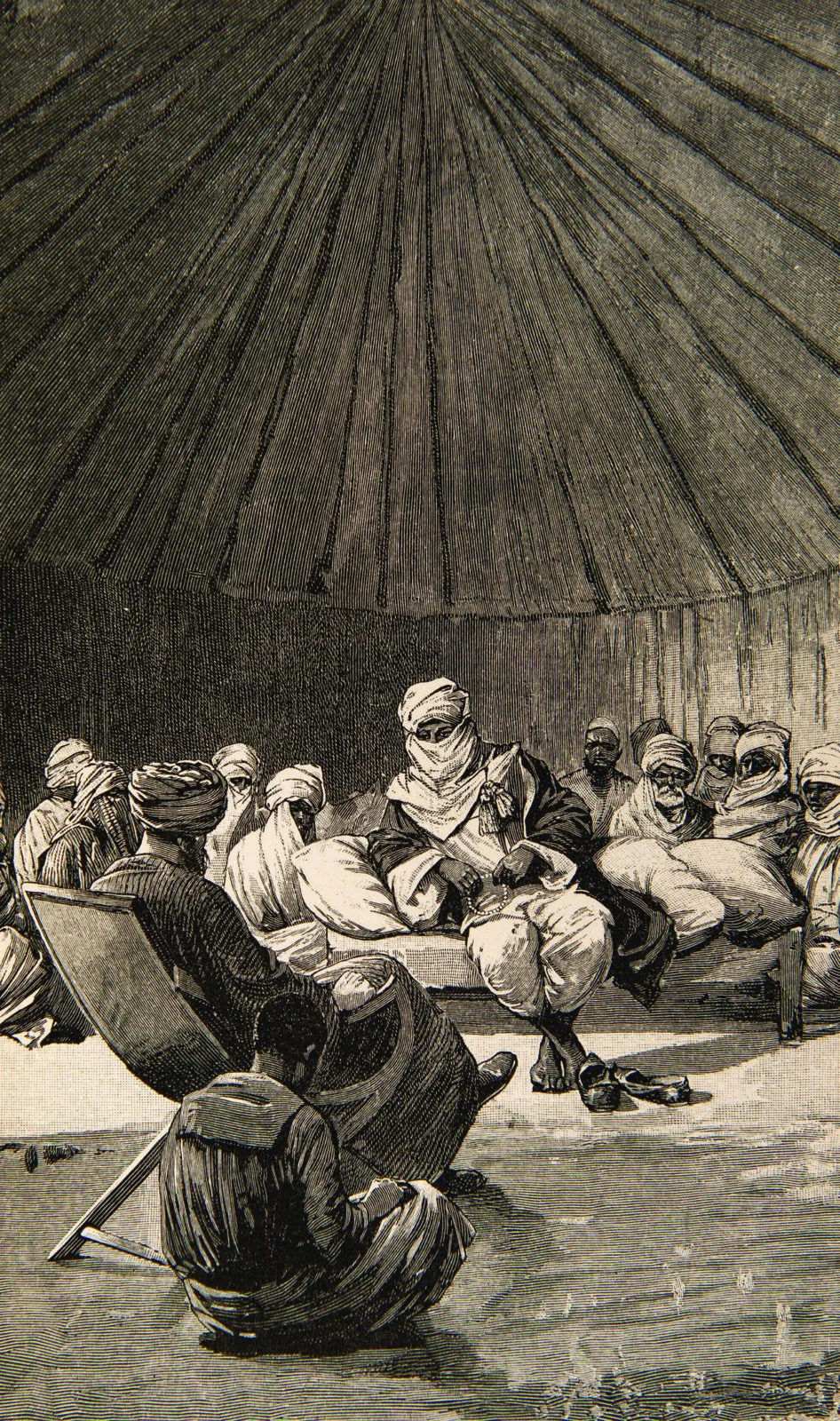
This illustration shows Mohamman Laamou – Lamido of Tibati receiving the expedition from Curt Morgen in 1890. The Lamido sits elevated, but Morgen sits at the same height in the travel chair he brought with him – a great provocation.