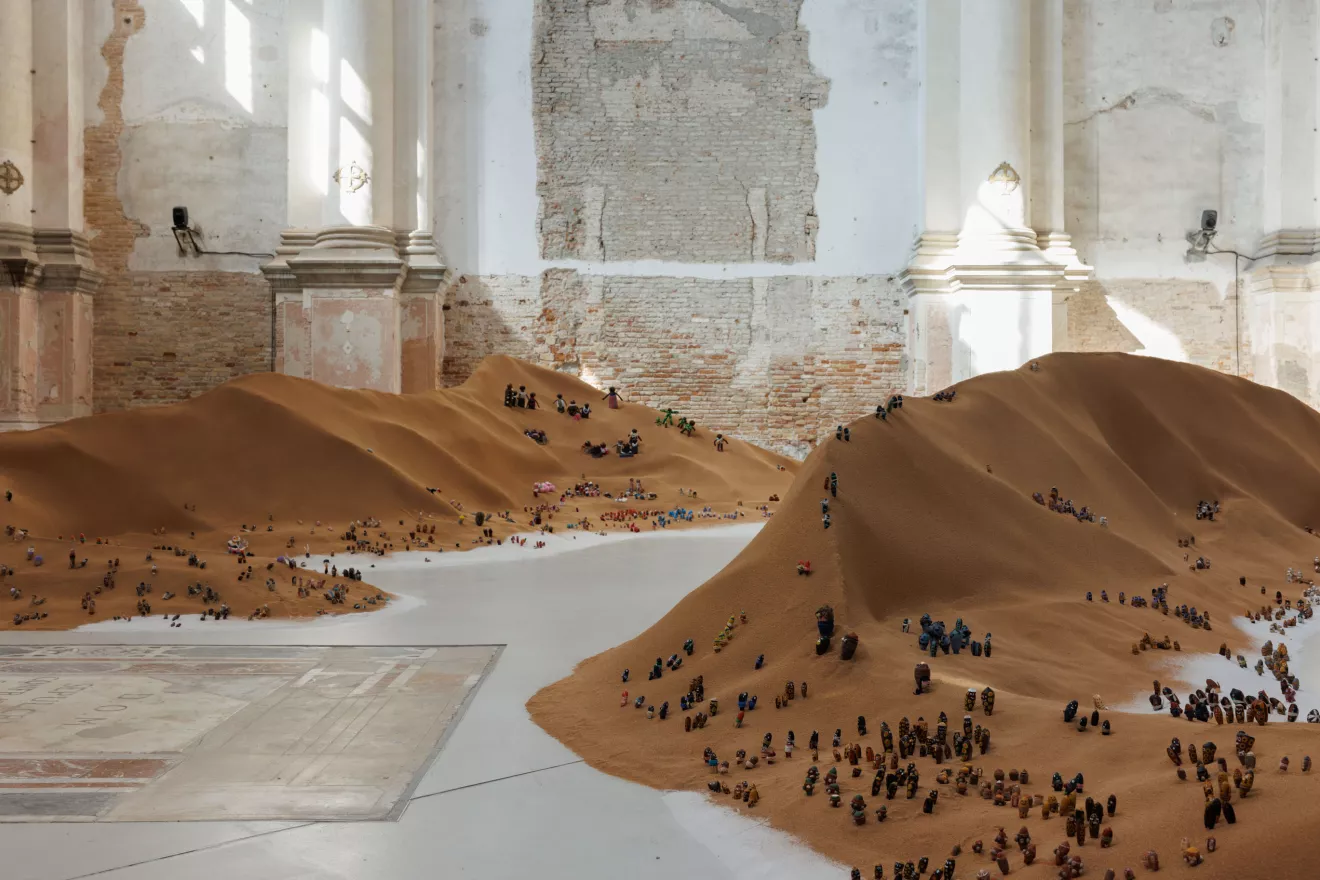
“The dissolution of European empires in the twentieth century sparked impassioned debates about the vast accumulation of cultural property in metropolitan museums in the West,” notes Zinnenburg Carroll of the Central European Universioty in Vienna in her catalog essay co-authored by Christopher Williams-Wynn. “Since the 1954 Hague Convention and the 1970 UNESCO Convention defined ‘cultural property’ in international law, repatriation has shifted from a moral obligation to a legal process. It’s a debate that defies simple answers.”

Photographs Jacopo Salvi
She states that repatriation demands are frequently met by museums in the following ways:
- Maintaining that the rightful ownership is uncertain
- Arguing that the circumstances of the original acquisition are often unclear
- Asserting institutional duty to preserve and provide access to the items
The exhibition analyses five case studies of repatriation approaches by major European museums. By comparing repatriation processes of cultural goods returning to Mexico, Australia, Nigeria, Benin and Namibia, the project proposes new models of co-ownership.