REGARTLESS reports: In three German museums, restitution decisions have been made for 31 objects from Nso, yet their return remains delayed. Communities continue to wait. The Cameroon government must take action to facilitate these returns.
[in English and German] The 2 days event 'From Colonial War to Postcolonial Memory: Transformations of Colonial Military Violence since 1918' is organised by the Center for Military History and Social Sciences of the Bundeswehr (ZMSBw).
Just as the narrative of the "clean Wehrmacht" long covered up the violent warfare and the involvement of soldiers and officers in National Socialist crimes, the myth of a "clean protection force" existed in Germany for a long time. Speakers from Cameroon and Tanzania will discuss this.
The Museologies of Africa explores decolonial museum practice in Sub-Saharan Africa, asking how to decolonize knowledge production in Africa and to meaningfully collaborate with indigenous communities to reimagine museology.
[in German] Thomas Fues argues that the handover of six Maka ancestors in Freiburg University has not brought the breakthrough for the German-Cameroonian reappraisal of the colonial heritage that many had hoped for.
How are colonial violence, looted cultural assets and partnership projects related? This exhibition sheds light on the eventful history between the Cameroonian city of Tibati and Bremen. The focus is on current questions: What is the status of the projects? What is the significance of the restitution of colonial objects and how can a common future be shaped?
During a ceremony and an ecumenical service in the University Church of Freiburg, Freiburg University prepared for the repatriation of ancestors of the Maka community from Cameroon. The human skulls are part of the Alexander-Ecker collection, anatomist from Freiburg in c. 1860.
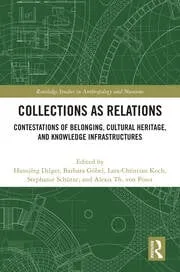
Hansjörg Dilger writes: Ethnographic collections can be understood as affective forces: relational entities that connect people, institutions, histories, and more-than-human worlds, while shaping contemporary debates about care, collaboration, and restitution. (open access)
ThomasFues writes about a recent report by the Culturebene portal in Cameroon that the government there is getting serious about the repatriation of human remains and cultural belongings from Germany. It is reported that Culture Minister Bidoung Mkpatt has granted the Maka community permission to recover the remains of their ancestors that were looted in 1905.
Yrine Matchinda examines in her disseration *Presence and Absence of Cameroonian Religious Objects in Colonial Collections of German Museums (1884–1919): Cultural and Religious Implications for Communities in Cameroon* how the musealisation of sacred/religious objects affects cultural identity, collective memory, and intergenerational transmission within communities of origin.
The conference 'Museums as Monuments to the Colonial Troops?' brings together historians, artists, curators and artists to examine the artefactual history of colonial warfare in three former German colonies: Togo, Kamerun and German East-Africa.
[in German] The Stiftung Preussischer Kulturbesitz (SPK) in Berlin is to return hundreds of skulls to Cameroon, Togo, Ghana and Nigeria. The origin of the human remains has been researched for several years. "If at all possible, the human bones should be able to return to where they came from," said foundation president Marion Ackermann.
[in German, partially in English] In Germany, the federal, state and local governments decided to establish the "Coordination Council for Returns of Cultural Property and Human Remains from Colonial Contexts". The secretariat will be located at the Federal Foreign Office.
On 25 February 2026, the Togolese cabinet approved a draft law to establish a restitution committee. The committee will seek to repatriate tangible and intangible cultural heritage, as well as human remains and archives from colonial contexts. The bill refers to over 8,000 „objects“ currently held in foreign museums. They predominantly come from northern Togo.
In new episode of podcast "Decolonial Memories", Flaubert Djateng, coordinator of the civil society organisation Zenu Network in Cameroon, talks about remembrance work on the German colonial era in his country.
[in French] This issue of Relations Internationales, edited by Anne Sophie Gijs, Matthieu Gillabert and Serge Jaumain offers a range of interesting articles about restiution issues, museums, diaspora groups and communitie sof origin, mostly in Switzerland and Belgium and in African countries as Cameroon and DR Congo.
The Tangué is a ship’s beak carved from wood and placed on the bow of the ship of the royal Bele-Bele family. This mystical and sacred belonging symbolises power, particularly the ultimate authority of the King over the water tribes of the Douala kingdom, and is an integral part of socio-cultural and spiritual practices. n 1884, it was stolen by German military. Currently, it is in the Museum Fünf Kontinente in Munich.
[English version, German version] Cultural heritage of the Nso in Germany - Episode with Dr Bulami Edward Fonyuy (Cameroon) by podcast Decolonial Memories (on all major platforms). In the podcast, Dr Bulami calls on the German government to play a long-term role in the healing process between the two countries, going beyond the restitution of colonial loot.
[ in English and in German ] The main focus is on cultural belongings from four Cameroonian communities, the Bakoko, Bamum, Duala, and Maka, whose heritage was absorbed by these institutions during the German colonial era (1884-1919). This should also become a basis for future restitutions.
This workshop marks the conclusion of the interdisciplinary provenance research project "Human Remains from Colonial Contexts: Provenance Research in the Anthropological Collections of the University of Göttingen and MARKK Hamburg".
Thomas Fues writes: the German government emphasises its willingness to confront Germany’s colonial history and its consequences. But it remains to be seen whether and how such declarations of intent at the beginning of the legislative period will actually be implemented in the coming years.
Thomas Fues writes: In an historic breakthrough for German restitution policy on colonial contexts, Cameroon’s official Restitution Committee has agreed upon the return of colonially appropriated cultural heritage in September 2025. Four German museums are involved.
This working paper offers an inventory of missionary orders and societies active in German colonial regions in Africa and Asia, the information available about them and the options for further research.
The repatriation of African art is gaining momentum, but a number of highly important and symbolic pieces remain in the hands of the continent’s former colonisers.
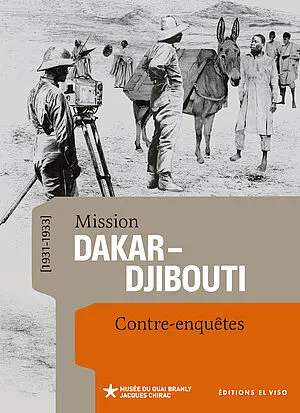
The Paris museum has invited African researchers to study the archives of the expedition, which took place between 1931 and 1933, and to carry out field studies to retrace the conditions of the undercover raid on artifacts.
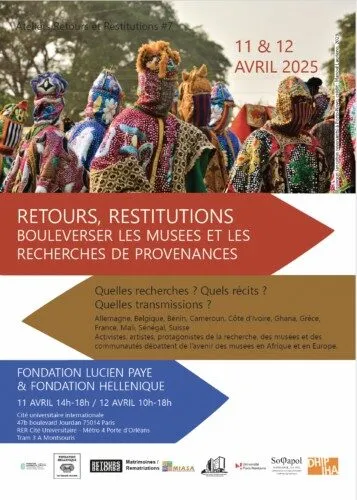
[ conference in French ] Germany, Benin, Cameroon, Ghana, Greece, France, Ivory Coast, Mali, Sénégal, Switzerland - Academics, activists, artists, experts from communities and museum actors debate the future of museums in Africa and in Europe.
The collection of the Musée des Rois Bamoun (MRB, Museum of the Bamoun Kings), located in Foumban in Cameroon’s West Region, testifies to the richness and diversity of the Bamoun Kingdom’s art, culture, and history.
[ open access ] 'Displacing and Displaying the Objects of Others - The Materiality of Identity and Depots of Global History' brings a diverse range of contributions inspired by research from the "Hamburg’s (post-)colonial legacy" research center.
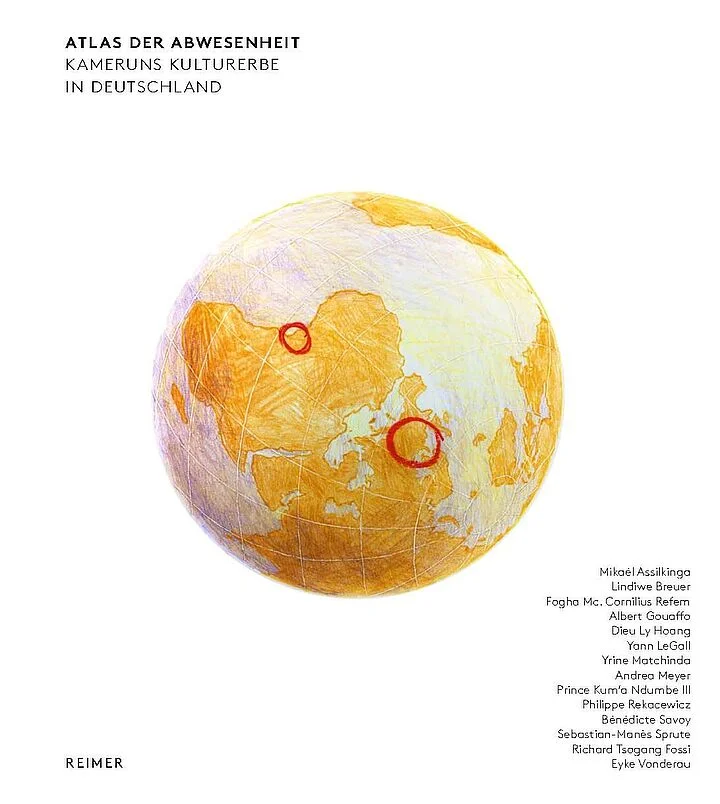
[ in German, English and French ] German museums of world cultures hold 40,000 objects from Cameroon, more than the entire African collection of the British Museum, according to a new study, presented by Bénédicte Savoy (Technische Universität, Berlin) and Albert Gouaffo (University of Dschang).
When Sylvie Vernyuy Njobati saw the sacred statue of her Nso people for the first time, she was shaking. "I was seeing... our founder... our mother locked up in some glass container. And for 120 years, she's been yelling out. She needs to be back home," she told the BBC's The Comb podcast.
Colonial looted art is finally being returned to its countries of origin. New problems lie ahead, as former colonies now fear the return of looted art may take the place of a comprehensive reparation for colonial crimes.
The Lebang community in Cameroon has been the recipient of eight (8) significant cultural and spiritual heritages sold in auction and online in The Netherlands and Germany.
Chief Charles Taku has made an impassioned call for the “urgent and unconditional restitution of the Bangwa Queen in Dapper Foundation in France, the Bangwa King in Metropolitan Museum in New York, USA and the cultural heritage artefacts which are in the National Ethnological Museum in Berlin and Municipal Museums in Germany, in the Netherlands and other parts of the world.”
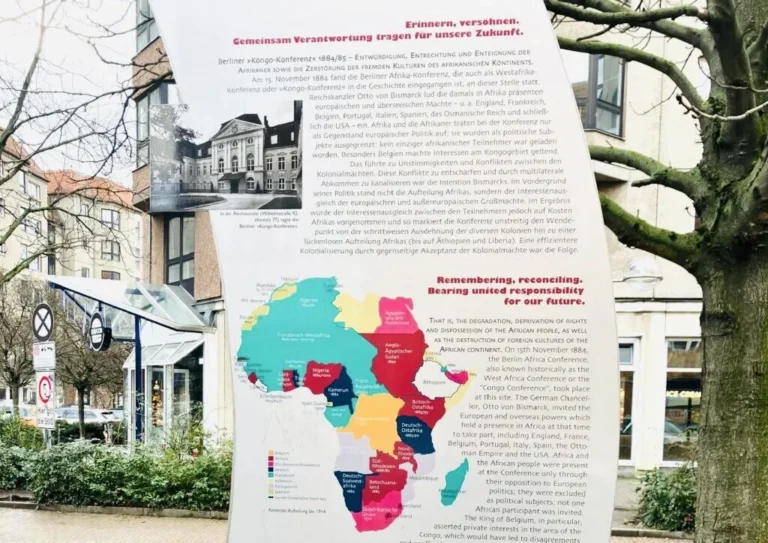
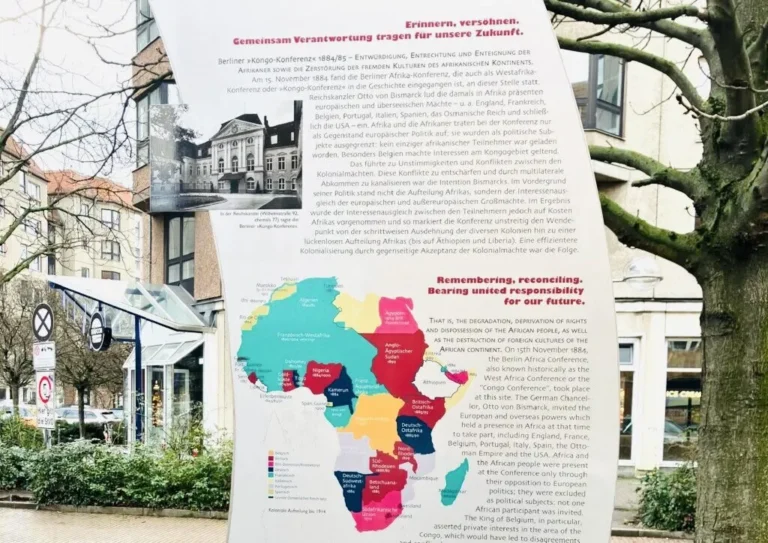
Chief Charles Taku argues that the resistance towards the restitution of African Heritage artefacts and the payment of reparations for colonial crimes is premised on the supposed legality of the crimes under the General Act of the Berlin Conference (26 February 1885).
Rachel Mariembe discusses the collection of the Musée des Rois Bamoun (MRB, Museum of the Bamoun Kings), located in Foumban in Cameroon’s West Region, as a framework for studying issues related to the concepts of museum, cultural heritage, conservation, and the restitution of cultural property looted during the colonial period.