A group of students at University College London’s (UCL) Institute of Archaeology critically examined the Petrie Palestinian Collection (PPC) to explore colonial legacies embedded in Western institutions. This reflection foregrounds Palestinian experiences with the collection.
Indigenous knowledge systems (IKS) contemplate the world through an interconnected lens, reflecting the integrated way life is lived and the symbiotic relationship between humans and their immediate tangible and intangible environment. Open Restitution Africa sees how the invocation of an IKS lens shifts the means and desired ends of restitutionary work around African cultural belongings and human ancestors.
Four authors argue that the rise of social media has amplified international trafficking of mummified humans and animals. However, these preserved remains pose health and biosecurity risks due to the toxicity of embalming methods and/or suboptimal storage that can promote microbial growth. This article investigates these risks by analysing 128 online posts from Meta platforms, e-commerce sites, web-stores, and auction houses.
Contemporary discourses concerning cultural property have focused on that which is easily defined as ‘cultural’: artworks and antiquities, sacred artifacts, perhaps ancestral human remains or ethnological collections. Natural history museums remain largely unaffected by many of the legal and political issues of ownership, stewardship, conservation, and justice which have begun to concern museum staff, civil society, and governments in the Global North and Global South alike. This theme for the 2027 volume of the International Journal of Cultural Property puts a spotlight on natural history specimens and collections.
Legal expert Ayale Do Vale Vales argues: While Indigenous peoples have long mobilised against appropriation, sometimes succeeding in claims to have their appropriated heritage returned to them, discussions on restitution have largely focused on tangible heritage. By contrast, the restitution of intangible cultural heritage (ICH), despite its importance and vulnerability to misappropriation, remains underexplored.
Livia Solaro investigates how a museum—especially one with a problematic past, such as an ethnographic institution—can critically confront its colonial heritage while keeping the public informed and actively involved in the process.
Cultural heritage occupies a paradoxical position in law: It is protected as property but experienced as a repository of identity, memory, and dignity. This article examines whether cultural heritage could, in principle, be recognized as a subject of law, drawing on emerging developments in environmental and nonhuman personhood.
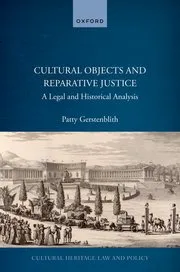
Early in 2025, Patty Gerstenblith published 'Cultural Objects and Reparative Justice. A Legal and Historical Analysis'. She proposes an innovative paradigm for determining reparations, including restitution of cultural objects appropriated during the nineteenth century. This is a review of her book by Annaïs Mattez with both positive and critical points.
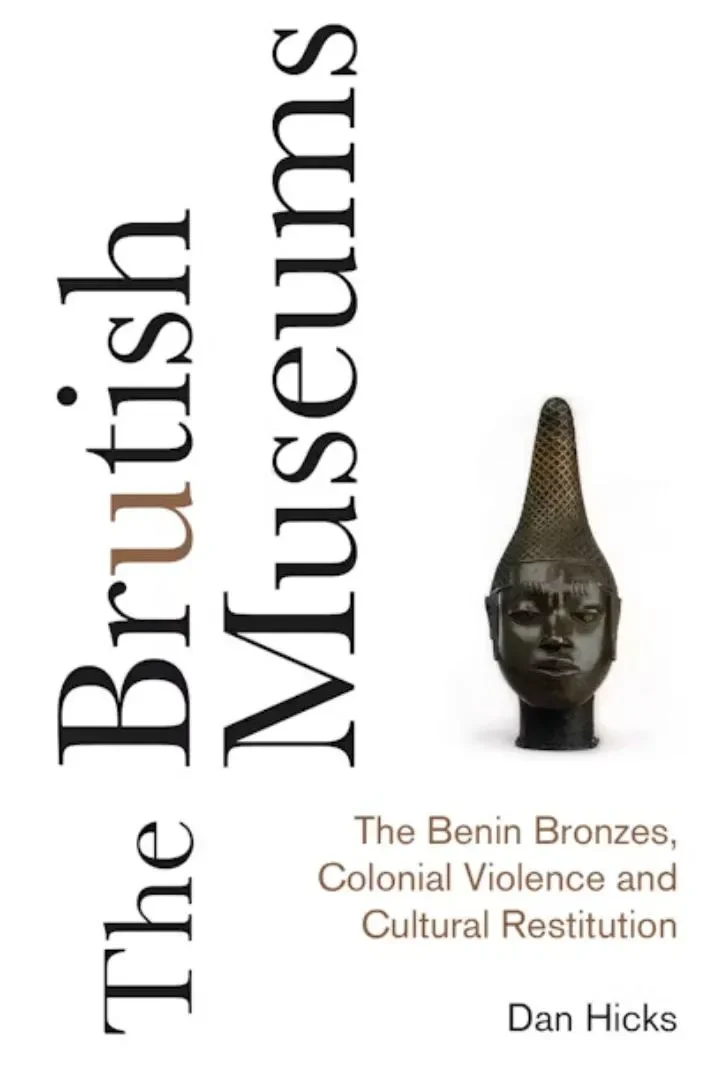
Dan Hicks argues that the allegation that his book The Brutish Museums is “part of a trend away from pro-British perspectives” is contextualised and refuted. On the contrary, this reply argues, openness and transparency about the colonial past and present is a key element of the reclamation and
reimagining of Britishness that is unfolding in the 2020s – this unfinished period that the book calls “the decade of returns”.
The debates on the ownership of contested cultural objects bring forth questions regarding the representation of history. But might these debates also lead to the fabrication of history?