Vishakha N. Desai writes: The return of looted artworks shows India is no longer treating restitution as a zero-sum recovery, but as a negotiating tool that asserts ownership while deploying art as soft power.
December 15th, at 4 pm (Lagos time), the International Repatriation Network (IRN) will host an online session exploring what restitution and repatriation mean for diverse communities and stakeholders in Nigeria today.
Join this event - organised by the Europeana Communicators Community - to hear museum professionals across Brazil and Europe explore issues of repatriation, decolonisation, and representation of Indigenous voices.
Oba Ewuare II today, during a courtesy visit to the Government house spoke explicitly on the proposed plan to build Benin Royal Museum which the past Governor of the state, Mr. Godwin Obaseki converted to EMOWAA and later MOWAA.
The public display of artefacts looted by British colonial forces at the new Museum of West African Art was supposed to be the crowning glory of a decades-long restitution effort. What went wrong?
[ in Portuguese ] A delegation from Nagaland in north-east India travels to the Pitt Rivers Museum in Oxford to negotiate the return of remains and artefacts taken during the colonial period.
The remains of a woman, described as a “non-European skeleton,” were given a full funeral service by Highgate School, the fee-paying secondary in Highgate Village. No relatives could be found.
Nigeria has received 119 Benin Bronzes from the Netherlands — the largest physical repatriation of looted artefacts since the 1897 British invasion of the Benin Kingdom. According to an expert, some of the pieces date back to between the 14th and 16th century.
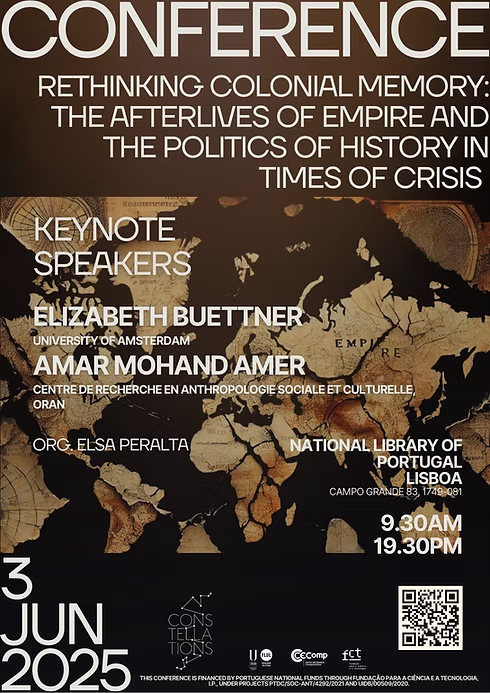
This conference explores how colonial histories continue to remain deeply embedded in the structures of today’s crises, shaping geopolitical conflicts, patterns of violence, systemic inequalities, and struggles for justice. It aims to critically engage with the intersections of colonial memory and historical narratives in relation to the pressing political and ethical dilemmas of our time.
A first activity will be the hosting of a Memorial Service to honor 19 individuals whose crania were taken from New Orleans in the 1880s and sent to Leipzig, Germany.