In 1899, French troops burned villages and looted cultural artifacts in the quest to include Niger in its West African colonial portfolio. Now, France has signaled willingness over possible restitution, but Niger is not interested.
The rejection by the city of Bordeaux of a private donation of 53 art objects allows for the direct repatriation of these works to their countries of origin, especially Gabon, which will receive 33 pieces from the collection. The other recipients are Nigeria, Niger, Ivory Coast, the Democratic Republic of Congo, Burkina Faso, and Togo.
An independent commission has revealed that the Dutch Royal Family possesses one thousand objects from the former colonies. Although most were ‘donated’ at the time, a few dozens of objects are booty of war and were taken by colonial officials and soldiers during military confrontations.
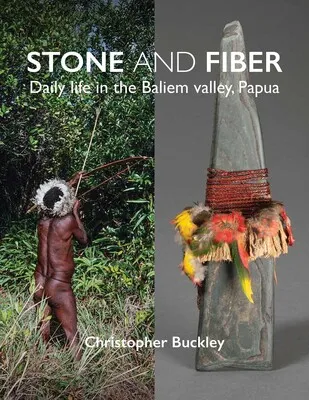
Based on stone tools, sacred objects, secret rituals, and daily life articles, collected by O.W. Hampton and kept in California, Christopher Buckley portrays in 'Stone and Fibre: Daily Life in the Baliem Valley, Papuathe Baliem Valley' the Hubula (Dani) peoples of the Grand Valley of the Baliem River in the central highlands of Papua. There is more than a book. In May 2026, the collection has been shipped to Jakarta, and from there to Papua. Initially, it will be housed in the Museum Lokabudaya in Jayapura. But the plan is for the collection to become the core of a new museum in Wamena (the regional capital of the highland area).
The Wereldmuseum collection includes 3,647 objects that contain ancestral human remains. Particularly harrowing are the 26 premature and newborn babies preserved in fluid. Together with members of various communities, Manuwi C. Tokai created an altar in the Wereldmuseum Amsterdam to serve as a place of remembrance for the ancestors held in the museum’s collection.
Twelve historical artefacts have been formally returned to Ethiopia after being kept by a German family for more than 100 years. The artefacts were y collected in the 1920s by Germany's then-envoy to Ethiopia Franz Weiss and his wife Hedwig.
[ in Dutch ] The objects come from a private collection of the descendants of doctor and amateur archaeologist Dr. Hans Feriz. In her will, his daughter had stipulated that the objects collected by her father in the past would be returned to the countries of origin.
Katharina Küng from canton Zurich had a headdress that she had received from her mother hanging on her wall for a long time. “We thought it was the padding of an old suit of armour,” Küng says. It wasn’t until a trip to Namibia that she realised – in the Swakopmund Genocide Museum – that it was a traditional Herero headdress.
The Department of Antiquities of the State of Libya and the Cleveland Museum of Art have announced an agreement in principle for the transfer of a Ptolemaic statue of a man to the State of Libya.
Advisory reports from the Colonial Collections Committee on objects for which restitution has been requested by Indonesia. The provenance reports have been added as an appendix.
The “De Grote Indonesië Tentoonstelling” at De Nieuwe Kerk in Amsterdam has faced scrutiny due to its display of seven Buddha heads, allegedly from the Borobudur, lacking contextualisation.