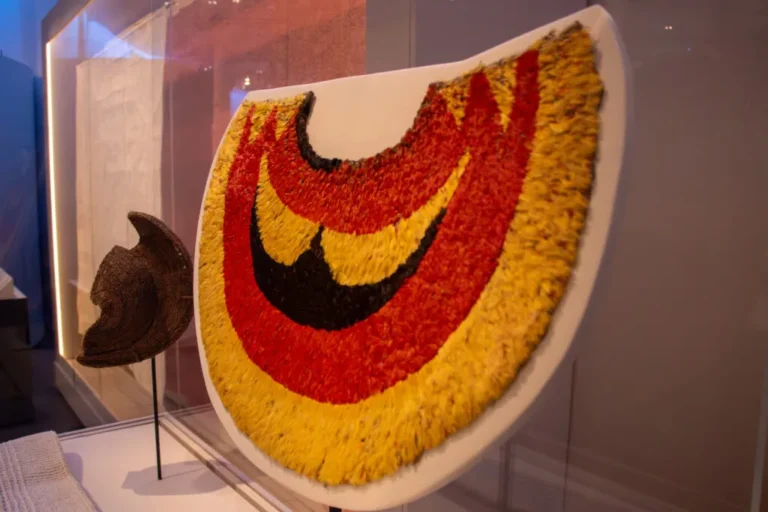
Makana Eyre thinks that the exhibit at The British Museum, “Hawaiʻi: a kingdom crossing oceans,” poses questions that have historically been uncomfortable for museums. Many items, though certainly not all, are sacred, intrinsically linked to ceremony, community, even Hawaiian sovereignty.
Coloniality is ever-present. Even decades after the period of formal colonisation has ended it has persisted through structural forms of privilege and bias. Beyond their more obvious manifestations such as the racial stratification of labour and the proliferation of inequality and racism, there is the coloniality of knowledge, which is hard to discern and much more insidious to overcome.
Museums hold thousands of ‘things’ from all around the world. In larger institutions like Te Papa, the histories of these ‘things’ are not always known. This blog is looking at ways to start recovering these lost stories and histories.
The wars of 1845–72 were described by James Belich as ‘bitter and bloody struggles, as important to New Zealand as were the Civil Wars to England and the United States’. The conflict’s themes of land and sovereignty continue to resonate today.