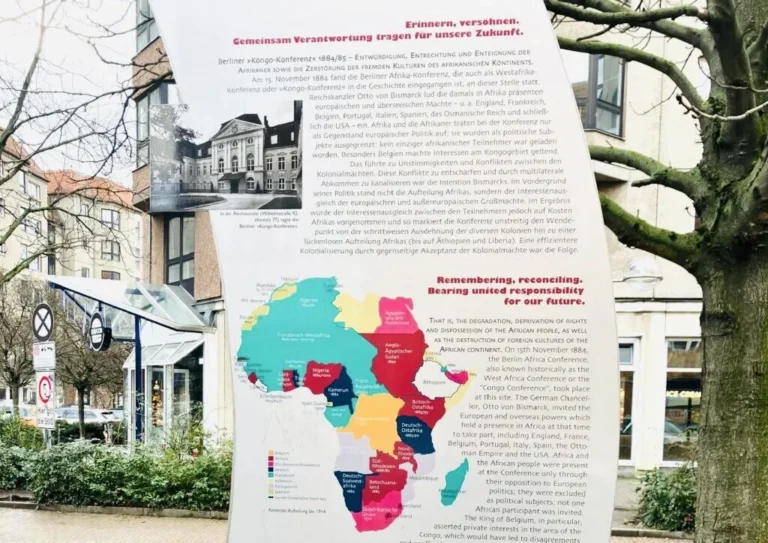
[in German] Thomas Fues argues that the handover of six Maka ancestors in Freiburg University has not brought the breakthrough for the German-Cameroonian reappraisal of the colonial heritage that many had hoped for.
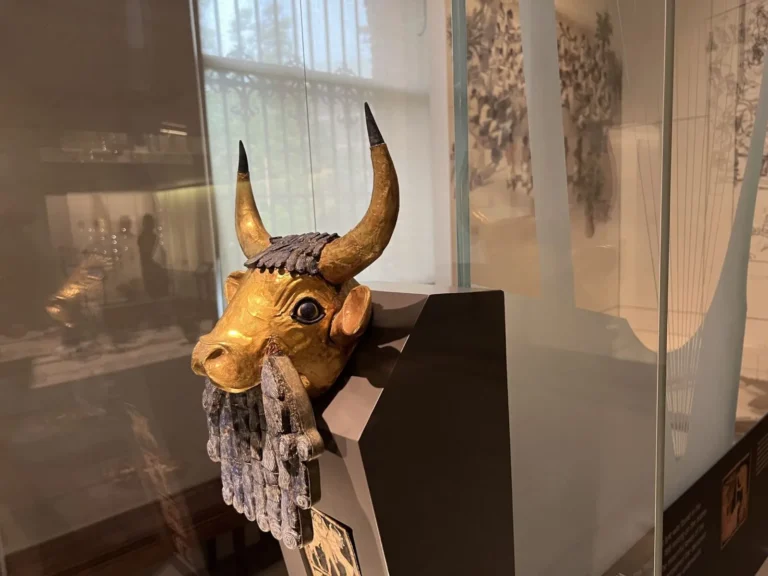
Amir Al-Khafaji writes: Western museums stripped my homeland (IRAQ) of its ancient soul under the banner of "civility." Today, they hold my ancestors’ legacy behind paywalls.
Language and culture advocate Gulwanyang Moran writes: Be honest with each other about history. Archives on this continent were working tools of colonial administration: mission records, protection board files, the paperwork of surveillance and control over Aboriginal lives. Many of our languages survive in the records of the very systems that punished our old people for speaking them.
ThomasFues writes about a recent report by the Culturebene portal in Cameroon that the government there is getting serious about the repatriation of human remains and cultural belongings from Germany. It is reported that Culture Minister Bidoung Mkpatt has granted the Maka community permission to recover the remains of their ancestors that were looted in 1905.
Emotional Provenance refers to the emotional, spiritual, ritual, and affective histories embedded within artefacts through their creation, use, displacement, performance, and institutional representation.
Ahmad Mohammad writes: As a wave of NAGPRA repatriation filings hit the Federal Register, this article asks what repatriation cannot reach, and why the limit is not accidental.
Ahmed Mohammad examines Germany's new Coordination Council for Returns of Cultural Property and Human Remains from Colonial Contexts — weighing what it genuinely achieves against the structural challenges that remain. The council's limitation is that it remains unclarified whether it will issue binding rulings or operate in an advisory capacity. The question of human remains is where this limitation is sharpest.
Paul P. Stewens wonders: The restitution of cultural property has become a hot topic. Museums grapple with restitution claims and colonial legacies. Did I say museums? I meant to say: cultural museums that house artworks, antiquities, or ethnological collections. Natural history museums, on the other hand, have barely been touched by the general turn to restitution. Why is that?
Alioune Samb writes: As part of my research, I developed and tested a system called SYDOCOM. Not to “add voices”. But to create conditions where different forms of knowledge can exist without being reduced to a single authorised version.
Coloniality is ever-present. Even decades after the period of formal colonisation has ended it has persisted through structural forms of privilege and bias. Beyond their more obvious manifestations such as the racial stratification of labour and the proliferation of inequality and racism, there is the coloniality of knowledge, which is hard to discern and much more insidious to overcome.
In new episode of podcast "Decolonial Memories", Flaubert Djateng, coordinator of the civil society organisation Zenu Network in Cameroon, talks about remembrance work on the German colonial era in his country.
Ahmad Mohammed: Digital collections have become core infrastructure for heritage work. But as collections move online and become more searchable, recombinable, and transferable, “good stewardship” is no longer only a technical matter of storage and backups.
Centuries of colonisation and exploitation have substantially determined the fact that museums in the West own collections of art that originated from their former colonies. Anaïs Mattez historicises the development of restitution from museums. She sheds light on the mutual influence of post-colonial studies, art crime, and international law.
The V&A’s collection includes nearly 200 Ethiopian objects – from metalwork and textiles to photography, manuscripts, and paintings. One of the most exciting outcomes of this research, Molly Judd writes, was uncovering records for objects that had effectively become hidden within the collection.
In 2022, the Republic of Indonesia submitted an official application for the collection’s restitution after which the Dutch State Secretary for Culture requested the Colonial Collections Committee to provide advice on this request. In 2025, the Netherlands transferred it to Indonesia. This Blog offers a reflection.
[ in French ] In the 19th century, the concept of "Asian art" gradually gained prominence in the European market, driven not initially by collectors, but by dealers, the true intermediaries between Asia and Europe. This phenomenon took root in a context of forced opening of Asian territories: the Treaty of Yedo (1858) with Japan, the Treaty of Tianjin (1858-1860) with China, and the Treaty of Saigon (1862) with Vietnam.
Ahmad Mohammed writes: Sacred objects, ancestral remains, and ritual artifacts remain estranged from the communities that created and cherished them. This condition is what many scholars and practitioners now identify as cultural heritage alienation: the systematic displacement of heritage from its social, spiritual, and cultural lifeworlds into the frameworks of Western curatorial authority. But community control is crucial.
Museums hold thousands of ‘things’ from all around the world. In larger institutions like Te Papa, the histories of these ‘things’ are not always known. This blog is looking at ways to start recovering these lost stories and histories.
Thomas Fues writes: the German government emphasises its willingness to confront Germany’s colonial history and its consequences. But it remains to be seen whether and how such declarations of intent at the beginning of the legislative period will actually be implemented in the coming years.
The June 2025 report by a working group of Edinburgh University DECOLONISED TRANSFORMATIONS CONFRONTING THE UNIVERSITY OF EDINBURGH’S HISTORY AND LEGACIES OF ENSLAVEMENT AND COLONIALISM focusses mainly on slavery an its current impact. At the en dit has an interesting recommendation for the university's Anatomical Museum and its 200 skulls.
Since 2018, the Association on American Indian Affairs has monitored 1,159 auction houses worldwide and provided auction alerts regarding the sale of sensitive cultural heritage. The Association’s work to monitor domestic and international auctions help fill this gap by identifying and reporting items that may warrant repatriation. The alerts have been shown to stop improper sales and support the return of important items.
Within the national museum context, the Repatriasi exhibition risks becoming a missed opportunity to critically engage with the afterlives of returned objects, beyond marking their physical return.
During the 19th century colonial wars, the library of the rulers of Palembang in Sumatra was looted by British and Dutch troops; its manuscripts were transported to other places and some of them are lost. Alan Darmawan looks for traces of some of these mishandled treasures.
Zainab Tahir: The Marine Heritage Gallery, a gallery managed by the Ministry of Marine Affairs and Fisheries in Jakarta, sparked conversation about the complexities surrounding the display of three thousand commercially salvaged artefacts.
Ahmad Mohammed writes: Immersive technologies and digital repatriation are reshaping heritage practice—opening up new possibilities for connection, access, and repair. But are we asking the right questions?
Heritage interpretation—the process through which meaning is assigned to the material and immaterial traces of the past—is never a neutral act. It inherently involves questions of power, identity, and authority, writes Ahmad Mohammed.
The (black-red) coalition agreement of Conservatives (CDU/CSU) and Social Democrats (SPD) in Germany contains remarkably positive statements on dealing with the colonial legacy.
Te Papa collection manager and kaitiaki taonga Moana Parata brings home a precious taonga, a raranga vest collected by Carl Freeze, an American Mormon missionary in the early 1900s.
A European art collector challenged Conan Cheong's commendation of the Dutch Government’s return of the Singhosari stone Bhairava, Nandi, Ganesha and Brahma statues to Indonesia the year before.
When repatriation has been largely framed within nation-state contexts, what does it mean to truly foster inclusivity in this process? Is it essential to involve the communities directly affected for such inclusivity to be achieved? What insights can we gain from community-led repatriations regarding local priorities, needs, and cultural practices?
Argentina has one of the most important and sensitive bioanthropological collections in Latin America. Most of the remains in museums come from Tehuelche and Mapuche victims of the so-called "Conquest of the Desert". However...
This blog discusses the necessity for a comprehensive monitoring system for tracking restitution efforts involving cultural belongings and ancestral remains in Latin America.
‘In 1894, two colonising powers faced each other across the narrow strait between the islands of Bali and Lombok. One was the Netherlands East Indies, the other the kingdom of Lombok, ruled by a settler regime from Bali that dominated the island’s indigenous Sasak population.'
Once, The Art Newspaper called the historical relationships of the art trade with museums a ‘foggy world’. That was in 2016. I dare say the relationship of trade with museums still is very foggy. How does this relationship look like?
During the European expansion constant fighting and violence and the taking of spoils of war went hand-in-hand. Palaces, shrines, homesteads and entire villages were plundered and destroyed. In the restitution debate, the focus is mostly on state-collections resulting from these confrontations. There is ample evidence, however, that many more parties were involved. This blogpost has soem of the evidence.
Why is research into colonial collections in the private sector - I mean art dealers, auction houses and private collectors - so tough? The main reasons is that most of them have built a wall around themselves, and there is rarely a hole in this wall through which an outside observer can look inside their closed bulwark.
What’s in a name? The language we use tells us who is speaking, from what perspective, and (implicitly), who controls the narrative. Names, in short, have power.