Gunther Fehlinger-Jahn's 2028 campaign pledge puts one of the world's most significant pre-Columbian artifacts back in play and signals how repatriation politics are reshaping what institutions can keep and what collectors can trade.
For more than a century and a half, Ethiopian manuscripts have travelled far from the churches, monasteries, and royal collections where they were created and preserved. Most crossed borders through looting and entered private collections, museums, and the international antiquarian market through chains of ownership that are now difficult to reconstruct. For Ethiopia’s scattered manuscript heritage, the journey home is gaining momentum—but remains far from complete. Is Ethiopia's effort indicative for a turning point in the restitution discourse?
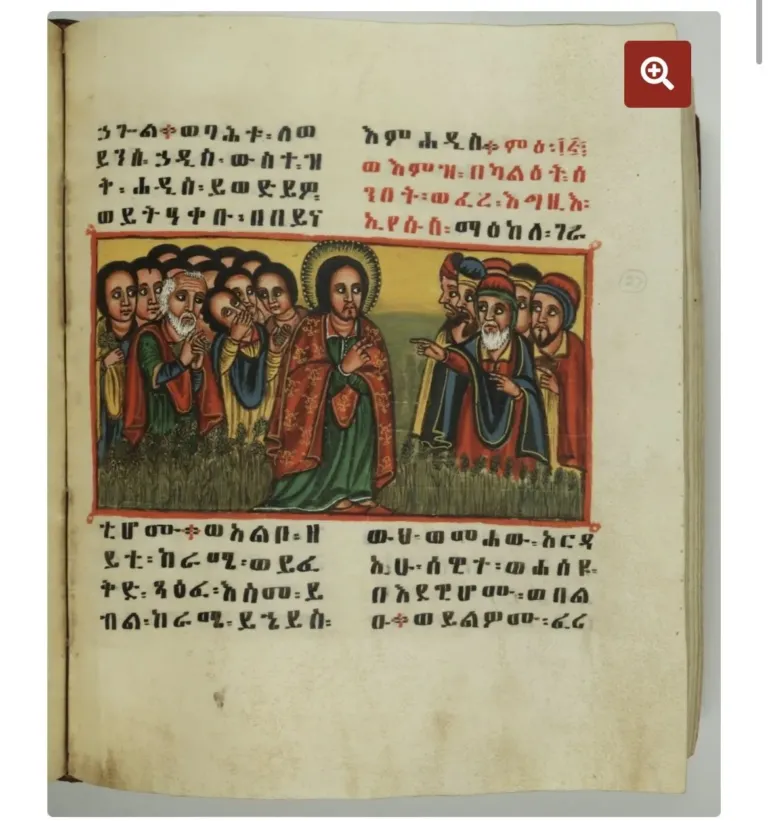
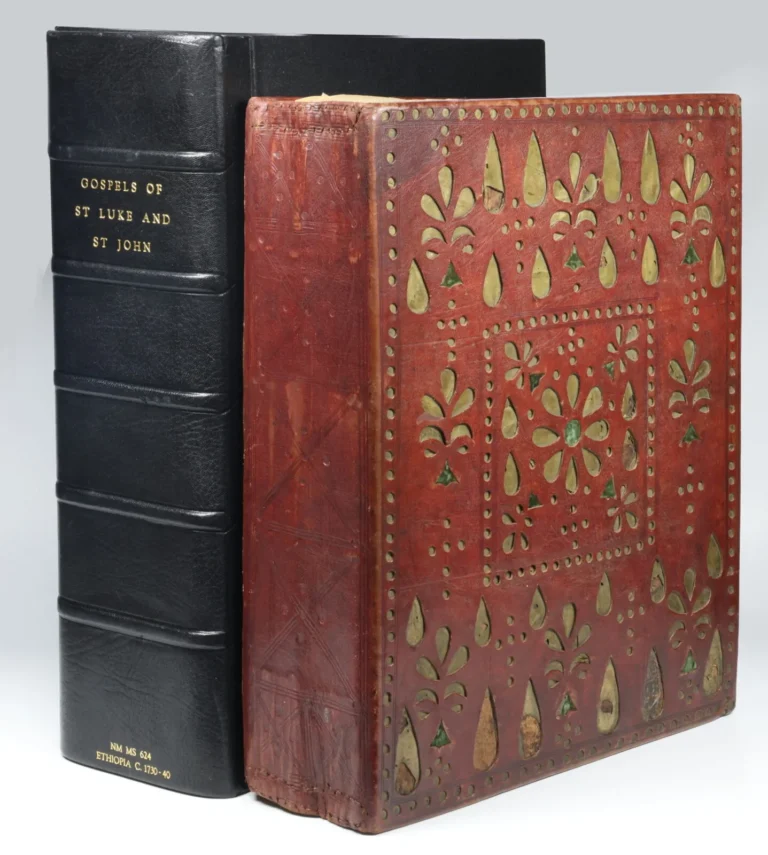
The Ethiopian Heritage Authority has initiated high-level discussions to block the auction by INLIBRIS of a sacred, richly illustrated ancient manuscript once linked to Emperor Tewodros II. The artifact was scheduled to be auctioned from September 13 to 18, 2026, coinciding with exhibition events in Abu Dhabi. RM* reported earlier about this.
This large Ethiopian manuscript, written in Ge'ez on vellum circa 1730-1740, preserves the Luke and John half of a celebrated two-volume royal Gospel commission, forming the companion volume to the Gospels of Matthew and Mark now in the Bavarian State Library. Date 13 September 2026. Auction House INLIBRIS Gilhofer Nfg, Abu Dhabi. Asking price €250,000. On 6 September 2026, INLIBRIS sold already the 108 manuscripts comprising Zemen collection.
Edna Arisbet Roque García's PhD project analyses restitution governance and the role of imperial museums in the foreign policy of states, with Germany as the main case study. The project demonstrates to what extent the restitution governance involves dialogue of interests, negotiation between states, and even the management of political repercussions. This is compared with the situation in Austria and in Switzerland.
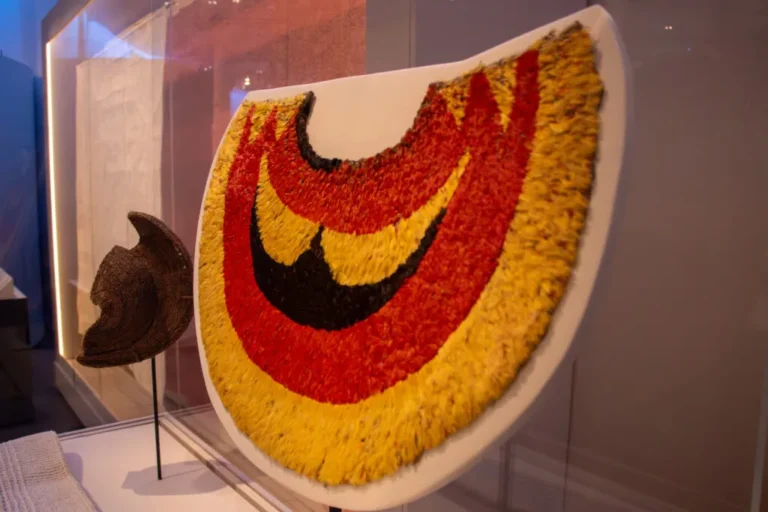
Makana Eyre thinks that the exhibit at The British Museum, “Hawaiʻi: a kingdom crossing oceans,” poses questions that have historically been uncomfortable for museums. Many items, though certainly not all, are sacred, intrinsically linked to ceremony, community, even Hawaiian sovereignty.
Join us on Sept 16 | 16:00–21:30 | Kulturhaus Brotfabrik - World Premieres of Eternos Retornos and other films, with installations by Repatriates, and a dinner ritual inspired by the counter vibration physics of the headdress. This is more than art. It is a call to return what was taken.
This workshop marks the conclusion of the interdisciplinary provenance research project "Human Remains from Colonial Contexts: Provenance Research in the Anthropological Collections of the University of Göttingen and MARKK Hamburg".
In the late 1800s, Andreas Reischek, an Austrian scientist, robbed Māori graves and plundered Māori artefacts for his private collection. More than 140 years later, officials of the Austrian government have been repatriating what Reischek looted.
The Austrian government aims to propose legislation governing the restitution of objects in national museums acquired in a colonial context by March 2024.
This publication compiles information on 39 institutions in museums and universities in German-speaking countries that have accessioned, altogether, almost 19,000 pieces of tangible cultural heritage produced in Namibian communities over a period of time of more than 160 years (pre-1860s to date).
The project, running until March 2025, highlights objects associated with the ship Saida. His Majesty's Ship Saida was built in 1878 and sailed from the main naval harbour of the Austro-Hungarian monarchy in Pula, Croatia. From 1884 to 1897, ship's doctors and other crew members collected objects, partly on behalf of the museum, during four so-called training voyages.
[ in German ] The draft law on the return of cultural property from colonial contexts has been shelved for the time being. It did not meet with the approval of the ruling Österreichische Volkspartei ÖVP (Austrian People’s Party).