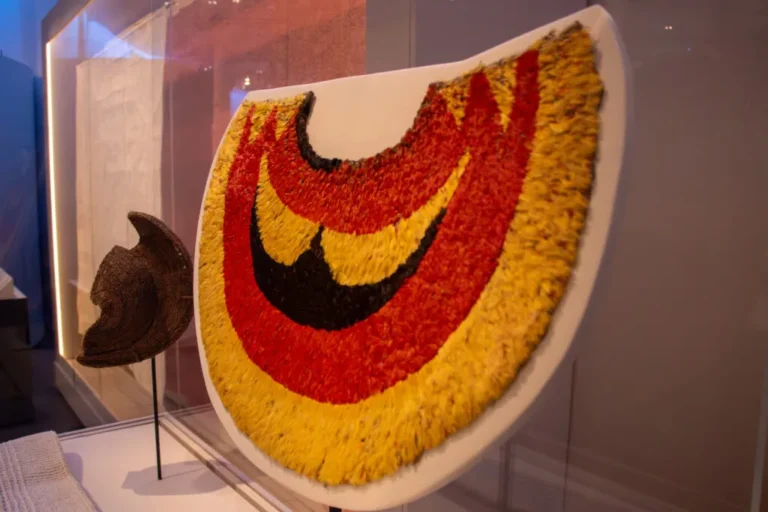
Makana Eyre thinks that the exhibit at The British Museum, “Hawaiʻi: a kingdom crossing oceans,” poses questions that have historically been uncomfortable for museums. Many items, though certainly not all, are sacred, intrinsically linked to ceremony, community, even Hawaiian sovereignty.
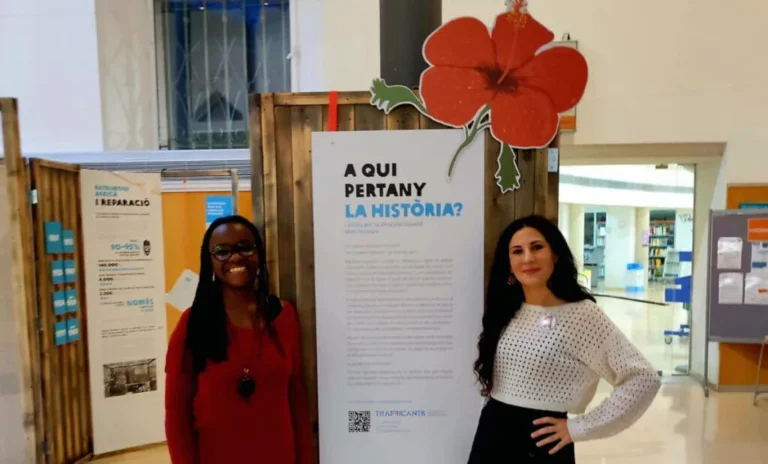
The Catalan project "(Tr)African(t)s. Museums and collections of Catalonia in the face of coloniality" has recently created a travelling exhibition titled “To whom does history belong? Struggles for the decolonization of museums". This exhibition “invites us to reflect on the role of museums in colonial history and to rethink heritage from a critical perspective."
[ in Spanish ] The work of the two expert committees created by Ernest Urtasun, Minister of Culture, to "overcome and challenge the Eurocentrism" of these two institutions, has concluded after six months with the delivery of two projects outlining concrete guidelines for renewing their museographic narratives.
The decolonisation of museums worldwide is an unstoppable process. Spain aimed to join the wave of museological decolonisation. In the case of the Canary Islands, this practice presents a series of peculiarities related to their unique historical process.
[ in Spanish ] The exhibition recovers key moments from the decades of 1880 and 1990, when the first restitutions of human remains and the demands for patrimonial return to our context were produced.
[ in Spanish ] This special issue of Revista Memorias Disidentes shows debates and reflections on restitution, repatriation, return and reburial of ancestors in South America.
Tim Maxwell: Repatriating artefacts found underwater could help former colonial powers meet moral obligations to countries they had historically exploited for their transatlantic slave trade.
Creative pursuits in Spain face the challenge of purging the country’s colonial vision, critically reviewing its relationship with the Americas and overcoming a gender bias. + Pedro Antonio Cano, a 7-foot man from South America
[ in Spanish ] The Spanish Minister of Culture, Ernest Urtasun, has reported to the parliamentarian Commission on Culture about the review of the “colonial framework” carried out in Spanish museums, institutions “anchored in gender or ethnocentric inertia that have often hindered the vision of heritage, the history and artistic legacy”. Conservatives are against.
Spain maintains unwavering ownership of the Quimbaya Treasure, dismissing Colombia’s legal and diplomatic efforts to reclaim the pre-Columbian artifacts donated to Queen María Cristina in 1893. Both nations stand at a crossroads over the fate of 122 golden pieces, symbolizing cultural heritage and historical legacies intertwined with colonial conquests.