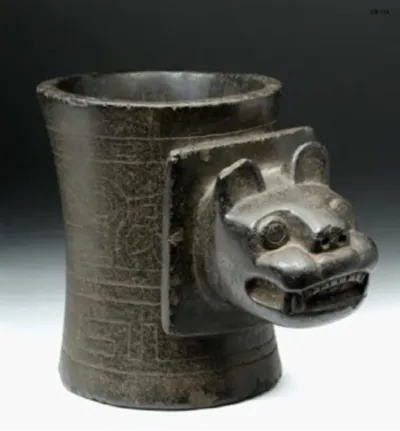
Australia’s High Court has upheld the forfeiture of the pre-Columbian basalt artefact under the Protection of Movable Cultural Heritage Act 1986 (Cth) (the Act), despite the cultural object having been exported more than 30 years before the Act came into force.
The Australian Museum has returned remains of 17 Rapa Nui people to their rightful home of Easter Island. They were removed from sacred burial sites in 1882 by a German naval expedition, and sold to the Sydney-based museum, where they have remained for more than 140 years.
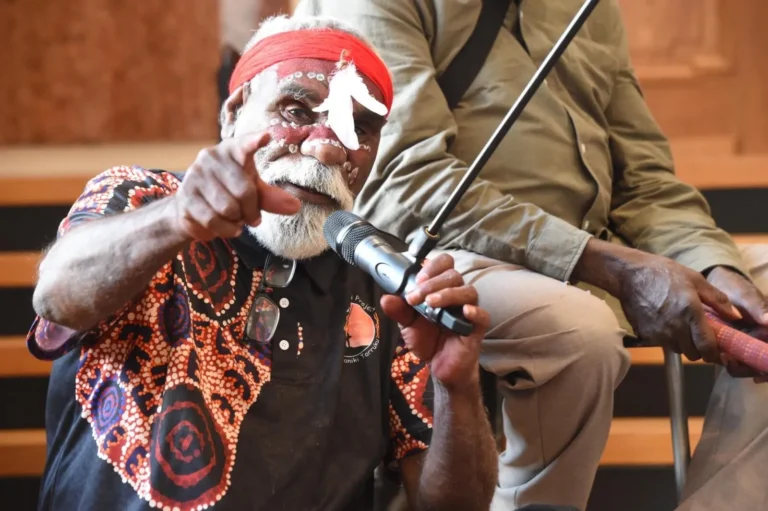
Since 2019, a number of sacred objects and ancestral remains have been repatriated to the Warlpiri people of Yuendumu community north-west of Alice Springs in the middle of Australia. For them repatriation is about healing the community, but in particular healing the young men and women of their community, writes Jamie Hampton*. In this Blog, he shares his story about the Yuendumu community and how repatriation has helped them heal from past injustices, providing pathways for the next generations of Warlpiri to ensure they live a life grounded in culture in a changing world.
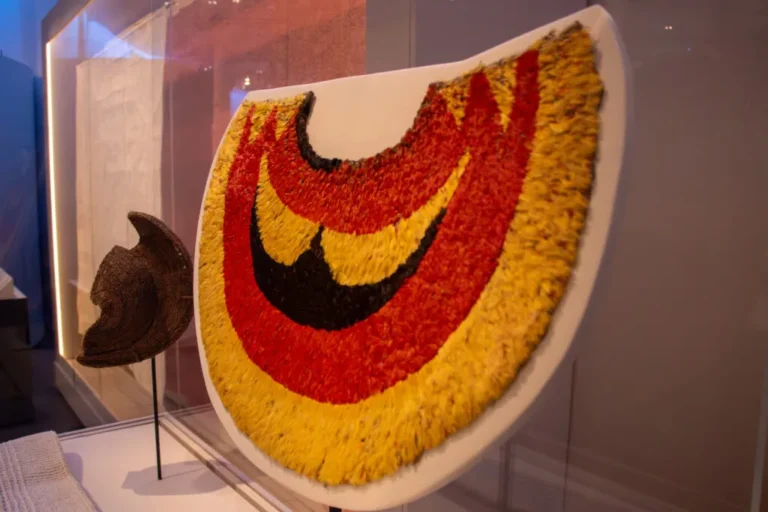
Makana Eyre thinks that the exhibit at The British Museum, “Hawaiʻi: a kingdom crossing oceans,” poses questions that have historically been uncomfortable for museums. Many items, though certainly not all, are sacred, intrinsically linked to ceremony, community, even Hawaiian sovereignty.
More than 1,790 Aboriginal and Torres Strait Islander ancestral remains have been repatriated from 11 countries over the past 35 years. An unknown number remain abroad. Eight major museums can apply for up to $100,000 a year in federal funding to support the return of ancestors and cultural objects.
Bella d'Abrera writes: The decolonisation movement is making headway in Australia’s museums and libraries which are adopting dangerous politics which will ultimately call into question their very existence. In trying to erase the past, we erase ourselves. (It is an older article but worth offers an anti-restitution perspective)
It is well known that Australia's police perpetrated violence against First Nations throughout the colonial period, but their role in supplying Indigenous ancestral bodily remains and cultural heritage objects to domestic and overseas museums is little understood, nor too is whether they exceeded or abused their powers in doing so.
Seven years ago, two men found a bronze Ming Dynasty Buddha statue on a roadside in WA's Shark Bay region, Australia. Tests confirmed the Buddha had been buried for 150 years and is probably linked to the beginnings of WA's pearling industry, which was pioneered in part by Chinese people. The two men want it to be handed over to the Chinese government as a symbol of peace and diplomacy.
Kulasumb Kalinoe (East Sepik area, Papua New Guinea; currrently James Cook University, Australia) focuses on the collection and removal of cultural material from Papua New Guinea (PNG) during the colonial era. She discusses views among the Papua New Guinean diaspora in Australia on museums and PNG collections, and argues that cultural heritage issues must be addressed before the work of decolonisation can begin.
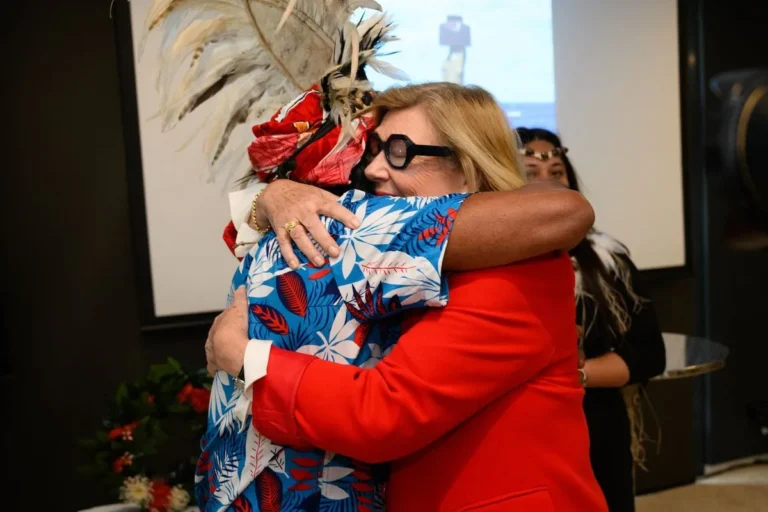
Two pou - ornate carvings - that have been in the South Australian Museum's collection for more than 130 years are now destined for New Zealand after a ceremony in Adelaide on Tuesday.
Palmanova paid USD$17,340 for the object. But when it was sent by Fedex to Melbourne, it was seized under the Protection of Movable Cultural Heritage Act. And now, the High Court found the artefact was subject to forfeiture, because it is protected.
Paul Dailey (Guardian Australian columnist) writes: Bodies and body parts have long been part of collections of imperial plunder over the years – but museums must understand that attitudes have moved on.
On March 14, the remains of eight Mirning ancestors were returned to their country and buried. The ancestors lived between the late 1800s and 1979, and their remains had most recently been stored at the West Australian Museum.
Indigenous artefacts will be returned to their ancestral home on Mornington Island in Queensland's Gulf of Carpentaria. More than 3,000 kilometres away in Victoria, Baw Baw Shire staff uncovered the 37 articles in storage.
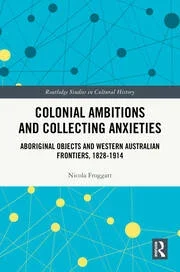
In her book 'Colonial Ambitions and Collecting Anxieties: Aboriginal Objects and Western Australian Frontiers, 1828–1914' Nicola Froggatt assesses how non-Aboriginal collectors understood Aboriginal objects, and what this reveals about colonial relationships, anxieties and ambitions.
This dissertation investigates the histories and itineraries of Abelam collections from the East Sepik Province of Papua New Guinea held in museums in Europe (the Netherlands, Germany, Switzerland and the UK), Australia and Papua New Guinea.
Europeans collected a huge number of Aboriginal artefacts during the colonisation of Australia. Gemmia Burden's research is on the Queensland Museum’s collecting networks.
Police played an important role in the collecting of Aboriginal objects for colonial and imperial museums. Although most scholars have noted the unequal power relationship that occurred when police ‘collected’ Aboriginal objects on the frontier, scholarship has not previously explored the ‘authority’ of the police to collect objects.