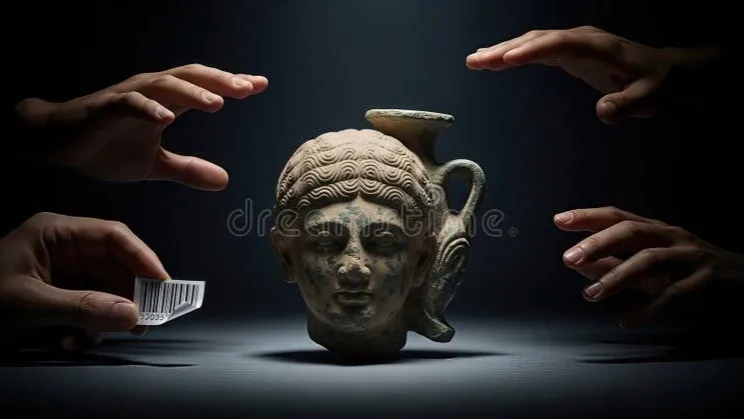
The landscape of cultural property restitution has undergone a fundamental transformation over the past three decades. What was once a world governed by gentlemanly agreements between dealers, collectors, and museum curators has become a forensic battleground where digitized trafficking archives, scientific testing, and aggressive legal enforcement determine the fate of objects. This document provides a comprehensive analysis of the current state.
Bradley J. Gordon, Melina Antoniadis & Sokunthyda Long write: Cambodia is among the countries most profoundly affected by the large-scale looting of cultural heritage, particularly from the 1960s to the 1990s—before, during, and after civil war and genocide—as well as during the French colonial era, which saw the large-scale removal of artifacts.
Ganga Rajinee Dissanayaka discovered at a conference in Europe that Benin Bronzes, Egyptian antiquities and African collections were discussed. But Asia was unmentioned. And then when a colleague from Indonesia brought up the topic of Southeast Asian collections, the moderator nodded graciously and then moved on to another topic. Decolonisation, it appears, is an African story.
Growing pressure on European museums to return artifacts taken from Southeast Asia during colonial times could provide soft-power benefits for the EU amid attempts to improve its image in the region, analysts say.
The British Museum (‘BM’) has a collection of 224 objects from or likely from Cambodia, which were acquired across a period spanning from the end of the nineteenth century to the beginning of the twenty-first century. In this figure BM’s collection of banknotes, coins and medals from Cambodia is not included.
The looting of Cambodia’s sacred temples, in the dead of night or under the cover of the fog of war by unscrupulous thieves, took place over many decades up until the 2000s. Now, a host of museums are investigating their own collections.