How can we trace and reconstruct the provenance of objects, collections and ancestral remains that were amassed in the past, and are now placed in museums as mundane and lifeless objects frozen in a timeless past without adequate information and context? The renewed interest in provenance research can be understood as part of the broader agenda to decolonise these museums.
[in English, in Mozambiquan Portuguese] The five texts in this richly illustrated issue nr. 9 of Troubles dans les Collections trace how new local contexts in Mozambique and global debates have resonated in the country since the restitution debate gained heightened visibility. Civil society actors play a crucial role in raising the restitution issue.
[in French] Issue 2025/8 of L’essor des contre-muséologies is about several types of museums. Confronting the dominant model of the museum—born of the French Revolution and rooted in bourgeois values—reformist museologists strive to democratize it, while popular or community-based initiatives attest to its rejection.
Australian Aboriginal Studies (AAS) is a peer-reviewed journal that combines academic rigour with research excellence. Issue nr 2/ 2025 has a number of articles relevant for RM*.
Christian missionary collections have contributed much to the development of the exhibitionary complex, but have received significantly less notice than imperial states using violence to acquire collections, and subsequent demands for restitution.
[ in English, French and Spanish ] From a continental European perspective, islands have long been considered as separated and isolated spaces, disconnected from one another and from the rest of their environment. This special issue of the ICOFOM Study Series rethinks such a perspective on islands by bringing together papers from around the world that draw on alternative views, notably from the Pacific and Caribbean regions concerning oceanic islands.
[ in Spanish ] This special issue of Revista Memorias Disidentes shows debates and reflections on restitution, repatriation, return and reburial of ancestors in South America.
Rematriation is more than the return of land or cultural items. It is a sacred process of restoring Indigenous relationships to land, water, language, and spiritual responsibility.
[ in Dutch ] Tervurologie sets its sights on the AfricaMuseum and radically bets on imagination - to think new Tervurens, plural. Not as escape, but as intervention. Not as recovery, but as restart. Not as an answer, but as another question. Tervurologie is an attempt at exorcism.
This Provenance Research Reports Series shows the variety of approaches to provenance research on specific objects, collections, collectors, and regions. This is the first of four issues.
In the last three decades, museums and museological practices that are fundamentally based on Western knowledge systems have been strongly questioned by a collective that includes Indigenous Peoples, political activists, representatives of civil society and scholars.
The latest issue of the "International Journal of Heritage Studies" (Volume 31, Issue 3, 2025) is out! This issues features a series of articles on "virtual repatriation", "the symbolic violence of heritage consultancy", "the heritage value of emptiness", etc.
[ open access ] This Special Issue of UMAC Journal has a Guidance for restitution and return of items from university collections and interesting contributions about ancestral remains in these collections.
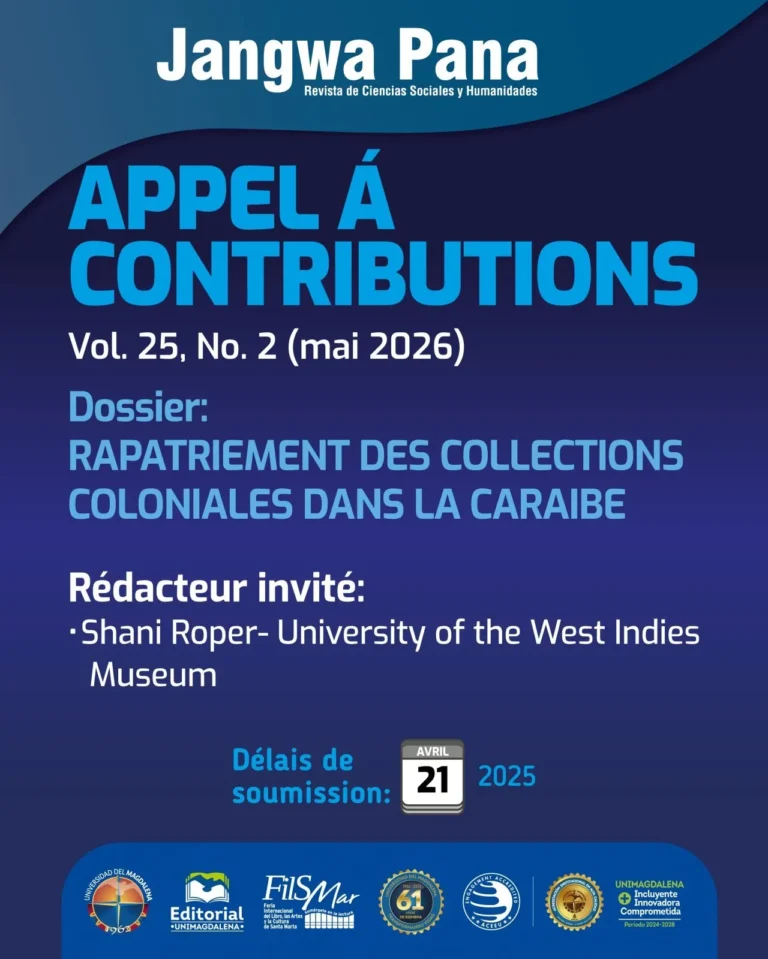
[ in English, French and Spanish ] This call invites researchers and academics from all areas of social sciences and humanities to submit their work for a special issue of Jangwa Pana dedicated to the repatriation of colonial collections in the Caribbean. Deadline 21 April 2025.
The American Alliance of Museums has brought out a special issue Museum as part of a larger project exploring the next horizon of museum practice with regard to voluntary repatriation, restitution, and reparations. The articles in this issue provide a window into practices regarding the Benin-objects, lost items of the Yaqui, voluntary returns, and the application of NAGPRA.
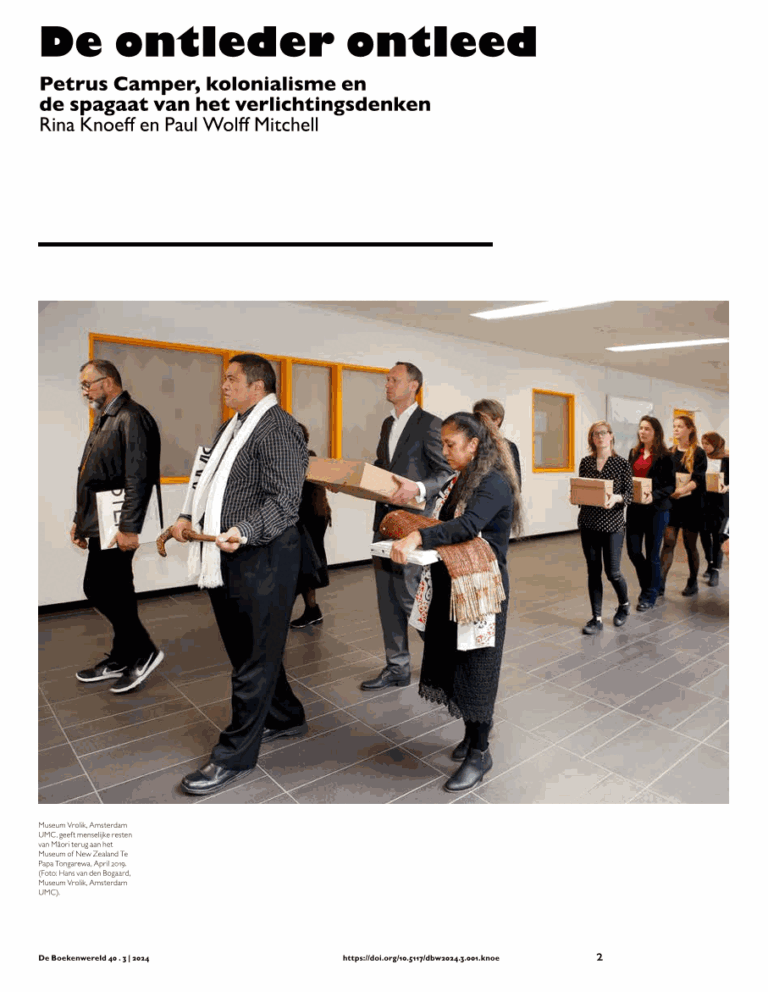
[ in Dutch ] The University Museum Groningen has a collection of human remains from Petrus Camper (1722-1789). Where do they come from and how can their presence there be understood? This issue of Magazine De Boekenwereld is about Camper, his ideas and his collection.
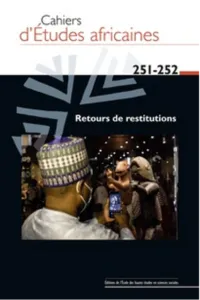
[ in French ] While the restitution of African cultural property polarizes debates, how can the voices of return be heard? How can we designate these things, objects, artifacts, goods or works returned or expected on the continent? How can we account for points of view, imaginations and frictions around their futures?
[ in Dutch ] The University Museum Groningen has a collection of human remains from Petrus Camper (1722-1789). Where do they come from and how can their presence there be understood? This issue of Magazine De Boekenwereld is about Camper, his ideas and his collection.
(In English, French and Spanish) This issue of ICOFOM Study Series is the result of an international seminar at the University of Marburg in Germany in June 2024, where a wide range of speakers from the global south and north met.
(In English, Italian and French) The central issue examined in this impressive collection of essays is how to respond to the desire of African-origin communities to reclaim what was taken from them.
This special issue of Museum & Society (open access), Mobilizing Museum Minerals: Critical Approaches to Mineralogical Collections, showcases burgeoning critical approaches to the collection, interpretation, and display of mineralogical specimens in museums while expanding understandings of their transformative potential in an era of rising ecological injustice.