Why is research into colonial collections in the private sector - I mean art dealers, auction houses and private collectors - so tough? The main reasons is that most of them have built a wall around themselves, and there is rarely a hole in this wall through which an outside observer can look inside their closed bulwark.
Why is research into colonial collections in the private sector - I mean art dealers, auction houses and private collectors - so tough? The main reasons is that most of them have built a wall around themselves, and there is rarely a hole in this wall through which an outside observer can look inside their closed bulwark.
[ in Dutch ] The theme of 'looting art' is back on the agenda, as more and more requests are coming in from museums to bring collection pieces back to former colonies.
During the European expansion constant fighting and violence and the taking of spoils of war went hand-in-hand. Palaces, shrines, homesteads and entire villages were plundered and destroyed. In the restitution debate, the focus is mostly on state-collections resulting from these confrontations. There is ample evidence, however, that many more parties were involved. This blogpost has some of the evidence.
Since 2017, Berlin's Museum of Prehistory and Early History has been carrying out research on around 1,100 skulls from what was known as German East Africa.
Manchester Museum, UK, has handed over 174 items to the Australian Aboriginal Anindilyakwa Community, marking one of the largest restitution projects ever undertaken in the UK.
A project to investigate the origins of human skulls taken from the former colony of German East Africa has concluded that nearly all are the remains of people from the same colonized region
Museums from Glasgow to Cambridge are proactively repatriating objects. Glasgow has become the first UK museum to repatriate objects to India (“a very emotional event”, as Glaswegians of Indian heritage said).
[ in French or in English ] Provenance research into non-Western heritage in Europe has become a must in the field of museology and cultural policy. Yet no scientific work has yet examined the collections of the Royal Museum for Central Africa in Tervuren (Belgium) in their entirety.
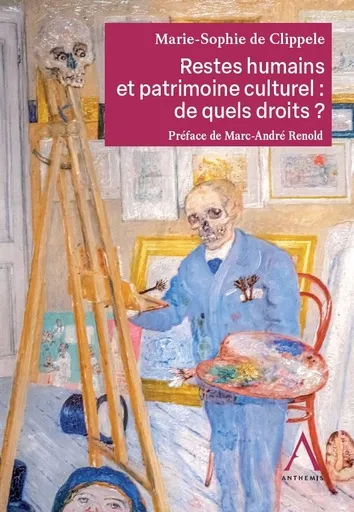
[ in French ] Marie-Sophie de Clippele’s book maps the numerous recent regulations relating to legal limitations on the marketing of objects and to assess their impact on the art market.
Archaeology in its formative years was often less a meticulous science than an exercise in vandalism. A little-known horror unfolded in the Southwestern United States.
The story of the discoveries is being told for the first time by Elisabeth Goring and her successor, Dr Margaret Maitland, in the Proceedings of the Society of Antiquaries of Scotland of 30 November 2023.
The American Alliance of Museums has brought out a special issue Museum as part of a larger project exploring the next horizon of museum practice with regard to voluntary repatriation, restitution, and reparations. The articles in this issue provide a window into practices regarding the Benin-objects, lost items of the Yaqui, voluntary returns, and the application of NAGPRA.
Germany asks forgiveness for 'dark' colonial legacy in Tanzania and discusses repatriation of human remains. German President Frank-Walter Steinmeier said his country would "open negotiations" with Tanzania to discuss the is colonial past in the East African nation.
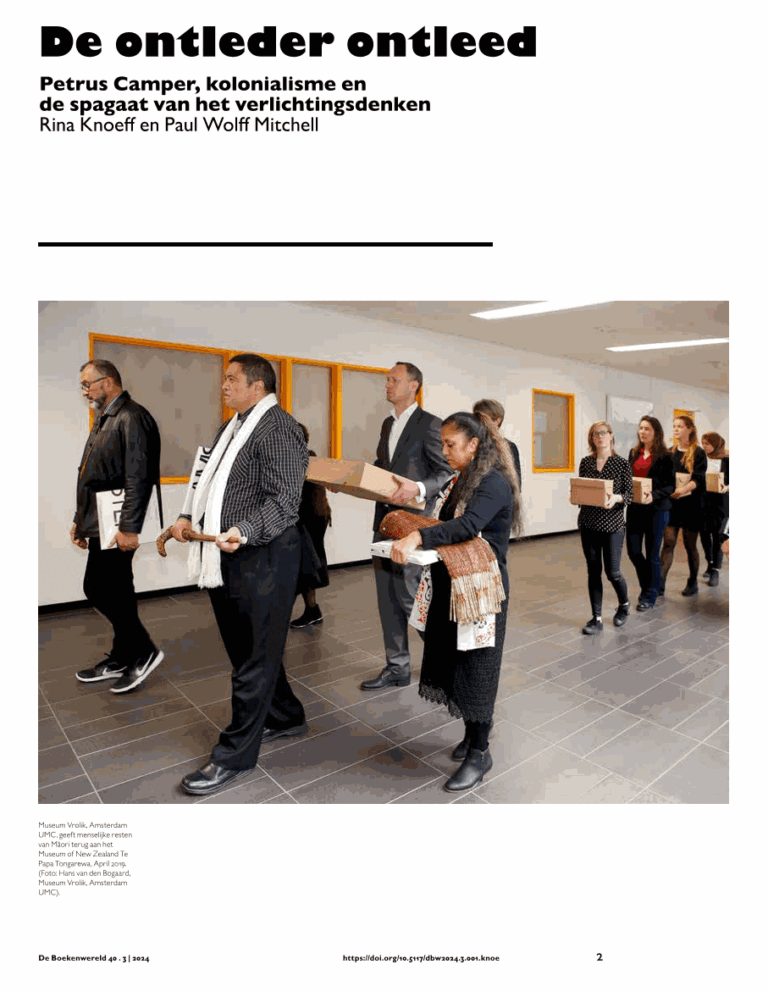
[ in Dutch ] The University Museum Groningen has a collection of human remains from Petrus Camper (1722-1789). Where do they come from and how can their presence there be understood? This issue of Magazine De Boekenwereld is about Camper, his ideas and his collection.
It might seem impossible to hurt the feelings of a 3,000-year-old corpse, but woke museum chiefs have stopped using the word 'mummy' to describe the remains of ancient Egyptians, all in the name of 'respect'.
Human remains held in French public collections and less than 500 years old, can now be returned to their countries of origin by a decision of the prime minister.
[ in French and in Dutch ] Although it is accepted that human remains are out of trade and therefore should not be sold, practice shows that this happens anyway.
A museum in Limburg has decided not to return five ornamental human skulls taken by missionaries from Papua New Guinea after the local population turned down the offer.
The Missiemuseum in Steyl investigated the origin of the artefacts in the wake of the controversy surrounding a skull from Benin that was sold by an auction house in Amsterdam.
In 1863, Emperor Tewodros II of Abyssinia took a British consul hostage; five years later, the British sent a punitive expedition. This military expedition shaped later campaigns in Sudan and West Africa in the1890s. What was new for Maqdala was the inclusion of a member of staff from the British Museum.
How do we trace the origin of collections? What new insights can be gleaned from these provenances? And what should become of such collections, within and beyond museum walls?
Three decades after legislation pushed for the return of Native American remains to Indigenous communities, many of the nation’s top museums and universities still have the remains of thousands of people in their collections.
Switzerland has returned four mummies to Chile, including two of them among the world’s oldest, after their private owner agreed to their restitution. Other remains, in an “advanced state of degradation”, buried in Geneva.
[ in Dutch ] What to do with the human skulls from Africa or Asia in their collection? The days when this kind of heritage could be easily in museums seem to be over. The call for return to the place of origin is louder and louder. But are they waiting for it there?
[ in German ] ‘African human skull, early 20th century, €2000’ - this is how dealers openly advertise human skulls on social media such as Instagram. Panorama reporters uncover just how dubious this trade is, especially when you realise the origin of these skulls.
[ in Dutch ] The University Museum Groningen has a collection of human remains from Petrus Camper (1722-1789). Where do they come from and how can their presence there be understood? This issue of Magazine De Boekenwereld is about Camper, his ideas and his collection.
Over the past several weeks, museums across the United States have been covering up and removing displays of Native American ancestors and cultural objects.
The documentary "The Empty Grave" traces the mission of two families in Tanzania that embark on an emotional journey to reclaim their ancestors’ human remains from German museums.
Tea sets, paravents, spears and shields – even if today’s heirs were not involved in their acquisition or theft, these artefacts are inextricably linked to German colonial history.
Some 17,000 human remains are said to be in the collections of German museums and universities. It's often no longer clear how they ended up in Germany. Colonialists committed horrific crimes.
Two great granddaughters of a Sakalava king, who was beheaded in 1897 by colonial troops, publicly addressed the French ambassador, asking him to speed up the repatriation of their ancestor’s skull.
Europeans collected a huge number of Aboriginal artefacts during the colonisation of Australia. Gemmia Burden's research is on the Queensland Museum’s collecting networks.
With tens of thousands of African artworks in French museums, curators face a huge task in trying to identify which of these were plundered during colonial rule in the 19th and 20th centuries and should be returned.
This report was developed as a response to the Truth and Reconciliation Commission’s Call to Action #67 under the guidance of the CMA Reconciliation Council.
Resist, Reclaim, Retrieve - The Long History of the Struggle for the Restitution of Cultural Heritage and Ancestral Remains Taken under Colonial Conditions, brings together authors from countries in the Global South and North. They shed light on the long history of restitution claims from colonised countries, with a focus on the pre-1970 period.
An international group of two hundred scientists and specialists in predatory art protests against the trade in human remains by the Amsterdam auction house De Zwaan. It is a skull of a person of the Fon people from Benin. The skull was sold last month for eight hundred euros.
Sarah van Beurden: What is new is the wave of research on the origins of colonial collections, and several projects – both academic and artistic – reflect on the larger cultural loss the removal of these objects caused in their communities of origin.
Police played an important role in the collecting of Aboriginal objects for colonial and imperial museums. Although most scholars have noted the unequal power relationship that occurred when police ‘collected’ Aboriginal objects on the frontier, scholarship has not previously explored the ‘authority’ of the police to collect objects.
Semley Auctioneers – based in Dorset – have made 18 skulls available for auction and estimate each skull will be sold for between £200 and £300. The auction is scheduled to take place on 18 May 2024.
Kodzo Gavua has called for an intensive education on the plunder of African cultural heritage objects and systems and the need for their return. Such efforts would help safeguard the nation’s cultural legacy and contribute to tourism and scholarly research.
On Wednesday (Nov. 20, 2024), Labour's Bell Ribeiro-Addy told the Commons that human remains are sold at auction and on social media and asked the government to end what she described as a "depraved practice."
[ in Portuguese ] Portugal has been doing little to develop knowledge on the provenance of its collections that came from former colonies. This can be partly explained by the lack of human and financial resources in archives, museums and universities.
In response to a request by the Mexican government, the Netherlands has decided to return a human skull which is part of the Dutch State Collection of Wereldmuseum Leiden to Mexico. The Ministry of Culture has handed over the skull to the Mexican embassy in The Hague.
[ in French ] Algeria has made a request for the return of objects that belonged to Emir Abdelkader, a great resistance fighter in the conquest of Algeria in the 19th century, who was defeated in 1847.
Some French parties pressure their country’s authorities to prevent them from responding to the requests submitted by the Algerian-French mixed commission concerning the restitution of some “symbolic” property that France had looted from Algeria during the occupation period.
The contents were two skulls molded with mud and three large effigies, called rambaramp, each containing the skull of a man, uniquely painted to depict the final stages of his life.
Sela K. Adjei and Yann LeGall (eds.): Debates around restitution and decolonising museums continue to rage across the world. Artefacts, effigies and ancestral remains are finally being accurately contextualised and repatriated to their homelands.
In 1905, a colonial British officer killed Koitalel Arap Samoei, the supreme leader of the Nandi tribe. According to oral history, his severed head was taken to the UK. The Nandi have been searching for it ever since. The Nandi have been searching for it ever since.
In the colonialist moves to collect human remains, and the desire to demonstrate grandeur and strength, many soldiers relied on racist and blood-thirsty narratives to rationalize their cruel actions.
The Museum of Cultures and the Natural History Museum in Basel, Switzerland, returned a collection of approximately 90 aboriginal artefacts, including human bones and tools, of Sri Lanka’s indigenous population.
(In English, French and Spanish) This issue of ICOFOM Study Series is the result of an international seminar at the University of Marburg in Germany in June 2024, where a wide range of speakers from the global south and north met.
The American Museum of Natural History (AMNH) institution holds the bodies of 12,000 individuals from communities within and outside the United States. The majority of which lack identification.
Over the centuries, a multitude of items – including a cannon of the King of Kandy, power-objects from DR Congo, Benin bronzes, Javanese temple statues, Maori heads and strategic documents – has ended up in museums and private collections in Belgium and the Netherlands by improper means.
In 'The Empty Showcase Syndrome - Tough Questions about Cultural Heritage from Colonial Regions', author Jos van Beurden explores three questions that slow down the restitution process.
(In English, Italian and French) The central issue examined in this impressive collection of essays is how to respond to the desire of African-origin communities to reclaim what was taken from them.
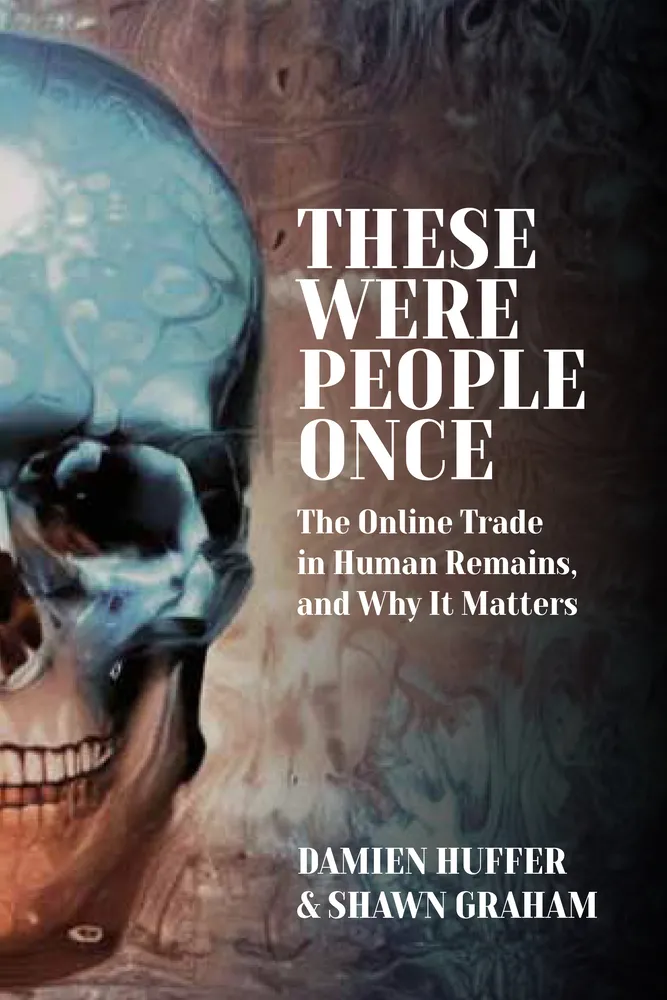
People buy and sell human remains online. Most of this trade these days is over social media. In a study of this 'bone trade', how it works, and why it matters, the authors review and use a variety of methods drawn from the digital humanities to analyze the sheer volume of social media posts in search of answers to questions regarding this online bone trade.
The Fine Arts Museums of San Francisco (FAMSF), which stewards the De Young Museum and the Legion of Honor, has begun consulting with Native tribes on how to return remains that were gifted, in some cases, over a century ago.
Nigerian creators Shobo and Shof, known for New Masters, are set to debut their latest project, Bronze Faces, a gripping art heist drama that brings real-world issues to the comic stage in 2025.
An estimated 350,000 African artefacts and manuscripts, as well as human remains, photographs and natural history specimens, have been found in the stores and archives of the eight museums and the Botanic Garden which together make up the University of Cambridge Museums, as well as the University Library and less-well known collections in university departments and institutions.
In a lengthy contribution, Kwame Opoku wonders how long the Ovaherero must wait for justice and reparation for the German genocide? He extensively quotes a press release of the Ovaherero Traditional Authority-Ouhonapare uo Mananeno uo Vaherero. Part of it is about repatriation.
More than 128,000 Native American ancestors and 4.5 million sacred objects have been identified in collections across museums, universities and government agencies. Those numbers don't include more than an estimated 90,000 ancestors and 700,000 associated funerary objects that have not yet been identified in collections.
It is seven years since President Emmanuel Macron of France announced his revolutionary plan to return African heritage to the continent. But following his declaration in Burkina Faso in November 2017 that “African heritage can’t just be in European private collections and museums”, the restitution journey has been arduous.
The project, running until March 2025, highlights objects associated with the ship Saida. His Majesty's Ship Saida was built in 1878 and sailed from the main naval harbour of the Austro-Hungarian monarchy in Pula, Croatia. From 1884 to 1897, ship's doctors and other crew members collected objects, partly on behalf of the museum, during four so-called training voyages.
In October 2024, a 19th-Century skull from the north-eastern Indian state of Nagaland was up for auction in the UK. The horned skull of a Naga tribesman was among thousands of items that European colonial administrators had collected from the state.
Justin M. Jacobs examined the allegedly immoral provenance of Western museum collections and challenges the widely accepted belief that many of Western museums’ treasures were acquired by imperialist plunder and theft.
As one of the oldest educational institutes in Scotland, the University of Edinburgh holds more than a million items in its historic collections. Around 13,000 are anatomical artefacts and of these, more than 1,800 are skulls. A large number of the skulls in the collection were amassed during the colonial period.
The contents were two skulls molded with mud and three large effigies, called rambaramp, each containing the skull of a man, uniquely painted to depict the final stages of his life.
Although there is no lack of information on individual repatriated works, the larger picture of where they came from and how, who is returning them and why can be lost in the anecdotes. This is where the Museum of Looted Antiquities (Mola) comes in—a new digital platform that traces not only the histories of specific repatriated objects but also compiles metadata in order to better understand smuggling networks and the museum industry’s intensifying repatriation efforts.
Anmol Irfan, a Muslim-Pakistani journalist, writes: Governments delay the process; museums often answer to wealthy donors. Complexities arise that require each case to be handled individually. But the first step of acknowledging the generational hurt and trauma caused by the removal of these culturally important and sacred artifacts has opened doors to broader solutions on a global scale.
For decades, families in Tanzania have been demanding the return of their ancestors’ human remains from Germany. These ancestors, executed leaders of resistance efforts against German colonial rule, were exhumed from their graves and taken to Germany. Cece Mlay discusses co-producing a new documentary on how their descendants are seeking justice and closure today.
Panorama of the Nord Deutsche Rundfunk wrote an extended commentary on a 35-minute-long documentary: ‘African human skull, early 20th century, €2000’ - this is how dealers openly advertise human skulls on social media such as Instagram. Panorama reporters uncover just how dubious this trade is, especially when you realise the origin of these skulls (in German).
Although there is no overarching framework for the repatriation of human remains at the international level, most repatriation efforts now operate within a more rigorous legal framework at the national and subnational level, which includes national laws and guidelines from public authorities.
2024 marks the 140th anniversary of the start of the historic Berlin West Africa Conference of 1884/85. Germany is working hard to come to terms with its colonial history, including restitution.
Germany was a significant – and often brutal – colonial power in Africa. But this colonial history is not told as often as that of other imperialist nations. A new book called The Long Shadow of German Colonialism: Amnesia, Denialism and Revisionism aims to bring the past into the light. It explores not just the history of German colonialism, but also how its legacy has played out in German society, politics and the media.
Exactly 130 years ago, the World Exhibition took place in Antwerp. For that occasion, 144 Congolese were exhibited at the KMSKA. Seven Congolese died. The AfricaMuseum, which has a similar colonial history in Tervuren, organizes an online MuseumTalk about the memory and commemoration of this tragedy. The speakers are a researcher, an activist and an artist.
In June 2024, 39 artifacts were formally handed back to the government of Uganda by Britain's University of Cambridge. While the return is technically a three-year loan between museums, it is extendable, and could see them remain in their country of origin.
Conference Sensitive Legacy in University Collections: Adaptation and Restitution, organized by the ANU Centre for European Studies in collaboration with The Urban Memory Foundation and the University of Wroclaw, Poland.
[ in Dutch ] Fifteen skulls originating from the Moluccas have been returned to the island group Tanimbar. These skulls had been part of the collection of Museum Vrolik, the anatomical museum of Amsterdam University Medical Centre, since the very early 20th century.
Until the late 1980s Indigenous art was being ripped off left right and centre. It was open slather. First at the cheap end of the market on T-shirts and then on fancy carpets made in Vietnam. The rip-off merchants maintained black artists were just painting old patterns, so their work was for the taking.
(Book in French; review in English) Claire Brizon describes in her 2023 book the military, traders and missionaries who collected in colonial regions; their collection culture and the use and meaning of the collections they had in Europe.
The return of artefacts to their countries of origin is not just an act of repatriation, but an opportunity for healing and reconnecting with cultural roots, said Tuuda Haitula, the museum development officer at the Museums Association of Namibia.
The Pennsylvania Museum’s Cultural Center in Philadelphia is launching a study that examines 450 museum collections, collecting policies and practices in the US and formulates a collection framework.
Early in October 2024, RM* distributed news about an auction by Swan Fine Art at Tetsworth (UK) of Naga human remains estimated at 3,500 – 4,000 UK pounds. This had infuriated the Forum for Naga Reconciliation and many others.
Thanks to Deneth Piumakshi Veda Arachchige, the Museum of Cultures and the Natural History Museum in Basel, Switzerland returned a collection of approximately 90 aboriginal artefacts, including human bones and tools, of Sri Lanka’s indigenous population this week.
[ in Dutch ] In colonial times, thousands of human remains ended up in Dutch museums. Soon, Moluccan activists will bring back 15 skulls single-handedly.
In July 2020, the Australian Government announced the introduction of the RoCH program with funding until June 2024. The research and community work continued and at the end of this period RoCH identified 383 overseas collecting institutions holding 126,000+ Aboriginal and / or Torres Strait Islander cultural heritage items.