The conference “Colonial Pasts and Contemporary Search for Justice: Interdisciplinary Perspectives on the Politics of Restitution and Redress for Colonial Violence” brings together experiences from different parts of the world, and perspectives in the field of transitional justice and (post-)colonial studies.
For several years, Bristol Museum and Art Gallery and the Australian Institute of Aboriginal and Torres Strait Islander Studies (AIATSIS) have been discussing returns of cultural heritage to Australia. This event will reflect on those discussions with community members and AIATSIS staff.
[ in Dutch ] How are Belgium and the Netherlands dealing with the sensitive issue of returning looted art and researching its colonial origins? An exploration of some treacherous areas in the quagmire of new Dutch and Belgian restitution policy. A discussion between museum director Wayne Modest and activist Nadia Nsayi.
[ French translation ] La France débat actuellement de la création d’un cadre juridique pour la restitution des collections publiques historiques, principalement d’origine coloniale. La Belgique dispose déjà d’une telle loi. Ce court article propose une comparaison entre les deux dispositifs – la loi belge et le projet de loi français – en se concentrant sur trois points :
• l’approche centrée sur l’État,
• le champ d’application,
• la procédure de restitution.
Reclaiming stolen artefacts: Africa’s landmark museum at the heart of global discussion about restitution.
Senegal’s Museum of Black Civilisations is asserting Africa’s right to secure its cultural heritage and tell its own story.
Museums hold thousands of ‘things’ from all around the world. In larger institutions like Te Papa, the histories of these ‘things’ are not always known. This blog is looking at ways to start recovering these lost stories and histories.
This open access book (only after 10 - 14 days) offers a unique perspective on the return of cultural objects by considering the aftermath of the handover processes.
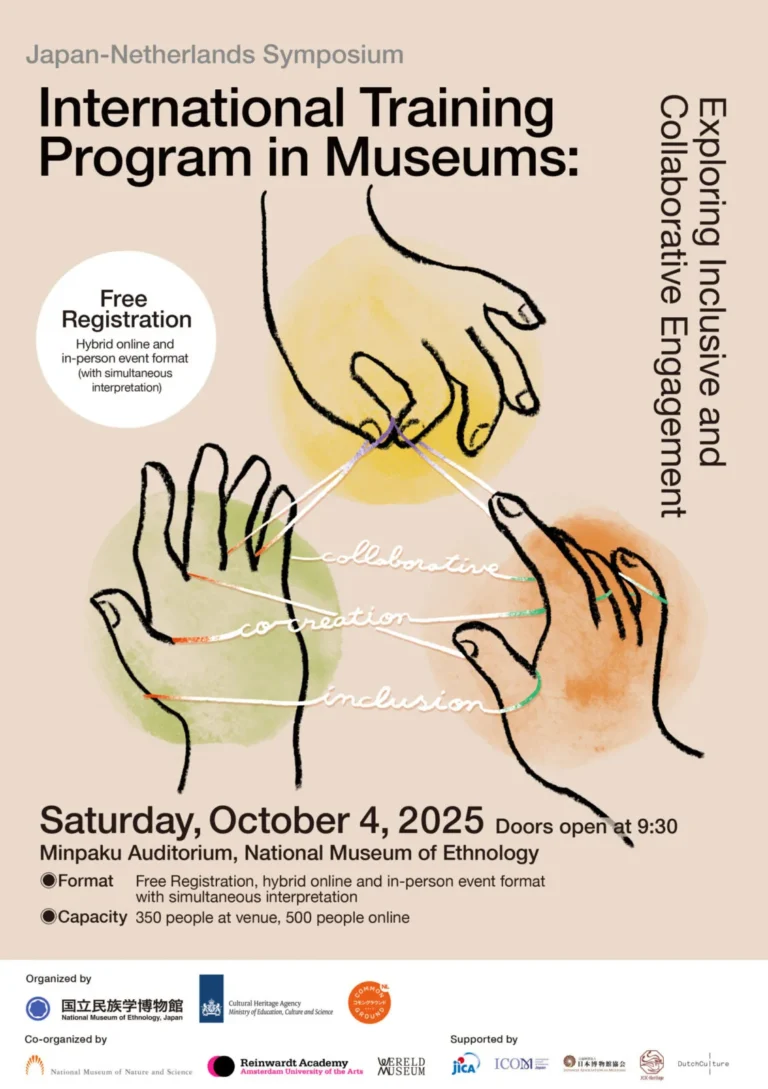
The Japan-Netherlands Symposium International Training Program in Museums: Exploring Inclusive and Collaborative Engagement focuses on international museum training programs conducted by the Netherlands and Japan, exploring new approaches to international museum collaboration that transcend the traditional hierarchy between “trainers” and “trainees.”
This paper is the outcome of joint reflections by the two authors, based in Europe and in Africa. Since the diverse practices of restitution have attracted more attention than certain concepts related to it, this paper addresses this imbalance by focusing on conceptual issues.
The article 'Journey of No Return: The Impact of Looted Heritage on Nigeria’s Cultural Legacy' explores the profound impact of looted heritage on Nigeria’s cultural legacy, highlighting the historical, cultural, and economic implications of the plundered artifacts.
Thomas Fues writes: the German government emphasises its willingness to confront Germany’s colonial history and its consequences. But it remains to be seen whether and how such declarations of intent at the beginning of the legislative period will actually be implemented in the coming years.
This call for contributions to Terroirs, African Journal of Social Sciences and Philosophy, aims to give greater consideration to African perspectives by analyzing citizen mobilizations, artistic initiatives, state strategies, and community practices that shape the return of heritage.
It’s no easy matter resolving the current ethical debate over the retention and exhibition of human remains. But one public collection is asking visitors to cast their vote.
The Latin America and the Caribbean chapter of the Association of Critical Heritage Studies (LAC-ACHS), together with Centro de Patrimonio Cultural and Núcleo Milenio Nupats of Universidad Católica de Chile and the Department of Arts and Culture Studies of Erasmus University Rotterdam, warmly invites abstracts for its inaugural conference “Encounters. Collaborative Approaches to Heritage in Latin America and the Caribbean”.
Officials from Canadian Heritage have confirmed the federal government has neither the means nor the ability to acquire any of the estimated 4,400 items in the Hudson Bay Company’s (HBC) collection of art and artifacts.
[ in Spanish ] This special issue of Revista Memorias Disidentes shows debates and reflections on restitution, repatriation, return and reburial of ancestors in South America.
In March 2025, Open Restitution Africa co-hosted a two-day gathering with the University of the Western Cape at the Iyatsiba Lab in Cape Town, bringing together African restitution practitioners, researchers and activists to reflect on how lived experience is shaping policy across the continent.
Eight years after French president Emmanuel Macron pledged to return African heritage to the continent, his government has adopted a bill facilitating the deaccession of cultural items plundered from former colonies. The text will be submitted for a vote in the senate on 24 September.
[ in Portuguese ] A delegation from Nagaland in north-east India travels to the Pitt Rivers Museum in Oxford to negotiate the return of remains and artefacts taken during the colonial period.
La Galigo, an Bugis text, is poetry, written on palm leaves in Bugis language and is considered to be the most voluminous literary work in the world. But the majority of the manuscripts are stored in Leiden University, The Netherlands.
Ahmad Mohammed writes: While digital repatriation offers an alternative or complementary pathway to physical restitution, its success hinges not only on ethical intent or technological innovation but on the socio-technical infrastructure available to source communities.
[ in Dutch ] According to FARO, the Flemish support centre for cultural heritage, organisations in this part of Belgium increasingly involve communities of origin as active partners in management, description, research and showing collections of these communities that the Flemish organisations preserve.
An institution is asking its visitors for their view: The Manchester Museum is running a public consultation about the future of Asru, a woman who lived in Thebes, southern Egypt
Hudson’s Bay Company, North America's oldest company, faces bankruptcy and wants to auction objects amassed from its founding in 1670, but it includes many important pieces of Canada’s First Nations and colonial heritage.
Thomas Fues writes: In an historic breakthrough for German restitution policy on colonial contexts, Cameroon’s official Restitution Committee has agreed upon the return of colonially appropriated cultural heritage in September 2025. Four German museums are involved.
On March 14, the remains of eight Mirning ancestors were returned to their country and buried. The ancestors lived between the late 1800s and 1979, and their remains had most recently been stored at the West Australian Museum.
Gov. Greg Gianforte last week finalized Montana’s two-year budget, which contains several new investments for Indian Country, including a historic increase in funding for tribal colleges and money devoted to repatriation efforts.
Indigenous artefacts will be returned to their ancestral home on Mornington Island in Queensland's Gulf of Carpentaria. More than 3,000 kilometres away in Victoria, Baw Baw Shire staff uncovered the 37 articles in storage.
This year’s theme explores the material return, digital reunification, and recontextualization of Philippine artefacts, manuscripts, and sound heritage kept in institutions outside of the Philippines.
South Africa is determined to repatriate the remains of its people taken abroad during the colonial era and those who died in exile as anti-apartheid activists, the culture minister Gayton McKenzie says. Including those of the Khoi-San, who are regarded as among the country's "first people".
A diaspora group discovers an object in the Wereldmuseum Amsterdam’s collection that the village of origin in Indonesia dearly misses. As it belongs to the Dutch national collection, its return requires the signature of the minister of Education, Culture and Science. But he only signs if the Indonesian minister of Culture supports the claim. After return, the latter must decide whether to deviate from the policy that returned objects are kept at the Museum Nasional Indonesia in Jakarta. Only then can the object go back to its village of origin. An interim report about a journey whose outcome no one yet knows.
Southern Africa is spearheading a transformative shift in the restitution discourse. This shift means reframing restitution as an act of healing, justice, and empowerment for communities still grappling with the enduring scars of historical dispossession.
Pope Francis promised to return artifacts to communities in Canada, but several years on, they remain in the Vatican’s museums and storage vaults. Recently, Canadian Prime Minister Mark Carney discussed the return in a meeting with Canadian Catholic Cardinals.
Tamara Lanier, who sued the school in 2019 over daguerreotypes of her enslaved ancestors held in its museum, called the outcome “a turning point in American history.”
Half of the 11 returned objects to the Larrakia community in Northern Australia first arrived at the Fowler Museum in 1965 through a large donation from the Wellcome Trust.
The House of Ni’isjoohl Memorial Pole, stolen in the 1920s, was rematriated from National Museums Scotland (NMS) in 2023. Noxs Ts’aawit (Dr. Amy Parent) of The Nisga’a Nation and Dr. John Giblin from NMS outline the process of international cooperation.
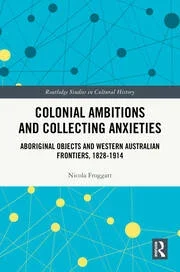
In her book 'Colonial Ambitions and Collecting Anxieties: Aboriginal Objects and Western Australian Frontiers, 1828–1914' Nicola Froggatt assesses how non-Aboriginal collectors understood Aboriginal objects, and what this reveals about colonial relationships, anxieties and ambitions.
At the global Museum & Heritage Awards 2025 the Pitt Rivers Museum won Partnership of the Year for the Maasai Living Cultures Project. The annual award celebrates the best in the world of museums, galleries plus cultural heritage visitor attractions.
The paper 'Nkali and Kolo-collecting in Eastern Nigeria: interrogating colonial collections of ọfϙ and Ikenga, Igbo objects of sovereignty and authority' explores the changing narratives of Ọfϙ and Ikenga, sacred objects of sovereignty and authority among the Igbo of Eastern Nigeria, currently in the Museum of Archaeology and Anthropology (MAA), University of Cambridge (UK).
Heritage interpretation—the process through which meaning is assigned to the material and immaterial traces of the past—is never a neutral act. It inherently involves questions of power, identity, and authority, writes Ahmad Mohammed.
A central assumption in the political process of restitution of looted properties and cultural objects is that their return helps societies to redeem histories of injustice and dispossession. In this article, we ask which objects address whose histories, and how processes of restitution are influenced by the presence and absence of objects and collections.
After more than 170 years at the Scottish University of Aberdeen, the remains of a young Aboriginal man who was killed on his Country have returned home.
Geraldine Kendall Adams delves into the moral and ethical arguments that surround the highly sensitive issue of human remains held in British museum collections.
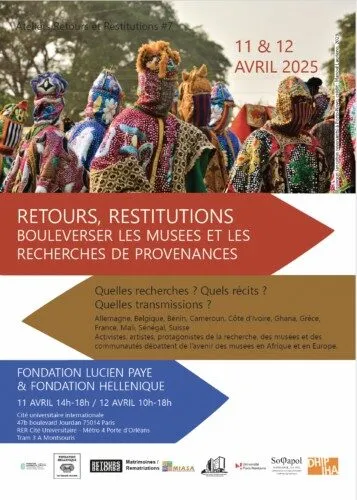
[ conference in French ] Germany, Benin, Cameroon, Ghana, Greece, France, Ivory Coast, Mali, Sénégal, Switzerland - Academics, activists, artists, experts from communities and museum actors debate the future of museums in Africa and in Europe.
A ceremony took place in the Leiden World Museum around the restitution of the heritage of the Ysleta del Sur Pueblo tribe. It is the first time the Netherlands has returned objects to the United States. „The healing process can now begin.”
The restitution of material objects has become central for engaging with past injustices in post-conflict situations. Thereby, restitution is increasingly attributed a transformative potential to enable dialogues between different victim and perpetrator groups in the aftermath of mass violence.
Modernity has emphasized the need to disconnect from emotions for the sake of objectivity; the mind as the vehicle for sense-making. However, onto-epistemologies from the Global South discuss the relevance of a holistic integration of the body, mind, heart, and life-force (spirit) for a better understanding.
British lawmakers, NGOs, and researchers urge the UK to address a 'legislative vacuum' permitting the display of African ancestral remains from the colonial era. T
This annotated bibliography presents mostly Indigenous authors and thinkers who have identified this disconnect between Euro-centric and Indigenous ways of seeing and understanding the world for decades, if not centuries.
Museums in Leipzig, Göttingen, Stuttgart and three other German cities have transferred the remains of Māori and Moriori people to a New Zealand delegation, headed Te Herekiekie Herewini of the Museum of New Zealand Te Papa Tongarewa.
Objects from the Wereldmuseum Leiden collection to be returned to indigenous tribe in the US. This item contains the announcement by the Dutch government, the report by the Dutch advisory Committee Colonial Collections and reactions from local news stations in El Paso, Texas.
Tim Maxwell: Repatriating artefacts found underwater could help former colonial powers meet moral obligations to countries they had historically exploited for their transatlantic slave trade.
[ in Dutch ] The problems at the AfricaMuseum in Tervuren are mainly a result of a lack of money. This is what director Bart Ouvry says, who is responding for the first time to the sharp criticism of political scientist and public officer Nadia Nsayi. In a column in De Morgen, she accuses him of toxic behavior, weak leadership and too little eye for diversity.
Nadia Nsayi is a political scientist and author of Daughter of Decolonization and Congolina. She argues why she hesitates to take a step back in the AfricaMuseum. [ in Dutch ]
A museum in Limburg has decided not to return five ornamental human skulls taken by missionaries from Papua New Guinea after the local population turned down the offer.
The Missiemuseum in Steyl investigated the origin of the artefacts in the wake of the controversy surrounding a skull from Benin that was sold by an auction house in Amsterdam.
Three decades after legislation pushed for the return of Native American remains to Indigenous communities, many of the nation’s top museums and universities still have the remains of thousands of people in their collections.
[ in Dutch ] What to do with the human skulls from Africa or Asia in their collection? The days when this kind of heritage could be easily in museums seem to be over. The call for return to the place of origin is louder and louder. But are they waiting for it there?
[ in French ] Indonesia is pursuing a process of complete repatriation of cultural works looted during the colonial period. By mid-December, 828 objects had been returned by the Netherlands, according to the Indonesian Heritage Agency.
Hundreds of Indonesian artefacts that were in the Netherlands for more than a century - the bulk of which were looted by the Dutch during their colonial rule - are now on display at Indonesia’s National Museum in Jakarta. They are among the latest batch of items returned after a lengthy process involving both countries.
An indigenous Mexican nation, the Nahñu people in the central Mexican state of Hidalgo, has written to the Assemblée Nationale in France seeking the return of its codex, arguing that the centuries-old manuscript describes traditions it still continues.
A 200-year-old wampum belt has spent much of its existence at the Vatican’s museums, across the ocean and thousands of kilometres away. Last year, the belt, made by Algonquin, Nipissing and Mohawk peoples in 1831, was returned to Canada for 51 days – for a brief appearance at a Montreal museum in the fall – before it was sent back the vaults of the Vatican. In 2023, nothing was returned, a Timeline reveals.
Earlier in 2024, David Nolan Gallery in New York mounted the exhibition Fort Marion and Beyond: Native American Ledger Drawings, 1865–1900, gathering over 100 works on paper by Native artists from the Arapaho, Cheyenne, Hidatsa, Kiowa, and Lakota tribes.
This report was developed as a response to the Truth and Reconciliation Commission’s Call to Action #67 under the guidance of the CMA Reconciliation Council.
[ in Dutch ] The judge has ruled that the collection of the Africa Museum in Berg en Dal is owned by the fathers of the Congregation of the Holy Spirit. The National Museum of World Cultures (NMVW) must return the collection to them.
An international group of two hundred scientists and specialists in predatory art protests against the trade in human remains by the Amsterdam auction house De Zwaan. It is a skull of a person of the Fon people from Benin. The skull was sold last month for eight hundred euros.
Trinity College and the Museum of Archaeology and Anthropology (MAA) agreed in March 2023 to return the spears to descendants of the Gweagal people who crafted the spears more than 250 years ago. One year later, they were handed over.
In 1905, a colonial British officer killed Koitalel Arap Samoei, the supreme leader of the Nandi tribe. According to oral history, his severed head was taken to the UK. The Nandi have been searching for it ever since. The Nandi have been searching for it ever since.
The Museum of Cultures and the Natural History Museum in Basel, Switzerland, returned a collection of approximately 90 aboriginal artefacts, including human bones and tools, of Sri Lanka’s indigenous population.
Six years ago, AIATSIS set up the Return of Cultural Heritage (RoCH) programme, and began looking at collections worldwide that might have holdings to return. Among the 200 institutions it first contacted, 74 responded positively, among these the Fowler museum in Los Angeles
Over the centuries, a multitude of items – including a cannon of the King of Kandy, power-objects from DR Congo, Benin bronzes, Javanese temple statues, Maori heads and strategic documents – has ended up in museums and private collections in Belgium and the Netherlands by improper means.
In 'The Empty Showcase Syndrome - Tough Questions about Cultural Heritage from Colonial Regions', author Jos van Beurden explores three questions that slow down the restitution process.
Alexander Herman: When Prime Minister Justin Trudeau met with Pope Francis last month, he raised the issue of reconciliation with First Nations, and urged the pope to return Indigenous cultural artifacts from the Vatican collections to communities in Canada. This request came at a tense time.
In a lengthy contribution, Kwame Opoku wonders how long the Ovaherero must wait for justice and reparation for the German genocide? He extensively quotes a press release of the Ovaherero Traditional Authority-Ouhonapare uo Mananeno uo Vaherero. Part of it is about repatriation.
An ancient, carved tree will be returned to Australia around a century after it was cut down and shipped to Europe. It was one of several “dhulu” stolen from a Gamilaraay ceremonial site beside a creek in northeast NSW in 1917.
More than 128,000 Native American ancestors and 4.5 million sacred objects have been identified in collections across museums, universities and government agencies. Those numbers don't include more than an estimated 90,000 ancestors and 700,000 associated funerary objects that have not yet been identified in collections.
In October 2024, a 19th-Century skull from the north-eastern Indian state of Nagaland was up for auction in the UK. The horned skull of a Naga tribesman was among thousands of items that European colonial administrators had collected from the state.
Rachel Mariembe discusses the collection of the Musée des Rois Bamoun (MRB, Museum of the Bamoun Kings), located in Foumban in Cameroon’s West Region, as a framework for studying issues related to the concepts of museum, cultural heritage, conservation, and the restitution of cultural property looted during the colonial period.
Anmol Irfan, a Muslim-Pakistani journalist, writes: Governments delay the process; museums often answer to wealthy donors. Complexities arise that require each case to be handled individually. But the first step of acknowledging the generational hurt and trauma caused by the removal of these culturally important and sacred artifacts has opened doors to broader solutions on a global scale.
A sacred cloak that had been in the holdings of the National Museum of Denmark for more than 300 years was returned to Indigenous leaders in Brazil. The nearly six-foot-long cloak was constructed using 4,000 scarlet ibis feathers. It was taken from the Tupinambá people during Portuguese colonial rule.
For decades, families in Tanzania have been demanding the return of their ancestors’ human remains from Germany. These ancestors, executed leaders of resistance efforts against German colonial rule, were exhumed from their graves and taken to Germany. Cece Mlay discusses co-producing a new documentary on how their descendants are seeking justice and closure today.
Claim of the Restitution Study Group: The Supreme Court has denied certiorari in the case Deadria Farmer-Paellmann v. Smithsonian Institution, allowing the return of 29 Benin Bronzes to Nigeria to proceed without further legal challenge.
Panorama of the Nord Deutsche Rundfunk wrote an extended commentary on a 35-minute-long documentary: ‘African human skull, early 20th century, €2000’ - this is how dealers openly advertise human skulls on social media such as Instagram. Panorama reporters uncover just how dubious this trade is, especially when you realise the origin of these skulls (in German).
Although there is no overarching framework for the repatriation of human remains at the international level, most repatriation efforts now operate within a more rigorous legal framework at the national and subnational level, which includes national laws and guidelines from public authorities.
Exactly 130 years ago, the World Exhibition took place in Antwerp. For that occasion, 144 Congolese were exhibited at the KMSKA. Seven Congolese died. The AfricaMuseum, which has a similar colonial history in Tervuren, organizes an online MuseumTalk about the memory and commemoration of this tragedy. The speakers are a researcher, an activist and an artist.
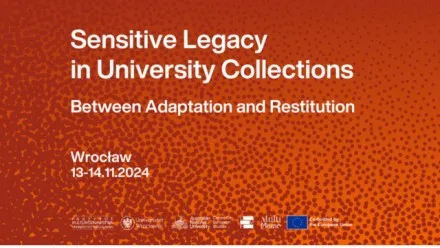
Conference Sensitive Legacy in University Collections: Adaptation and Restitution, organized by the ANU Centre for European Studies in collaboration with The Urban Memory Foundation and the University of Wroclaw, Poland.
[ in Dutch ] Fifteen skulls originating from the Moluccas have been returned to the island group Tanimbar. These skulls had been part of the collection of Museum Vrolik, the anatomical museum of Amsterdam University Medical Centre, since the very early 20th century.
Until the late 1980s Indigenous art was being ripped off left right and centre. It was open slather. First at the cheap end of the market on T-shirts and then on fancy carpets made in Vietnam. The rip-off merchants maintained black artists were just painting old patterns, so their work was for the taking.
The return of artefacts to their countries of origin is not just an act of repatriation, but an opportunity for healing and reconnecting with cultural roots, said Tuuda Haitula, the museum development officer at the Museums Association of Namibia.
Early in October 2024, RM* distributed news about an auction by Swan Fine Art at Tetsworth (UK) of Naga human remains estimated at 3,500 – 4,000 UK pounds. This had infuriated the Forum for Naga Reconciliation and many others.
Thanks to Deneth Piumakshi Veda Arachchige, the Museum of Cultures and the Natural History Museum in Basel, Switzerland returned a collection of approximately 90 aboriginal artefacts, including human bones and tools, of Sri Lanka’s indigenous population this week.
[ in Dutch ] In colonial times, thousands of human remains ended up in Dutch museums. Soon, Moluccan activists will bring back 15 skulls single-handedly.
In July 2020, the Australian Government announced the introduction of the RoCH program with funding until June 2024. The research and community work continued and at the end of this period RoCH identified 383 overseas collecting institutions holding 126,000+ Aboriginal and / or Torres Strait Islander cultural heritage items.
The “De Grote Indonesië Tentoonstelling” at De Nieuwe Kerk in Amsterdam has faced scrutiny due to its display of seven Buddha heads, allegedly from the Borobudur, lacking contextualisation.