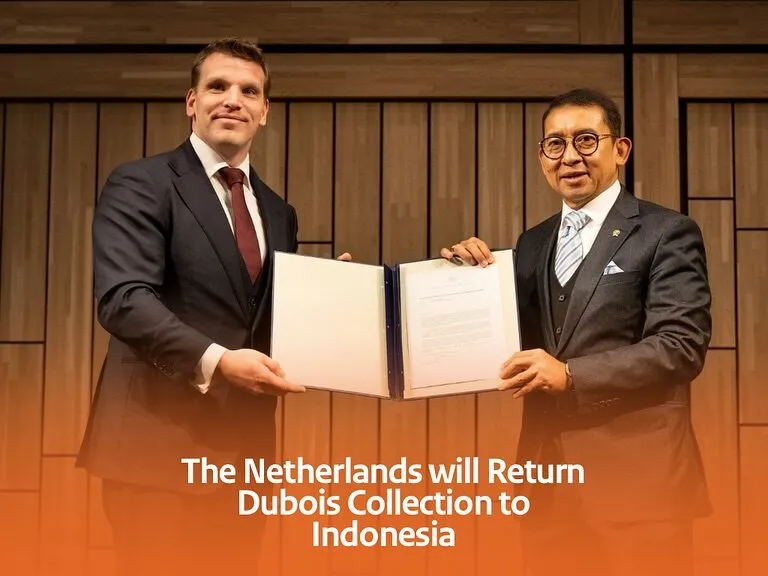
In 2022, the Republic of Indonesia submitted an official application for the collection’s restitution after which the Dutch State Secretary for Culture requested the Colonial Collections Committee to provide advice on this request. In 2025, the Netherlands transferred it to Indonesia. This Blog offers a reflection.
‘Time for Papua’ brings different perspectives together: from refined wood carvings and korwar figures to prauw prows and recent film works. You see how creators make history tangible, how objects form relationships, and how a dynamic perception of time clashes with imposed boundaries and economic interests.
The Wereldmuseum collection includes 3,647 objects that contain ancestral human remains. Particularly harrowing are the 26 premature and newborn babies preserved in fluid. Together with members of various communities, Manuwi C. Tokai created an altar in the Wereldmuseum Amsterdam to serve as a place of remembrance for the ancestors held in the museum’s collection.
[ in Dutch ] After five years, research project Pressing Matter, which dealt with the restitution of colonial collection pieces, ends. De Volkskrant talks to initiator Wayne Modest about the project and its influence on the World Museum.
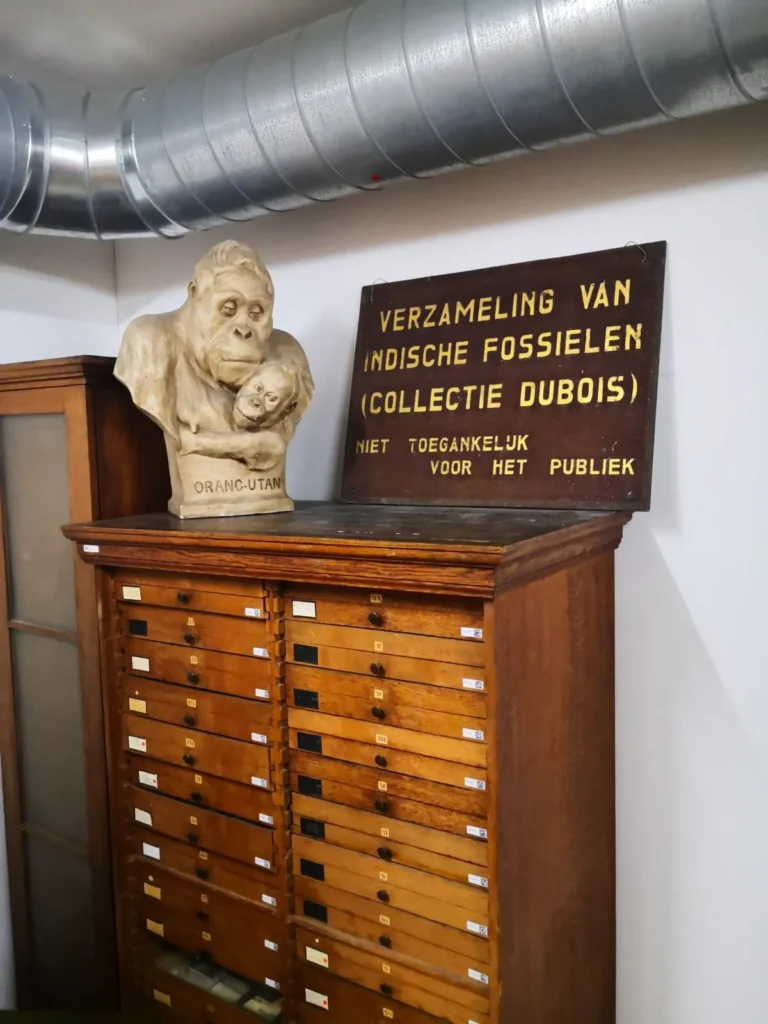
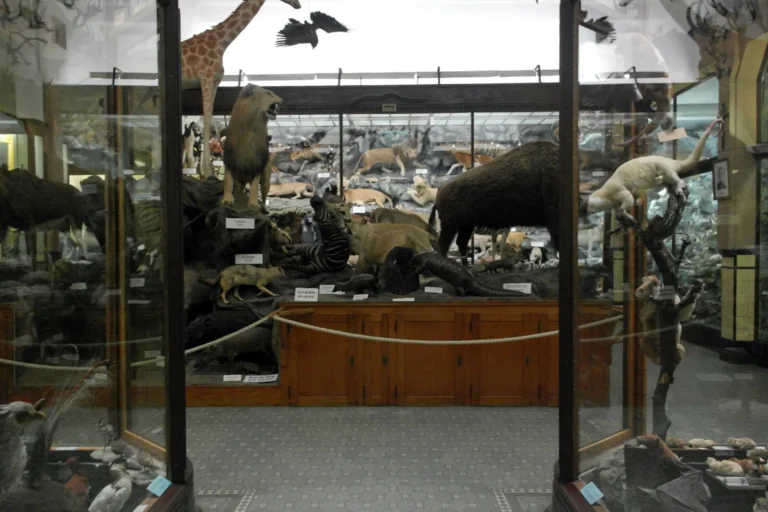
Naturalis Marcel Beukeboom: “We will take time to think of a new story to tell. That story will most likely include references to the evolution and early humans, and may also address colonialism and perhaps even the influence of Dubois. But without his collection, and with everything we have learned, this will be a different story.”
Rodney Westerlaken writes: The return of the Dubois Collection: principled restitution, unresolved policy questions: – At what point does scientific heritage become cultural heritage? – Which criteria should govern this classification, and by whom are they determined? - How can restitution frameworks avoid becoming normatively expansive without sufficient conceptual precision?
Four important objects from the Dubois collection were handed over to Indonesia on Wednesday 17 December. The handover ceremony took place at the National Museum of Indonesia in Jakarta, which will exhibit the objects.
Barnaby Philips discovers one more return of a Benin object from the Netherlands and further analyses what went wrong in Benin City: Two days before the aborted viewing of the Museum of West African Art (MOWAA), Oba Ewuare II visited his ally Monday Okpebholo, the governor of Edo State. ‘Please stop the opening of the MOWAA.’
All too often, the literature on the restitution of colonial cultural objects tends to focus on the public international law (PubIIL) aspects of the debate. With a few notable exceptions, the PubIIL and private international law (PIL) dimensions of the debate are rarely considered together. This article makes the case for a coordinated approach.
Western museums are returning the Benin Bronzes to Nigeria, but a state-of-the-art museum to display them is still a long way off. Alex Marshall saw hundreds of Benin Bronzes while reporting this article in Benin City and Lagos, Nigeria.
Open Restitution Africa has published a case study that is centred around 119 cultural belongings from the historic Benin Kingdom. This collection includes intricately cast bronzes, carved ivories and terracotta. They serve dually as both historical artefact and active carriers of spiritual and cultural knowledge, many of which remain relevant in Benin cultural and religious life today.
Andrew Matthijssen of the Vendue House informs the authorities in Vanuatu that it withdraws the skulls from auction and will suggest to the owner(s) of the skulls to return them to Vanuatu.
In an email, in the hands of RM*, to the Vendue Huis in The Hague, the Netherlands, the Vanuatu Cultural Centre (VKS) and the National Museum of Vanuatu, the national authorities responsible for the safeguarding of Vanuatu’s cultural heritage, demand the immediate withdrawal of ancestral remains from sale.
The auctioneers of the Venduehuis in The Hague, the Netherlands, offer four ancestral skulls from Vanuatu. Evidence that the trade in ancestral remains continues. On line auction, until 24 November 2025
[ in Dutch] Due to the death of Otto van der Mieden on February 1, 2024, the founder and director of the Puppetry Museum, the museum is closed and the collection is being deaccessioned.
Julien Volper, acurator at the Royal Museum for Central Africa (Tervuren, Belgium), is writing here in a personal capacity: The Dutch restitution of Benin objects, earlier this year, was motivated by Dutch self-interest, both of the government and of the museum that has to let go a collection.
It is the final conference of Pressing Matter, in partnership with the Research Center for Material Culture (RCMC) and the Wereldmuseum. Min theme: Rethinking the Restitutionary Moment: What Next? On 27 and 28 November in Leiden. On 26 November, Achille Mbembe will speak in Amsterdam.
When tourists tread the halls of Sri Lanka’s national museums or glance over the plaques at sites of historical significance, they are reading stories of the past. But whose? Sri Lankan ethnographer Ganga Rajinee Dissanayaka wonders who made that judgement of what is worth saving, worth memorialising, worth forgetting?
The public display of artefacts looted by British colonial forces at the new Museum of West African Art was supposed to be the crowning glory of a decades-long restitution effort. What went wrong?
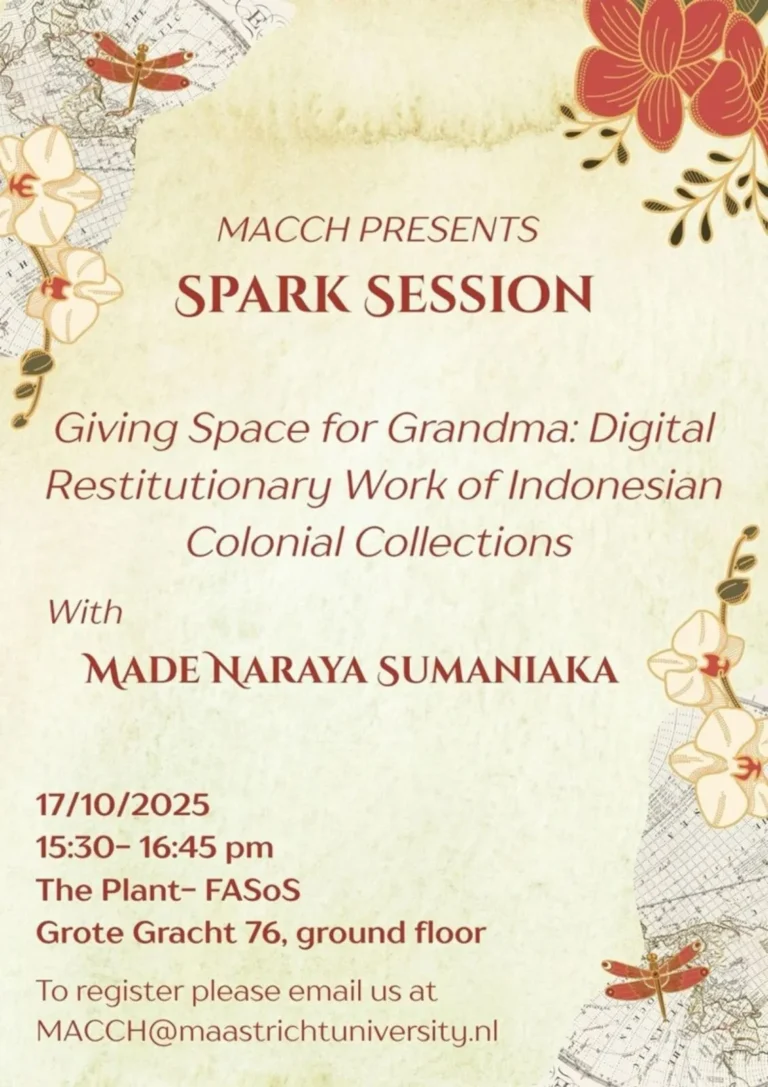
In this Spark Session Made Naraya Sumaniaka presents his thesis work, which recentres community agency by examining how digital spaces enable participation and contestation using the newly established Colonial Collections Datahub and TikTok as case studies.
This project explores the colonial framework that has shaped our understanding and knowledge of historical objects, focusing on the Lombok Treasures looted from Cakranegara Palace in 1894. Adopting a decolonial perspective, this project reframes these heritage objects as living entities endowed with knowledge and cultural significance, rather than mere relics.
Christian missionary collections have contributed much to the development of the exhibitionary complex, but have received significantly less notice than imperial states using violence to acquire collections, and subsequent demands for restitution.
[ in Dutch ]'Dutch' fossils soon to be seen again in Indonesia: 'Young people here only know the Javaman from textbooks'
Indonesia will soon receive thousands of fossils that are still in museum Naturalis. It is a historic moment for his country, says Indonesian paleontologist Sofwan Noerwidi.
On 26 September 2025, the Dutch government returned 28,000 fossils, including the famous skullcap, a molar, and a thighbone (the so-called Java Man), to Indonesia following an official claim submitted by the Indonesian state in July 2022. They were part of the collection of Naturalis Biodiversity Centre in Leiden. With this, the government followed the advice of the Colonial Collections Committee. Now that the dust about this massive return has begun to settle, it is time for some reflection. I consider the acceptance of the advice of the independent Colonial Collections Committee groundbreaking in several respects.
[ in Dutch ] Looted art is a hot issue in the art world. This therefore seems like a good time to return ten pleurists who are now in the Rijksmuseum to Belgium, writes parliamentary lobbyist Marcelo Mooren in this opinion piece.
[ in Dutch ] At the Indonesian Ministry of Culture, they can't count on their luck. The Netherlands returns an important archaeological find to Indonesia. It concerns the skullcap of Dubois, named after the Dutch finder Eugène Dubois. This proved in 1891 that other humanos had existed, which Dubois called the Javamen.
[ in Dutch ] The restitution process of the Dubois collection took an unusually long time. The responsible advisory committee and Naturalis point out the complexity of the case, experts make sharp accusations against the museum.
[ links are in Dutch or in English ] Today, Dutch Minister Moes (Education, Culture and Science) presented a letter to Indonesian Minister Fadli Zon (Culture) announcing this decision. The so-called Dubois collection is now managed by Naturalis Biodiversity Center in the city of Leiden.
‘The most valuable Buginese manuscript of La Galigo, is held at Leiden University Library’ in the Netherlands, the university proudly communicates. It has come from Makassar on the Indonesian island of Sulawesi. For the Bugis who live there, it is an essential part of their history. But they have no access to it. A local group with academics, heritage professionals and activists in Makassar has begun to discuss its future. For them the repatriation of meaning is crucial. And this is only possible if the Dutch recognise their responsibility.
[ in Dutch ] The objects come from a private collection of the descendants of doctor and amateur archaeologist Dr. Hans Feriz. In her will, his daughter had stipulated that the objects collected by her father in the past would be returned to the countries of origin.
[ in Dutch ] How are Belgium and the Netherlands dealing with the sensitive issue of returning looted art and researching its colonial origins? An exploration of some treacherous areas in the quagmire of new Dutch and Belgian restitution policy. A discussion between museum director Wayne Modest and activist Nadia Nsayi.
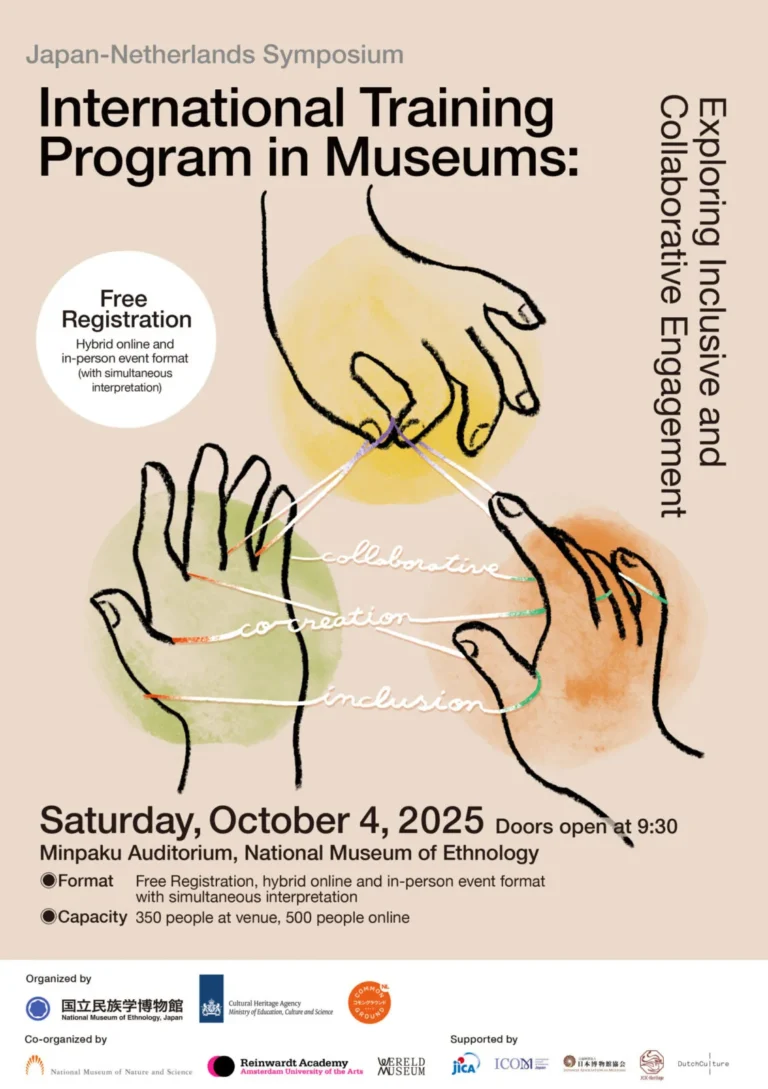
The Japan-Netherlands Symposium International Training Program in Museums: Exploring Inclusive and Collaborative Engagement focuses on international museum training programs conducted by the Netherlands and Japan, exploring new approaches to international museum collaboration that transcend the traditional hierarchy between “trainers” and “trainees.”
[ in Dutch ] How do Belgium and the Netherlands deal with the sensitive issue of returning looted art and investigating its colonial origins? What do you see of this in museums and what remains underexposed?
This article about 500 palm-leaf manuscripts, looted during the conquest of Lombok by the Netherlands East Indies in 1894, is especially urgent as the demand for provenance research grows. It helps to better understand the complex historical trajectories of these cultural heritage objects.
La Galigo, an Bugis text, is poetry, written on palm leaves in Bugis language and is considered to be the most voluminous literary work in the world. But the majority of the manuscripts are stored in Leiden University, The Netherlands.
In a step toward preserving and rediscovering Sri Lanka’s colonial intellectual heritage, the government has greenlit a groundbreaking research project focusing on Dutch-era palm leaf manuscripts of Sri Lankan origin.
The path to true restitution requires more than symbolic gestures, demanding that Britain repeal its obstructive laws, France accelerate its glacial restitution process, and all former colonial powers establish transparent frameworks for repatriation.
[ in Dutch ] Daantje van de Linde delves into the history of a power statue that has been called the face of the World Museum Rotterdam's Africa collection. Her conclusion: case of involuntary loss of possession.
Nigeria has received 119 Benin Bronzes from the Netherlands — the largest physical repatriation of looted artefacts since the 1897 British invasion of the Benin Kingdom. According to an expert, some of the pieces date back to between the 14th and 16th century.
A diaspora group discovers an object in the Wereldmuseum Amsterdam’s collection that the village of origin in Indonesia dearly misses. As it belongs to the Dutch national collection, its return requires the signature of the minister of Education, Culture and Science. But he only signs if the Indonesian minister of Culture supports the claim. After return, the latter must decide whether to deviate from the policy that returned objects are kept at the Museum Nasional Indonesia in Jakarta. Only then can the object go back to its village of origin. An interim report about a journey whose outcome no one yet knows.
Minister of Culture Fadli Zon announced significant progress in repatriating Indonesian cultural artifacts from the Netherlands after bilateral talks with the Dutch Colonial Collections Committee (CCC) in Jakarta.
Within the national museum context, the Repatriasi exhibition risks becoming a missed opportunity to critically engage with the afterlives of returned objects, beyond marking their physical return.
During the 19th century colonial wars, the library of the rulers of Palembang in Sumatra was looted by British and Dutch troops; its manuscripts were transported to other places and some of them are lost. Alan Darmawan looks for traces of some of these mishandled treasures.
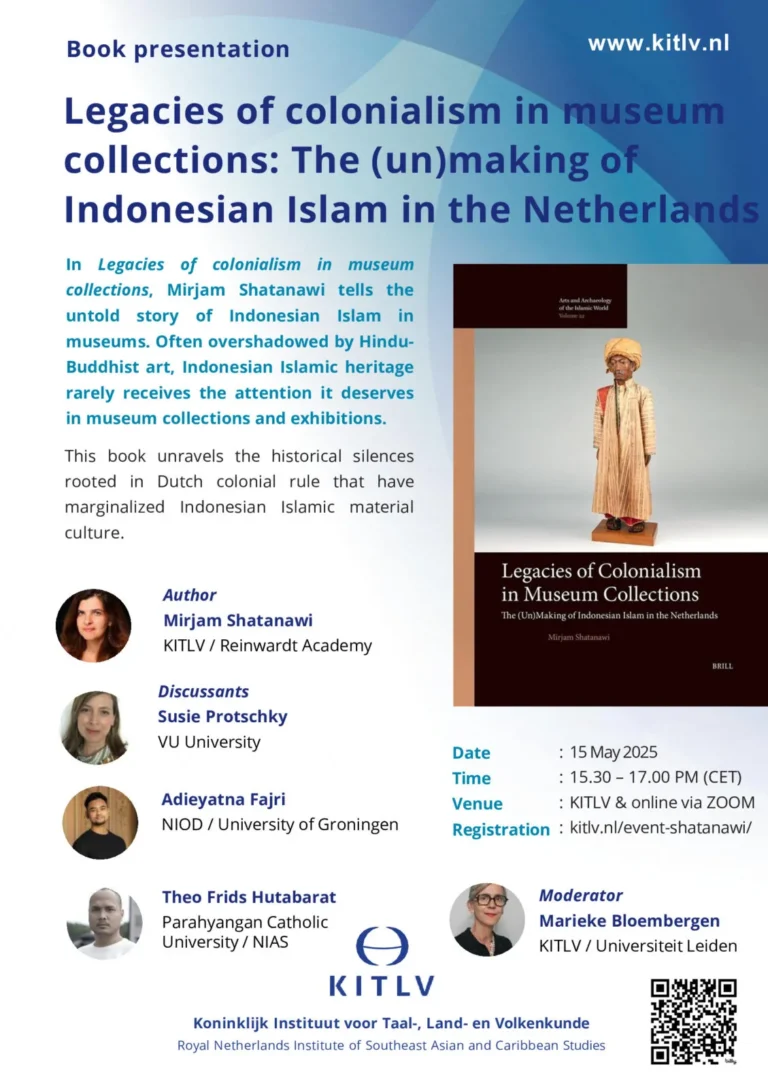
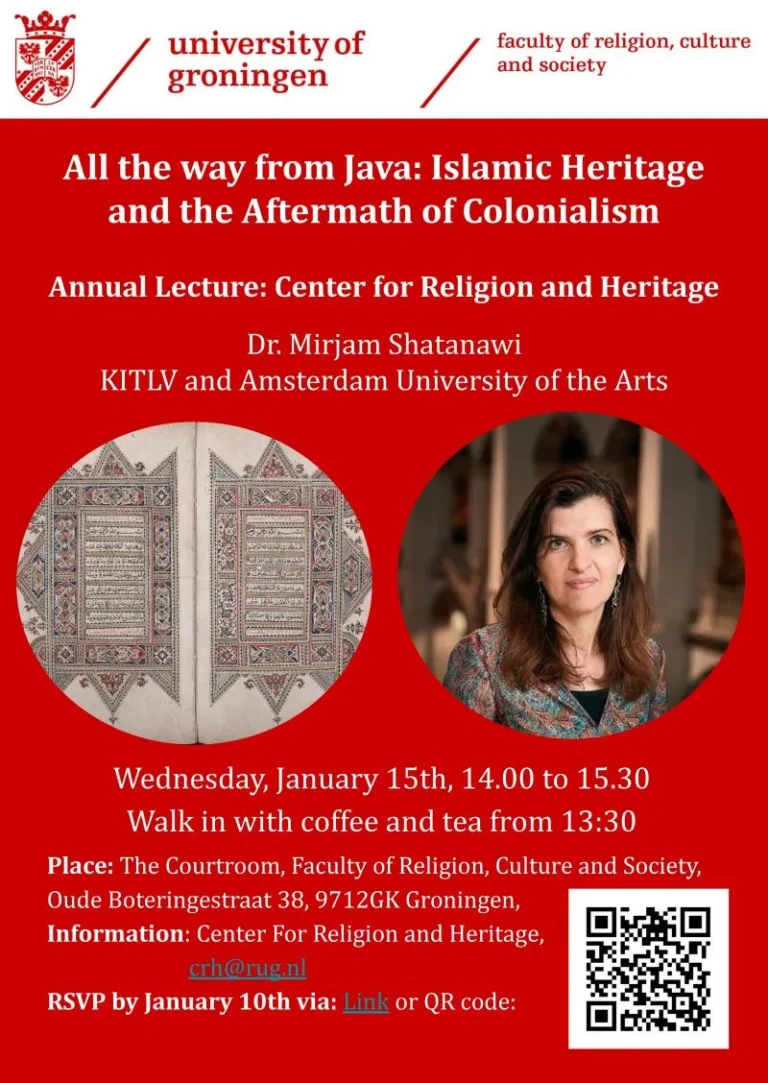
Legacies of colonialism in museum collections: The (un)making of Indonesian Islam in the Netherlands tells the untold story of Indonesian Islam in museums. Often overshadowed by Hindu-Buddhist art, Indonesian Islamic heritage rarely receives the attention it deserves in museum collections and exhibitions.
The exhibition explores the current debate surrounding collections gathered during the colonial period and the question of restitution. Visitors not only learn about the provenance of cultural objects but also to reflect on ownership, value, and the ethical implications of a colonial history that continues to resonate in museum collections today. [ English version and Dutch version ]
Re:Sound explores whether and how the inherent divergence of validations and understandings of sonic expression provides ways to reconsider established notions of heritage.
[ in English and in Dutch ] Science museums are full of skeletons, skulls and other human and animal remains. How were these obtained? Colonial heritage researchers shed new light on that question and come to painful conclusions.
Restitution and repatriation are topics of much attention and debate in the world of museums, archives, and cultural heritage institutions. How do music, intangible heritage, and historical sound recordings from colonial contexts fit into these debates?
A European art collector challenged Conan Cheong's commendation of the Dutch Government’s return of the Singhosari stone Bhairava, Nandi, Ganesha and Brahma statues to Indonesia the year before.
The Leiden University Medical Centre (LUMC) has established a committee to investigate what part of the current collection has a connection to the former colonies or slavery past. Based on this investigation, the committee will issue a recommendation at a later date.
Contributing to current efforts to grapple with museums' colonial legacies, this article takes the question of evidence as an entry point to unlock the multi-layered make-up of African spiritual artifacts in missionary collections.
European governments negotiate restitutions only with the governments of countries of origin. The collections they negotiate usually are state-owned and contain valuable, not rarely iconic objects. The path followed by governments of former colonies is quite similar. It is the path of what Laurajane Smith called the authorized heritage discourse (AHD), where only a limited part of a country’s heritage dominates in national narratives and public policies. This approach has serious limitations.
Julien Volper argues that the Netherlands practises double standards when it comes to restitution. On the one hand, the country returns 119 Benin objects to Nigeria. On the other, it was reluctant to return to Belgium parts of a 16th-century altarpiece by Pasquier Borman, stolen from a church of in Boussu (Belgium) in 1914, and it cut back its international assistance to the global south.
A ceremony took place in the Leiden World Museum around the restitution of the heritage of the Ysleta del Sur Pueblo tribe. It is the first time the Netherlands has returned objects to the United States. „The healing process can now begin.”
Until 25 May 2025, the Louvre Abu Dhabi unveils 'Kings and Queens of Africa: Forms and Figures of Power', an exhibition celebrating 350 works of African art and majesty, most of them on loan from Musée Du Quai Branly-Jacques Chirac. Is this a manner to postpone their restitution?
This dissertation investigates the histories and itineraries of Abelam collections from the East Sepik Province of Papua New Guinea held in museums in Europe (the Netherlands, Germany, Switzerland and the UK), Australia and Papua New Guinea.
When repatriation has been largely framed within nation-state contexts, what does it mean to truly foster inclusivity in this process? Is it essential to involve the communities directly affected for such inclusivity to be achieved? What insights can we gain from community-led repatriations regarding local priorities, needs, and cultural practices?
RM* saw reports from AP, Hyperallergic, DutchNews, Jerusalem Post, ArtDependence, Punch, Arise, Voice of Alexandria, Devdiscours, Pinnacle Gazette and AllAfrica.
The British Museum has come under fresh pressure to hand over its Benin Bronzes after the Netherlands returned more than 100 of the artefacts to Nigeria.
At the request of Nigeria, the Netherlands returns 119 ‘Benin Bronzes’ to Nigeria, 113 from the National Collection and six owned by the Rotterdam municipality. [Later this week, RM* will add the relevant links].
How can academics and museum professionals research the provenance of a colonial museum collection? And can we trace possible ‘involuntary loss of possession’ or looted objects?
The report offers an overview of the restitutions and claims processed in the Netherlands until recently, and the legal framework in which they took place.
The State-centric discourse that surrounds Indonesia’s cultural heritage protection and repatriation policies impede locally-led activism related to cultural heritage.
This article explores the ownership of cultural objects within national and traditional customary law in Suriname, with the aim to provide a legal context to the issue of claims for the return of some of these cultural objects from the Netherlands.
[ in Dutch ] They are the most controversial items in the collection of the Dutch Mission Museum in Steyl, Limburg: five human skulls from Papua New Guinea. How did they get there? And why don't the locals want them back?
A research project has been conducted with the participation of the museum department and independent researchers regarding 6 such artifacts in the Netherlands and it has been confirmed that all the artifacts were brought from Sri Lanka during the colonial period.
Objects from the Wereldmuseum Leiden collection to be returned to indigenous tribe in the US. This item contains the announcement by the Dutch government, the report by the Dutch advisory Committee Colonial Collections and reactions from local news stations in El Paso, Texas.
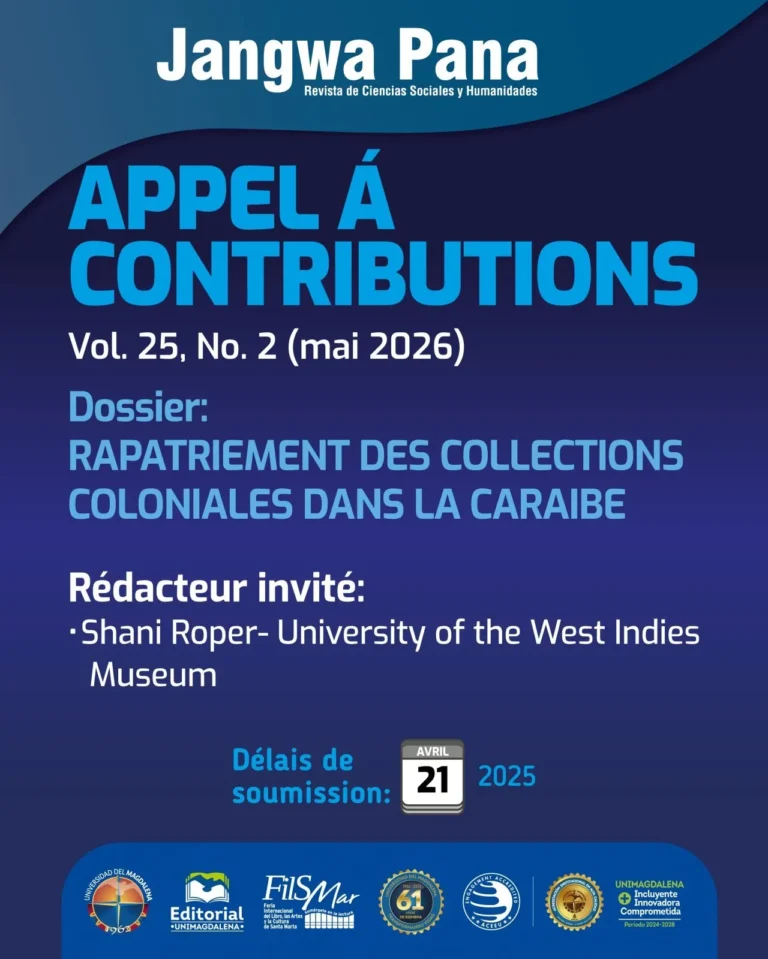
[ in English, French and Spanish ] This call invites researchers and academics from all areas of social sciences and humanities to submit their work for a special issue of Jangwa Pana dedicated to the repatriation of colonial collections in the Caribbean. Deadline 21 April 2025.
The Netherlands and other European countries are developing policies to return objects and ancestral remains appropriated in the colonial period. This offers hope for postcolonial countries to retrieve their lost treasures. Bangladesh should make more use of this opportunity. To begin with, it can claim an object from the Rijksmuseum Amsterdam.
[ in English and in Dutch ] In April 2024, a Netherlands delegation visited Suriname and mapped out which objects are present in Dutch public collections through the colonial history of the Netherlands and Suriname.
Jakarta welcomes the Dutch returns. ‘The return is part of a broader agreement between Indonesia and the Netherlands in 1975. That deal, though, faced many obstacles in its implementation, said Sri Margana, a member of Indonesia’s Repatriation Committee and professor of history at Gadjah Mada University in Yogyakarta.
‘In 1894, two colonising powers faced each other across the narrow strait between the islands of Bali and Lombok. One was the Netherlands East Indies, the other the kingdom of Lombok, ruled by a settler regime from Bali that dominated the island’s indigenous Sasak population.'
[ in English and in Dutch ] The Indonesian Repatriasi Commission and Naturalis will work together to explore how the importance of the Homo erectus fossils from the Dubois collection can best be safeguarded for Indonesia, the Netherlands and the rest of the world.
Why is research into colonial collections in the private sector - I mean art dealers, auction houses and private collectors - so tough? The main reasons is that most of them have built a wall around themselves, and there is rarely a hole in this wall through which an outside observer can look inside their closed bulwark.
Political turmoil across the continent is hampering plans for national structures to return colonial-era heritage. But the UK, once a laggard, appears to be preparing to review laws
During the European expansion constant fighting and violence and the taking of spoils of war went hand-in-hand. Palaces, shrines, homesteads and entire villages were plundered and destroyed. In the restitution debate, the focus is mostly on state-collections resulting from these confrontations. There is ample evidence, however, that many more parties were involved. This blogpost has some of the evidence.
[ in Dutch ] The owner of the museum, the Congregation of the Holy Spirit, wanted the World Museum to admit visitors until the lease expires on December 31, 2024.
The Netherlands will physically hand over six Sri Lankan artefacts to Sri Lanka during a two-day event at the Colombo National Museum. All come from the Rijksmuseum Amsterdam, among them is a famous ceremonial cannon of the King of Kandy (captured in 1765).
[ in Dutch ] This thesis on the Watson collection shows that even smaller non-ethnographic museums such as the Noordbrabants Museum of art, culture and history have collections from colonial areas.
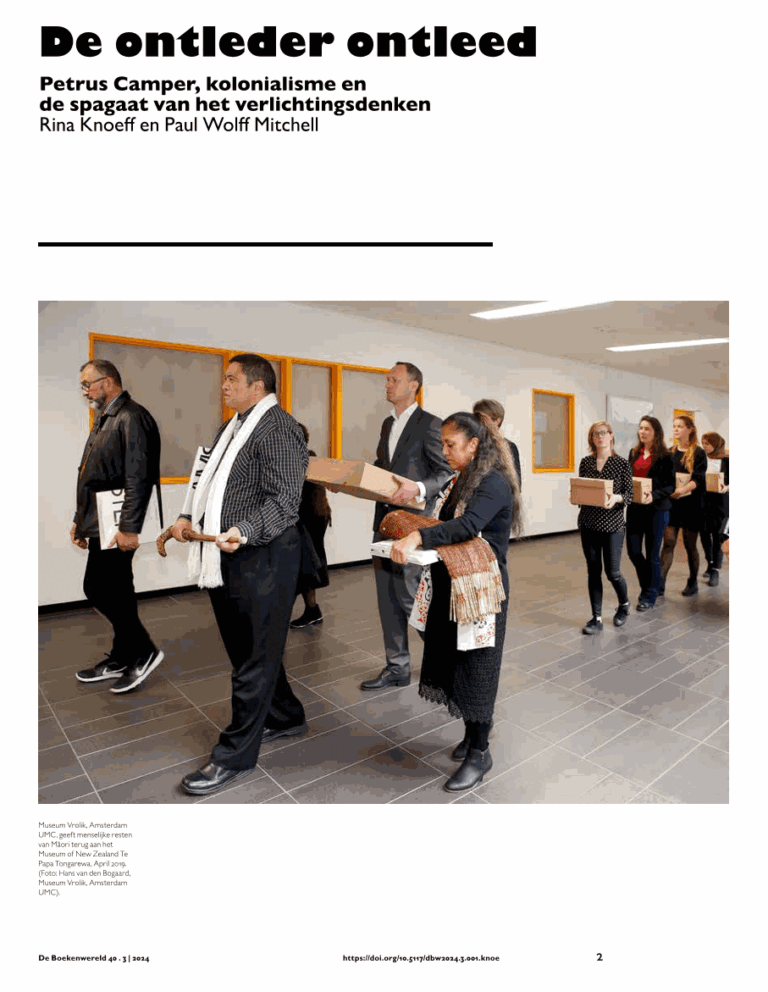
[ in Dutch ] The University Museum Groningen has a collection of human remains from Petrus Camper (1722-1789). Where do they come from and how can their presence there be understood? This issue of Magazine De Boekenwereld is about Camper, his ideas and his collection.
In 2023, Sri Lanka retrieved six objects from the Netherlands. The hope is that future initiatives will lead to the return of more Sri Lankan artefacts from other countries and even private collectors, fostering a stronger connection between the country and its cultural heritage.
A museum in Limburg has decided not to return five ornamental human skulls taken by missionaries from Papua New Guinea after the local population turned down the offer.
The Missiemuseum in Steyl investigated the origin of the artefacts in the wake of the controversy surrounding a skull from Benin that was sold by an auction house in Amsterdam.
In January 2021, the Dutch government became the first in Europe to approve a central mechanism for repatriating colonial loot. One aspect of the new policy raises concerns given that artefacts that were looted from non-Dutch colonies will not automatically be repatriated.
Mirjam Shatanawi's 'Legacies of Colonialism in Museum Collections - The (Un)Making of Indonesian Islam in the Netherlands' tells the untold story of Indonesian Islam in museums: Often overshadowed by Hindu-Buddhist art, Indonesian Islamic heritage rarely receives the attention.
[ in Dutch ] What to do with the human skulls from Africa or Asia in their collection? The days when this kind of heritage could be easily in museums seem to be over. The call for return to the place of origin is louder and louder. But are they waiting for it there?
[ in Dutch ] The University Museum Groningen has a collection of human remains from Petrus Camper (1722-1789). Where do they come from and how can their presence there be understood? This issue of Magazine De Boekenwereld is about Camper, his ideas and his collection.
An exhibition at the Foreign Ministry Museum in Mexico City is displaying more than 100 stolen pieces that have been recovered, thanks to intense work by the country’s diplomats.
As a result of the Netherlands’ colonial past, parts of the history of countries, communities and individuals across the world are being held in archives currently located in the Netherlands. These archives might not be in the right place.
The Lebang community in Cameroon has been the recipient of eight (8) significant cultural and spiritual heritages sold in auction and online in The Netherlands and Germany.
Taco Dibbits: “Like many people I used to think of restitution as a solution — politically, certainly. If you just give something back, then that’s done with, finished. But now I think it’s only the beginning.".
Chief Charles Taku has made an impassioned call for the “urgent and unconditional restitution of the Bangwa Queen in Dapper Foundation in France, the Bangwa King in Metropolitan Museum in New York, USA and the cultural heritage artefacts which are in the National Ethnological Museum in Berlin and Municipal Museums in Germany, in the Netherlands and other parts of the world.”
Cynthia Scott analyzes the history of the negotiations that led to the atypical return of colonial-era cultural property from the Netherlands to Indonesia in the 1970s. By doing so, the book shows that competing visions of post-colonial redress were contested throughout the era of post-World War II decolonization.
[ in Dutch ] The judge has ruled that the collection of the Africa Museum in Berg en Dal is owned by the fathers of the Congregation of the Holy Spirit. The National Museum of World Cultures (NMVW) must return the collection to them.
An international group of two hundred scientists and specialists in predatory art protests against the trade in human remains by the Amsterdam auction house De Zwaan. It is a skull of a person of the Fon people from Benin. The skull was sold last month for eight hundred euros.
In response to a request by the Mexican government, the Netherlands has decided to return a human skull which is part of the Dutch State Collection of Wereldmuseum Leiden to Mexico. The Ministry of Culture has handed over the skull to the Mexican embassy in The Hague.
[ in Dutch ] The Dutch city of Rotterdam returns 66 looted objects from the municipal collection to Indonesia. They were looted by the Dutch army. The municipal government chooses to follow the State's return rules.
[ in Dutch ] Fifteen skulls originating from the Moluccas have been returned to the island group Tanimbar. These skulls had been part of the collection of Museum Vrolik, the anatomical museum of Amsterdam University Medical Centre, since the very early 20th century.
[ in Dutch ] In colonial times, thousands of human remains ended up in Dutch museums. Soon, Moluccan activists will bring back 15 skulls single-handedly.
Advisory reports from the Colonial Collections Committee on objects for which restitution has been requested by Indonesia. The provenance reports have been added as an appendix.
The “De Grote Indonesië Tentoonstelling” at De Nieuwe Kerk in Amsterdam has faced scrutiny due to its display of seven Buddha heads, allegedly from the Borobudur, lacking contextualisation.