Colonial looted art is finally being returned to its countries of origin. New problems lie ahead, as former colonies now fear the return of looted art may take the place of a comprehensive reparation for colonial crimes.
[ in English and in Dutch ] The Indonesian Repatriasi Commission and Naturalis will work together to explore how the importance of the Homo erectus fossils from the Dubois collection can best be safeguarded for Indonesia, the Netherlands and the rest of the world.
[ in French ] Just before the major exhibition "Dakar-Djibouti, counter-investigations", scheduled for 2025 at the Musée du quai Branly-Jacques Chirac, in France, Sotheby's is selling part of the collection of the art dealer Hélène The Wolf. A collection built up between the end of the colonial era and the beginning of Mali's independence.
A YouGov poll, commissioned by the Parthenon Project, suggests the majority of Brits would back returning the sculptures to Greece in a "cultural partnership".
Crania from a Nordic 'golden age' sit in a Harvard museum basement, and now researchers on both sides of the Atlantic want to reunite them with their bodies.
The Rochester Museum in New York and Harvard University return ancestral remains of Native Americans and funerary artifacts to the Oneida Indian Nation.
The Koh-i-Noor diamond, a 106-carat gem that is part of Britain's crown jewels, has been back on public display after initially being absent at Charles III's coronation. The diamond was gifted to Queen Victoria after Britain's East India Company formally annexed the Kingdom of Punjab in 1849.
One of the most preserved among the eleven remaining mantles of the Tupinambá native people will definitely return to Brazil. By the end of 2023, the treasure made with red feathers of the scarlet ibis will leave the ethnographic collection of the Nationalmuseet, the National Museum of Denmark, and will join the collection of the National Museum in Rio de Janeiro.
The age of many of museums, particularly those in the UK, means that they have artefacts dating back to colonial times. This article lists arguments pro and con restitution. Here the con's are presented.
Dresden’s museum of world cultures returned four everyday objects to the Kaurna Aboriginal community of Australia at a ceremony in Sydney: the spear, digging stick, cudgel and net were brought to Germany by two protestant missionaries between 1838 and 1839.
Emails leaked to BBC News claim the British Museum was alerted by Ittai Gradel, an antiquities dealer, to items being sold on eBay in 2021, but that it ignored the report.
[ in Dutch ] The 2014 forced marriage between the Africa Museum in Berg en Dal, owned by the Fathers of the Holy Spirit, and the Dutch National Museum of World Cultures (nowadays Wereldmuseum) has never been a happy one.
The National Museum of Natural History has at least 30,700 human bones and body parts in storage. Brains and other body parts, mostly from people of colour, were taken without consent.
The most important object a bronze ceremonial cannon of the King of Kandy, partly covered with silver and gold, and set with rubies. During a military campaign in 1765, the Dutch had captured it. + [ in Dutch ] Negative reaction to it
Political turmoil across the continent is hampering plans for national structures to return colonial-era heritage. But the UK, once a laggard, appears to be preparing to review laws
[ in Dutch ] The theme of 'looting art' is back on the agenda, as more and more requests are coming in from museums to bring collection pieces back to former colonies.
The extensive article 'The ghosts are everywhere, about a museum beset by colonial controversy, difficult finances and the discovery of a thief on the inside.
Tim Maxwell: Repatriating artefacts found underwater could help former colonial powers meet moral obligations to countries they had historically exploited for their transatlantic slave trade.
Creative pursuits in Spain face the challenge of purging the country’s colonial vision, critically reviewing its relationship with the Americas and overcoming a gender bias. + Pedro Antonio Cano, a 7-foot man from South America
Since 2017, Berlin's Museum of Prehistory and Early History has been carrying out research on around 1,100 skulls from what was known as German East Africa.
Manchester Museum, UK, has handed over 174 items to the Australian Aboriginal Anindilyakwa Community, marking one of the largest restitution projects ever undertaken in the UK.
This is how the difficulties of the colonial past should be negotiated. First, begin with the object and not the politics. Museums cannot absolve the crimes of colonialism and they should not be mobilised to assist contemporary geopolitical objectives.
Egypt has announced plans to convene an international meeting for countries affected by the smuggling of antiquities during the age of imperialism. The move comes in the wake of the revelation that over 2,000 artifacts were stolen from the British Museum, which has raised concerns about the credibility of several Western museums.
A project to investigate the origins of human skulls taken from the former colony of German East Africa has concluded that nearly all are the remains of people from the same colonized region
Museums from Glasgow to Cambridge are proactively repatriating objects. Glasgow has become the first UK museum to repatriate objects to India (“a very emotional event”, as Glaswegians of Indian heritage said).
The Mauritshuis gallery in the Netherlands and the Humboldt Forum in Berlin have joined forces in an exhibition that addresses the looting of art that has sustained European collections for centuries
The National Museum of Scotland nearly had to call off the high-profile repatriation of a totem pole to the Nisga’a in Canada after the Scottish Government reneged on a promise to cover costs.
[ in Dutch ] The owner of the museum, the Congregation of the Holy Spirit, wanted the World Museum to admit visitors until the lease expires on December 31, 2024.
Isabella Walsh, an Irish woman, has contacted embassies and consulates in Dublin and London to repatriate 10 African and Aboriginal objects that her father wanted to be returned
African leaders and diaspora have gathered for a 4-days meeting in Accra, Ghana, to discuss reparations for the slave trade and also for the restitution of lost treasures.
[ in French ] President Tshisekedi of DR Congo, currently chair of the African Union, has made restitution priority. It is interesting to read what the Director General of the Kinshasa Academy of Fine Arts, Henri Kalama Akulez, has to say about it.
Many believe new applications—from AI and NFTs to 3D scanning—are game changing in returning objects to source communities. Lawyers say they can make the process harder.
The semi-documentary sheds light on the Qing Dynasty (1644-1911). Taoist abbot Wang Yuanlu, who was the caretaker of the Mogao Caves (UNESCO World Heritage site) in Dunhuang in Northwest China's Gansu Province, discovered the Library Cave at the site, a repository of over 50,000 items dating back to the 4th to the 11th century.
Switzerland’s Federal Council will set up a new independent committee to advise on disputes over art that was looted during the Nazi era. The committee will also be consulted over repatriation claims made about cultural objects that came to Switzerland due to colonialism.
With our own website, a dream is coming true. RM* [restitution matters] began in 2018 with some sixty users and now reaches over 3,000 users worldwide; most of you with roots in the global south.
Germany asks forgiveness for 'dark' colonial legacy in Tanzania and discusses repatriation of human remains. German President Frank-Walter Steinmeier said his country would "open negotiations" with Tanzania to discuss the is colonial past in the East African nation.
The Netherlands will physically hand over six Sri Lankan artefacts to Sri Lanka during a two-day event at the Colombo National Museum. All come from the Rijksmuseum Amsterdam, among them is a famous ceremonial cannon of the King of Kandy (captured in 1765).
What his piece makes also interesting is what Nelly Kalu writes about her childhood: When I was a child, my father would tell me stories of the deities in our village and their significance to our lives, even in our names
Among the most intriguing objects in the British Museum is the Asante Ewer, a bronze jug made in England for Richard II in the 1390s, which somehow ended up in West Africa.
When the southwestern jungles of Colombia were rediscovered by Spanish colonizers in the 18th century, looters arrived looking for gold. Scientists eventually followed to survey, study, and inventory the site.
‘I’m a strong believer that trustees of museum collections should have autonomy over those collections, and be able to make the case whether they should retain them within the UK or loan them to other museums around the world – or indeed begin a conversation around restitution and repatriation.’
British Museum chair George Osborne (and Lord Cameron) criticise Sunak over Parthenon marbles. Osborne says the row gave the Labour Party a line of attack. Rishi Sunak opened the door to a ‘devastating line of attack’ from Labour by snubbing his Greek counterpart, PM
The Rosenbach Museum & Library in Philadelphia voluntarily transfers to the custody of the FBI a 16th-century manuscript for return to the Archivo General de la Nación del Perú, the Peruvian national archives.
[ in Dutch ] The problems at the AfricaMuseum in Tervuren are mainly a result of a lack of money. This is what director Bart Ouvry says, who is responding for the first time to the sharp criticism of political scientist and public officer Nadia Nsayi. In a column in De Morgen, she accuses him of toxic behavior, weak leadership and too little eye for diversity.
British High Commissioner in Nigeria: UK museums operate independently of the government, as decisions relating to the care and management of UK collections are addressed by museum trustees, with claims for restitution addressable to relevant museums.
Nick Merriman, the chief executive of the Horniman Museum in south London, says inclusion of difficult stories of slavery and empire is not wokery, but ‘simply good history’.
It might seem impossible to hurt the feelings of a 3,000-year-old corpse, but woke museum chiefs have stopped using the word 'mummy' to describe the remains of ancient Egyptians, all in the name of 'respect'.
Nadia Nsayi is a political scientist and author of Daughter of Decolonization and Congolina. She argues why she hesitates to take a step back in the AfricaMuseum. [ in Dutch ]
Human remains held in French public collections and less than 500 years old, can now be returned to their countries of origin by a decision of the prime minister.
[ in French ] The auction of an extremely rare African sculpted mask for 4.2 million euros, initially purchased for 150 euros by a second-hand dealer from a French couple, has been validated by the court of Alès (Gard).
Tony Blair considered a “long-term loan” of the Parthenon Marbles to Greece in the hope of support for a London 2012 Olympic Games bid, bypassing the issue of ownership.
In 2023, Sri Lanka retrieved six objects from the Netherlands. The hope is that future initiatives will lead to the return of more Sri Lankan artefacts from other countries and even private collectors, fostering a stronger connection between the country and its cultural heritage.
A museum in Limburg has decided not to return five ornamental human skulls taken by missionaries from Papua New Guinea after the local population turned down the offer.
The Missiemuseum in Steyl investigated the origin of the artefacts in the wake of the controversy surrounding a skull from Benin that was sold by an auction house in Amsterdam.
The Digital Benin project provides a central place to see artifacts that are now scattered around the Global North. Its organizers hope it will be the first step toward repatriation.
Princess royals Ncedisa Maqoma and Princess Mamtshawe Zukiswa Kona of the Xhosa nation saw in Dublin, for the first time, their ancestor Chief Maqoma’s sacred warrior’s stick, looted and brought to Ireland 150 years ago.
Germany and France will jointly spend €2.1m (£1.8m) to further research the provenance of African heritage objects in their national museums’ collections, which could prepare the ground for their eventual return.
[ in Spanish ] The Spanish Minister of Culture, Ernest Urtasun, has reported to the parliamentarian Commission on Culture about the review of the “colonial framework” carried out in Spanish museums, institutions “anchored in gender or ethnocentric inertia that have often hindered the vision of heritage, the history and artistic legacy”. Conservatives are against.
British Museum and V&A to lend Ghana looted gold and silver. Tristram Hunt, director of the V&A, said the items were the equivalent of “our crown jewels” but added that the three-year was “not restitution by the back door”.
Growing pressure on European museums to return artifacts taken from Southeast Asia during colonial times could provide soft-power benefits for the EU amid attempts to improve its image in the region, analysts say.
Almost nine decades after it was stolen by Benito Mussolini’s fascist regime, the Italian government has officially returned Ethiopia’s first plane, named Tsehay in honour of the princess daughter of Emperor Haile Selassie.
Yinka Adegoke of Semafor interviews Oumy Diaw, contemporary art specialist and former communications director for the Museum of Black Civilizations in Dakar, Senegal.
During Mongolia’s Minister of Culture, Nomin Chinbat’s visit to Britain, not only the 2027 exhibition Arts of the Mongol World was discussed but also provenance research and restitution. Mongolia’s treasures ‘provide a window on the country’s history and demonstrate the vibrancy and captivating nature of our nomadic culture’.
Switzerland has returned four mummies to Chile, including two of them among the world’s oldest, after their private owner agreed to their restitution. Other remains, in an “advanced state of degradation”, buried in Geneva.
[ in French ] Indonesia is pursuing a process of complete repatriation of cultural works looted during the colonial period. By mid-December, 828 objects had been returned by the Netherlands, according to the Indonesian Heritage Agency.
Hundreds of Indonesian artefacts that were in the Netherlands for more than a century - the bulk of which were looted by the Dutch during their colonial rule - are now on display at Indonesia’s National Museum in Jakarta. They are among the latest batch of items returned after a lengthy process involving both countries.
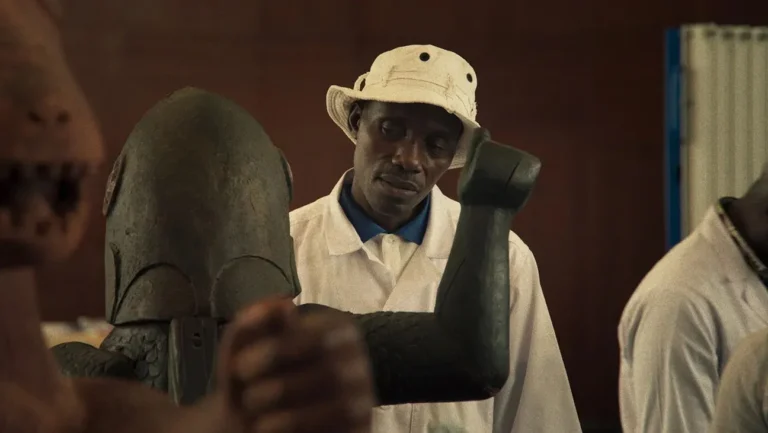
In Mati Diop’s film Dahomey, which premiered at the Berlin film festival, the director documents the 2021 journey of 26 treasures that the commander of French forces in Senegal looted from the royal palace of the kingdom of Dahomey, part of modern-day Benin, in 1890.
The BM is tackling an influx of social media trolls from Chile, who have flooded the museum’s Instagram posts calling for the return of a moai statue, one of the stone monuments from Easter Island.
An exhibition at the Foreign Ministry Museum in Mexico City is displaying more than 100 stolen pieces that have been recovered, thanks to intense work by the country’s diplomats.
Over the past several weeks, museums across the United States have been covering up and removing displays of Native American ancestors and cultural objects.
A commission of French and Algerian historians created to reconcile colonial difficulties has agreed proposals for the exchange of archives, remains and artefacts.
'Measina' or cultural artefacts kept in the Uebersee Museum in Bremen will be back in Samoa in June 2024. A team from the National University of Samoa, led by Ta’iao Matiu Dr Matavai Tautunu, will be making this trip.
If you came here for a vicious takedown or a strident defence of Tristram Hunt’s position on “colonialism and collecting”, you might be slightly disappointed.
Guyana is seeking the return of various artefacts including a letter written by Quamina, the leader of a 19th century slave rebellion, held by the School of Oriental and African Studies, University of London (SOAS).
Some 17,000 human remains are said to be in the collections of German museums and universities. It's often no longer clear how they ended up in Germany. Colonialists committed horrific crimes.
Two great granddaughters of a Sakalava king, who was beheaded in 1897 by colonial troops, publicly addressed the French ambassador, asking him to speed up the repatriation of their ancestor’s skull.
An indigenous Mexican nation, the Nahñu people in the central Mexican state of Hidalgo, has written to the Assemblée Nationale in France seeking the return of its codex, arguing that the centuries-old manuscript describes traditions it still continues.
After almost 70 years in the Africa Museum, the rare Kakungu mask is back in Congo. Despite the festive ceremony at the National Museum, the mask remains the property of Belgium, causing unrest among the Congolese people and the Suku community, where the mask originally came from.
A 200-year-old wampum belt has spent much of its existence at the Vatican’s museums, across the ocean and thousands of kilometres away. Last year, the belt, made by Algonquin, Nipissing and Mohawk peoples in 1831, was returned to Canada for 51 days – for a brief appearance at a Montreal museum in the fall – before it was sent back the vaults of the Vatican. In 2023, nothing was returned, a Timeline reveals.
A group of 11 sacred Ethiopian altar tablets, which the museum acknowledges were looted by British soldiers after the Battle of Maqdala in 1868, have never been on public display and are considered to be so sacred that even the institution’s own curators and trustees are forbidden from examining them.
The Lebang community in Cameroon has been the recipient of eight (8) significant cultural and spiritual heritages sold in auction and online in The Netherlands and Germany.
Robert Jenrick, MP Conservative Party since 2014 and Minister of State from 2022 to 2023, writes: Our museums have fallen into the hands of a careless generation. Foreign governments seeking restitution of art calculate that our institutions – the UK itself – lacks the self-confidence to fight back.
Taco Dibbits: “Like many people I used to think of restitution as a solution — politically, certainly. If you just give something back, then that’s done with, finished. But now I think it’s only the beginning.".
32 Gold and silver items have been sent on long-term loan to Ghana by the Victoria & Albert Museum (V&A) and the British Museum (BM). They were stolen during 19th century conflicts.
Chief Charles Taku has made an impassioned call for the “urgent and unconditional restitution of the Bangwa Queen in Dapper Foundation in France, the Bangwa King in Metropolitan Museum in New York, USA and the cultural heritage artefacts which are in the National Ethnological Museum in Berlin and Municipal Museums in Germany, in the Netherlands and other parts of the world.”
Earlier in 2024, David Nolan Gallery in New York mounted the exhibition Fort Marion and Beyond: Native American Ledger Drawings, 1865–1900, gathering over 100 works on paper by Native artists from the Arapaho, Cheyenne, Hidatsa, Kiowa, and Lakota tribes.
With tens of thousands of African artworks in French museums, curators face a huge task in trying to identify which of these were plundered during colonial rule in the 19th and 20th centuries and should be returned.
Peru’s Ministry of Culture triumphantly reclaimed 202 cultural artifacts, spanning various eras and civilizations, from Germany, Spain, the USA, Canada, and Belgium, showcasing successful international collaboration against illicit trafficking.
Spain maintains unwavering ownership of the Quimbaya Treasure, dismissing Colombia’s legal and diplomatic efforts to reclaim the pre-Columbian artifacts donated to Queen María Cristina in 1893. Both nations stand at a crossroads over the fate of 122 golden pieces, symbolizing cultural heritage and historical legacies intertwined with colonial conquests.
[ in Dutch ] The judge has ruled that the collection of the Africa Museum in Berg en Dal is owned by the fathers of the Congregation of the Holy Spirit. The National Museum of World Cultures (NMVW) must return the collection to them.
An international group of two hundred scientists and specialists in predatory art protests against the trade in human remains by the Amsterdam auction house De Zwaan. It is a skull of a person of the Fon people from Benin. The skull was sold last month for eight hundred euros.
Sarah van Beurden: What is new is the wave of research on the origins of colonial collections, and several projects – both academic and artistic – reflect on the larger cultural loss the removal of these objects caused in their communities of origin.
The looting of Cambodia’s sacred temples, in the dead of night or under the cover of the fog of war by unscrupulous thieves, took place over many decades up until the 2000s. Now, a host of museums are investigating their own collections.
Trinity College and the Museum of Archaeology and Anthropology (MAA) agreed in March 2023 to return the spears to descendants of the Gweagal people who crafted the spears more than 250 years ago. One year later, they were handed over.
At a formal repatriation ceremony at the Okinawa Prefectural Museum and Art Museum in Naha, the Federal Bureau of Investigation and the Embassy of the United States in Tokyo returned 22 historic artifacts that were looted following the Battle of Okinawa and had been missing for almost 80 years.
Semley Auctioneers – based in Dorset – have made 18 skulls available for auction and estimate each skull will be sold for between £200 and £300. The auction is scheduled to take place on 18 May 2024.
Ghanaians flocked to the Manhyia Palace Museum in Kumasi, the capital of Asante region, to welcome the 32 items home. "This is a day for Asante. A day for the Black African continent. The spirit we share is back," said Asante King Otumfuo Osei Tutu II.
There are obvious similarities between the episode in 1874 and 1896 (Asante Kingdom) and 1897 (Benin Kingdom). Both kingdoms have been asking for restitutions for decades. Barnaby Philips explores why is it taking Nigeria so long to put its returned treasures on display?
Many artefacts in UK collections were taken along with a war indemnity of 50,000 ounces of gold following the Third Anglo-Asante War, then auctioned off to collectors of major museums by the Crown jeweller in order to raise funds for injured soldiers.
The fact that the government and elected representatives are unable to reach a consensus on large restitutions raises questions about the future of a framework bill designed to facilitate such transfers, writes columnist Michel Guerrin.
Conversations between communities and institutions around the world are ramping up, with museums and universities agreeing to return culturally significant items. But in the case of the British Museum, there is one big roadblock.
Omo N’ Oba N’ Edo, Oba of Benin, has taken custody of two looted royal stools from the German government, symbolising a significant step in the right direction.
Kodzo Gavua has called for an intensive education on the plunder of African cultural heritage objects and systems and the need for their return. Such efforts would help safeguard the nation’s cultural legacy and contribute to tourism and scholarly research.
Beninese President Patrick Talon has an ambitious development plan with culture and heritage at its core. “It is at the end of the old rope that the new one is best woven,” he said recently, citing an old African proverb.
[ in Portuguese ] Portugal has been doing little to develop knowledge on the provenance of its collections that came from former colonies. This can be partly explained by the lack of human and financial resources in archives, museums and universities.
The Federal Government has vowed to pursue all necessary measures, including legal action in international courts, to recover cultural artefacts stolen from Nigeria.
The Department of Antiquities of the State of Libya and the Cleveland Museum of Art have announced an agreement in principle for the transfer of a Ptolemaic statue of a man to the State of Libya. It was lost in 1941, during the Second World War.
[ in French ] Algeria has made a request for the return of objects that belonged to Emir Abdelkader, a great resistance fighter in the conquest of Algeria in the 19th century, who was defeated in 1847.
At a United Nations meeting, Turkey’s spokesperson denied that the Scottish diplomat who took them, Lord Elgin, had permission from the then-ruling Ottoman Empire. “We are not aware of any document legitimizing this purchase,” Zeynep Boz of the Turkish Culture Ministry told the UNESCO committee that oversees restitution cases.
The barriers are legal, as many of these items are held by private individuals rather than the state, Buddhasasana, Religious and Cultural Affairs Minister Vidura Wickremenayake said.
Some French parties pressure their country’s authorities to prevent them from responding to the requests submitted by the Algerian-French mixed commission concerning the restitution of some “symbolic” property that France had looted from Algeria during the occupation period.
The Alliance for Cultural Heritage in Asia (ACHA) is a framework in which China will work with all Asian countries to strengthen experience sharing on cultural heritage preservation and establish a network for dialogue and cooperation among civilizations. Many members are also participating in China's Silk Road initiative. Reclaiming colonial loot is a minor aim.
Delegates from the Siksika Nation in Canada visit Exeter’s Royal Albert Memorial Museum (RAMM) in Exeter, UK, for a handover ceremony of a ceremonial Woman’s Headdress. The headdress has been held at RAMM since 1920.
Popular British actor and writer Stephen Fry has compared Lord Elgin’s removal of the Parthenon sculptures from Greece to Nazi Germany stealing the Arc de Triomphe during the occupation of France.
[ in Dutch ] Museum Huis Doorn in the Netherlands, the exiling place where Wilhelm II lived until his death in 1941, owns 36,000 objects from the ex- emperor. How many of these have a colonial origin, and whether there is colonial predatory art, for example, the museum did not know until recently.
David Guido Pietroni, Italian publisher, film, and music producer, offers an overview of the BM’s history, not only of its large collections of artworks, antiquities, and collectibles, but also of its large collections of controversies: colonial loot, Nazi-looted art works, stolen and lost objects, and links with big business.
The contents were two skulls molded with mud and three large effigies, called rambaramp, each containing the skull of a man, uniquely painted to depict the final stages of his life.
In 1905, a colonial British officer killed Koitalel Arap Samoei, the supreme leader of the Nandi tribe. According to oral history, his severed head was taken to the UK. The Nandi have been searching for it ever since. The Nandi have been searching for it ever since.
A German museum is facing right-wing backlash after creating a designated time for non-white visitors to view an exhibition about colonialism, the Washington Post reported last week. Police remain stationed at the museum. Director Kirsten Baumann: We want to offer victims of racism a safe place.
China has launched a recommendation for the protection and return of cultural objects removed from colonial contexts or acquired by other unjustifiable or unethical means: the Qingdao Recommendations for the Protection and Return of Cultural Objects Removed from Colonial Contexts or Acquired by Other Unjustifiable or Unethical Means (Qingdao Recommendations)
The Museum of Cultures and the Natural History Museum in Basel, Switzerland, returned a collection of approximately 90 aboriginal artefacts, including human bones and tools, of Sri Lanka’s indigenous population.
The American Museum of Natural History (AMNH) institution holds the bodies of 12,000 individuals from communities within and outside the United States. The majority of which lack identification.
Six years ago, AIATSIS set up the Return of Cultural Heritage (RoCH) programme, and began looking at collections worldwide that might have holdings to return. Among the 200 institutions it first contacted, 74 responded positively, among these the Fowler museum in Los Angeles
The British Museum (BM) has an extensive collection of Chinese antiquities. Historically, many assumed that these treasures were obtained through imperialist plunder. However, recent findings by US historian Justin Jacobs present a different narrative, suggesting that a significant number of the artifacts in question were willingly given to the British Museum by Chinese officials.
Alexander Herman: When Prime Minister Justin Trudeau met with Pope Francis last month, he raised the issue of reconciliation with First Nations, and urged the pope to return Indigenous cultural artifacts from the Vatican collections to communities in Canada. This request came at a tense time.
The Fine Arts Museums of San Francisco (FAMSF), which stewards the De Young Museum and the Legion of Honor, has begun consulting with Native tribes on how to return remains that were gifted, in some cases, over a century ago.
Nigerian creators Shobo and Shof, known for New Masters, are set to debut their latest project, Bronze Faces, a gripping art heist drama that brings real-world issues to the comic stage in 2025.
The Parthenon Marbles, Rosetta Stone and Benin Bronzes are just some of the ‘contested objects’ in the British Museum (BM). The Marbles are ‘not going to be on the prime minister’s agenda. His focus will be on support for Ukraine and the urgent need for a ceasefire in Gaza.’ They remain ‘a matter for the BM, and the government has no plans to change the law to permit a permanent move of the Parthenon Sculptures.’ But the BM has more contested collections.
An estimated 350,000 African artefacts and manuscripts, as well as human remains, photographs and natural history specimens, have been found in the stores and archives of the eight museums and the Botanic Garden which together make up the University of Cambridge Museums, as well as the University Library and less-well known collections in university departments and institutions.
Keir Starmer reiterates support for British Museum reaching deal with Greek PM. “The mood music has completely changed,” said one source close to the negotiations.
In a lengthy contribution, Kwame Opoku wonders how long the Ovaherero must wait for justice and reparation for the German genocide? He extensively quotes a press release of the Ovaherero Traditional Authority-Ouhonapare uo Mananeno uo Vaherero. Part of it is about repatriation.
An ancient, carved tree will be returned to Australia around a century after it was cut down and shipped to Europe. It was one of several “dhulu” stolen from a Gamilaraay ceremonial site beside a creek in northeast NSW in 1917.
Your auction is soaked in blood—give back Ras Desta Damtew’s medal: An open letter to La Galerie Numismatique in Lausanne. The medal was stolen by a Fascist army invader, its proper recipient unlawfully executed, and now your event practically celebrates the theft and murder.
More than 128,000 Native American ancestors and 4.5 million sacred objects have been identified in collections across museums, universities and government agencies. Those numbers don't include more than an estimated 90,000 ancestors and 700,000 associated funerary objects that have not yet been identified in collections.
It is seven years since President Emmanuel Macron of France announced his revolutionary plan to return African heritage to the continent. But following his declaration in Burkina Faso in November 2017 that “African heritage can’t just be in European private collections and museums”, the restitution journey has been arduous.
[ in German ] The draft law on the return of cultural property from colonial contexts has been shelved for the time being. It did not meet with the approval of the ruling Österreichische Volkspartei ÖVP (Austrian People’s Party).
In October 2024, a 19th-Century skull from the north-eastern Indian state of Nagaland was up for auction in the UK. The horned skull of a Naga tribesman was among thousands of items that European colonial administrators had collected from the state.
[ in Dutch ] The Dutch city of Rotterdam returns 66 looted objects from the municipal collection to Indonesia. They were looted by the Dutch army. The municipal government chooses to follow the State's return rules.
As one of the oldest educational institutes in Scotland, the University of Edinburgh holds more than a million items in its historic collections. Around 13,000 are anatomical artefacts and of these, more than 1,800 are skulls. A large number of the skulls in the collection were amassed during the colonial period.
The contents were two skulls molded with mud and three large effigies, called rambaramp, each containing the skull of a man, uniquely painted to depict the final stages of his life.
In November 2022, the Horniman Museum in London brought back six Benin objects to the Oba of Benin. Horniman’s Nick Merriman was rather enthusiastic. Independent researcher Mike Wells takes a hard look at Merriman’s historical and factual claims regarding the Horniman’s ‘research and consultation process’ and the museum’s arguments supporting return of the bronzes.
The Ayôkwé djidji or talking drum, confiscated in 1916 by the French army from the Ebrié community, will be exposed in its home country, but France has yet to pass legislation allowing for it to be formally restituted.
Anmol Irfan, a Muslim-Pakistani journalist, writes: Governments delay the process; museums often answer to wealthy donors. Complexities arise that require each case to be handled individually. But the first step of acknowledging the generational hurt and trauma caused by the removal of these culturally important and sacred artifacts has opened doors to broader solutions on a global scale.
Asantehene, Otumfuo Osei Tutu II, is set to receive 28 gold ornaments and regalia from South Africa, marking another restitution of Asante cultural heritage looted during the 19th century, including linguist staff, swords, palace security locks, rings, necklaces, and proverbial gold weights depicting crocodiles and gold scandals. These items reflect the governance structures and chieftaincy traditions of the Asante Court.
A sacred cloak that had been in the holdings of the National Museum of Denmark for more than 300 years was returned to Indigenous leaders in Brazil. The nearly six-foot-long cloak was constructed using 4,000 scarlet ibis feathers. It was taken from the Tupinambá people during Portuguese colonial rule.
From this contribution by BBC correspondent Adaobi Tricia Nwaubani: Kenneth C Murray, a British colonial art teacher, was a key figure in Nigeria’s museum history. Murray was invited to Nigeria at the request of Aina Onabolu, a European-trained Yoruba fine artist who convinced the colonial government to bring qualified art teachers from the UK to Nigerian secondary schools and teacher training institutions.
The enduring controversy surrounding the Parthenon Sculptures, one of the world’s most prominent cultural property disputes, may see significant progress in 2025, according to The Economist’s The World Ahead 2025 report.
Claim of the Restitution Study Group: The Supreme Court has denied certiorari in the case Deadria Farmer-Paellmann v. Smithsonian Institution, allowing the return of 29 Benin Bronzes to Nigeria to proceed without further legal challenge.
Panorama of the Nord Deutsche Rundfunk wrote an extended commentary on a 35-minute-long documentary: ‘African human skull, early 20th century, €2000’ - this is how dealers openly advertise human skulls on social media such as Instagram. Panorama reporters uncover just how dubious this trade is, especially when you realise the origin of these skulls (in German).
2024 marks the 140th anniversary of the start of the historic Berlin West Africa Conference of 1884/85. Germany is working hard to come to terms with its colonial history, including restitution.
Germany was a significant – and often brutal – colonial power in Africa. But this colonial history is not told as often as that of other imperialist nations. A new book called The Long Shadow of German Colonialism: Amnesia, Denialism and Revisionism aims to bring the past into the light. It explores not just the history of German colonialism, but also how its legacy has played out in German society, politics and the media.
It has become a tradition, Kwame Opoku’s annual retrospect. For him, the most spectacular event of the year for restitution was the royal lecture of the Asantehene, Nana Osei Tutu II (19 July 2024) at the British Museum London.
In June 2024, 39 artifacts were formally handed back to the government of Uganda by Britain's University of Cambridge. While the return is technically a three-year loan between museums, it is extendable, and could see them remain in their country of origin.
A Mexican delegation is coming to retrieve 84 Mesoamerican axes currently in transit at University de Montreal, underscoring the need to raise public awareness of the looting of archaeological artifacts.
Culture Minister Fadli Zon told lawmakers that the United Kingdom is unwilling to repatriate historical artifacts and other antiquities taken from Indonesia in the 19th century. UK troops, led by Thomas Stamford Raffles, raided the Yogyakarta Palace in June 1812, seizing valuable items, including historic manuscripts.
[ in Dutch ] Fifteen skulls originating from the Moluccas have been returned to the island group Tanimbar. These skulls had been part of the collection of Museum Vrolik, the anatomical museum of Amsterdam University Medical Centre, since the very early 20th century.
Until the late 1980s Indigenous art was being ripped off left right and centre. It was open slather. First at the cheap end of the market on T-shirts and then on fancy carpets made in Vietnam. The rip-off merchants maintained black artists were just painting old patterns, so their work was for the taking.
Katharina Küng from canton Zurich had a headdress that she had received from her mother hanging on her wall for a long time. “We thought it was the padding of an old suit of armour,” Küng says. It wasn’t until a trip to Namibia that she realised – in the Swakopmund Genocide Museum – that it was a traditional Herero headdress.
The prize-winning documentary film Dahomey continues to evoke reactions. In ARTnews, Alex Greenberger writes: If the 2016 statement by Andre Frasier that prisons and art institutions are “two sides of the same coin of inequality” seemed provocative eight years ago, it appears only mildly controversial now, at a time when museums are commonly seen as appendages of racist, colonialist, and deeply unfair systems.
The return of artefacts to their countries of origin is not just an act of repatriation, but an opportunity for healing and reconnecting with cultural roots, said Tuuda Haitula, the museum development officer at the Museums Association of Namibia.
The Pennsylvania Museum’s Cultural Center in Philadelphia is launching a study that examines 450 museum collections, collecting policies and practices in the US and formulates a collection framework.
A bamboo sunhat that was looted from the Kenyah Badeng people of Sarawak, Borneo, during British-led war expeditions in 1895 and 1896, is returning home. It is the Pitt Rivers Museum's first object to be returned (as opposed to ancestral remains).
Early in October 2024, RM* distributed news about an auction by Swan Fine Art at Tetsworth (UK) of Naga human remains estimated at 3,500 – 4,000 UK pounds. This had infuriated the Forum for Naga Reconciliation and many others.
The National Museum of Finland is preparing to return a kataklé, a ceremonial royal stool which was received into the museum´s collections in 1939, to the Republic of Benin.
Thanks to Deneth Piumakshi Veda Arachchige, the Museum of Cultures and the Natural History Museum in Basel, Switzerland returned a collection of approximately 90 aboriginal artefacts, including human bones and tools, of Sri Lanka’s indigenous population this week.
[ in Dutch ] In colonial times, thousands of human remains ended up in Dutch museums. Soon, Moluccan activists will bring back 15 skulls single-handedly.
Can one historical injustice be compared to another? Historians don't like it, for understandable reasons. But in matters of looting art you can't escape it. What rarely happens, comparing books by authors from four countries on one subject, does Pieter van Os.
Algeria has made a request for the return of objects that belonged to Emir Abdelkader, a great resistance fighter in the conquest of Algeria in the 19th century, who was defeated in 1847.
Julia Binter talks about knowledge justice in relation to Namibian cultural assets and investigates cooperative research on cultural assets from colonial contexts in museums.