The Museum of Fine Arts, Boston (MFA), today returned two works of art from the Benin Kingdom to His Royal Majesty Omo N’Oba Ewuare II, Oba of Benin, in a ceremony at the Nigeria House in New York City.
On March 14, the remains of eight Mirning ancestors were returned to their country and buried. The ancestors lived between the late 1800s and 1979, and their remains had most recently been stored at the West Australian Museum.
Indigenous artefacts will be returned to their ancestral home on Mornington Island in Queensland's Gulf of Carpentaria. More than 3,000 kilometres away in Victoria, Baw Baw Shire staff uncovered the 37 articles in storage.
The international seminar Critical Studies on Provenance, History, and Cultural Heritage focused on the role of provenance research in cultural heritage and repatriation efforts. Organized with several Indonesian universities and professional associations, the event highlighted how tracing the origin of cultural artifacts is essential for repatriation claims—particularly in light of Dutch colonial history and recent returns of Indonesian objects.
Gov. Greg Gianforte last week finalized Montana’s two-year budget, which contains several new investments for Indian Country, including a historic increase in funding for tribal colleges and money devoted to repatriation efforts.
A royal shrine from the Joseon Dynasty (1392-1910), believed to have been removed from Korea nearly a century ago during Japan’s colonial rule, has returned home. Known as Gwanwoldang, the wooden structure was officially transferred to Korea through a bilateral cultural collaboration marking the 60th anniversary of normalized diplomatic ties between the two countries.
The path to true restitution requires more than symbolic gestures, demanding that Britain repeal its obstructive laws, France accelerate its glacial restitution process, and all former colonial powers establish transparent frameworks for repatriation.
Nigeria has received 119 Benin Bronzes from the Netherlands — the largest physical repatriation of looted artefacts since the 1897 British invasion of the Benin Kingdom. According to an expert, some of the pieces date back to between the 14th and 16th century.
The Japanese civic group, Movement for the Repatriation of Chinese Cultural Properties, urges the Japanese government to return looted Chinese cultural relics, the Chinese Global Times reports. Japan conducted archaeological surveys in China during wartime and later transported their "findings" to Japan under the guise of "academic research."
Quoting the recently deceased Kenyan author Ngũgĩ wa Thiong'o on decolonisation of the mind, Kwame Opoku critically analyses a recent interview in The Times with Nicholas Cullinan, the new director of the British Museum.
The Albanese Labor Government has welcomed the return of 10 First Nations ancestors from three Japanese collecting institutions. A joint ceremony was held in Tokyo. This is the first ever return of ancestors from Japan.
A delegation of Naga elders and leaders, along with representatives from the Forum for Naga Reconciliation (FNR) and Recover, Restore, and Decolonise (RRaD), gathered at the Pitt Rivers Museum (PRM), University of Oxford, to initiate the repatriation of Naga ancestral human remains.
South Africa is determined to repatriate the remains of its people taken abroad during the colonial era and those who died in exile as anti-apartheid activists, the culture minister Gayton McKenzie says. Including those of the Khoi-San, who are regarded as among the country's "first people".
In 2013, the AfricaMuseum near Brussels closed its doors and embarked on a major redesign. The architectural changes must have felt less challenging than the long overdue re-evaluation of the holdings and their presentation. Jeremy Harding reports.
In a five pages long joint statement, eight archaeological organisations from across the UK said a “cross-sector consultative forum” should be established to enable a wide range of viewpoints to be heard on any proposed changes to human remains legislation and practice.
Southern Africa is spearheading a transformative shift in the restitution discourse. This shift means reframing restitution as an act of healing, justice, and empowerment for communities still grappling with the enduring scars of historical dispossession.
According to the Greek newspaper Kathimerini, the Greek Government and the British Museum have made substantial headway in discussions regarding the Parthenon Sculptures.
[ in Dutch ] Collaborative research between heritage institutions in Europe and heritage communities outside Europe offer a unique opportunity to democratise the production of knowledge about the past, the present ,and the future, writes Katrijn D'Hamers (p. 72 ff).
Remains taken by Japanese researchers from a tomb in Okinawa Prefecture in the early 20th century have been returned, sources said Thursday. + comment Nathan Sydenham
A first activity will be the hosting of a Memorial Service to honor 19 individuals whose crania were taken from New Orleans in the 1880s and sent to Leipzig, Germany.
Pope Francis promised to return artifacts to communities in Canada, but several years on, they remain in the Vatican’s museums and storage vaults. Recently, Canadian Prime Minister Mark Carney discussed the return in a meeting with Canadian Catholic Cardinals.
Experts in Basel have found four plant collections belonging to the two naturalists Fritz and Paul Sarasin that were thought to be lost. Until now, scientists had assumed that these pocket herbaria were destroyed in Berlin during the Second World War.
Minister of Culture Fadli Zon announced significant progress in repatriating Indonesian cultural artifacts from the Netherlands after bilateral talks with the Dutch Colonial Collections Committee (CCC) in Jakarta.
Tamara Lanier, who sued the school in 2019 over daguerreotypes of her enslaved ancestors held in its museum, called the outcome “a turning point in American history.”
Culture Minister Samira Tovela announced Mozambique’s official effort to reclaim around 800 colonial-era artworks stolen during colonization. The process, supported by UNESCO and EU nations, comes ahead of the country’s 50th independence anniversary in June. The cultural and symbolic value is estimated at over USD 100 million.
In The Art Newspaper, Ben Luke wonders whether museums are ‘guilt tripping’ their visitors and concludes they aren’t doing enough.
Engaging with the difficult histories behind objects has deepened my experiences at cultural institutions — and the fact it is different for everyone is a good thing.
[ in Portuguese ] A 15-point action plan is the most tangible proposal put forward by the working group in a report on “sensitive heritage” at the University of Coimbra. Among the actions consists are “identifying and systematizing all the ‘sensitive heritage’ of UC”, the adoption of principles on dealing with them, legislation for restitution and the repatriation of a skull collection to Timor Leste.
In a historic handover event at the Fowler Museum in California, USA, a collection of 11 objects of deep cultural significance were unconditionally returned to the Larrakia Community of the Northern Territory in Australia.
Half of the 11 returned objects to the Larrakia community in Northern Australia first arrived at the Fowler Museum in 1965 through a large donation from the Wellcome Trust.
In Benin, a 'kataklè' – a ceremonial stool, and the final piece of the royal treasure of Abomey – has been returned by Finland, 133 years after being looted by French troops and later transferred to the National Museum of Finland. It began with an investigation by a Radio France International (RFI) journalist.
The Smithsonian's National Museum of Asian Art returned the remnants of the Zidanku Silk Manuscript, estimated to be more than 2,300 years old, from its collection and formally transferred them to China's National Cultural Heritage Administration.
The director of the British Museum, Nicholas Cullinan, has ruled out any move towards allowing restitution from its collections as he focuses instead on fostering global collaboration.
British Culture Secretary Lisa Nandy: “In the arts and creative industries, Britain and India lead the world and I look forward to this agreement opening up fresh opportunities for collaboration, innovation and economic growth for our artists, cultural institutions and creative businesses." (Not a single word about restitution)
The Museum of Fine Arts (MFA) in Boston returned 27 Benin objects to Robert Lehman, from whom it had received them on loan. Kwame Opoku: The museum's attempt to keep up an ethical image is not convincing.
Why and how is filmmaking important to the search for justice and efforts to right historical wrongs? Because filmmaking, as an art, is partly responsible for didactic, historical portraiture.
[ in French ] France Culture interviews historian Benjamin Storashares about some of the issues with the restitution of documents and objects that were looted during the 1950's war of independence of Algeria.
La Galigo, an Bugis text, is poetry, written on palm leaves in Bugis language and is considered to be the most voluminous literary work in the world. But the majority of the manuscripts are stored in Leiden University, The Netherlands.
According to the Japanese government, the remains of three Ainu Indigenous people that were kept at the University of Edinburgh in Scotland will be returned.
The repatriation of African art is gaining momentum, but a number of highly important and symbolic pieces remain in the hands of the continent’s former colonisers.
In an unprecedented move for a United States arts institution, the Museum of Fine Arts, Boston, will return a promised gift of Benin Bronzes to collector Robert Owen Lehman and close the collection’s dedicated gallery on April 28.
On May 6, just days before Buddhists around the world celebrate the holiday of Vesak, Sotheby’s Hong Kong will put relics of the Buddha — what Sotheby’s calls the “Piprahwa Gems of the Historical Buddha”— on the auction block.
Pope Francis died on April 20 at 88, marking the end of an epoch for the Catholic Church and the beginning of its search for the next spiritual leader, who will also become proprietor of the Vatican’s library and vast art collection.
Two centuries to the day after France imposed a crippling debt on Haiti in exchange for its independence, a UN forum has heard calls for the restitution of what has long been described as a “ransom” extorted under the threat of force from the Caribbean nation that still bears the scars of colonialism and slavery.
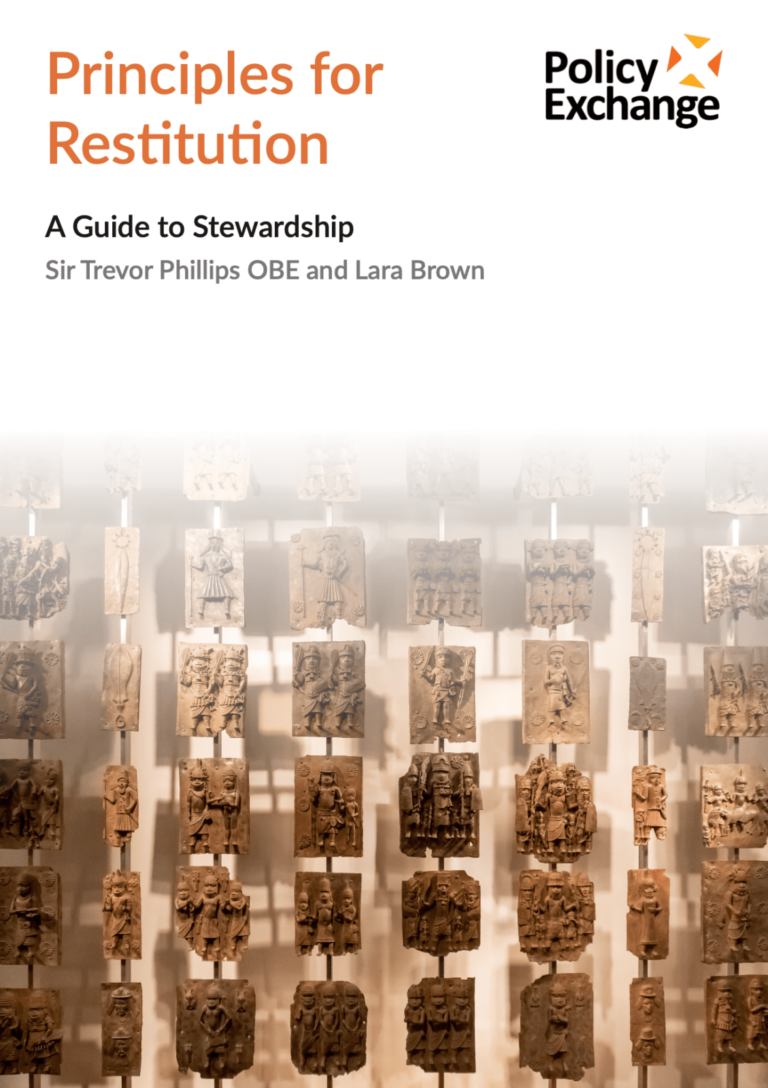
The British Museum must not succumb to pressure to return the Benin Bronzes to Africa, as the case for their restitution is 'weak', Sir Trevor Phillips says.
The Natural History Museum in London hosted a formal ceremony on 10 April 2025 with Traditional Custodians from Queensland communities to mark the return of 36 First Nations ancestors.
France will repatriate the skulls of King Toera and two Sakalava warriors to Madagascar, marking the first return of human remains under a new French law passed in 2023.
Resistance hero Ras Desta Damtew was executed by Italian fascists in 1937, after which some of his belongings are believed to have been stolen. Now his grandchildren and the Ethiopian government are fighting to bring them home.
The Mexican Ministries of Foreign Affairs and Culture, through the Legal Advisor’s Office and the National Institute of Anthropology and History (INAH), welcome the restitution of 915 cultural artifacts belonging to the nation's heritage.
The Leiden University Medical Centre (LUMC) has established a committee to investigate what part of the current collection has a connection to the former colonies or slavery past. Based on this investigation, the committee will issue a recommendation at a later date.
With the deaccession policies of Britain’s national museums so diametrically different from Britain’s larger number of regional and university collections, learning how museums unencumbered by national legislation are dealing successfully with the same legacies of inequality and trauma is revealing.
The African Union (AU) has said that the Year of Reparations 2025 is about economic liberation and ending Africa’s systemic wealth drain. Onyekachi Wambu writes: 'Restitution is a key part of the agenda. it has been explicitly mentioned in all the AU related reparations meeting I have attended.'
US President Donald Trump has signed an executive order targeting the Smithsonian Institution, which operates more than 20 museums and research centres visited by millions yearly in Washington DC and New York City. It also affects the Smithsonian's restitution policy. J.D. Vance will lead the purge.
After more than 170 years at the Scottish University of Aberdeen, the remains of a young Aboriginal man who was killed on his Country have returned home.
Adéwolé Faladé, PhD candidate in History at the Central European University (CEU) in Vienna, highlights and analyzes the traces left by the 26 repatriated artefacts by France to the Republic of Benin in 2021.
Julien Volper argues that the Netherlands practises double standards when it comes to restitution. On the one hand, the country returns 119 Benin objects to Nigeria. On the other, it was reluctant to return to Belgium parts of a 16th-century altarpiece by Pasquier Borman, stolen from a church of in Boussu (Belgium) in 1914, and it cut back its international assistance to the global south.
Julien Volper, acurator at the Royal Museum for Central Africa (Tervuren, Belgium), is writing here in a personal capacity: The Dutch restitution of Benin objects, earlier this year, was motivated by Dutch self-interest, both of the government and of the museum that has to let go a collection.
The British Museum has welcomed a new slate of trustees, including Dr. Tiffany Jenkins, an academic and author staunchly opposed to returning stolen antiquities like the Parthenon Marbles.
A ceremony took place in the Leiden World Museum around the restitution of the heritage of the Ysleta del Sur Pueblo tribe. It is the first time the Netherlands has returned objects to the United States. „The healing process can now begin.”
Until 25 May 2025, the Louvre Abu Dhabi unveils 'Kings and Queens of Africa: Forms and Figures of Power', an exhibition celebrating 350 works of African art and majesty, most of them on loan from Musée Du Quai Branly-Jacques Chirac. Is this a manner to postpone their restitution?
The Tasmanian Aboriginal Centre and The Hunterian at the University of Glasgow have announced the repatriation of a rare shell necklace from The Hunterian collection in Glasgow to its home in Tasmania.
The display of human remains in museums has long been a contentious issue. Earlier in March, the All-Party Parliamentary Group for Afrikan Reparations (APPG-AR) published the report Laying the Ancestors to Rest. Returning African human remains is time- and money-consuming. With the ongoing budget cuts, it becomes harder to return them.
At present, the law that regulates the storage and use of human remains in the UK only requires consent for acquiring and holding body tissue from people under 100 years old. Fiona Twycross, a junior minister in the Department for Culture, Media and Sport, acknowledged that the guidance was dated and “the world has changed substantially” since then.
British lawmakers, NGOs, and researchers urge the UK to address a 'legislative vacuum' permitting the display of African ancestral remains from the colonial era. T
In recent years, Southeast Asian countries have had success in lobbying museums, governments and art collectors in the West to return cultural artefacts taken from their lands.
The African Union (AU) has declared 2025 the “Year of Justice for Africans and People of African Descent Through Reparations” — a bold demand for accountability from former colonial powers. Reparations are not charity — they are a long-overdue debt.
Tristam Hunt, director V&A Museum, discusses the contradictory state of the restitution debate in Great Britain (GB): on the one hand, a quickening rhythm of returns from university and regional museums and on the other, continued confusion around deaccessioning contested objects from national collections such as the V&A and British Museum (BM).
Despite promises from Western institutions to return the artefacts, the process has been slow and piecemeal, raising questions about the sincerity of these efforts.
RM* saw reports from AP, Hyperallergic, DutchNews, Jerusalem Post, ArtDependence, Punch, Arise, Voice of Alexandria, Devdiscours, Pinnacle Gazette and AllAfrica.
At the request of Nigeria, the Netherlands returns 119 ‘Benin Bronzes’ to Nigeria, 113 from the National Collection and six owned by the Rotterdam municipality. [Later this week, RM* will add the relevant links].
The British Museum has come under fresh pressure to hand over its Benin Bronzes after the Netherlands returned more than 100 of the artefacts to Nigeria.
The centuries-old African artifacts housed in European institutions and that are worth billions of dollars should be returned to the rightful owners, Global Black Centre (GBC) Vice President and the prominent historian Robin Walker said.
The National Commission for Museums and Monuments (NCMM) with the support of the Federal Ministry of Art, culture , tourism and the creative economy signed a historic management agreement with the Oba of Benin, Omo N’Oba N’Edo Uku Akpolokpolo Ewuare II at the Royal Palace in Benin..
[ in Dutch ] They are the most controversial items in the collection of the Dutch Mission Museum in Steyl, Limburg: five human skulls from Papua New Guinea. How did they get there? And why don't the locals want them back?
The question of stolen cultural property during the colonial era is not just one of legality; it is deeply embedded in morality, historical injustice, and the unequal dynamics of power between former colonies and colonisers, argues dr. Naazima Kamardeen.
The Cape Verde President, José Maria Neves, has called on African nations to unite in demanding compensation for the invaluable properties and artifacts stolen from the continent by colonial powers.
South Africa's Department of Sports, Arts and Culture is preparing to repatriate human remains which were allegedly stolen from graves in Port Alfred, in the Eastern Cape and other places. They currently are in the US and Europe.
Objects taken from former colonies have been incorporated into collections. They express universality, which should be valued, without ignoring the need to trace their journey and restore their ownership.
Museum in Koko, Niger Delta, commemorates important exiled merchant prince Nanna Olomu . The restitution focus in Nigeria should not only be on Benin objects.
Prince Ermias Sahle-Selassie, the grandson of Ethiopia’s last emperor, will ask the universities of Oxford and Cambridge to return artefacts stolen by British soldiers in 1868.
Lawyer Alexander Herman: To make progress in returning countries’ heritage taken by previous generations, museums must take a pragmatic, ethical stance.
An exquisite diptych which links Albrecht Dürer and Christian Ethiopia is being investigated at the British Museum, raising a fascinating story of cross-cultural links.
RedressHub builds an innovative online platform that leverages advanced data technologies, interactive visualization tools, and participatory design to map and connect efforts addressing colonial harms and their ongoing legacies. Among these restitution.
Objects from the Wereldmuseum Leiden collection to be returned to indigenous tribe in the US. This item contains the announcement by the Dutch government, the report by the Dutch advisory Committee Colonial Collections and reactions from local news stations in El Paso, Texas.
Political turmoil across the continent is hampering plans for national structures to return colonial-era heritage. But the UK, once a laggard, appears to be preparing to review laws
With our own website, a dream is coming true. RM* [restitution matters] began in 2018 with some sixty users and now reaches over 3,000 users worldwide; most of you with roots in the global south.
[ in Dutch ] The theme of 'looting art' is back on the agenda, as more and more requests are coming in from museums to bring collection pieces back to former colonies.
Tim Maxwell: Repatriating artefacts found underwater could help former colonial powers meet moral obligations to countries they had historically exploited for their transatlantic slave trade.
[ in Dutch ] The problems at the AfricaMuseum in Tervuren are mainly a result of a lack of money. This is what director Bart Ouvry says, who is responding for the first time to the sharp criticism of political scientist and public officer Nadia Nsayi. In a column in De Morgen, she accuses him of toxic behavior, weak leadership and too little eye for diversity.
A museum in Limburg has decided not to return five ornamental human skulls taken by missionaries from Papua New Guinea after the local population turned down the offer.
The Missiemuseum in Steyl investigated the origin of the artefacts in the wake of the controversy surrounding a skull from Benin that was sold by an auction house in Amsterdam.
[ in Dutch ] What to do with the human skulls from Africa or Asia in their collection? The days when this kind of heritage could be easily in museums seem to be over. The call for return to the place of origin is louder and louder. But are they waiting for it there?
Nadia Nsayi is a political scientist and author of Daughter of Decolonization and Congolina. She argues why she hesitates to take a step back in the AfricaMuseum. [ in Dutch ]
Hundreds of Indonesian artefacts that were in the Netherlands for more than a century - the bulk of which were looted by the Dutch during their colonial rule - are now on display at Indonesia’s National Museum in Jakarta. They are among the latest batch of items returned after a lengthy process involving both countries.
[ in French ] Indonesia is pursuing a process of complete repatriation of cultural works looted during the colonial period. By mid-December, 828 objects had been returned by the Netherlands, according to the Indonesian Heritage Agency.
An indigenous Mexican nation, the Nahñu people in the central Mexican state of Hidalgo, has written to the Assemblée Nationale in France seeking the return of its codex, arguing that the centuries-old manuscript describes traditions it still continues.
An international group of two hundred scientists and specialists in predatory art protests against the trade in human remains by the Amsterdam auction house De Zwaan. It is a skull of a person of the Fon people from Benin. The skull was sold last month for eight hundred euros.
[ in Dutch ] The judge has ruled that the collection of the Africa Museum in Berg en Dal is owned by the fathers of the Congregation of the Holy Spirit. The National Museum of World Cultures (NMVW) must return the collection to them.
Beninese President Patrick Talon has an ambitious development plan with culture and heritage at its core. “It is at the end of the old rope that the new one is best woven,” he said recently, citing an old African proverb.
Kodzo Gavua has called for an intensive education on the plunder of African cultural heritage objects and systems and the need for their return. Such efforts would help safeguard the nation’s cultural legacy and contribute to tourism and scholarly research.
In response to a request by the Mexican government, the Netherlands has decided to return a human skull which is part of the Dutch State Collection of Wereldmuseum Leiden to Mexico. The Ministry of Culture has handed over the skull to the Mexican embassy in The Hague.
The Federal Government has vowed to pursue all necessary measures, including legal action in international courts, to recover cultural artefacts stolen from Nigeria.
[ in Portuguese ] Portugal has been doing little to develop knowledge on the provenance of its collections that came from former colonies. This can be partly explained by the lack of human and financial resources in archives, museums and universities.
The contents were two skulls molded with mud and three large effigies, called rambaramp, each containing the skull of a man, uniquely painted to depict the final stages of his life.
The Rochester Museum in New York and Harvard University return ancestral remains of Native Americans and funerary artifacts to the Oneida Indian Nation.
An estimated 350,000 African artefacts and manuscripts, as well as human remains, photographs and natural history specimens, have been found in the stores and archives of the eight museums and the Botanic Garden which together make up the University of Cambridge Museums, as well as the University Library and less-well known collections in university departments and institutions.
The Parthenon Marbles, Rosetta Stone and Benin Bronzes are just some of the ‘contested objects’ in the British Museum (BM). The Marbles are ‘not going to be on the prime minister’s agenda. His focus will be on support for Ukraine and the urgent need for a ceasefire in Gaza.’ They remain ‘a matter for the BM, and the government has no plans to change the law to permit a permanent move of the Parthenon Sculptures.’ But the BM has more contested collections.
In a lengthy contribution, Kwame Opoku wonders how long the Ovaherero must wait for justice and reparation for the German genocide? He extensively quotes a press release of the Ovaherero Traditional Authority-Ouhonapare uo Mananeno uo Vaherero. Part of it is about repatriation.
Keir Starmer reiterates support for British Museum reaching deal with Greek PM. “The mood music has completely changed,” said one source close to the negotiations.
An ancient, carved tree will be returned to Australia around a century after it was cut down and shipped to Europe. It was one of several “dhulu” stolen from a Gamilaraay ceremonial site beside a creek in northeast NSW in 1917.
Your auction is soaked in blood—give back Ras Desta Damtew’s medal: An open letter to La Galerie Numismatique in Lausanne. The medal was stolen by a Fascist army invader, its proper recipient unlawfully executed, and now your event practically celebrates the theft and murder.
It is seven years since President Emmanuel Macron of France announced his revolutionary plan to return African heritage to the continent. But following his declaration in Burkina Faso in November 2017 that “African heritage can’t just be in European private collections and museums”, the restitution journey has been arduous.
More than 128,000 Native American ancestors and 4.5 million sacred objects have been identified in collections across museums, universities and government agencies. Those numbers don't include more than an estimated 90,000 ancestors and 700,000 associated funerary objects that have not yet been identified in collections.
[ in Dutch ] The Dutch city of Rotterdam returns 66 looted objects from the municipal collection to Indonesia. They were looted by the Dutch army. The municipal government chooses to follow the State's return rules.
On Wednesday (Nov. 20, 2024), Labour's Bell Ribeiro-Addy told the Commons that human remains are sold at auction and on social media and asked the government to end what she described as a "depraved practice."
Anmol Irfan, a Muslim-Pakistani journalist, writes: Governments delay the process; museums often answer to wealthy donors. Complexities arise that require each case to be handled individually. But the first step of acknowledging the generational hurt and trauma caused by the removal of these culturally important and sacred artifacts has opened doors to broader solutions on a global scale.
The enduring controversy surrounding the Parthenon Sculptures, one of the world’s most prominent cultural property disputes, may see significant progress in 2025, according to The Economist’s The World Ahead 2025 report.
Asantehene, Otumfuo Osei Tutu II, is set to receive 28 gold ornaments and regalia from South Africa, marking another restitution of Asante cultural heritage looted during the 19th century, including linguist staff, swords, palace security locks, rings, necklaces, and proverbial gold weights depicting crocodiles and gold scandals. These items reflect the governance structures and chieftaincy traditions of the Asante Court.
In October 2024, a 19th-Century skull from the north-eastern Indian state of Nagaland was up for auction in the UK. The horned skull of a Naga tribesman was among thousands of items that European colonial administrators had collected from the state.
The Ayôkwé djidji or talking drum, confiscated in 1916 by the French army from the Ebrié community, will be exposed in its home country, but France has yet to pass legislation allowing for it to be formally restituted.
2024 marks the 140th anniversary of the start of the historic Berlin West Africa Conference of 1884/85. Germany is working hard to come to terms with its colonial history, including restitution.
A Mexican delegation is coming to retrieve 84 Mesoamerican axes currently in transit at University de Montreal, underscoring the need to raise public awareness of the looting of archaeological artifacts.
Culture Minister Fadli Zon told lawmakers that the United Kingdom is unwilling to repatriate historical artifacts and other antiquities taken from Indonesia in the 19th century. UK troops, led by Thomas Stamford Raffles, raided the Yogyakarta Palace in June 1812, seizing valuable items, including historic manuscripts.
[ in Dutch ] Fifteen skulls originating from the Moluccas have been returned to the island group Tanimbar. These skulls had been part of the collection of Museum Vrolik, the anatomical museum of Amsterdam University Medical Centre, since the very early 20th century.
The National Museum of Finland is preparing to return a kataklé, a ceremonial royal stool which was received into the museum´s collections in 1939, to the Republic of Benin.
A bamboo sunhat that was looted from the Kenyah Badeng people of Sarawak, Borneo, during British-led war expeditions in 1895 and 1896, is returning home. It is the Pitt Rivers Museum's first object to be returned (as opposed to ancestral remains).
[ in Dutch ] In colonial times, thousands of human remains ended up in Dutch museums. Soon, Moluccan activists will bring back 15 skulls single-handedly.
The return of artefacts to their countries of origin is not just an act of repatriation, but an opportunity for healing and reconnecting with cultural roots, said Tuuda Haitula, the museum development officer at the Museums Association of Namibia.
Claim of the Restitution Study Group: The Supreme Court has denied certiorari in the case Deadria Farmer-Paellmann v. Smithsonian Institution, allowing the return of 29 Benin Bronzes to Nigeria to proceed without further legal challenge.
[ in German ] The draft law on the return of cultural property from colonial contexts has been shelved for the time being. It did not meet with the approval of the ruling Österreichische Volkspartei ÖVP (Austrian People’s Party).
A section of educationists and experts from various African countries are urging European nations that colonised them to return their historical archives.
In July 2020, the Australian Government announced the introduction of the RoCH program with funding until June 2024. The research and community work continued and at the end of this period RoCH identified 383 overseas collecting institutions holding 126,000+ Aboriginal and / or Torres Strait Islander cultural heritage items.
The human remains of a man from the indigenous Selk’nam community in Chile were handed over to a delegation from Tierra del Fuego at Lübeck Town Hall. The Selk’nam have now requested that their ancestor be buried in a Lübeck cemetery.
Early in October 2024, RM* distributed news about an auction by Swan Fine Art at Tetsworth (UK) of Naga human remains estimated at 3,500 – 4,000 UK pounds. This had infuriated the Forum for Naga Reconciliation and many others.
Katharina Küng from canton Zurich had a headdress that she had received from her mother hanging on her wall for a long time. “We thought it was the padding of an old suit of armour,” Küng says. It wasn’t until a trip to Namibia that she realised – in the Swakopmund Genocide Museum – that it was a traditional Herero headdress.
The Pitt Rivers Museum in Oxford U.K. holds 188 Maasai items from Kenya and Tanzania. The seven-year Living Cultures project brought a new approach to decolonisation and repatriation through creating equitable partnerships with Indigenous peoples and facilitated visits to the museum by Maasai representatives.
From this contribution by BBC correspondent Adaobi Tricia Nwaubani: Kenneth C Murray, a British colonial art teacher, was a key figure in Nigeria’s museum history. Murray was invited to Nigeria at the request of Aina Onabolu, a European-trained Yoruba fine artist who convinced the colonial government to bring qualified art teachers from the UK to Nigerian secondary schools and teacher training institutions.
A sacred cloak that had been in the holdings of the National Museum of Denmark for more than 300 years was returned to Indigenous leaders in Brazil. The nearly six-foot-long cloak was constructed using 4,000 scarlet ibis feathers. It was taken from the Tupinambá people during Portuguese colonial rule.
The contents were two skulls molded with mud and three large effigies, called rambaramp, each containing the skull of a man, uniquely painted to depict the final stages of his life.
As one of the oldest educational institutes in Scotland, the University of Edinburgh holds more than a million items in its historic collections. Around 13,000 are anatomical artefacts and of these, more than 1,800 are skulls. A large number of the skulls in the collection were amassed during the colonial period.
The Fine Arts Museums of San Francisco (FAMSF), which stewards the De Young Museum and the Legion of Honor, has begun consulting with Native tribes on how to return remains that were gifted, in some cases, over a century ago.
David Guido Pietroni, Italian publisher, film, and music producer, offers an overview of the BM’s history, not only of its large collections of artworks, antiquities, and collectibles, but also of its large collections of controversies: colonial loot, Nazi-looted art works, stolen and lost objects, and links with big business.
In November 2022, the Horniman Museum in London brought back six Benin objects to the Oba of Benin. Horniman’s Nick Merriman was rather enthusiastic. Independent researcher Mike Wells takes a hard look at Merriman’s historical and factual claims regarding the Horniman’s ‘research and consultation process’ and the museum’s arguments supporting return of the bronzes.
The American Museum of Natural History (AMNH) institution holds the bodies of 12,000 individuals from communities within and outside the United States. The majority of which lack identification.
Six years ago, AIATSIS set up the Return of Cultural Heritage (RoCH) programme, and began looking at collections worldwide that might have holdings to return. Among the 200 institutions it first contacted, 74 responded positively, among these the Fowler museum in Los Angeles
The British Museum (BM) has an extensive collection of Chinese antiquities. Historically, many assumed that these treasures were obtained through imperialist plunder. However, recent findings by US historian Justin Jacobs present a different narrative, suggesting that a significant number of the artifacts in question were willingly given to the British Museum by Chinese officials.
Alexander Herman: When Prime Minister Justin Trudeau met with Pope Francis last month, he raised the issue of reconciliation with First Nations, and urged the pope to return Indigenous cultural artifacts from the Vatican collections to communities in Canada. This request came at a tense time.
When Prime Minister Justin Trudeau met with Pope Francis last month, he raised the issue of reconciliation with First Nations, and urged the pope to return Indigenous cultural artifacts from the Vatican collections to communities in Canada. This request came at a tense time.
Kwame Opoku wonders whether loans will be the future status of African objects in western museums. If so, western museums remain in control of what is not theirs.
In June 2024, 39 artifacts were formally handed back to the government of Uganda by Britain's University of Cambridge. While the return is technically a three-year loan between museums, it is extendable, and could see them remain in their country of origin.
In 1905, a colonial British officer killed Koitalel Arap Samoei, the supreme leader of the Nandi tribe. According to oral history, his severed head was taken to the UK. The Nandi have been searching for it ever since. The Nandi have been searching for it ever since.
China has launched a recommendation for the protection and return of cultural objects removed from colonial contexts or acquired by other unjustifiable or unethical means: the Qingdao Recommendations for the Protection and Return of Cultural Objects Removed from Colonial Contexts or Acquired by Other Unjustifiable or Unethical Means (Qingdao Recommendations)
The Alliance for Cultural Heritage in Asia (ACHA) is a framework in which China will work with all Asian countries to strengthen experience sharing on cultural heritage preservation and establish a network for dialogue and cooperation among civilizations. Many members are also participating in China's Silk Road initiative. Reclaiming colonial loot is a minor aim.
Popular British actor and writer Stephen Fry has compared Lord Elgin’s removal of the Parthenon sculptures from Greece to Nazi Germany stealing the Arc de Triomphe during the occupation of France.
Thanks to Deneth Piumakshi Veda Arachchige, the Museum of Cultures and the Natural History Museum in Basel, Switzerland returned a collection of approximately 90 aboriginal artefacts, including human bones and tools, of Sri Lanka’s indigenous population this week.
The Museum of Cultures and the Natural History Museum in Basel, Switzerland, returned a collection of approximately 90 aboriginal artefacts, including human bones and tools, of Sri Lanka’s indigenous population.
[ in Dutch ] Museum Huis Doorn in the Netherlands, the exiling place where Wilhelm II lived until his death in 1941, owns 36,000 objects from the ex- emperor. How many of these have a colonial origin, and whether there is colonial predatory art, for example, the museum did not know until recently.
Delegates from the Siksika Nation in Canada visit Exeter’s Royal Albert Memorial Museum (RAMM) in Exeter, UK, for a handover ceremony of a ceremonial Woman’s Headdress. The headdress has been held at RAMM since 1920.
At a United Nations meeting, Turkey’s spokesperson denied that the Scottish diplomat who took them, Lord Elgin, had permission from the then-ruling Ottoman Empire. “We are not aware of any document legitimizing this purchase,” Zeynep Boz of the Turkish Culture Ministry told the UNESCO committee that oversees restitution cases.
Some French parties pressure their country’s authorities to prevent them from responding to the requests submitted by the Algerian-French mixed commission concerning the restitution of some “symbolic” property that France had looted from Algeria during the occupation period.
The barriers are legal, as many of these items are held by private individuals rather than the state, Buddhasasana, Religious and Cultural Affairs Minister Vidura Wickremenayake said.
Algeria has made a request for the return of objects that belonged to Emir Abdelkader, a great resistance fighter in the conquest of Algeria in the 19th century, who was defeated in 1847.
The Department of Antiquities of the State of Libya and the Cleveland Museum of Art have announced an agreement in principle for the transfer of a Ptolemaic statue of a man to the State of Libya. It was lost in 1941, during the Second World War.
Algeria submitted a list of items held by France since the colonial era in order to restore them as part of the joint memory committee to look into that historical period.
Kwame Opoku writes: President Macron of France had promised in 2017 to restitute Africa artefacts in French museums, and in 2021, twenty-six artefacts were returned to the Republic of Benin.
The Department of Antiquities of the State of Libya and the Cleveland Museum of Art have announced an agreement in principle for the transfer of a Ptolemaic statue of a man to the State of Libya.
[ in French ] Algeria has made a request for the return of objects that belonged to Emir Abdelkader, a great resistance fighter in the conquest of Algeria in the 19th century, who was defeated in 1847.
Conversations between communities and institutions around the world are ramping up, with museums and universities agreeing to return culturally significant items. But in the case of the British Museum, there is one big roadblock.
Omo N’ Oba N’ Edo, Oba of Benin, has taken custody of two looted royal stools from the German government, symbolising a significant step in the right direction.
There are obvious similarities between the episode in 1874 and 1896 (Asante Kingdom) and 1897 (Benin Kingdom). Both kingdoms have been asking for restitutions for decades. Barnaby Philips explores why is it taking Nigeria so long to put its returned treasures on display?