The purpose of this article by Mirosław M Sadowski is to take a closer look at such instances of return of cultural heritage, by particularly focusing on the relationship between the matters of return and the questions of identity and collective memory in this respect. With case studies from Brazil and Angola.
To commemorate years of diplomatic relation—and sure, with an eye to continued trade—France and Mexico exchanged two ancient manuscripts: the Codex Azcatitlán, and the Codex Boturini.
This paper is an ethnographic essay on what should not count as collection and how the Mapuche modes of existence exceed the Chilean heritage regime of objectification. Thus, it requires rethinking repatriation as other-than-human politics.
In January 2023, an online seminar was held to investigate the Vatican collections, their legal structure and how repatriation might be possible to countries and communities of origin. In particular we looked at the principle of ‘inalienability’ which governs the collections under Vatican civil law, Alexander Herman writes.
The agreement represents the first major case of art restitution involving works created by an enslaved person in the U.S. — a process traditionally associated with families seeking the return of art looted by the Nazis in World War II.
The purpose of this article is to take a closer look at such instances of return of cultural heritage, by particularly focusing on the relationship between the matters of return and the questions of identity and collective memory in this respect. The third part focuses on the question of repatriation of cultural objects removed during the times of colonialism.
The Vatican is working with the Canadian Catholic Church to return 62 Indigenous objects, says Gilbert Whiteduck . He is the education director and former chief of the Algonquin community Kitigan Zibi Anishinābeg, in western Quebec.
The theft of the Louvre’s crown jewels has increased calls for the museum to be more transparent about the colonial origins of the treasures it displays. Their routes to Paris run through the shadows of empire, an uncomfortable history that France has only begun to confront.
Join the Association on American Indian Affairs virtually for the 11th Annual Repatriation Conference! The summary agenda for the Conference is available at https://www.indian-affairs.org/11thannualagenda.html
First Nations leaders talked about the need to develop a national repatriation strategy for artifacts, cultural items and ancestral remains at the Assembly of First Nations (AFN) annual general assembly in Winnipeg.
BREAKING: Three shrunken heads of South American persons and one hand of a mummified person from Egypt are currently offered by Hannam's Auctioneers, The Old Dairy Norton Farm, Selborne, GU34 3NB, Hampshire, UK.
Join us on Sept 16 | 16:00–21:30 | Kulturhaus Brotfabrik - World Premieres of Eternos Retornos and other films, with installations by Repatriates, and a dinner ritual inspired by the counter vibration physics of the headdress. This is more than art. It is a call to return what was taken.
[ in Dutch ] The objects come from a private collection of the descendants of doctor and amateur archaeologist Dr. Hans Feriz. In her will, his daughter had stipulated that the objects collected by her father in the past would be returned to the countries of origin.
Palmanova paid USD$17,340 for the object. But when it was sent by Fedex to Melbourne, it was seized under the Protection of Movable Cultural Heritage Act. And now, the High Court found the artefact was subject to forfeiture, because it is protected.
The past decade has seen a worldwide tendency to re-examine human remains found in old museum collections. To obtain a full picture of the life history of the individuals under consideration, an anthropological study might be mandated, although this approach is not yet systematic.
Nearly five centuries after Spanish conquistador Hernán Cortés signed it and decades after someone swiped it from national archives, a priceless manuscript page has been returned by the FBI to Mexico.
Officials from Canadian Heritage have confirmed the federal government has neither the means nor the ability to acquire any of the estimated 4,400 items in the Hudson Bay Company’s (HBC) collection of art and artifacts.
[ in Spanish ] This special issue of Revista Memorias Disidentes shows debates and reflections on restitution, repatriation, return and reburial of ancestors in South America.
Leading academic, Gloria Bell, argues that the Vatican is not only stalling on Pope Francis’ promises of restoring the looted artifacts — but continues to falsely 'refer to everything in their collection as a ‘gift.’
Hudson’s Bay Company, North America's oldest company, faces bankruptcy and wants to auction objects amassed from its founding in 1670, but it includes many important pieces of Canada’s First Nations and colonial heritage.
The human remains of a man from the indigenous Selk’nam community in Chile were handed over to a delegation from Tierra del Fuego at Lübeck Town Hall. The Selk’nam have now requested that their ancestor be buried in a Lübeck cemetery.
This working paper provides an analysis of grounds for return and restitution frameworks based upon them in different national contexts. One European policy context, namely the German, is analyzed alongside three Latin American legislative contexts: the Argentinian, Chilean, and Brazilian.
The Tsilhqot’in National Government has launched its first major repatriation exhibit at the Museum of Vancouver, following the return of over 60 ancestral belongings—including baskets, tools, and cultural items—that had been held in museums and private collections for more than a century.
Gov. Greg Gianforte last week finalized Montana’s two-year budget, which contains several new investments for Indian Country, including a historic increase in funding for tribal colleges and money devoted to repatriation efforts.
Mike Rutherford, curator of Zoology and Anatomy at the Hunterian, University of Glasgow, speaks at a conference in Manchester. Case-study: Repatriation Jamaican Giant Galliwasp.
Since 2018, the Association on American Indian Affairs has monitored 1,159 auction houses worldwide and provided auction alerts regarding the sale of sensitive cultural heritage. The Association’s work to monitor domestic and international auctions help fill this gap by identifying and reporting items that may warrant repatriation. The alerts have been shown to stop improper sales and support the return of important items.
Pope Francis promised to return artifacts to communities in Canada, but several years on, they remain in the Vatican’s museums and storage vaults. Recently, Canadian Prime Minister Mark Carney discussed the return in a meeting with Canadian Catholic Cardinals.
A first activity will be the hosting of a Memorial Service to honor 19 individuals whose crania were taken from New Orleans in the 1880s and sent to Leipzig, Germany.
Tamara Lanier, who sued the school in 2019 over daguerreotypes of her enslaved ancestors held in its museum, called the outcome “a turning point in American history.”
The House of Ni’isjoohl Memorial Pole, stolen in the 1920s, was rematriated from National Museums Scotland (NMS) in 2023. Noxs Ts’aawit (Dr. Amy Parent) of The Nisga’a Nation and Dr. John Giblin from NMS outline the process of international cooperation.
(Re)collecting Natural History in Europe is a research project that examines how natural history and ethnographic collections are curated and displayed, with a particular focus on European museums.
The paper argues that the ensuing negotiations and the state-imposed criteria for reburial reflect an ongoing colonial impulse to control Indigenous bodies and restrict ontological and political self-determination.
The Mexican Ministries of Foreign Affairs and Culture, through the Legal Advisor’s Office and the National Institute of Anthropology and History (INAH), welcome the restitution of 915 cultural artifacts belonging to the nation's heritage.
Markus Scholz discusses the missionary practice and ideas of the Bavarian Capuchins among the Mapuche in Araucanía in south Chile from 1895–1896 onwards. Distinguishing themselves as defenders of Indigenous land rights and as linguistic experts on the Mapuche language, they also assembled a rich collection of ethnographic artifacts and natural specimens, which could be problematic today. [ open access ]
This collaboration between the Académie des Traces and C& explores the traces of colonial heritage today in several texts by emerging scholars and museum professionals from the African and European continents.
A ceremony took place in the Leiden World Museum around the restitution of the heritage of the Ysleta del Sur Pueblo tribe. It is the first time the Netherlands has returned objects to the United States. „The healing process can now begin.”
This article presents recent provenance research on the Indigenous ancestral human remains gathered by Alphonse Louis Pinart (1852-1911) during his journey in Oceania on board the French navy cruiser Le Seignelay.
Modernity has emphasized the need to disconnect from emotions for the sake of objectivity; the mind as the vehicle for sense-making. However, onto-epistemologies from the Global South discuss the relevance of a holistic integration of the body, mind, heart, and life-force (spirit) for a better understanding.
New World Objects of Knowledge: A Cabinet of Curiosities delves into the hidden histories of forty of the New World’s most iconic artifacts, from the Inca mummy to Darwin’s hummingbirds.
Argentina has one of the most important and sensitive bioanthropological collections in Latin America. Most of the remains in museums come from Tehuelche and Mapuche victims of the so-called "Conquest of the Desert". However...
This blog discusses the necessity for a comprehensive monitoring system for tracking restitution efforts involving cultural belongings and ancestral remains in Latin America.
The workshop “People, Objects and Ideas Circulation: Transnational Entanglements between Brazil and Germany”, held in the context of the 200th anniversary of German-speaking people’s immigration to Brazil, offered a fresh perspective to reflect upon the relations between Brazil and Germany.
The report offers an overview of the restitutions and claims processed in the Netherlands until recently, and the legal framework in which they took place.
This article explores the ownership of cultural objects within national and traditional customary law in Suriname, with the aim to provide a legal context to the issue of claims for the return of some of these cultural objects from the Netherlands.
According to a recent ProPublica investigation of the failure to bring about the expeditious return of human remains by federally funded universities and museums, over 110,000 ancestral remains are held by institutions in the U.S., from Harvard to Berkeley.
Germany has handed over to Colombia two masks made by the Indigenous Kogi people that had been in a Berlin museum’s collection for more than a century, another step in the country’s restitution of cultural artifacts as European nations reappraise their colonial-era past. They may have health risks.
The Return of Cultural Heritage to Latin America takes a new approach to the question of returns and restitutions. It is the first publication to look at the domestic politics of claiming countries in order to understand who supports the claims and why.
This book examines the ways in which law can be used to structure the return of indigenous sacred cultural heritage to indigenous communities, referred to as repatriation in this volume. In particular, it aims at developing legal structures that align repatriation with contemporary international human rights standards.
The 1990 Native American Graves and Protection Act (NAGPRA) is generally presented as a breakthrough in favour of First Nations. NAGPRA set up a process by which Native American tribes can request the return of human remains and cultural objects from museums and government agencies, including federally funded universities. How successful has it been in California?
Objects from the Wereldmuseum Leiden collection to be returned to indigenous tribe in the US. This item contains the announcement by the Dutch government, the report by the Dutch advisory Committee Colonial Collections and reactions from local news stations in El Paso, Texas.
After receiving a letter from the Thai government, it was not difficult for the Asian Art Museum in San Francisco to determine it was showing looted objects. Before their return the museum holds an exhibition. Is this becoming a trend?
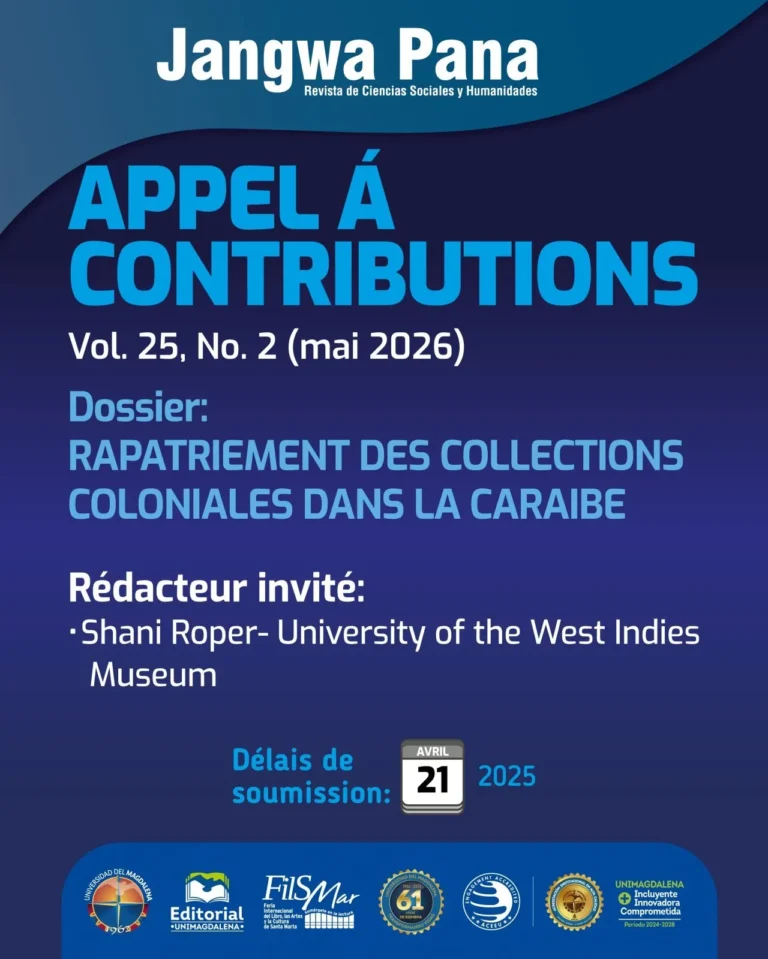
[ in English, French and Spanish ] This call invites researchers and academics from all areas of social sciences and humanities to submit their work for a special issue of Jangwa Pana dedicated to the repatriation of colonial collections in the Caribbean. Deadline 21 April 2025.
Modern treaties and statutes protecting cultural property apply only prospectively to items stolen or illegally exported after their effective dates. But while the United States does not have a law concerning looted cultural objects taken from formerly colonized peoples overseas, it does have a statute governing the repatriation of Native American cultural items and human remains.
[ in English and in Dutch ] In April 2024, a Netherlands delegation visited Suriname and mapped out which objects are present in Dutch public collections through the colonial history of the Netherlands and Suriname.
The Rochester Museum in New York and Harvard University return ancestral remains of Native Americans and funerary artifacts to the Oneida Indian Nation.
One of the most preserved among the eleven remaining mantles of the Tupinambá native people will definitely return to Brazil. By the end of 2023, the treasure made with red feathers of the scarlet ibis will leave the ethnographic collection of the Nationalmuseet, the National Museum of Denmark, and will join the collection of the National Museum in Rio de Janeiro.
Held in 1972, the Santiago de Chile Round Table was a fundamental milestone in the historiography of museums and museology from the Global South, and a pivotal event for practices and reflections related to the ‘social role’ of museums.
Tim Maxwell: Repatriating artefacts found underwater could help former colonial powers meet moral obligations to countries they had historically exploited for their transatlantic slave trade.
The National Museum of Scotland nearly had to call off the high-profile repatriation of a totem pole to the Nisga’a in Canada after the Scottish Government reneged on a promise to cover costs.
Archaeology in its formative years was often less a meticulous science than an exercise in vandalism. A little-known horror unfolded in the Southwestern United States.
What’s in a name? The language we use tells us who is speaking, from what perspective, and (implicitly), who controls the narrative. Names, in short, have power.
For Indigenous museum visitors, long-prevalent display methods like ‘wonder cabinets’ or ‘white cubes’ can be an alienating way to encounter their cultural heritage. This article will illustrate how exhibition designers are influenced by the colonial imagination, a term we use for the settler mythology behind imperial ambition, both historical and contemporary.
The American Alliance of Museums has brought out a special issue Museum as part of a larger project exploring the next horizon of museum practice with regard to voluntary repatriation, restitution, and reparations. The articles in this issue provide a window into practices regarding the Benin-objects, lost items of the Yaqui, voluntary returns, and the application of NAGPRA.
When the southwestern jungles of Colombia were rediscovered by Spanish colonizers in the 18th century, looters arrived looking for gold. Scientists eventually followed to survey, study, and inventory the site.
The Rosenbach Museum & Library in Philadelphia voluntarily transfers to the custody of the FBI a 16th-century manuscript for return to the Archivo General de la Nación del Perú, the Peruvian national archives.
Three decades after legislation pushed for the return of Native American remains to Indigenous communities, many of the nation’s top museums and universities still have the remains of thousands of people in their collections.
Switzerland has returned four mummies to Chile, including two of them among the world’s oldest, after their private owner agreed to their restitution. Other remains, in an “advanced state of degradation”, buried in Geneva.
The BM is tackling an influx of social media trolls from Chile, who have flooded the museum’s Instagram posts calling for the return of a moai statue, one of the stone monuments from Easter Island.
An exhibition at the Foreign Ministry Museum in Mexico City is displaying more than 100 stolen pieces that have been recovered, thanks to intense work by the country’s diplomats.
Over the past several weeks, museums across the United States have been covering up and removing displays of Native American ancestors and cultural objects.
Guyana is seeking the return of various artefacts including a letter written by Quamina, the leader of a 19th century slave rebellion, held by the School of Oriental and African Studies, University of London (SOAS).
An indigenous Mexican nation, the Nahñu people in the central Mexican state of Hidalgo, has written to the Assemblée Nationale in France seeking the return of its codex, arguing that the centuries-old manuscript describes traditions it still continues.
A 200-year-old wampum belt has spent much of its existence at the Vatican’s museums, across the ocean and thousands of kilometres away. Last year, the belt, made by Algonquin, Nipissing and Mohawk peoples in 1831, was returned to Canada for 51 days – for a brief appearance at a Montreal museum in the fall – before it was sent back the vaults of the Vatican. In 2023, nothing was returned, a Timeline reveals.
Earlier in 2024, David Nolan Gallery in New York mounted the exhibition Fort Marion and Beyond: Native American Ledger Drawings, 1865–1900, gathering over 100 works on paper by Native artists from the Arapaho, Cheyenne, Hidatsa, Kiowa, and Lakota tribes.
This report was developed as a response to the Truth and Reconciliation Commission’s Call to Action #67 under the guidance of the CMA Reconciliation Council.
Peru’s Ministry of Culture triumphantly reclaimed 202 cultural artifacts, spanning various eras and civilizations, from Germany, Spain, the USA, Canada, and Belgium, showcasing successful international collaboration against illicit trafficking.
Spain maintains unwavering ownership of the Quimbaya Treasure, dismissing Colombia’s legal and diplomatic efforts to reclaim the pre-Columbian artifacts donated to Queen María Cristina in 1893. Both nations stand at a crossroads over the fate of 122 golden pieces, symbolizing cultural heritage and historical legacies intertwined with colonial conquests.
In response to a request by the Mexican government, the Netherlands has decided to return a human skull which is part of the Dutch State Collection of Wereldmuseum Leiden to Mexico. The Ministry of Culture has handed over the skull to the Mexican embassy in The Hague.
The American Museum of Natural History (AMNH) institution holds the bodies of 12,000 individuals from communities within and outside the United States. The majority of which lack identification.
Alexander Herman: When Prime Minister Justin Trudeau met with Pope Francis last month, he raised the issue of reconciliation with First Nations, and urged the pope to return Indigenous cultural artifacts from the Vatican collections to communities in Canada. This request came at a tense time.
The Fine Arts Museums of San Francisco (FAMSF), which stewards the De Young Museum and the Legion of Honor, has begun consulting with Native tribes on how to return remains that were gifted, in some cases, over a century ago.
More than 128,000 Native American ancestors and 4.5 million sacred objects have been identified in collections across museums, universities and government agencies. Those numbers don't include more than an estimated 90,000 ancestors and 700,000 associated funerary objects that have not yet been identified in collections.
Jamaica will intensify efforts for the repatriation of its cultural and natural heritage artefacts taken from Jamaica by the British and housed in museums and universities in the United Kingdom. The negotiation for the return of a whole repository of artefacts from the Tainosis is ongoing. The country also works on reparations related to the slave trade. Recently, Minister of Culture Olivia Grange received a delegation from churches in the United Kingdom during which the United Reform Church apologised for its role in this trade.
A sacred cloak that had been in the holdings of the National Museum of Denmark for more than 300 years was returned to Indigenous leaders in Brazil. The nearly six-foot-long cloak was constructed using 4,000 scarlet ibis feathers. It was taken from the Tupinambá people during Portuguese colonial rule.
A Mexican delegation is coming to retrieve 84 Mesoamerican axes currently in transit at University de Montreal, underscoring the need to raise public awareness of the looting of archaeological artifacts.