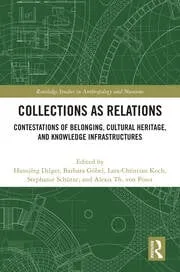
Susan Tallman writes: What does a fair policy of museum repatriation look like? A new book considers the issue in terms of human rights, cultural sovereignty, and stewardship.
[ in Spanish ] In 'Arte secuestrado' or Abducted art, Catharine Titi (CNRS, France) and Katia Fach Gómez (Uni Zaragoza) recount the stories of six iconic collections, from the Parthenon Marbles to Moctezuma's headdress, the Benin Bronzes, and the Bust of Nefertiti, to shed light on how they ended up in the museums where they now reside, and to open the debate about their repatriation.
The V&A’s collection includes nearly 200 Ethiopian objects – from metalwork and textiles to photography, manuscripts, and paintings. One of the most exciting outcomes of this research, Molly Judd writes, was uncovering records for objects that had effectively become hidden within the collection.
Early in 2025, Patty Gerstenblith published 'Cultural Objects and Reparative Justice. A Legal and Historical Analysis'. She proposes an innovative paradigm for determining reparations, including restitution of cultural objects appropriated during the nineteenth century. This is a review of her book by Annaïs Mattez with both positive and critical points.
In 2022, the Republic of Indonesia submitted an official application for the collection’s restitution after which the Dutch State Secretary for Culture requested the Colonial Collections Committee to provide advice on this request. In 2025, the Netherlands transferred it to Indonesia. This Blog offers a reflection.
The Freer Research Center at the Smithsonian’s National Museum of Asian Art and the Zentralarchiv and Museum für Asiatische Kunst (Staatliche Museen zu Berlin) of the Stiftung Preußischer Kulturbesitz announce their second in-person symposium dedicated to the provenance of Asian art, occurring November 11–13, 2026, on Museum Island in Berlin, Germany.
The protection of cultural heritage is increasingly shifting towards favouring the return of cultural property to its people of origin. Evidence of this shift can be found in a more intentional distinction between cultural property rights on the one hand, and traditional rights in rem on the other; the strengthening of international cooperation; as well as the reconstruction of traditional doctrines.
For several years, the Wereldmuseum in the Netherlands has actively engaged in provenance research, focusing on the unequal power dynamics that shaped the collection of objects amidst European colonialism. Daantje van de Linde and Karolien Nédée investigate this approach. 'The broader discipline is still in its infant years, and its goals and research methods are continuously developing.'
Australian Aboriginal Studies (AAS) is a peer-reviewed journal that combines academic rigour with research excellence. Issue nr 2/ 2025 has a number of articles relevant for RM*.
Archaeologist and journalist Mariam Gichan wonders why complicated legal hurdles are sufficient to explain why the fossil hasn’t returned to Tanzania and whether “complicated” becomes a convenient reason for inaction.
In recent years, there has been growing recognition that these collections carry painful legacies. In all these engagements, two words are often used: repatriation and restitution.
At first glance they may seem to mean the same thing, and both involve the return of something. But as South African scholars, working in the fields of history, museum studies and human biology, Victoria Ribbon and Ciraj Rassool argue that the difference between these terms is not just semantic. The choice of word reflects deeper politics of justice, recognition and repair.
[ in Spanish ] Lucas da Costa Maciel, Mario Blaser and Marisol de la Cadena invite readers to think of ethnography from friction—not as an obstacle to be resolved, but as a material and creative condition of encounters between worlds.
[ in French ] In the 19th century, the concept of "Asian art" gradually gained prominence in the European market, driven not initially by collectors, but by dealers, the true intermediaries between Asia and Europe. This phenomenon took root in a context of forced opening of Asian territories: the Treaty of Yedo (1858) with Japan, the Treaty of Tianjin (1858-1860) with China, and the Treaty of Saigon (1862) with Vietnam.
Leah Niederhausen and Nicole L. Immler joined forces with Markus Kooper (Hoachanas Community Library & Archives) and Talita Uinuses (Captain Hendrik Witbooi Auta !Nanseb Foundation) and listened to, archive, and amplify Nama knowledge (Namibia) on and experiences with restitution, reparation, and historical (in)justice.
All too often, the literature on the restitution of colonial cultural objects tends to focus on the public international law (PubIIL) aspects of the debate. With a few notable exceptions, the PubIIL and private international law (PIL) dimensions of the debate are rarely considered together. This article makes the case for a coordinated approach.
For an issue about 'Measuring Cultural Heritage: Indicators for Cultural Heritage Law and Policy Development', the e-journal Santander Art, Culture & Law Review welcomes contributions from legal scholars, policymakers, cultural heritage practitioners, and interdisciplinary researchers. Submissions should offer original research, comparative analysis, or innovative methodologies that contribute to the understanding, assessment, and governance of cultural heritage.
In January 2023, an online seminar was held to investigate the Vatican collections, their legal structure and how repatriation might be possible to countries and communities of origin. In particular we looked at the principle of ‘inalienability’ which governs the collections under Vatican civil law, Alexander Herman writes.
David Abulafia writes: The history of the Rosetta Stone is not simply an Egyptian history. The inscription in three scripts, hieroglyphic, the less formal hieratic script, and classical Greek, is humdrum.
Andreas Roth shows, the real story of the coral regalia does not fit the postcolonial narrative some want to attach to these artefacts. They do not provide a precedent for the return of Benin Bronzes.
Through diverse voices, this (open access) Abécédaire rethinks the history of art and museums as an experimental space, transcending disciplinary and geographical boundaries. It offers a fresh, nuanced perspective on contemporary issues in the study of the past while paving new pathways for the future.
Open Restitution Africa has published a case study that is centred around 119 cultural belongings from the historic Benin Kingdom. This collection includes intricately cast bronzes, carved ivories and terracotta. They serve dually as both historical artefact and active carriers of spiritual and cultural knowledge, many of which remain relevant in Benin cultural and religious life today.
This paper is an ethnographic essay on what should not count as collection and how the Mapuche modes of existence exceed the Chilean heritage regime of objectification. Thus, it requires rethinking repatriation as other-than-human politics.
Colonial officials, collectors, and anthropologists dismembered African buildings and dispersed their parts to museums in Europe and the United States. Most of these artifacts were cataloged as ornamental art objects, which erased their intended functions, and the removal of these objects often had catastrophic consequences for the original structures.
'Investigating Online Heritage Crime - New Directions, New Technologies, Emerging Markets' offers an introduction to a crucial new field of interest to all heritage researchers.
[ in English and in German ] The Museum der Kulturen Basel is systematically examining its collection for coloniality and highlighting the central importance of collaborating with communities in the Global South.
Through the case of the Palembang Sultanate in Sumatra, Alan Darmawan investigates the extant manuscripts originating from the palace library. Some moved into the hands of private owners in Palembang, while others were dispersed into colonial collections in Europe and Southeast Asia.
This paper investigates the political and cultural grounds in disseminating manuscripts’ digital copies and ask what kinds of shifting assumptions about the nature of textuality and manuscripts are indicated by digital returns. This is especially relevant given that some manuscripts in traditional Java, those designated as pusaka, are not merely media transmitting textual information. Rather, their materiality contains a power of its own.
[ in Dutch, in French ] The MAS in Antwerp investigated the provenance of three important cultural objects from its Congolese collection. How did they end up in Antwerp, and what do they mean to Congolese communities today? The results are published in the new publication "On Origin and Future" and incorporated into the permanent exhibition.
The documentary Elephants & Squirrels by Swiss filmmaker Gregor Brändli chronicles a Sri Lankan artist’s discovery of looted artefacts in Basel and her mission to return them to Sri Lanka, exposing Switzerland’s uneasy reckoning with its colonial entanglements.
The Georg Steindorff Collection, comprising 163 objects, is a central, yet complex, component of the Egyptian Museum-Georg Steindorff at Leipzig University. The “loss” for Georg Steindorff’s family was placed at the forefront of this restitution of Nazi-looted art, while the original, broader loss of heritage for the country of origin (Egypt) due to colonial practices was sidelined.
This article examines how an eighteenth-century decision to bureaucratize gift exchange continued to disrupt long-standing South Asian protocols of reciprocity and regard well into the twentieth century.
University collections are more than any others, linked to the definition and transmission of knowledge. The Musée L, UCLouvain's university museum, is launching a new open-access online scientific journal dedicated to university collections and museums: UniMusea – Research and Practices on University Collections.
On November 9th, 2025, as 250 Nigerian and international guests – donors, diplomats, and the heads of national cultural agencies – gathered in Benin City at the new Museum of West African Art’s opening event, protesters in red baseball caps broke into the museum, forcing its closure. Cultural Property News analyses what happen, and why.
[ in French ] It was in 2021, after 129 years of plunder by France, that the royal treasure of Abomey was returned to Benin. The restitution of this piece of history is part of a campaign launched by Benin in 2016 to make its heritage the cornerstone of its cultural influence.
[ in French ] What does decolonization mean when power relations remain unchanged? Anne Wetsi Mpoma invites us to rethink decolonization as a political, epistemic and restorative process — where art becomes a space of resistance, reappropriation and symbolic justice.
Ngaire Blankenberg writes: While the world debates restitution, Africa’s own heritage institutions are collapsing. The question is no longer who took our past, but who is keeping it alive.
It is well known that Australia's police perpetrated violence against First Nations throughout the colonial period, but their role in supplying Indigenous ancestral bodily remains and cultural heritage objects to domestic and overseas museums is little understood, nor too is whether they exceeded or abused their powers in doing so.
The purpose of this article is to take a closer look at such instances of return of cultural heritage, by particularly focusing on the relationship between the matters of return and the questions of identity and collective memory in this respect. The third part focuses on the question of repatriation of cultural objects removed during the times of colonialism.
The purpose of this article by Mirosław M Sadowski is to take a closer look at such instances of return of cultural heritage, by particularly focusing on the relationship between the matters of return and the questions of identity and collective memory in this respect. With case studies from Brazil and Angola.
Nikolaus Perneczky examines three archival films produced in the 1960s and 1970s, locating them within struggles over the historical memory of colonialism and political contestations of the post-independence era. These works were some of the earliest African-directed films to employ found (still and moving) images.
Phillip Ihenacho, director and chairman of the Museum of West African Art (MOWAA), has watched the restitution debate unfold with both pride and concern. Pride, because it signals a long-overdue recognition of West Africa’s cultural heritage; concern, because too often the conversation is shaped by Western priorities rather than African ones.
From the crowns of Ethiopian emperors held abroad to the mummified remains of African ancestors still stored in Western institutions, the theft of Africa’s sacred heritage represents a deeper violence. Those which we speak of, are not mere museum exhibits; they are vessels of ancestral power and collective memory. Their continued displacement denies Africa’s children the right to know and connect with their lineage.
This paper explores the challenges of repatriating poorly documented Aboriginal secret-sacred objects—known as tywerrenge—to central Australia. 'No story, but we still want to see them come back. Then people can know them.'
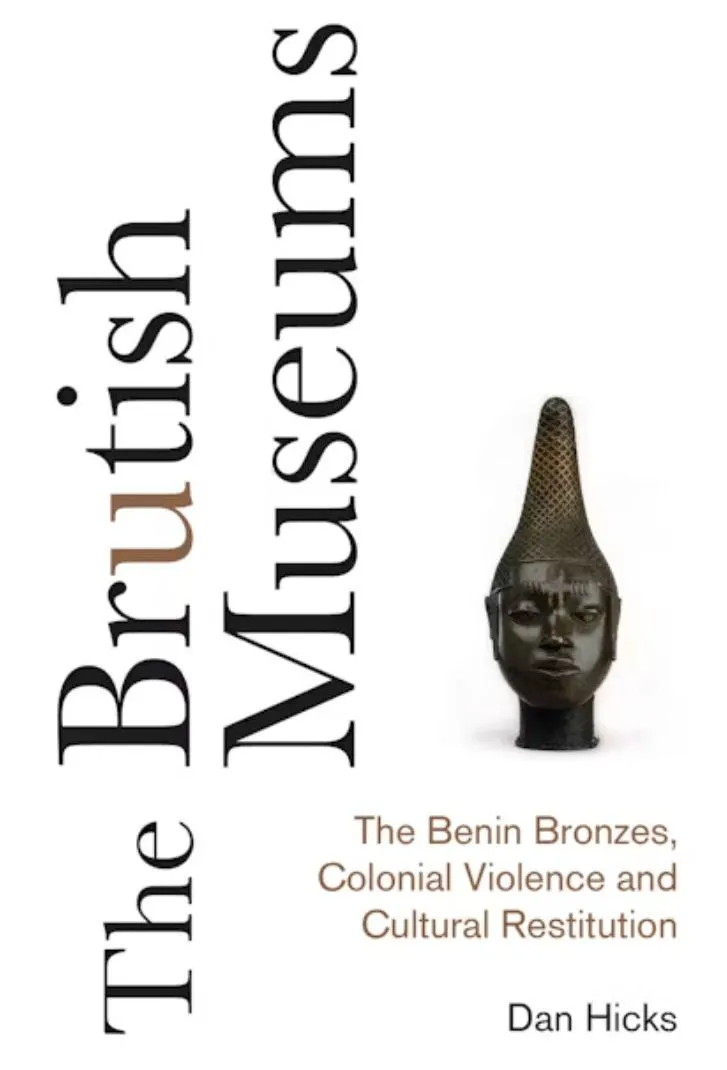
Dan Hicks argues that the allegation that his book The Brutish Museums is “part of a trend away from pro-British perspectives” is contextualised and refuted. On the contrary, this reply argues, openness and transparency about the colonial past and present is a key element of the reclamation and
reimagining of Britishness that is unfolding in the 2020s – this unfinished period that the book calls “the decade of returns”.
Kwame Opoku looks back at the year 2025. Two fragments, one about the Western dedain for looted objects and human remains. The other about a publication of Open Restitution Africa. But first, a positive event.
[ in French ] Marie-Anne Léourier administered a questionnaire focused on these questions to visitors of the permanent collections area of the Quai Branly – Jacques Chirac Museum (MQB).
Doing research in Swiss museums, artist Deneth Piumakshi Veda Arachchige comes across a collection of ancestral remains and artifacts from an indigenous Sri Lankan community. The award-winning documentary can be seen at film festivals in Leipzig and Amsterdam.
[ in French ] The French government intends to go further with a bill that could become a landmark law in this area. What are the terms of the bill, and why does it potentially represent a historic turning point? Catharine Titi writes....
[ in German ] The 2025 Guidelines promote dialogue with societies of origin and descendants, interdisciplinary provenance research, and proactive roles for museums, while they acknowledge the cultural, spiritual, and epistemological singularities of each case. They expand on communication channels for restitution requests, specifically notably requiring the consent of the state of origin, and call for a need to streamline procedures and call for an expert advisory body to be established to support restitution efforts. Further details on governance and the body’s specific mandate remain to be defined.
The British Museum has announced that it will be holding a charity ball on 18 October 2025 to collect funds to further, inter alia, its international partnerships. This makes Kwame Opoku having a closer look at it.
The Art of Status: Looted Treasures and the Global Politics of Restitution examines the relationship between looted art and international status, by focusing on the debates about acquisition and restitution of the Parthenon Marbles, Benin Bronzes, and a never before written about collection of Nazi-looted art housed in the National Museum of Serbia.
This special exhibition is dedicated to a long-overlooked collecting practice: The collection of objects by Catholic and Protestant missionary societies – primarily during the 19th and early 20th centuries.
Findings suggest that whilst there is strong support for retaining objects, namely under the guise of guaranteeing access for all peoples, there is also opposition from volunteers who feel that the British Museum is morally obliged to return objects.
[ in Dutch ] Heritage organizations preserve and make accessible archives, publications, and objects that tell interesting or moving stories. At the same time, these same collections often contain heritage that reflects painful and poignant histories. This heritage raises questions or even comes under fire.
Ahmad Mohammed writes: Sacred objects, ancestral remains, and ritual artifacts remain estranged from the communities that created and cherished them. This condition is what many scholars and practitioners now identify as cultural heritage alienation: the systematic displacement of heritage from its social, spiritual, and cultural lifeworlds into the frameworks of Western curatorial authority. But community control is crucial.
The English translation of this guide offers the basic steps for how to begin, with the main sources and practical tips. The guide was written for Dutch museums and other institutions.
Hugh Johnson-Gilbert and Alexander Herman write: It has long been the view in the UK that national museums are restricted by law from repatriating collection objects. But will legislation passed three years ago, the Charities Act 2022, point the way ahead?
Nigeria should establish a bilateral negotiating group with Germany on reparations to pay for its crimes against humanity, comprising the indigenous peoples of Nigeria and other African nations. Not as charity, but as a binding act of justice and a guarantee that such atrocities will never be repeated.
There has been a lack of academic focus related to how public facing or ‘live interpreter’ volunteers are strategically utilised to support the delivery of museum decolonisation, as well as the implications this has for volunteering.
Cyprus is a much negelected spot in colonial history. This documentary Film trailer by Zimbabwean artist Sithabile Mlotshwa is made possible through a collaboration with historian Paraskevas Samaras and videographer Michalakis Georgiou with contributions and support from Dinos Toumazos, Agora Dialogue, Oz Karahan and others.
The past decade has seen a worldwide tendency to re-examine human remains found in old museum collections. To obtain a full picture of the life history of the individuals under consideration, an anthropological study might be mandated, although this approach is not yet systematic.
Museums hold thousands of ‘things’ from all around the world. In larger institutions like Te Papa, the histories of these ‘things’ are not always known. This blog is looking at ways to start recovering these lost stories and histories.
This open access book (only after 10 - 14 days) offers a unique perspective on the return of cultural objects by considering the aftermath of the handover processes.
Kwame Opoku writes: The French Minister of Culture presented a legislative text on 30 July to facilitate the restitution of artefacts in French museums by derogating from the principle of inalienability. It will not likely lead to a rush of restitutions from France. Excluding archaeological materials, military materials, and public records eliminates many objects. Archaeological finds from Egypt, Mali, and other African countries, such as those on the ICOM Red Lists, would be excluded.
Thomas Fues writes: the German government emphasises its willingness to confront Germany’s colonial history and its consequences. But it remains to be seen whether and how such declarations of intent at the beginning of the legislative period will actually be implemented in the coming years.
The African Renaissance made restitution central to reclaiming cultural sovereignty. But the reality is that implementation is still shaped by donor-led systems that often bypass African agency and African audiences.
Tilda Gladwell likes to divert your attention from news of war and geopolitical instability for just a moment to an equally pressing issue: the decades-long debate concerning repatriation.
[ in Dutch ] How are Belgium and the Netherlands dealing with the sensitive issue of returning looted art and researching its colonial origins? An exploration of some treacherous areas in the quagmire of new Dutch and Belgian restitution policy. A discussion between museum director Wayne Modest and activist Nadia Nsayi.
It’s no easy matter resolving the current ethical debate over the retention and exhibition of human remains. But one public collection is asking visitors to cast their vote.
Vanessa Hava Schulmann (Freie Universität Berlin): The stories I will tell you about happened during my work in a Berlin university collection. I was tasked of meeting the deceased whose bones and tissues were stored in those dusty wooden cupboards and figure out how to handle their presence in a dignified way.
[ in English, French and Spanish ] From a continental European perspective, islands have long been considered as separated and isolated spaces, disconnected from one another and from the rest of their environment. This special issue of the ICOFOM Study Series rethinks such a perspective on islands by bringing together papers from around the world that draw on alternative views, notably from the Pacific and Caribbean regions concerning oceanic islands.
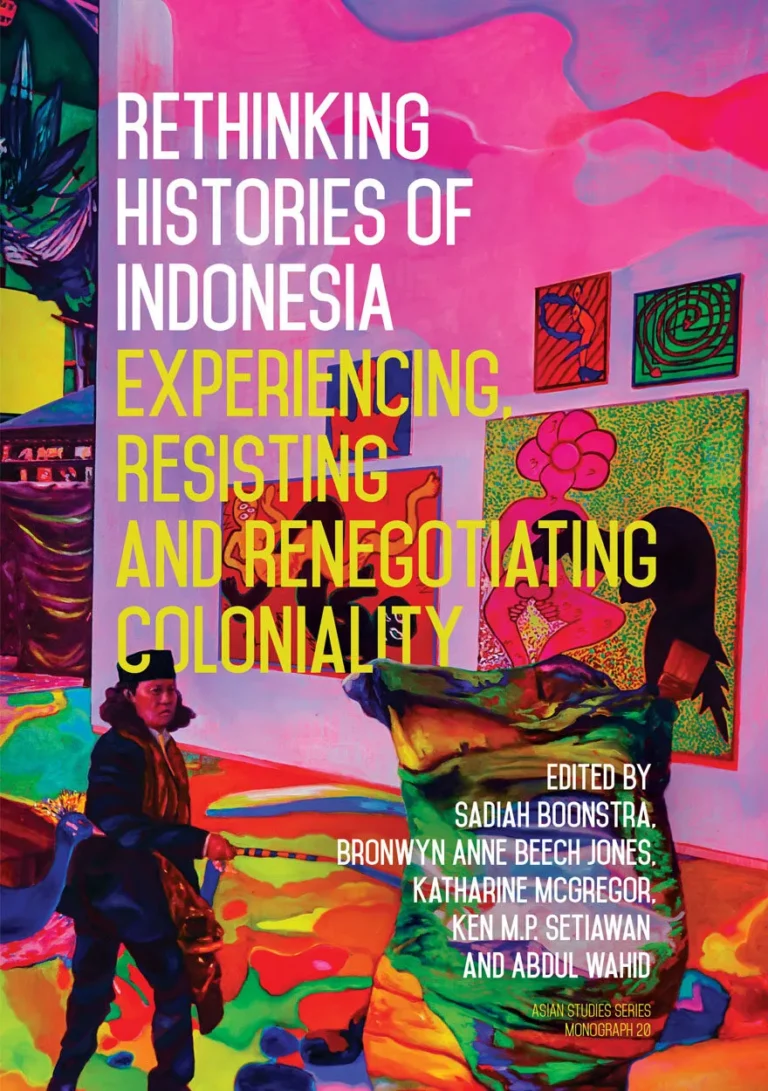
In 'Rethinking Histories of Indonesia - Experiencing, Resisting and Renegotiating Coloniality', editors Sadiah Boonstra and others provide a critical evaluation of histories of Indonesia from the formal period of colonisation to the present day. The volume approaches Indonesian history through the lens of coloniality, or the structures of power and control that underpin colonisation and which persist into the present.
On 7 July 2025, the French National Assembly has approved the restitution to Ivory Coast of the Djidji Ayôkwê, an important talking drum, stolen in 1916. In the same period, the British Museum came with a statement that it is unwilling to restitute an equally important drum to the Pokomo council of elders in Kenya.
[ in Spanish ] This special issue of Revista Memorias Disidentes shows debates and reflections on restitution, repatriation, return and reburial of ancestors in South America.
[ in Dutch ] How do Belgium and the Netherlands deal with the sensitive issue of returning looted art and investigating its colonial origins? What do you see of this in museums and what remains underexposed?
In 2021, the University of Aberdeen returned a looted Benin object to the Oba of Benin, becoming the first UK institution to agree to an unconditional return. Neil Curtis [University of Aberdeen] outlines the process of giving back a pillaged object without a repatriation request being made.
Thupten Kelsang quotes Clare Harris: 'The bulk of Tibet’s portable cultural heritage has been retained everywhere other than Tibet, and is now most readily at the disposal of everyone other than Tibetans.' About a 'doubly colonial' Tibet.
Ahmad Mohammed writes: While digital repatriation offers an alternative or complementary pathway to physical restitution, its success hinges not only on ethical intent or technological innovation but on the socio-technical infrastructure available to source communities.
[ in Dutch ] According to FARO, the Flemish support centre for cultural heritage, organisations in this part of Belgium increasingly involve communities of origin as active partners in management, description, research and showing collections of these communities that the Flemish organisations preserve.
Andreas Giorgallis provides an overview of how race manifests itself when it comes to cultural heritage, with reference to the restitution of colonial cultural objects, statues related to slavery and colonialism, intangible cultural heritage but also its protection during armed conflict.
Christian missionary collections have contributed much to the development of the exhibitionary complex, but have received significantly less notice than imperial states using violence to acquire collections, and subsequent demands for restitution.
This working paper provides an analysis of grounds for return and restitution frameworks based upon them in different national contexts. One European policy context, namely the German, is analyzed alongside three Latin American legislative contexts: the Argentinian, Chilean, and Brazilian.
The June 2025 report by a working group of Edinburgh University DECOLONISED TRANSFORMATIONS CONFRONTING THE UNIVERSITY OF EDINBURGH’S HISTORY AND LEGACIES OF ENSLAVEMENT AND COLONIALISM focusses mainly on slavery an its current impact. At the en dit has an interesting recommendation for the university's Anatomical Museum and its 200 skulls.
This paper is the outcome of joint reflections by the two authors, based in Europe and in Africa. Since the diverse practices of restitution have attracted more attention than certain concepts related to it, this paper addresses this imbalance by focusing on conceptual issues.
In “Relooted” players find themselves in a major museum, busting through walls, arms full of ill-begotten African artifacts to be returned to their rightful homes. The game features a crew of Robin Hood-esque thieves staging elaborate heists to take back stolen artifacts from Western museums, and repatriating them to the peoples from whom they were taken.
[ in Dutch ] Daantje van de Linde delves into the history of a power statue that has been called the face of the World Museum Rotterdam's Africa collection. Her conclusion: case of involuntary loss of possession.
Catharine Titi examines the history of a series of objects in the museum's possession that are currently being claimed by their countries of origin and reviews the institution's inadequate response to the repatriation debate.
This working paper offers an inventory of missionary orders and societies active in German colonial regions in Africa and Asia, the information available about them and the options for further research.
Since 2018, the Association on American Indian Affairs has monitored 1,159 auction houses worldwide and provided auction alerts regarding the sale of sensitive cultural heritage. The Association’s work to monitor domestic and international auctions help fill this gap by identifying and reporting items that may warrant repatriation. The alerts have been shown to stop improper sales and support the return of important items.
This article postulates that what we have seen in the past decade has been a turning point in memory politics of the colonial past, and it asks whether a new Franco-German paradigm in memory politics has emerged?
Proceedings from the seminar Museums, Decolonisation, and Restitution: A Global Conversation, held at Shanghai University on March 20–21, 2023. With 60 experts from 21 countries.
Within the national museum context, the Repatriasi exhibition risks becoming a missed opportunity to critically engage with the afterlives of returned objects, beyond marking their physical return.
[ in Dutch ] Tervurologie sets its sights on the AfricaMuseum and radically bets on imagination - to think new Tervurens, plural. Not as escape, but as intervention. Not as recovery, but as restart. Not as an answer, but as another question. Tervurologie is an attempt at exorcism.
Mike Rutherford, curator of Zoology and Anatomy at the Hunterian, University of Glasgow, speaks at a conference in Manchester. Case-study: Repatriation Jamaican Giant Galliwasp.
This article about 500 palm-leaf manuscripts, looted during the conquest of Lombok by the Netherlands East Indies in 1894, is especially urgent as the demand for provenance research grows. It helps to better understand the complex historical trajectories of these cultural heritage objects.
'Mobile Heritage' explores how diverse digital technologies have allowed for new types of mobilities and introduced a novel set of practices, interventions, and politics for heritage collections, archives, exhibitions, entertainment, conservation, management, commerce, education, restitution, activism, and regulation. With a case-study about digitalised ancient manuscripts from Ethiopia in the British Library.
Rematriation is more than the return of land or cultural items. It is a sacred process of restoring Indigenous relationships to land, water, language, and spiritual responsibility.
This Provenance Research Reports Series shows the variety of approaches to provenance research on specific objects, collections, collectors, and regions. This is the first of four issues.
Dominic Senayah presents an in-depth exploration of reparations using Ghana as a case study. He highlights the multivalent dimensions of reparations and has a set of recommendations.
During the 19th century colonial wars, the library of the rulers of Palembang in Sumatra was looted by British and Dutch troops; its manuscripts were transported to other places and some of them are lost. Alan Darmawan looks for traces of some of these mishandled treasures.
In her book 'Colonial Ambitions and Collecting Anxieties: Aboriginal Objects and Western Australian Frontiers, 1828–1914' Nicola Froggatt assesses how non-Aboriginal collectors understood Aboriginal objects, and what this reveals about colonial relationships, anxieties and ambitions.
The paper 'Nkali and Kolo-collecting in Eastern Nigeria: interrogating colonial collections of ọfϙ and Ikenga, Igbo objects of sovereignty and authority' explores the changing narratives of Ọfϙ and Ikenga, sacred objects of sovereignty and authority among the Igbo of Eastern Nigeria, currently in the Museum of Archaeology and Anthropology (MAA), University of Cambridge (UK).
Cameroonian prof. Albert Gouaffo made an interim assessment of the debate on the looting and restitution of Cameroon’s cultural heritage in Germany. 'This work requires preparation and prudence and not a rush, as the German side would like.'
Zainab Tahir: The Marine Heritage Gallery, a gallery managed by the Ministry of Marine Affairs and Fisheries in Jakarta, sparked conversation about the complexities surrounding the display of three thousand commercially salvaged artefacts.
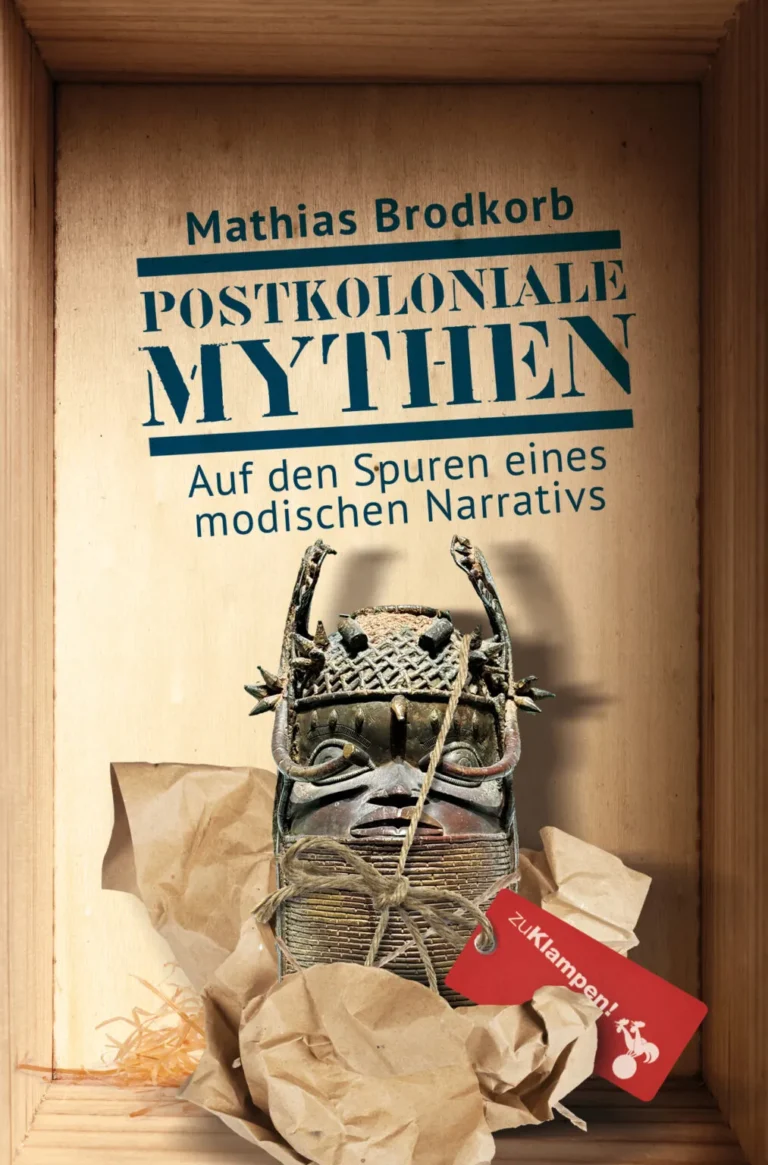
[ in German ] In a new book, German author and former SPD politician Mathias Brodkorb denounces the development of ethnological museums in Europe, especially Leipzig, Hamburg, Berlin and Vienna.
Understanding the Restorative museum practices begins with a departure from static preservation models. It involves recognizing that cultural institutions operate within complex social and ecological systems, bearing responsibility for their historical impacts and future roles.
Dan Hicks' 'Every Monument Will Fall - A Story of Remembering and Forgetting' reappraises how we think about culture, and how to find hope, remembrance and reconciliation in the fragments of an unfinished violent past.
The aim of the project is to reveal and connect all collections of material made in Africa that are held in 32 Scottish museums, including lesser-known as well as better-known ones, and to connect these collections with relevant and interested diaspora and descendant communities.
Deliberate avoidance, lack of interest, or lack of sources, African arts have found themselves to the margins of the history of spoliations, destruction and displacement of works of art during the 1933-45 period, with research largely focusing on European art. Conference on 13 November 2025 in Paris.
(Re)collecting Natural History in Europe is a research project that examines how natural history and ethnographic collections are curated and displayed, with a particular focus on European museums.
The paper argues that the ensuing negotiations and the state-imposed criteria for reburial reflect an ongoing colonial impulse to control Indigenous bodies and restrict ontological and political self-determination.
Rohan Fernando emphasises the colonial roots of India’s great contemporary museums and the role of the British in rediscovering India’s past. Muhammad Nishan Hussain [University of Lahore] takes an opposite view and sees them as a tool of colonial control.
Ahmad Mohammed writes: Immersive technologies and digital repatriation are reshaping heritage practice—opening up new possibilities for connection, access, and repair. But are we asking the right questions?
Heritage interpretation—the process through which meaning is assigned to the material and immaterial traces of the past—is never a neutral act. It inherently involves questions of power, identity, and authority, writes Ahmad Mohammed.
The (black-red) coalition agreement of Conservatives (CDU/CSU) and Social Democrats (SPD) in Germany contains remarkably positive statements on dealing with the colonial legacy.
Te Papa collection manager and kaitiaki taonga Moana Parata brings home a precious taonga, a raranga vest collected by Carl Freeze, an American Mormon missionary in the early 1900s.
A European art collector challenged Conan Cheong's commendation of the Dutch Government’s return of the Singhosari stone Bhairava, Nandi, Ganesha and Brahma statues to Indonesia the year before.
Markus Scholz discusses the missionary practice and ideas of the Bavarian Capuchins among the Mapuche in Araucanía in south Chile from 1895–1896 onwards. Distinguishing themselves as defenders of Indigenous land rights and as linguistic experts on the Mapuche language, they also assembled a rich collection of ethnographic artifacts and natural specimens, which could be problematic today. [ open access ]
The article 'Journey of No Return: The Impact of Looted Heritage on Nigeria’s Cultural Legacy' explores the profound impact of looted heritage on Nigeria’s cultural legacy, highlighting the historical, cultural, and economic implications of the plundered artifacts.
This essay by Ahmad Mohammed critically interrogates how decolonisation discourse is being used—sometimes productively to drive real change, but other times performatively as a mere buzzword—within the heritage sector.
This collaboration between the Académie des Traces and C& explores the traces of colonial heritage today in several texts by emerging scholars and museum professionals from the African and European continents.
Senegalese art historian El Hadji Malick Ndiaye says discussions and decisions about the restitution of African artefacts cannot be dictated by the West. He also discusses inter-Africa repatriations.
Muhammad Nishat Hussain explores how Pakistan has been doubly deprived of its cultural heritage, first through British colonial looting and later through India's post-Partition retention of thousands of artifacts.
Re:Sound explores whether and how the inherent divergence of validations and understandings of sonic expression provides ways to reconsider established notions of heritage.
This interdisciplinary encyclopedia brings together scholars from different disciplines across the humanities and social sciences to provide the state of the art and most comprehensive overview of theoretical and methodological approaches to the study of cultural heritage and conflict.
The House of Ni’isjoohl Memorial Pole, stolen in the 1920s, was rematriated from National Museums Scotland (NMS) in 2023. Noxs Ts’aawit (Dr. Amy Parent) of The Nisga’a Nation and Dr. John Giblin from NMS outline the process of international cooperation.
Since the later part of the twentieth century, ethnographic museums have come under increasing scrutiny, and many have reflected on and changed their presentation as they questioned collections so often made by colonial officials and explorers.
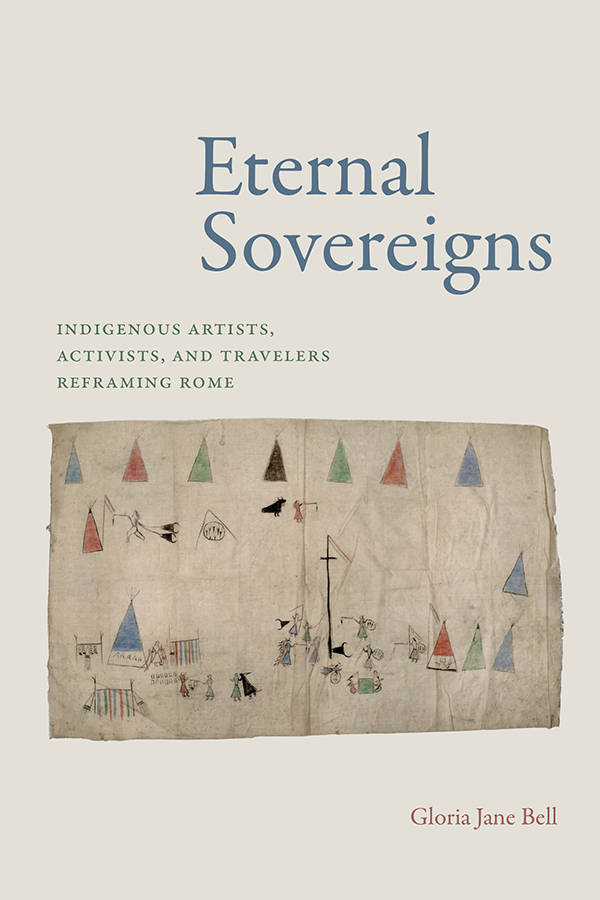
In Eternal Sovereigns: Indigenous Artists, Activists, and Travelers Reframing Rome, Gloria Jane Bell considers Indigenous cultural belongings held in Vatican Museums collections. As she turns attention to the stories they tell—and the Vatican’s efforts to silence them—she locates these possessions within a long history of Indigenous travelers with creative ties to Rome.
The All-Party Parliamentary Group for African Reparations (APPG-AR) has produced a policy brief, ‘Laying Ancestors to Rest’, which makes the case that the display and sale of African ancestral remains by British institutions “causes profound distress to diaspora communities and countries of origin”.
The restitution of material objects has become central for engaging with past injustices in post-conflict situations. Thereby, restitution is increasingly attributed a transformative potential to enable dialogues between different victim and perpetrator groups in the aftermath of mass violence.
This article presents recent provenance research on the Indigenous ancestral human remains gathered by Alphonse Louis Pinart (1852-1911) during his journey in Oceania on board the French navy cruiser Le Seignelay.
In Morocco, the post-colonial power has implemented cultural policies aiming for a return to the precolonial times with a conception of tradition that was produced by the colonial gaze, thus continuing the colonial epistemology and policies.
Contributing to current efforts to grapple with museums' colonial legacies, this article takes the question of evidence as an entry point to unlock the multi-layered make-up of African spiritual artifacts in missionary collections.
How are museum objects valued and who decides? Trevor Engel explores the relationship of perceived scientific value to the idea of hoarding applied to colonial institutions' holdings.
The colonial legacy continues to resonate in Portugal, shaping “organized forgetting” of colonial violence. Finding ways to dismantle the real effects of that historical legacy includes restitution of looted collections.
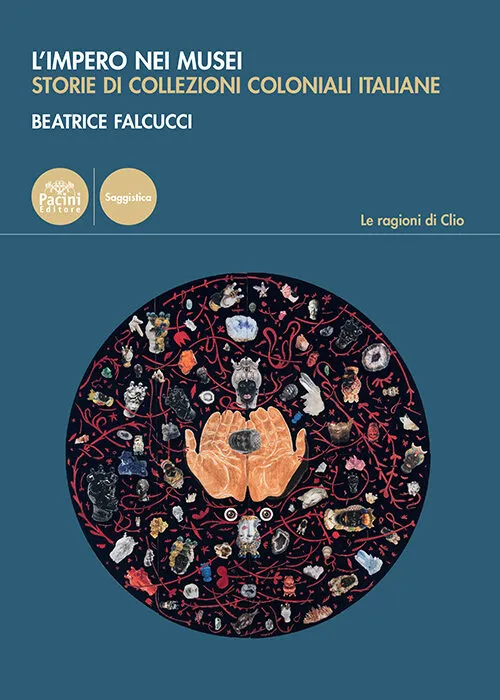
[ in Italian ] From the dawn of Italian exploration in Africa and throughout the colonial period, objects and samples from overseas came to the Peninsula, finding their way into temporary exhibitions and more than one hundred permanent displays, where they were studied, described and presented to the public.
Live-report of the meanings and significance of provenance research in the current legal debate on the return and restitution of cultural objects, organised by the Cultural Heritage and the Arts Interest Group and the Interest Group on International Law of Culture of the European Society of International Law.
When repatriation has been largely framed within nation-state contexts, what does it mean to truly foster inclusivity in this process? Is it essential to involve the communities directly affected for such inclusivity to be achieved? What insights can we gain from community-led repatriations regarding local priorities, needs, and cultural practices?
[ open access ] This Special Issue of UMAC Journal has a Guidance for restitution and return of items from university collections and interesting contributions about ancestral remains in these collections.
This gold crown with stunningly delicate filigree belonged to Emperor Tewodros II, the King of Kings of Abyssinia. It was the most remarkable artefact looted during the British Army’s 1868 siege of Maqdala, the king’s hilltop fortress capital.
The Netherlands and other European countries are developing policies to return objects and ancestral remains appropriated in the colonial period. This offers hope for postcolonial countries to retrieve their lost treasures. Bangladesh should make more use of this opportunity. To begin with, it can claim an object from the Rijksmuseum Amsterdam.
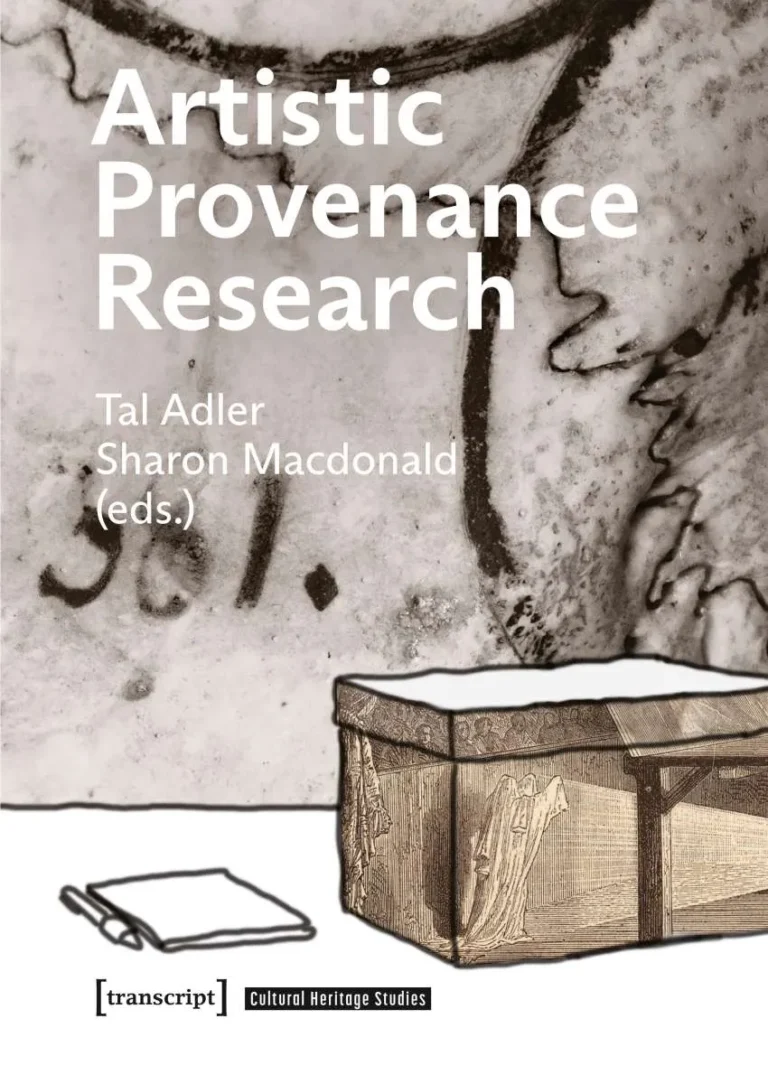
What can art and artists bring to researching the origins and biographies of objects? How do they shed new light on – or even unsettle – existing approaches to such questions? 'What is not said or shown – absences and gaps – needs attention and can itself open up new avenues of investigation.' [ open access ]
Once, The Art Newspaper called the historical relationships of the art trade with museums a ‘foggy world’. That was in 2016. I dare say the relationship of trade with museums still is very foggy. How does this relationship look like?
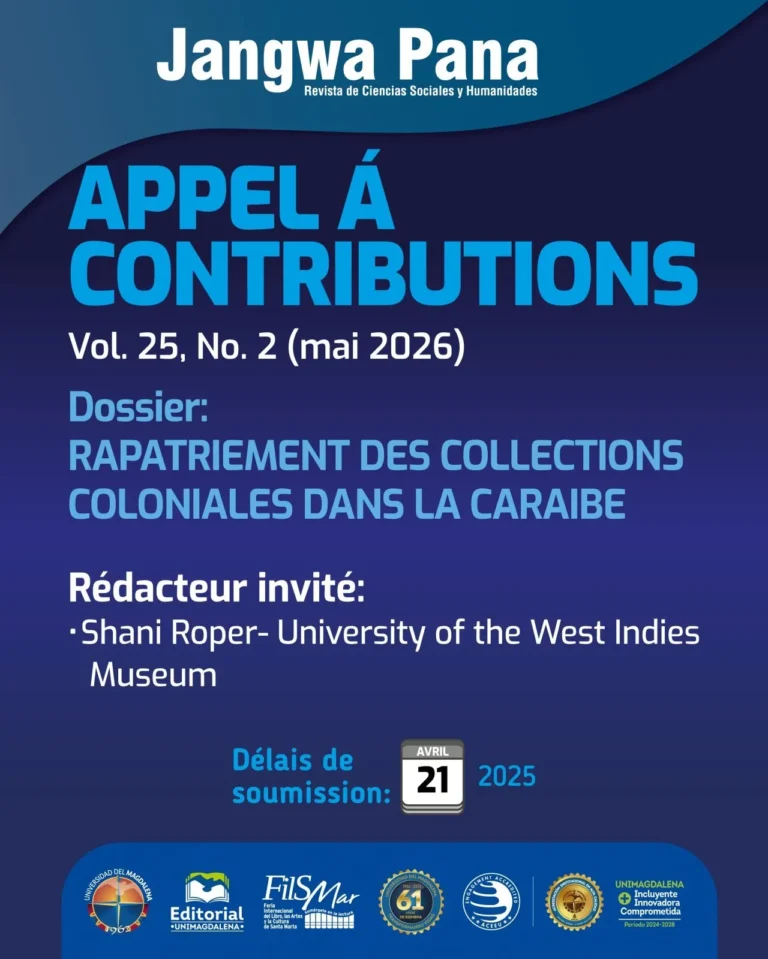
[ in English, French and Spanish ] This call invites researchers and academics from all areas of social sciences and humanities to submit their work for a special issue of Jangwa Pana dedicated to the repatriation of colonial collections in the Caribbean. Deadline 21 April 2025.
During the European expansion constant fighting and violence and the taking of spoils of war went hand-in-hand. Palaces, shrines, homesteads and entire villages were plundered and destroyed. In the restitution debate, the focus is mostly on state-collections resulting from these confrontations. There is ample evidence, however, that many more parties were involved. This blogpost has soem of the evidence.
The latest issue of the "International Journal of Heritage Studies" (Volume 31, Issue 3, 2025) is out! This issues features a series of articles on "virtual repatriation", "the symbolic violence of heritage consultancy", "the heritage value of emptiness", etc.
Why is research into colonial collections in the private sector - I mean art dealers, auction houses and private collectors - so tough? The main reasons is that most of them have built a wall around themselves, and there is rarely a hole in this wall through which an outside observer can look inside their closed bulwark.
The extensive article 'The ghosts are everywhere, about a museum beset by colonial controversy, difficult finances and the discovery of a thief on the inside.
European powers often dismissed or devalued the cultural expressions of colonised peoples, labelling them as ‘crafts,’ ‘artifacts,’ or ‘ethnographic objects’ rather than art and reinforcing the idea that European art holds a superior place in global culture.
The article 'Hidden Colonial Legacies and Pathways of Repair'investigates how the question of ancestral remains out of colonial contexts in Belgian museum collections is understood in the DR Congo.
This paper demonstrates that communities and victims of colonial crimes who suffered gross violations of international human rights and serious violations of international humanitarian law are entitled to reparations and the restitution of their stolen or looted African cultural heritage.
On August 26, 2016, the Minister of Foreign Affairs and Cooperation of Benin, in a letter to his French counterpart, made an official request calling for the restitution of cultural goods brought back to mainland France by French colonial troops during the conquest of the kingdom of Danhomè. [ in French ]
Mirjam Shatanawi's 'Legacies of Colonialism in Museum Collections - The (Un)Making of Indonesian Islam in the Netherlands' tells the untold story of Indonesian Islam in museums: Often overshadowed by Hindu-Buddhist art, Indonesian Islamic heritage rarely receives the attention.
Who should own Benin objects returned to Nigeria? And what about the Oba of Benin commenting, prior to 2023, that the Benin objects to be returned to Nigeria should be returned to him and not the federal government?
The debates on the ownership of contested cultural objects bring forth questions regarding the representation of history. But might these debates also lead to the fabrication of history?
Resist, Reclaim, Retrieve - The Long History of the Struggle for the Restitution of Cultural Heritage and Ancestral Remains Taken under Colonial Conditions, brings together authors from countries in the Global South and North. They shed light on the long history of restitution claims from colonised countries, with a focus on the pre-1970 period.
'Deconstructing Dinosaurs - The History of the German Tendaguru Expedition and its finds, 1906-2023' takes a fresh look at the history of the German Tendaguru Expedition (1909–1913), using recently uncovered sources to reveal how Berlin’s Natural History Museum appropriated and extracted 225 tonnes of dinosaur fossils from land belonging to modern-day Tanzania.
This special issue of Museum & Society (open access), Mobilizing Museum Minerals: Critical Approaches to Mineralogical Collections, showcases burgeoning critical approaches to the collection, interpretation, and display of mineralogical specimens in museums while expanding understandings of their transformative potential in an era of rising ecological injustice.
Nigerian creators Shobo and Shof, known for New Masters, are set to debut their latest project, Bronze Faces, a gripping art heist drama that brings real-world issues to the comic stage in 2025.
Christa Roodt, specialist in international private law and and provenance and restitution issues at the University of Glasgow, adopts a novel approach to the social question of restitution and repatriation of sacred cultural property and heritage acquired unethically during the colonial era. Her approach premises on better integration of law, ethics, history, anthropology, and provenance research.
[ in French ] The article 'Between Belgian archives and Congolese oral sources in provenance research. The case of the statue of Chief Nkolomonyi at MAS (Belgium)' examines the value of sources in the country of the former coloniser and that of the ex-colonised. It broadens the scope of provenance research.
The African Collections Futures project seeks to develop a better sense of where Africa-related objects and materials are present in diaspora and communities of origin have with these objects, and what more can be done. The scope covers the nine institutions – eight museums and the Botanic Garden – that make up the University of Cambridge Museums (UCM), the University Library, and less well-known collections such as those in various University departments and affiliated institutions.
[ open access ] 'Displacing and Displaying the Objects of Others - The Materiality of Identity and Depots of Global History' brings a diverse range of contributions inspired by research from the "Hamburg’s (post-)colonial legacy" research center.
It has become a tradition, Kwame Opoku’s annual retrospect. For him, the most spectacular event of the year for restitution was the royal lecture of the Asantehene, Nana Osei Tutu II (19 July 2024) at the British Museum London.
Despite the existence of codes of ethics and other published guidelines for the ethical treatment of human remains in many countries and for most professional bodies, there is still widespread anxiety among many professionals in museum and research contexts about whether they are getting it right.
In A Programme of Absolute Disorder, political scientist Françoise Vergès puts the museum in its place. Exploring the Louvre's history, she uncovers the context in which the universal museum emerged: as a product of colonialism, and of Europe's self-appointed claim to be the guardian of global heritage.
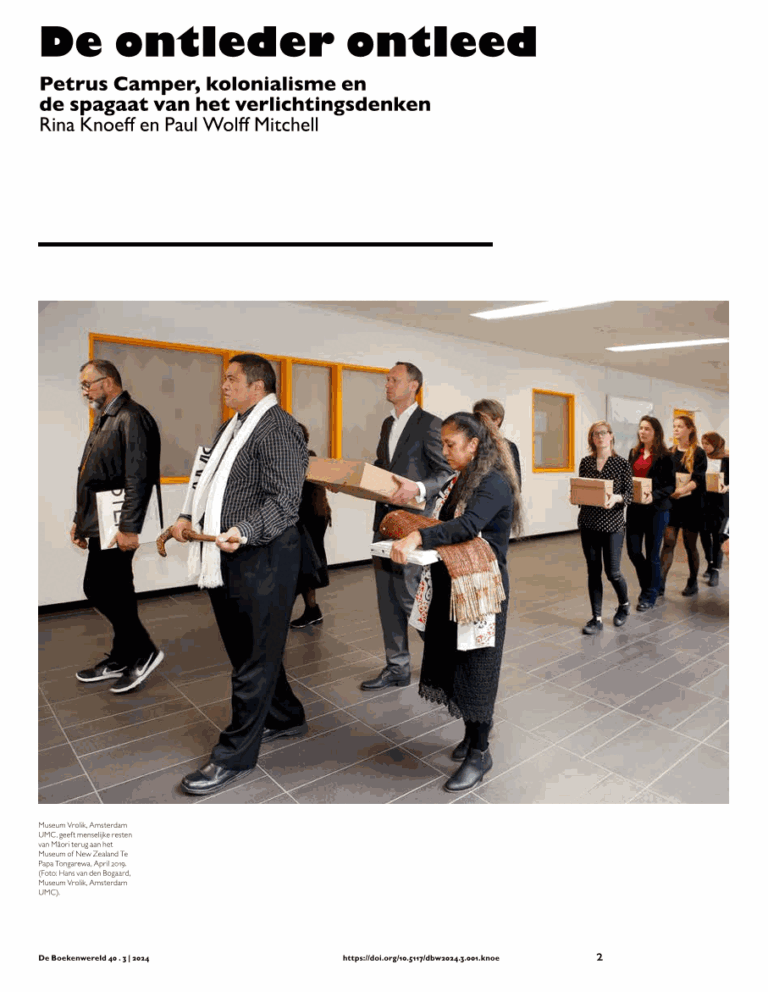
[ in Dutch ] The University Museum Groningen has a collection of human remains from Petrus Camper (1722-1789). Where do they come from and how can their presence there be understood? This issue of Magazine De Boekenwereld is about Camper, his ideas and his collection.
[ in Dutch ] The University Museum Groningen has a collection of human remains from Petrus Camper (1722-1789). Where do they come from and how can their presence there be understood? This issue of Magazine De Boekenwereld is about Camper, his ideas and his collection.
Geraldine Kendall Adams delves into the moral and ethical arguments that surround the highly sensitive issue of human remains held in British museum collections.
Panorama of the Nord Deutsche Rundfunk wrote an extended commentary on a 35-minute-long documentary: ‘African human skull, early 20th century, €2000’ - this is how dealers openly advertise human skulls on social media such as Instagram. Panorama reporters uncover just how dubious this trade is, especially when you realise the origin of these skulls (in German).
[ in German ] ‘African human skull, early 20th century, €2000’ - this is how dealers openly advertise human skulls on social media such as Instagram. Panorama reporters uncover just how dubious this trade is, especially when you realise the origin of these skulls.
ÌMỌ̀ DÁRA’s mission is to connect art collectors with the world’s leading dealers and scholars, based on a foundation of knowledge. It publishes an annual overview in which the voice of the collector is central. The 2024 overview has an interesting chapter on restitution.
Many European countries deal with their colonial history and their collections of ethnographic material. As much as human remains seem like the essence of the need to do reparations to indigenous cultures, they are but a small part of the responsibility to understand our entangled histories
Material Culture in Transit: Theory and Practice constellates curators and scholars actively working with material culture within academic and museal institutions through theory and practice.
Until the late 1980s Indigenous art was being ripped off left right and centre. It was open slather. First at the cheap end of the market on T-shirts and then on fancy carpets made in Vietnam. The rip-off merchants maintained black artists were just painting old patterns, so their work was for the taking.
Can one historical injustice be compared to another? Historians don't like it, for understandable reasons. But in matters of looting art you can't escape it. What rarely happens, comparing books by authors from four countries on one subject, does Pieter van Os.
In 1925, Pius XI staged the Vatican Missionary Exposition in Rome’s Vatican City. Gloria Bell explores the relationship between Indigenous cultures around the world and the Vatican, which holds thousands of works by Indigenous scholars and refuses to return them.
This e-report of the international conference 'Museum Forward International Best Practice Forum on Museums & Heritage' in Jakarta gives a clear insight into Indonesia's cultural policy.
Although there is no lack of information on individual repatriated works, the larger picture of where they came from and how, who is returning them and why can be lost in the anecdotes. This is where the Museum of Looted Antiquities (Mola) comes in—a new digital platform that traces not only the histories of specific repatriated objects but also compiles metadata in order to better understand smuggling networks and the museum industry’s intensifying repatriation efforts.