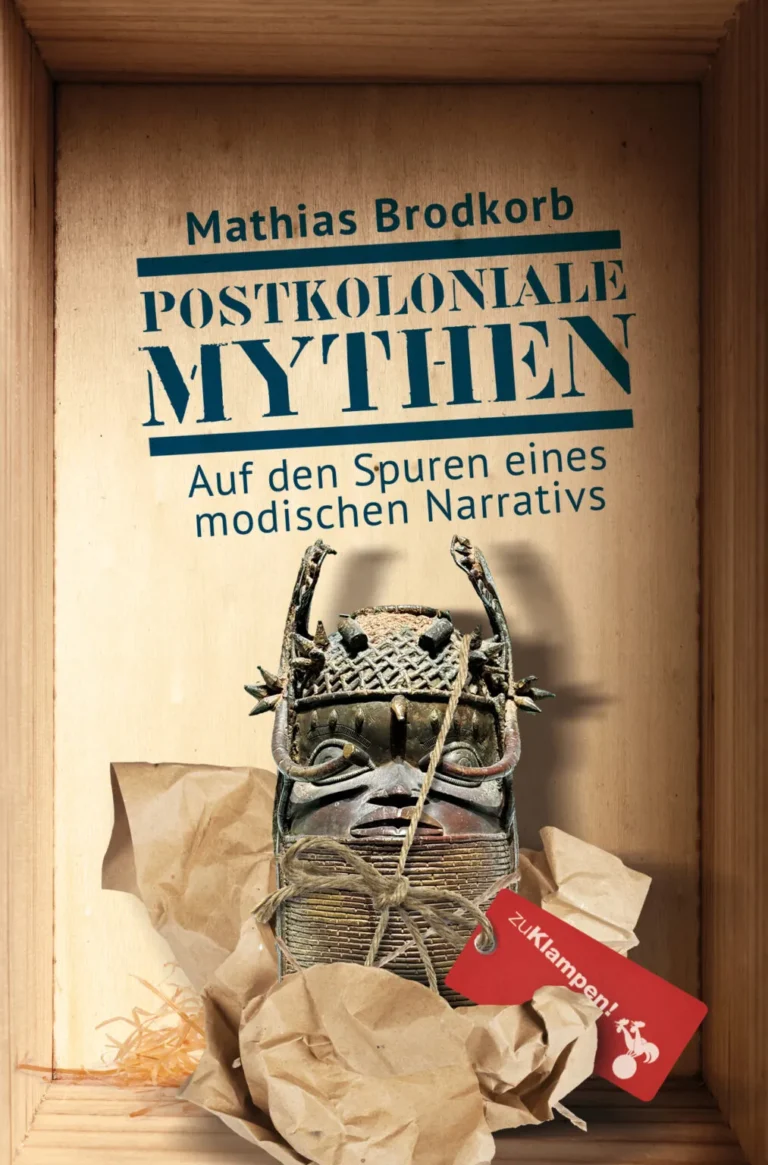
[ in German ] In a new book, German author and former SPD politician Mathias Brodkorb denounces the development of ethnological museums in Europe, especially Leipzig, Hamburg, Berlin and Vienna.
Understanding the Restorative museum practices begins with a departure from static preservation models. It involves recognizing that cultural institutions operate within complex social and ecological systems, bearing responsibility for their historical impacts and future roles.
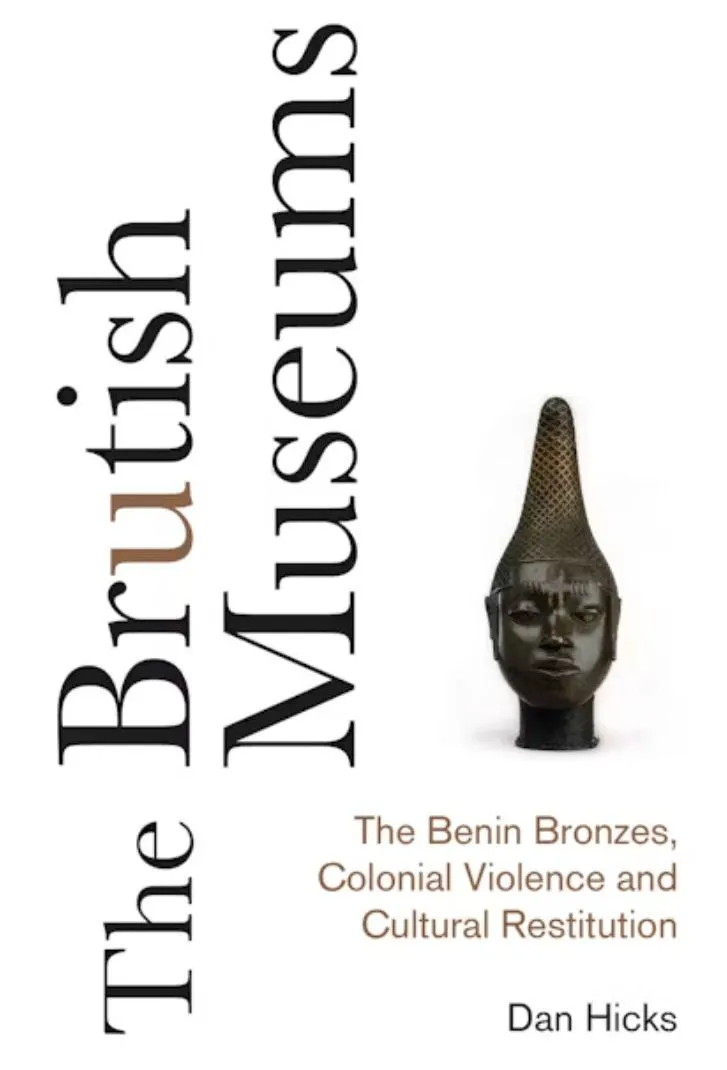
Dan Hicks' 'Every Monument Will Fall - A Story of Remembering and Forgetting' reappraises how we think about culture, and how to find hope, remembrance and reconciliation in the fragments of an unfinished violent past.
The aim of the project is to reveal and connect all collections of material made in Africa that are held in 32 Scottish museums, including lesser-known as well as better-known ones, and to connect these collections with relevant and interested diaspora and descendant communities.
Deliberate avoidance, lack of interest, or lack of sources, African arts have found themselves to the margins of the history of spoliations, destruction and displacement of works of art during the 1933-45 period, with research largely focusing on European art. Conference on 13 November 2025 in Paris.
(Re)collecting Natural History in Europe is a research project that examines how natural history and ethnographic collections are curated and displayed, with a particular focus on European museums.
The paper argues that the ensuing negotiations and the state-imposed criteria for reburial reflect an ongoing colonial impulse to control Indigenous bodies and restrict ontological and political self-determination.
Rohan Fernando emphasises the colonial roots of India’s great contemporary museums and the role of the British in rediscovering India’s past. Muhammad Nishan Hussain [University of Lahore] takes an opposite view and sees them as a tool of colonial control.
To Sell or Not to Sell: The British Association for Biological Anthropology and Osteoarchaeology’s Position on the Trade and Sales of Human Remains in the UK pleads for improved legislation if the UK is to end this industry.
Ahmad Mohammed writes: Immersive technologies and digital repatriation are reshaping heritage practice—opening up new possibilities for connection, access, and repair. But are we asking the right questions?
Heritage interpretation—the process through which meaning is assigned to the material and immaterial traces of the past—is never a neutral act. It inherently involves questions of power, identity, and authority, writes Ahmad Mohammed.
The (black-red) coalition agreement of Conservatives (CDU/CSU) and Social Democrats (SPD) in Germany contains remarkably positive statements on dealing with the colonial legacy.
Te Papa collection manager and kaitiaki taonga Moana Parata brings home a precious taonga, a raranga vest collected by Carl Freeze, an American Mormon missionary in the early 1900s.
A European art collector challenged Conan Cheong's commendation of the Dutch Government’s return of the Singhosari stone Bhairava, Nandi, Ganesha and Brahma statues to Indonesia the year before.
Markus Scholz discusses the missionary practice and ideas of the Bavarian Capuchins among the Mapuche in Araucanía in south Chile from 1895–1896 onwards. Distinguishing themselves as defenders of Indigenous land rights and as linguistic experts on the Mapuche language, they also assembled a rich collection of ethnographic artifacts and natural specimens, which could be problematic today. [ open access ]
The article 'Journey of No Return: The Impact of Looted Heritage on Nigeria’s Cultural Legacy' explores the profound impact of looted heritage on Nigeria’s cultural legacy, highlighting the historical, cultural, and economic implications of the plundered artifacts.
This essay by Ahmad Mohammed critically interrogates how decolonisation discourse is being used—sometimes productively to drive real change, but other times performatively as a mere buzzword—within the heritage sector.
This collaboration between the Académie des Traces and C& explores the traces of colonial heritage today in several texts by emerging scholars and museum professionals from the African and European continents.
Senegalese art historian El Hadji Malick Ndiaye says discussions and decisions about the restitution of African artefacts cannot be dictated by the West. He also discusses inter-Africa repatriations.
Muhammad Nishat Hussain explores how Pakistan has been doubly deprived of its cultural heritage, first through British colonial looting and later through India's post-Partition retention of thousands of artifacts.
Re:Sound explores whether and how the inherent divergence of validations and understandings of sonic expression provides ways to reconsider established notions of heritage.
This interdisciplinary encyclopedia brings together scholars from different disciplines across the humanities and social sciences to provide the state of the art and most comprehensive overview of theoretical and methodological approaches to the study of cultural heritage and conflict.
The House of Ni’isjoohl Memorial Pole, stolen in the 1920s, was rematriated from National Museums Scotland (NMS) in 2023. Noxs Ts’aawit (Dr. Amy Parent) of The Nisga’a Nation and Dr. John Giblin from NMS outline the process of international cooperation.
Since the later part of the twentieth century, ethnographic museums have come under increasing scrutiny, and many have reflected on and changed their presentation as they questioned collections so often made by colonial officials and explorers.
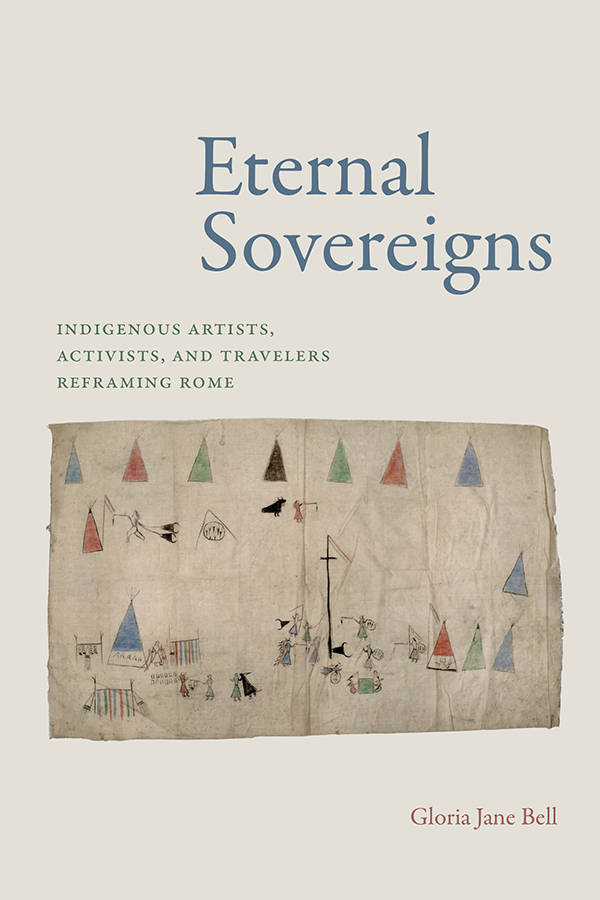
In Eternal Sovereigns: Indigenous Artists, Activists, and Travelers Reframing Rome, Gloria Jane Bell considers Indigenous cultural belongings held in Vatican Museums collections. As she turns attention to the stories they tell—and the Vatican’s efforts to silence them—she locates these possessions within a long history of Indigenous travelers with creative ties to Rome.
The All-Party Parliamentary Group for African Reparations (APPG-AR) has produced a policy brief, ‘Laying Ancestors to Rest’, which makes the case that the display and sale of African ancestral remains by British institutions “causes profound distress to diaspora communities and countries of origin”.
The restitution of material objects has become central for engaging with past injustices in post-conflict situations. Thereby, restitution is increasingly attributed a transformative potential to enable dialogues between different victim and perpetrator groups in the aftermath of mass violence.
This article presents recent provenance research on the Indigenous ancestral human remains gathered by Alphonse Louis Pinart (1852-1911) during his journey in Oceania on board the French navy cruiser Le Seignelay.
In Morocco, the post-colonial power has implemented cultural policies aiming for a return to the precolonial times with a conception of tradition that was produced by the colonial gaze, thus continuing the colonial epistemology and policies.
Contributing to current efforts to grapple with museums' colonial legacies, this article takes the question of evidence as an entry point to unlock the multi-layered make-up of African spiritual artifacts in missionary collections.
How are museum objects valued and who decides? Trevor Engel explores the relationship of perceived scientific value to the idea of hoarding applied to colonial institutions' holdings.
The colonial legacy continues to resonate in Portugal, shaping “organized forgetting” of colonial violence. Finding ways to dismantle the real effects of that historical legacy includes restitution of looted collections.
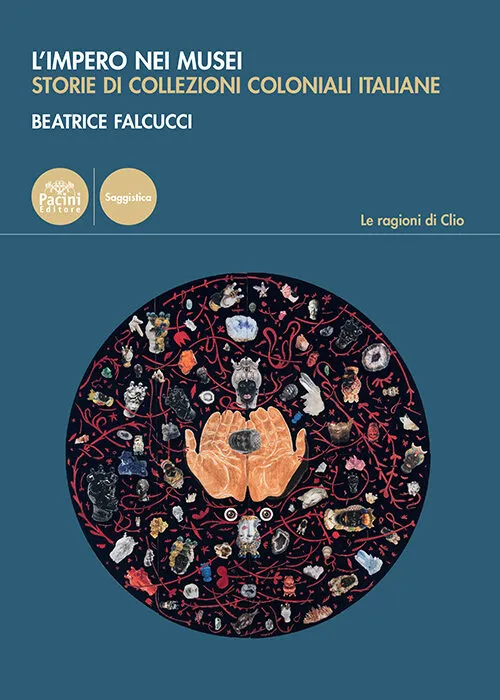
[ in Italian ] From the dawn of Italian exploration in Africa and throughout the colonial period, objects and samples from overseas came to the Peninsula, finding their way into temporary exhibitions and more than one hundred permanent displays, where they were studied, described and presented to the public.
Live-report of the meanings and significance of provenance research in the current legal debate on the return and restitution of cultural objects, organised by the Cultural Heritage and the Arts Interest Group and the Interest Group on International Law of Culture of the European Society of International Law.
When repatriation has been largely framed within nation-state contexts, what does it mean to truly foster inclusivity in this process? Is it essential to involve the communities directly affected for such inclusivity to be achieved? What insights can we gain from community-led repatriations regarding local priorities, needs, and cultural practices?
[ open access ] This Special Issue of UMAC Journal has a Guidance for restitution and return of items from university collections and interesting contributions about ancestral remains in these collections.
This gold crown with stunningly delicate filigree belonged to Emperor Tewodros II, the King of Kings of Abyssinia. It was the most remarkable artefact looted during the British Army’s 1868 siege of Maqdala, the king’s hilltop fortress capital.
The Netherlands and other European countries are developing policies to return objects and ancestral remains appropriated in the colonial period. This offers hope for postcolonial countries to retrieve their lost treasures. Bangladesh should make more use of this opportunity. To begin with, it can claim an object from the Rijksmuseum Amsterdam.
What can art and artists bring to researching the origins and biographies of objects? How do they shed new light on – or even unsettle – existing approaches to such questions? 'What is not said or shown – absences and gaps – needs attention and can itself open up new avenues of investigation.' [ open access ]
Once, The Art Newspaper called the historical relationships of the art trade with museums a ‘foggy world’. That was in 2016. I dare say the relationship of trade with museums still is very foggy. How does this relationship look like?
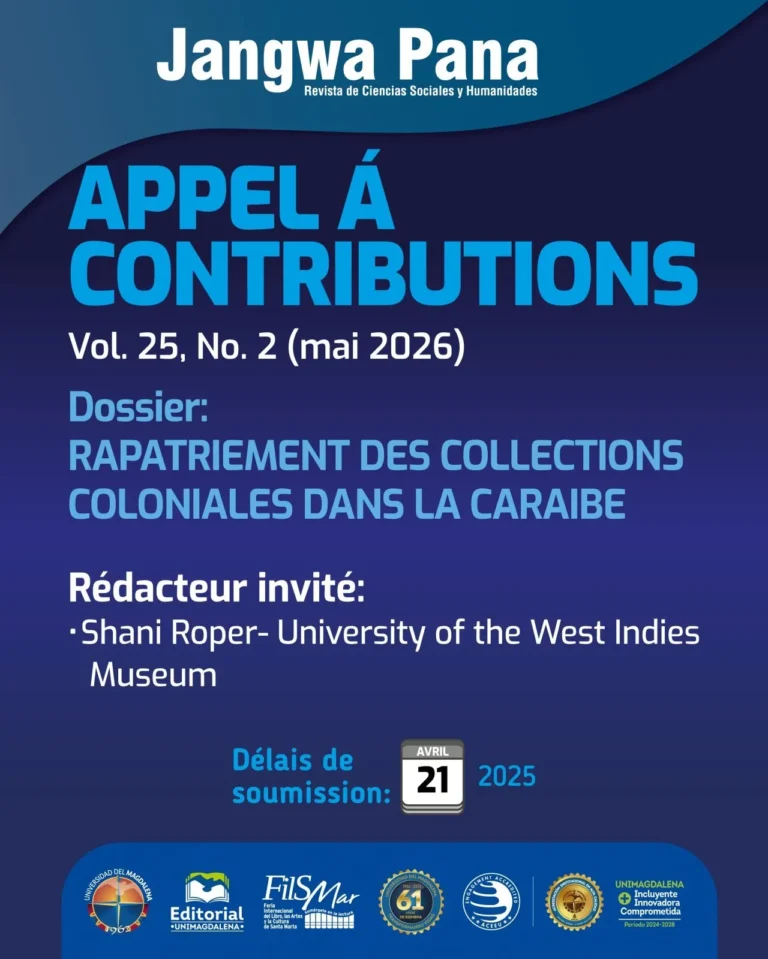
[ in English, French and Spanish ] This call invites researchers and academics from all areas of social sciences and humanities to submit their work for a special issue of Jangwa Pana dedicated to the repatriation of colonial collections in the Caribbean. Deadline 21 April 2025.
During the European expansion constant fighting and violence and the taking of spoils of war went hand-in-hand. Palaces, shrines, homesteads and entire villages were plundered and destroyed. In the restitution debate, the focus is mostly on state-collections resulting from these confrontations. There is ample evidence, however, that many more parties were involved. This blogpost has soem of the evidence.
The latest issue of the "International Journal of Heritage Studies" (Volume 31, Issue 3, 2025) is out! This issues features a series of articles on "virtual repatriation", "the symbolic violence of heritage consultancy", "the heritage value of emptiness", etc.
Why is research into colonial collections in the private sector - I mean art dealers, auction houses and private collectors - so tough? The main reasons is that most of them have built a wall around themselves, and there is rarely a hole in this wall through which an outside observer can look inside their closed bulwark.
The extensive article 'The ghosts are everywhere, about a museum beset by colonial controversy, difficult finances and the discovery of a thief on the inside.
European powers often dismissed or devalued the cultural expressions of colonised peoples, labelling them as ‘crafts,’ ‘artifacts,’ or ‘ethnographic objects’ rather than art and reinforcing the idea that European art holds a superior place in global culture.
The article 'Hidden Colonial Legacies and Pathways of Repair'investigates how the question of ancestral remains out of colonial contexts in Belgian museum collections is understood in the DR Congo.
This paper demonstrates that communities and victims of colonial crimes who suffered gross violations of international human rights and serious violations of international humanitarian law are entitled to reparations and the restitution of their stolen or looted African cultural heritage.
On August 26, 2016, the Minister of Foreign Affairs and Cooperation of Benin, in a letter to his French counterpart, made an official request calling for the restitution of cultural goods brought back to mainland France by French colonial troops during the conquest of the kingdom of Danhomè. [ in French ]
Mirjam Shatanawi's 'Legacies of Colonialism in Museum Collections - The (Un)Making of Indonesian Islam in the Netherlands' tells the untold story of Indonesian Islam in museums: Often overshadowed by Hindu-Buddhist art, Indonesian Islamic heritage rarely receives the attention.
Who should own Benin objects returned to Nigeria? And what about the Oba of Benin commenting, prior to 2023, that the Benin objects to be returned to Nigeria should be returned to him and not the federal government?
The debates on the ownership of contested cultural objects bring forth questions regarding the representation of history. But might these debates also lead to the fabrication of history?
Resist, Reclaim, Retrieve - The Long History of the Struggle for the Restitution of Cultural Heritage and Ancestral Remains Taken under Colonial Conditions, brings together authors from countries in the Global South and North. They shed light on the long history of restitution claims from colonised countries, with a focus on the pre-1970 period.
'Deconstructing Dinosaurs - The History of the German Tendaguru Expedition and its finds, 1906-2023' takes a fresh look at the history of the German Tendaguru Expedition (1909–1913), using recently uncovered sources to reveal how Berlin’s Natural History Museum appropriated and extracted 225 tonnes of dinosaur fossils from land belonging to modern-day Tanzania.
This special issue of Museum & Society (open access), Mobilizing Museum Minerals: Critical Approaches to Mineralogical Collections, showcases burgeoning critical approaches to the collection, interpretation, and display of mineralogical specimens in museums while expanding understandings of their transformative potential in an era of rising ecological injustice.
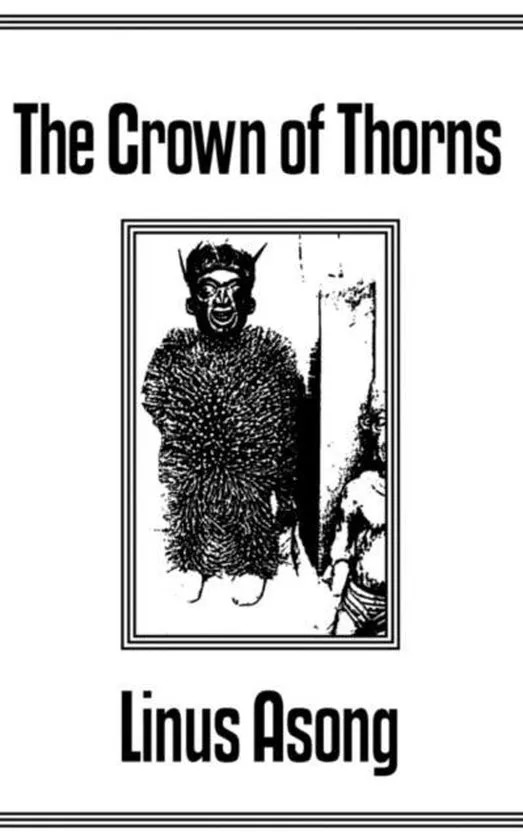
Nigerian creators Shobo and Shof, known for New Masters, are set to debut their latest project, Bronze Faces, a gripping art heist drama that brings real-world issues to the comic stage in 2025.
Christa Roodt, specialist in international private law and and provenance and restitution issues at the University of Glasgow, adopts a novel approach to the social question of restitution and repatriation of sacred cultural property and heritage acquired unethically during the colonial era. Her approach premises on better integration of law, ethics, history, anthropology, and provenance research.
[ in French ] The article 'Between Belgian archives and Congolese oral sources in provenance research. The case of the statue of Chief Nkolomonyi at MAS (Belgium)' examines the value of sources in the country of the former coloniser and that of the ex-colonised. It broadens the scope of provenance research.
The African Collections Futures project seeks to develop a better sense of where Africa-related objects and materials are present in diaspora and communities of origin have with these objects, and what more can be done. The scope covers the nine institutions – eight museums and the Botanic Garden – that make up the University of Cambridge Museums (UCM), the University Library, and less well-known collections such as those in various University departments and affiliated institutions.
[ open access ] 'Displacing and Displaying the Objects of Others - The Materiality of Identity and Depots of Global History' brings a diverse range of contributions inspired by research from the "Hamburg’s (post-)colonial legacy" research center.
It has become a tradition, Kwame Opoku’s annual retrospect. For him, the most spectacular event of the year for restitution was the royal lecture of the Asantehene, Nana Osei Tutu II (19 July 2024) at the British Museum London.
Despite the existence of codes of ethics and other published guidelines for the ethical treatment of human remains in many countries and for most professional bodies, there is still widespread anxiety among many professionals in museum and research contexts about whether they are getting it right.
In A Programme of Absolute Disorder, political scientist Françoise Vergès puts the museum in its place. Exploring the Louvre's history, she uncovers the context in which the universal museum emerged: as a product of colonialism, and of Europe's self-appointed claim to be the guardian of global heritage.
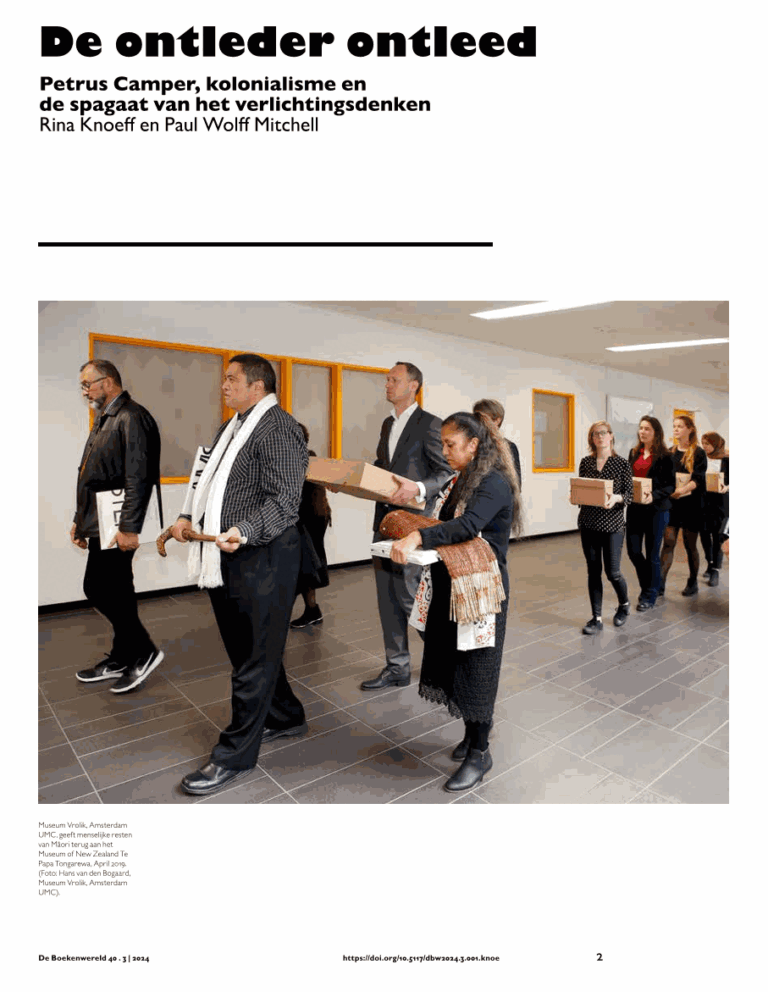
[ in Dutch ] The University Museum Groningen has a collection of human remains from Petrus Camper (1722-1789). Where do they come from and how can their presence there be understood? This issue of Magazine De Boekenwereld is about Camper, his ideas and his collection.
[ in Dutch ] The University Museum Groningen has a collection of human remains from Petrus Camper (1722-1789). Where do they come from and how can their presence there be understood? This issue of Magazine De Boekenwereld is about Camper, his ideas and his collection.
Geraldine Kendall Adams delves into the moral and ethical arguments that surround the highly sensitive issue of human remains held in British museum collections.
Panorama of the Nord Deutsche Rundfunk wrote an extended commentary on a 35-minute-long documentary: ‘African human skull, early 20th century, €2000’ - this is how dealers openly advertise human skulls on social media such as Instagram. Panorama reporters uncover just how dubious this trade is, especially when you realise the origin of these skulls (in German).
[ in German ] ‘African human skull, early 20th century, €2000’ - this is how dealers openly advertise human skulls on social media such as Instagram. Panorama reporters uncover just how dubious this trade is, especially when you realise the origin of these skulls.
ÌMỌ̀ DÁRA’s mission is to connect art collectors with the world’s leading dealers and scholars, based on a foundation of knowledge. It publishes an annual overview in which the voice of the collector is central. The 2024 overview has an interesting chapter on restitution.
Many European countries deal with their colonial history and their collections of ethnographic material. As much as human remains seem like the essence of the need to do reparations to indigenous cultures, they are but a small part of the responsibility to understand our entangled histories
Material Culture in Transit: Theory and Practice constellates curators and scholars actively working with material culture within academic and museal institutions through theory and practice.
Until the late 1980s Indigenous art was being ripped off left right and centre. It was open slather. First at the cheap end of the market on T-shirts and then on fancy carpets made in Vietnam. The rip-off merchants maintained black artists were just painting old patterns, so their work was for the taking.
Can one historical injustice be compared to another? Historians don't like it, for understandable reasons. But in matters of looting art you can't escape it. What rarely happens, comparing books by authors from four countries on one subject, does Pieter van Os.
In 1925, Pius XI staged the Vatican Missionary Exposition in Rome’s Vatican City. Gloria Bell explores the relationship between Indigenous cultures around the world and the Vatican, which holds thousands of works by Indigenous scholars and refuses to return them.
This e-report of the international conference 'Museum Forward International Best Practice Forum on Museums & Heritage' in Jakarta gives a clear insight into Indonesia's cultural policy.
Although there is no lack of information on individual repatriated works, the larger picture of where they came from and how, who is returning them and why can be lost in the anecdotes. This is where the Museum of Looted Antiquities (Mola) comes in—a new digital platform that traces not only the histories of specific repatriated objects but also compiles metadata in order to better understand smuggling networks and the museum industry’s intensifying repatriation efforts.
For decades, families in Tanzania have been demanding the return of their ancestors’ human remains from Germany. These ancestors, executed leaders of resistance efforts against German colonial rule, were exhumed from their graves and taken to Germany. Cece Mlay discusses co-producing a new documentary on how their descendants are seeking justice and closure today.
A foundational handbook for critical heritage research about Africa and its diaspora. Part III African Objects and the Global Museum-Scape is relevant for RM*.
Rachel Mariembe discusses the collection of the Musée des Rois Bamoun (MRB, Museum of the Bamoun Kings), located in Foumban in Cameroon’s West Region, as a framework for studying issues related to the concepts of museum, cultural heritage, conservation, and the restitution of cultural property looted during the colonial period.
The collection of the Musée des Rois Bamoun (MRB, Museum of the Bamoun Kings), located in Foumban in Cameroon’s West Region, testifies to the richness and diversity of the Bamoun Kingdom’s art, culture, and history.
The volume offers new findings on the historical and current significance of artifacts and highlights the current dialogue with partners from Nigeria and the diaspora, reflecting on the methods of cooperative research and the future of the objects currently kept in Swiss collections.
[ in English but also available in French ] With the release of the documentary film Dahomey, which follows France’s restitution of twenty-six works of art to Benin, various research teams continue to work on the return of African cultural property to their communities of origin.
Historian Justin M. Jacobs challenges the widely accepted belief that many of Western museums’ treasures were acquired by imperialist plunder and theft. His account re-examines the allegedly immoral provenance of Western collections, advocating for a nuanced understanding of how artefacts reached Western shores.
Sela K. Adjei and Yann LeGall (eds.): Debates around restitution and decolonising museums continue to rage across the world. Artefacts, effigies and ancestral remains are finally being accurately contextualised and repatriated to their homelands.
"A History of Excuses" dives into the often absurd justifications given to delay or deny the return of African cultural heritage, using satire and humour. .
Germany was a significant – and often brutal – colonial power in Africa. But this colonial history is not told as often as that of other imperialist nations. A new book called The Long Shadow of German Colonialism: Amnesia, Denialism and Revisionism aims to bring the past into the light. It explores not just the history of German colonialism, but also how its legacy has played out in German society, politics and the media.
In 'The Empty Showcase Syndrome - Tough Questions about Cultural Heritage from Colonial Regions', author Jos van Beurden explores three questions that slow down the restitution process.
This blog discusses the necessity for a comprehensive monitoring system for tracking restitution efforts involving cultural belongings and ancestral remains in Latin America.
[ in Dutch ] This thesis on the Watson collection shows that even smaller non-ethnographic museums such as the Noordbrabants Museum of art, culture and history have collections from colonial areas.
Advisory reports from the Colonial Collections Committee on objects for which restitution has been requested by Indonesia. The provenance reports have been added as an appendix.
Tomos Llywelyn Evans (William & Mary UNi, USA) describes, how, in 1937–38, the American William R. Bascom conducted research in the sacred Yorùbá city of Ilé-Ifẹ̀, Nigeria. Bascom saw unique copper and copper alloy heads, two of which he acquired and exported to the USA. Bascom’s actions in 1938
How did Geneva live through the colonial period? In what ways was the Ethnography Museum a major cultural actor in the colonial context? What is the future of the collections held there? Can we understand today the real identity of an object, sometimes centuries after it entered the Genevan museum collections?
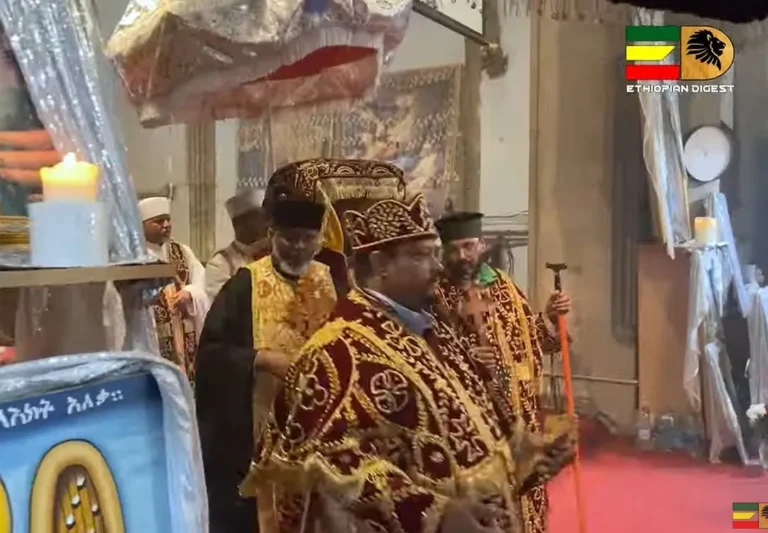
Lewis McNaught investigates why the British Museum, which already has the authority to return a collection of Tabots (sacred objects) to Ethiopia, is failing to comply or explain why it won't return the Tabots.
Centuries of colonisation and exploitation have substantially determined the fact that museums in the West own collections of art that originated from their former colonies. Anaïs Mattez historicises the development of restitution from museums. She sheds light on the mutual influence of post-colonial studies, art crime, and international law.
Film maker Ngawatilo Naiwiyoo and restitution proponent Silvie Njobati embark on a journey through history, exploring the complex, violent, and manipulative ways in which heritage items of African origin ended up in Western museums and private collections.
Modern treaties and statutes protecting cultural property apply only prospectively to items stolen or illegally exported after their effective dates. But while the United States does not have a law concerning looted cultural objects taken from formerly colonized peoples overseas, it does have a statute governing the repatriation of Native American cultural items and human remains.
The opening of Kader Attia’s latest exhibition J’accuse could not be more perfectly timed. After Mati Diop’s Dahomey won the Golden Bear at the Berlinale in February, restitution is now firmly back in the headlines.
Chief Charles Taku argues that the resistance towards the restitution of African Heritage artefacts and the payment of reparations for colonial crimes is premised on the supposed legality of the crimes under the General Act of the Berlin Conference (26 February 1885).
In the colonialist moves to collect human remains, and the desire to demonstrate grandeur and strength, many soldiers relied on racist and blood-thirsty narratives to rationalize their cruel actions.
Although there is no overarching framework for the repatriation of human remains at the international level, most repatriation efforts now operate within a more rigorous legal framework at the national and subnational level, which includes national laws and guidelines from public authorities.
[ in English and in Dutch ] In April 2024, a Netherlands delegation visited Suriname and mapped out which objects are present in Dutch public collections through the colonial history of the Netherlands and Suriname.
A central assumption in the political process of restitution of looted properties and cultural objects is that their return helps societies to redeem histories of injustice and dispossession. In this article, we ask which objects address whose histories, and how processes of restitution are influenced by the presence and absence of objects and collections.
The wars of 1845–72 were described by James Belich as ‘bitter and bloody struggles, as important to New Zealand as were the Civil Wars to England and the United States’. The conflict’s themes of land and sovereignty continue to resonate today.
This Guide to Initiating Requests for the Return of Cultural Property to its Countries of Origin is part of the ECOWAS Action Plan 2019-2023 on the Return of Cultural Property to its Countries of Origin.
As a result of the Netherlands’ colonial past, parts of the history of countries, communities and individuals across the world are being held in archives currently located in the Netherlands. These archives might not be in the right place.
Tea sets, paravents, spears and shields – even if today’s heirs were not involved in their acquisition or theft, these artefacts are inextricably linked to German colonial history.
There’s one maritime challenge that’s gone underdiscussed: underwater heritage. We are co-investigators on a research project called Reuniting Cargoes: Underwater Cultural Heritage of the Maritime Silk Route.
'Measina' or cultural artefacts kept in the Uebersee Museum in Bremen will be back in Samoa in June 2024. A team from the National University of Samoa, led by Ta’iao Matiu Dr Matavai Tautunu, will be making this trip.
The documentary "The Empty Grave" traces the mission of two families in Tanzania that embark on an emotional journey to reclaim their ancestors’ human remains from German museums.
The 2024 report covers the previous year and concludes that the tribal art market has plummeted in 2023, with a global auction turnover of €37.55 million, marking a 37.5% decline, compared with the year 2022.
Two British museums, the British Museum (BM) and the Victoria and Albert Museum (V&A) have agreed to return to Asante/Ghana respectively 15 and 17 looted objects. It is, however, a loan.
This publication compiles information on 39 institutions in museums and universities in German-speaking countries that have accessioned, altogether, almost 19,000 pieces of tangible cultural heritage produced in Namibian communities over a period of time of more than 160 years (pre-1860s to date).
As part of donation agreements with private collectors, such museums could agree to make the objects the focus of courses centred on provenance research and related issues. A key goal of the research would be to trace as complete an ownership history as possible and identify the most likely country of origin for all the objects.
In a lengthy and worthwhile essay in ARTnews about the progress in the restitution discourse, both steps forward and steps back in the former colonizers’ countries and the former colonies are discussed.
Fifty-four years ago, Ghanaian Nii Kwate Owoo was granted access to the storage facilities of the British Museum. The result was You Hide Me – a 40-minute film depicting Owoo and his colleague discovering an enormous volume of colonial objects hidden away in the institution’s basement.
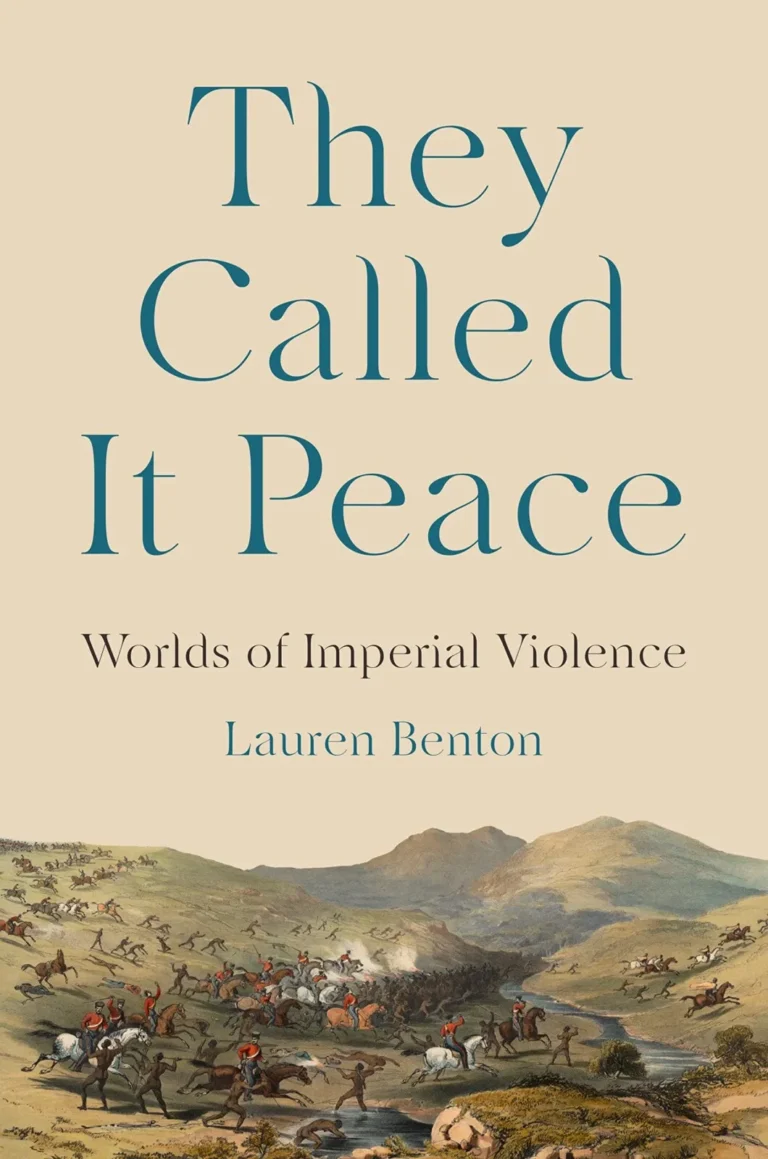
Although Laura Benton's book is not directly about colonial collections and restitution, RM* wants to mention it. 'They called it peace' is about the ideological-legal justification of colonial violence and plunder.
Rachel Ama Asaa Engmann of the Christiansborg Archaeoogical Heritage Project helps to understand how the agreement with one American and two British museums was reached.
In January 2021, the Dutch government became the first in Europe to approve a central mechanism for repatriating colonial loot. One aspect of the new policy raises concerns given that artefacts that were looted from non-Dutch colonies will not automatically be repatriated.
Denunciations of the ‘evils’ of colonialism occur over and over again, as does an intermittent readiness to listen to them. But the wounds that have been inflicted cannot be healed, not least because the colonial systems in all their forms have upset the deep structures of the social, economic and political organization of the societies they have targeted.
From a historical point of view, the practice of the restitution of cultural artefacts among States emerged at the beginning of the 19th century, during the Congress of Vienna in 1815. Unfortunately, these rules were not universal. They were only applicable among contracting States, stopping at the borders of Europe, the ‘civilised world’, and did not apply to territories which were or were to be colonised.
This project, sponsored by the Scottish Government, developed recommendations on how Scotland’s involvement in empire, colonialism, and historic slavery can be addressed using museum collections and museum spaces. The Scottish Government accepted these recommendations in January 2024 and work to deliver them is underway.
In the German Historical Institute London (GHIL) podcast interview, Kokou Azamede, Associate Professor at the Department of German Studies at the University of Lomé tells about restitution in his country and the role of communities.
In the last three decades, museums and museological practices that are fundamentally based on Western knowledge systems have been strongly questioned by a collective that includes Indigenous Peoples, political activists, representatives of civil society and scholars.
In 2021, the Belgian federal state declared that Belgium, with a deep history immersed in colonialism, would return looted artefacts to the Democratic Republic of the Congo, by way of transfer of legal ownership of the antiquities to the Congolese state.
Aurora Hamm argues that restituted objects are instruments of soft power through public and cultural diplomacy. The (former) coloniser states utilise them, with geopolitical considerations in mind, as a means of ‘restarting’ their bilateral relationships and thus obtaining a certain form the restitution
Archaeology in its formative years was often less a meticulous science than an exercise in vandalism. A little-known horror unfolded in the Southwestern United States.
In this interview by Lucas Lixinsky, Joacine Katar Moreira discusses her background, tactics and strategy for restitution and reckoning with colonial history, and the roles of diplomacy and law in this space. The interview has been condensed, edited, and translated from Portuguese.
What practical steps can we take to resolve cross-border claims to looted art and prevent illicit trafficking in cultural goods? That's what the European Parliament asked Leiden legal scholar Evelien Campfens.
[ in French ] While the restitution of African cultural property polarizes debates, how can the voices of return be heard? How can we designate these things, objects, artifacts, goods or works returned or expected on the continent? How can we account for points of view, imaginations and frictions around their futures?
This is the “age of apology” for past wrongs. Reams of articles in Western media are devoted to former colonizer countries and yet, this is rarely the result of requests from former colonies. Example India.
The American Alliance of Museums has brought out a special issue Museum as part of a larger project exploring the next horizon of museum practice with regard to voluntary repatriation, restitution, and reparations. The articles in this issue provide a window into practices regarding the Benin-objects, lost items of the Yaqui, voluntary returns, and the application of NAGPRA.
The story of the discoveries is being told for the first time by Elisabeth Goring and her successor, Dr Margaret Maitland, in the Proceedings of the Society of Antiquaries of Scotland of 30 November 2023.
Anaïs Mattez (University of Hongkong) argues that provenance research has been key in the downfall of the internationalist ideology about cultural property.
What’s in a name? The language we use tells us who is speaking, from what perspective, and (implicitly), who controls the narrative. Names, in short, have power.
The MFA distinguishes five theft categories: garden-variety theft, archaeological looting, wartime pillage, state expropriation, and sales under duress or other forcible transfers. The last form the most expansive category.
In this captivating episode, Syvlie Njobati and Ngwatilo Mawiyoo embark on a journey through history, exploring the complex, violent, and manipulative ways in which heritage items of African origin ended up in Western museums and private collections.
For Indigenous museum visitors, long-prevalent display methods like ‘wonder cabinets’ or ‘white cubes’ can be an alienating way to encounter their cultural heritage. This article will illustrate how exhibition designers are influenced by the colonial imagination, a term we use for the settler mythology behind imperial ambition, both historical and contemporary.
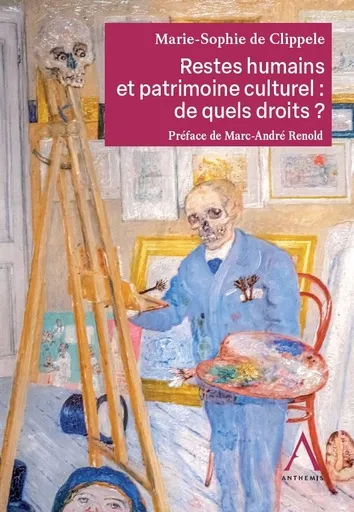
[ in French ] Marie-Sophie de Clippele’s book maps the numerous recent regulations relating to legal limitations on the marketing of objects and to assess their impact on the art market.
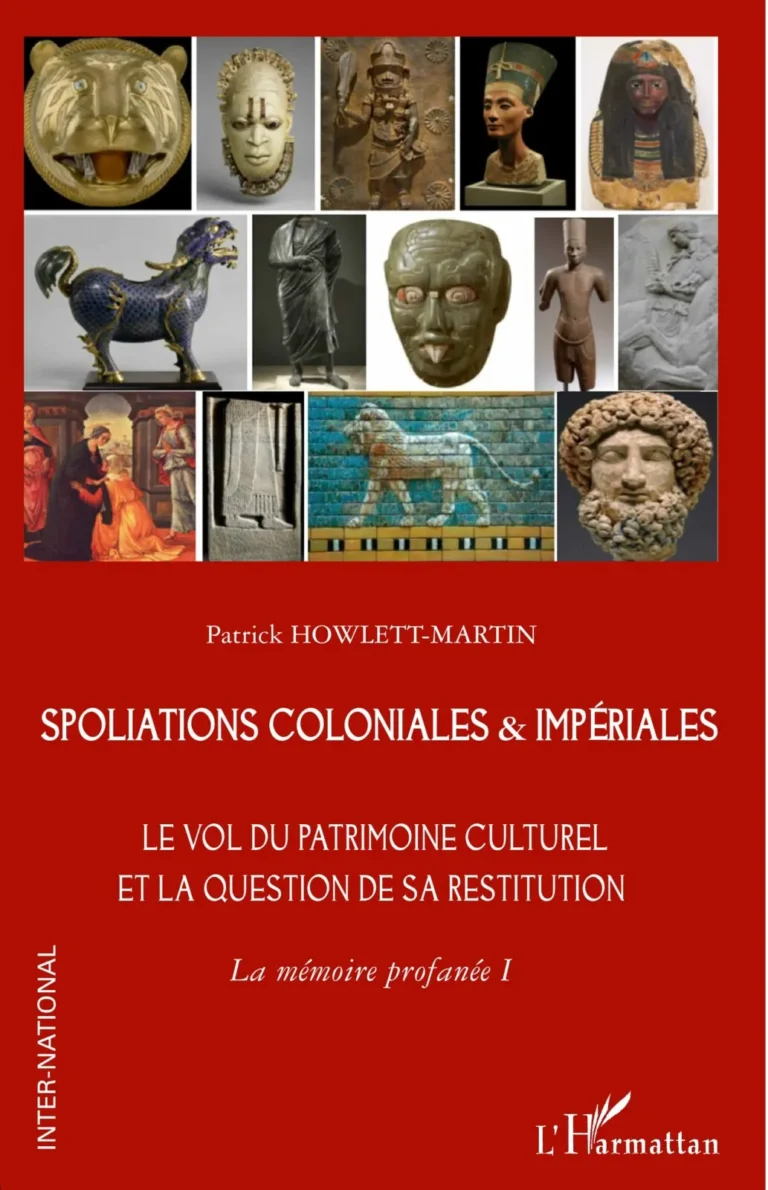
[ in French ] French historian Patrick Howlett Martin focuses on colonial spoliations and those committed during conflicts and military interventions with their procession of enslavement, repression and pillage exercised on the peoples and cultures that suffered the rule of the conquering powers.
This reader, edited by Sarah Van Beurden, Didier Gondola and Agnès Lacaille, is the first scholarly work has scrutinized the collections of the Royal Museum for Central Africa in Tervuren (Belgium) as a whole.
[ in French or in English ] Provenance research into non-Western heritage in Europe has become a must in the field of museology and cultural policy. Yet no scientific work has yet examined the collections of the Royal Museum for Central Africa in Tervuren (Belgium) in their entirety.
In 'The Making of Museums in Nigeria - Kenneth C. Murray and Heritage Preservation in Colonial West Africa' Amanda H. Hellman, director of the Vanderbilt University Fine Arts Gallery, writes: In November 1927, Kenneth Crosthwaite Murray (1902-1972) left for Nigeria to develop the art program in the British colony.
In 'The Parthenon Marbles Dispute', Alexander Herman examines the entire contentious history of the Parthenon marbles from their creation up to the famous restitution debate of the present day.
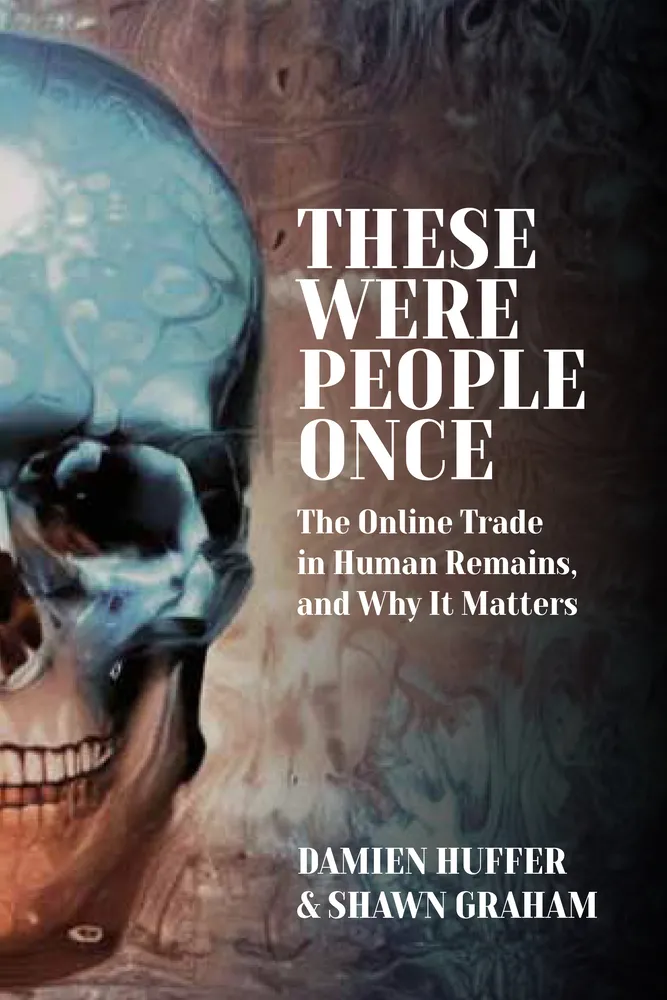
People buy and sell human remains online. Most of this trade these days is over social media. In a study of this 'bone trade', how it works, and why it matters, the authors review and use a variety of methods drawn from the digital humanities to analyze the sheer volume of social media posts in search of answers to questions regarding this online bone trade.
Many African countries are becoming more proactive in their quest for the repatriation of their cultural heritage. They increasingly participate in international conventions and adopt more effective policies in these areas.
In the Review of African Political Economy, Aguigah argues that current debates around restitution of looted art from Africa mostly ignore politico-economic aspects of neocolonialism, reflecting the trend in academia as well as the wider public to separate cultural from economic issues.
Cultural assets such as the large corpus of Benin bronzes housed in museums are part of the cultural world heritage of mankind. It is time to give up the exclusive concept of private property– or a single nation’s property – for these cultural assets in favor of a concept of multiple stakeholders. “Shared heritage,” in other words. The same patterns anchored in the socioeconomic structure of European societies unfold their power again and again: It is not the victims, the slaves, who receive compensation, but the dispossessed slave owners, then as now.
Held in 1972, the Santiago de Chile Round Table was a fundamental milestone in the historiography of museums and museology from the Global South, and a pivotal event for practices and reflections related to the ‘social role’ of museums.
Joint research on the 1868 Maqdala expedition led us to question assumptions about the legacy of empire in museums and to scrutinise unexpected connections in the history of museum collections.
The museum is an institution embedded in European modernity. It was invented when a perception of ‘the Other’, or colonised populations, was being disseminated. The International Council of Museums ICOM has had a longstanding involvement in this process.
Colonial looted art is finally being returned to its countries of origin. New problems lie ahead, as former colonies now fear the return of looted art may take the place of a comprehensive reparation for colonial crimes.
Discussions, held in March 2023 by experts, scholars, and professionals from around the world who delve into the complex questions surrounding decolonization and restitution in the museum sector.
Kulasumb Kalinoe (East Sepik area, Papua New Guinea; currrently James Cook University, Australia) focuses on the collection and removal of cultural material from Papua New Guinea (PNG) during the colonial era. She discusses views among the Papua New Guinean diaspora in Australia on museums and PNG collections, and argues that cultural heritage issues must be addressed before the work of decolonisation can begin.
(Book in French; review in English) Claire Brizon describes in her 2023 book the military, traders and missionaries who collected in colonial regions; their collection culture and the use and meaning of the collections they had in Europe.
The 1990 Native American Graves and Protection Act (NAGPRA) is generally presented as a breakthrough in favour of First Nations. NAGPRA set up a process by which Native American tribes can request the return of human remains and cultural objects from museums and government agencies, including federally funded universities. How successful has it been in California?
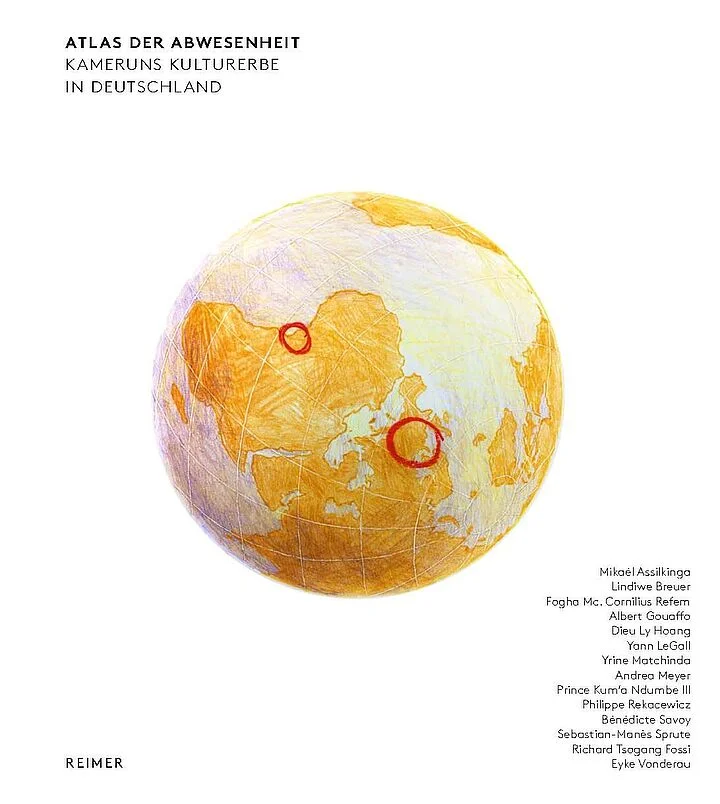
[ in German, English and French ] German museums of world cultures hold 40,000 objects from Cameroon, more than the entire African collection of the British Museum, according to a new study, presented by Bénédicte Savoy (Technische Universität, Berlin) and Albert Gouaffo (University of Dschang).
[ in French, Italian subtitles ] This year it is seventy years ago that Alain Resnais, Chris Marker, and Ghislain Cloquet released their documentary Les statues meurent aussi about historical African art and the effects colonialism has had on how it is perceived.
Much ink has been spilled on the Parthenon marbles, mostly on the ethical and cultural merits of their repatriation. But what has generally not been considered are the legal merits of their return in light of contemporary international law.
This annotated bibliography presents mostly Indigenous authors and thinkers who have identified this disconnect between Euro-centric and Indigenous ways of seeing and understanding the world for decades, if not centuries.
Since the later stage of the Qing Dynasty, many imperial objects have been moved to Europe due to a series of Sino-European wars. Perceived as having less material value, Qing imperial books, manuscripts, and scrolls are studied less by contemporary scholars.
This paper examines the complex relationship between African art and colonial encounter while interrogating the commodification and restitution of African artifacts which has become a topical issue.
In Switzerland, the decolonization of ethnological and historical museums and collections is in progress. This is true in practice, especially by federally funded provenance research projects and by single restitutions of human remains and colonial objects.
This article explores the ownership of cultural objects within national and traditional customary law in Suriname, with the aim to provide a legal context to the issue of claims for the return of some of these cultural objects from the Netherlands.
The State-centric discourse that surrounds Indonesia’s cultural heritage protection and repatriation policies impede locally-led activism related to cultural heritage.
The report offers an overview of the restitutions and claims processed in the Netherlands until recently, and the legal framework in which they took place.
[ in German ] Scientists from the global south criticize museum provenance research and restitutions as a colonial project: The assignment of work orders copies the mapping of the world shut down by imperialism.
‘In 1894, two colonising powers faced each other across the narrow strait between the islands of Bali and Lombok. One was the Netherlands East Indies, the other the kingdom of Lombok, ruled by a settler regime from Bali that dominated the island’s indigenous Sasak population.'
Argentina has one of the most important and sensitive bioanthropological collections in Latin America. Most of the remains in museums come from Tehuelche and Mapuche victims of the so-called "Conquest of the Desert". However...
This article by Elias Aguigah, Yann LeGall and Jeanne-Ange Wagne (TU Berlin) is part of The Restitution of Knowledge project. It documents the history of ‘plunder’ of former African colonies and addresses its legacy in ethnological collections, with a focus on loot from so-called 'punitive expeditions', this time in the Grassi Museum für Völkerkunde in Leipzig (+ an addition about Togo loot in Stuttgart).
In 1863, Emperor Tewodros II of Abyssinia took a British consul hostage; five years later, the British sent a punitive expedition. This military expedition shaped later campaigns in Sudan and West Africa in the1890s. What was new for Maqdala was the inclusion of a member of staff from the British Museum.
The Bill of 3 July 2022 to recognize the alienability of goods linked to the Belgian State’s colonial past and to determine a legal framework for their restitution and return (“the Restitution Bill”) puts Belgium at the forefront of international restitutions of colonial collections.
This open access publication presents the results of a research project which is probably unique in this form: In the course of only two years, the provenances of approximately 1100 sets of Human Remains from the territory of the present-day nations of Kenya, Tanzania, and Rwanda were examined. Editors are Charles Mulinda Kabwete and Bernhard Heeb.
This paper offers an overview of successful cases and unsettled claims submitted to West and East German museums, collections and private people between 1970 and 2021.
“Every empire, however, tells itself and the world that it is unlike all other empires that its mission is not to plunder and control but to educate and liberate” Edward W. Said.
This report was developed as a response to the Truth and Reconciliation Commission’s Call to Action #67 under the guidance of the CMA Reconciliation Council.
Modernity has emphasized the need to disconnect from emotions for the sake of objectivity; the mind as the vehicle for sense-making. However, onto-epistemologies from the Global South discuss the relevance of a holistic integration of the body, mind, heart, and life-force (spirit) for a better understanding.
Over the centuries, a multitude of items – including a cannon of the King of Kandy, power-objects from DR Congo, Benin bronzes, Javanese temple statues, Maori heads and strategic documents – has ended up in museums and private collections in Belgium and the Netherlands by improper means.
The Return of Cultural Heritage to Latin America takes a new approach to the question of returns and restitutions. It is the first publication to look at the domestic politics of claiming countries in order to understand who supports the claims and why.