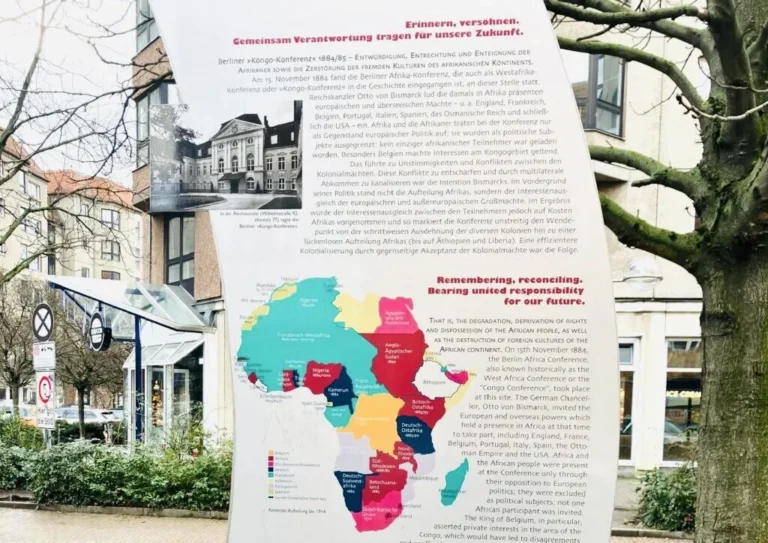
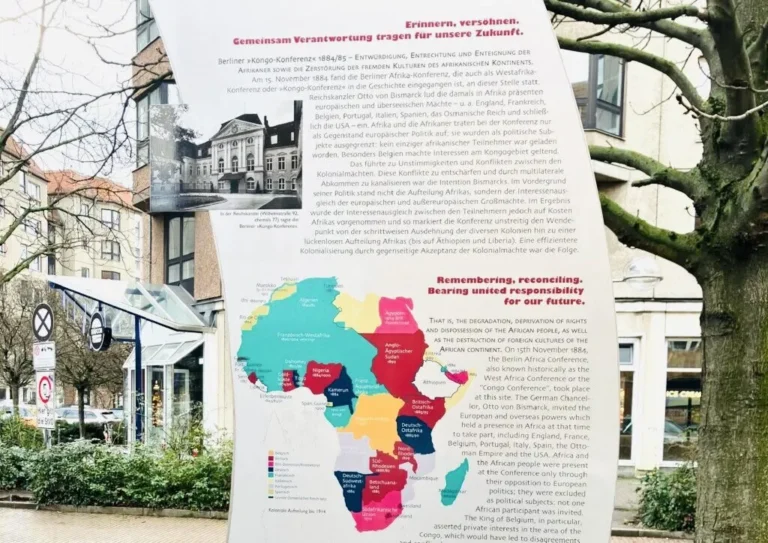
[in French, in English] Since the 1990s, new forms of discourse and mobilization have emerged to question Belgium’s colonial past and postcolonial present. Journalists, researchers, archivists, community activists, artists, members of the African diaspora, former colonists and their descendants, national and political players, etc. have contributed to putting the issue of colonial legacy on the public agenda.
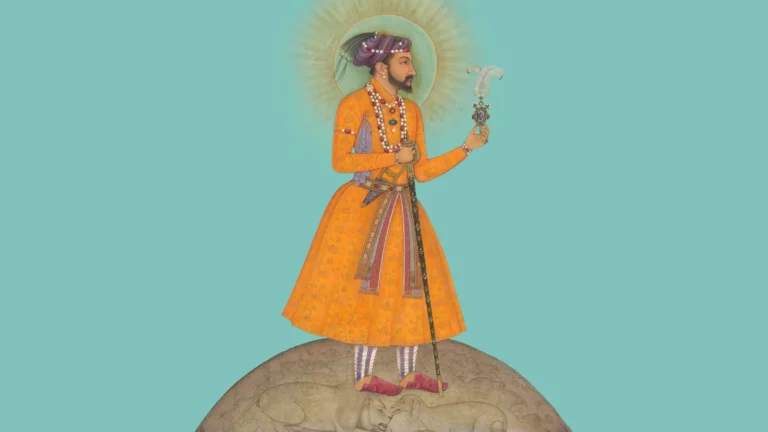
While Britain has shown little inclination to even seriously consider restitution of the Kohinoor or other cultural artefacts taken from India, several European countries have begun doing so, with the Netherlands emerging at the forefront. While doing so, all sorts of challenges pop up.
Ayọ̀ Akínwándé examines restitution, spiritual provenance, and the unresolved tensions between royal authority, state power, and museum-making in Benin City. The conflict between the MOWAA and the Benin Court goes back to the colonial days.
The British Museum’s attempt to frame its decision to ‘share’ a few colonial-era artefacts with the Chhatrapati Shivaji Maharaj Vastu Sangrahalaya (CSMVS) in Mumbai as a move to ‘decolonise’ its collection has been ridiculed by art historians as a ‘con’. There’s only one way to show contrition: return the stolen goods.
Colonial officials, collectors, and anthropologists dismembered African buildings and dispersed their parts to museums in Europe and the United States. Most of these artifacts were cataloged as ornamental art objects, which erased their intended functions, and the removal of these objects often had catastrophic consequences for the original structures.
The protection of cultural heritage is increasingly shifting towards favouring the return of cultural property to its people of origin. Evidence of this shift can be found in a more intentional distinction between cultural property rights on the one hand, and traditional rights in rem on the other; the strengthening of international cooperation; as well as the reconstruction of traditional doctrines.
[in German] Parts of the collection of the closed, missionary Werl museum "Forum der Völker" in Germany are under suspicion. Three collections may have originated from colonial looting. The German Lost Art Foundation sees a need for further research.
The purpose of this article by Mirosław M Sadowski is to take a closer look at such instances of return of cultural heritage, by particularly focusing on the relationship between the matters of return and the questions of identity and collective memory in this respect. With case studies from Brazil and Angola.
The V&A’s collection includes nearly 200 Ethiopian objects – from metalwork and textiles to photography, manuscripts, and paintings. One of the most exciting outcomes of this research, Molly Judd writes, was uncovering records for objects that had effectively become hidden within the collection.
According to Ruby Satele, a PhD candidate from Sāmoa at the University of Vienna, rematriation involves not only the return of ancestors, but also practices of care while they remain in storage. Her research combines strong theoretical thinking with practical action to challenge power imbalances and promote greater justice in museums and universities.
Early in 2025, Patty Gerstenblith published 'Cultural Objects and Reparative Justice. A Legal and Historical Analysis'. She proposes an innovative paradigm for determining reparations, including restitution of cultural objects appropriated during the nineteenth century. This is a review of her book by Annaïs Mattez with both positive and critical points.
For decades, the demand for colonial reparations in Africa was treated by Western capitals as a rhetorical exercise — a radical plea from the fringes that could be safely ignored or pacified with vague “expressions of regret.” By the end of 2025, however, that era of Western comfort officially ended in Algiers.
[in English and German] One of the mortal remains of three people of Indigenous Australian descent in the University of Cologne’s Anatomy Center, which were planned to be returned on 4 December 2025. was discovered during the preparations for the return to have been replaced.
In 2022, the Republic of Indonesia submitted an official application for the collection’s restitution after which the Dutch State Secretary for Culture requested the Colonial Collections Committee to provide advice on this request. In 2025, the Netherlands transferred it to Indonesia. This Blog offers a reflection.
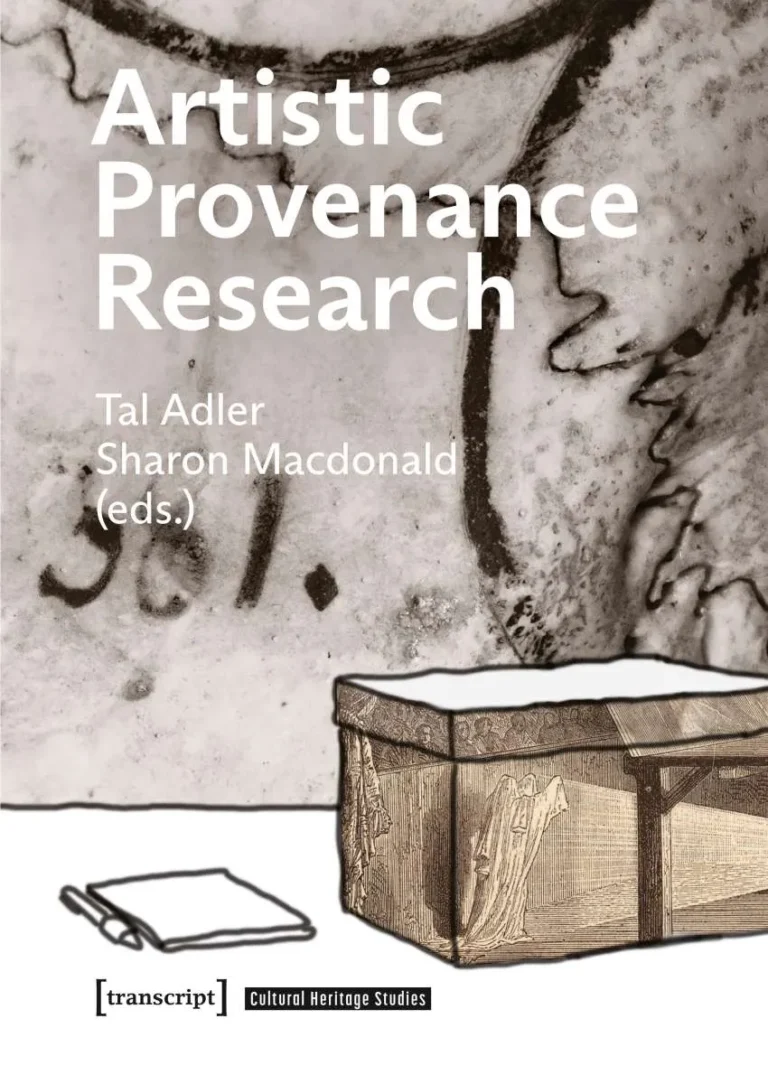
What can art and artists bring to researching the origins and biographies of objects? How do they shed new light on – or even unsettle – existing approaches to such questions? 'What is not said or shown – absences and gaps – needs attention and can itself open up new avenues of investigation.' [ open access ]
Between 1896-1916 today's Burundi was a German colony as part of what was known as ‘German East Africa’. Not only in colonial historiography, but also in provenance research, Burundi has been largely underrepresented and, similar to Rwanda, stands ‘in the shadow’ of the reappraisal of the material cultural heritage of present-day Tanzania.
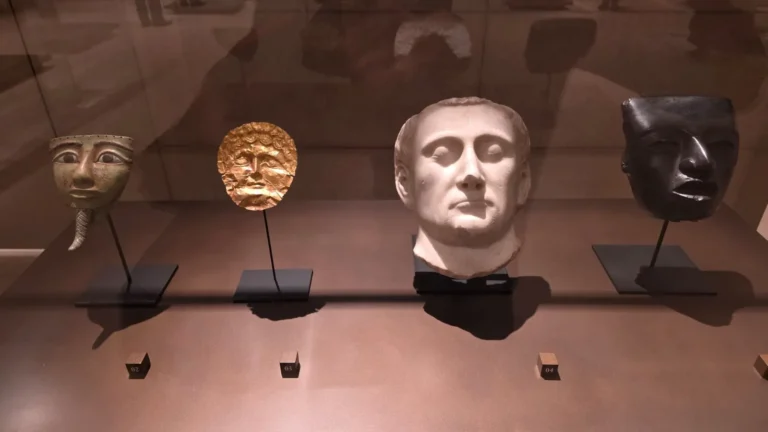
On December 3, 2025, the Pavillon des Sessions at the Louvre reopened its new layout, now called the Galerie des Cinq Continents or Gallery of the Five Continents. In Maria Pia Guermandi’s opinion, the layout continues to express a Western vision that claims to ‘elevate’ other cultures by granting them admission to the sancta sanctorum of European art.
For several years, the Wereldmuseum in the Netherlands has actively engaged in provenance research, focusing on the unequal power dynamics that shaped the collection of objects amidst European colonialism. Daantje van de Linde and Karolien Nédée investigate this approach. 'The broader discipline is still in its infant years, and its goals and research methods are continuously developing.'
For an issue about 'Measuring Cultural Heritage: Indicators for Cultural Heritage Law and Policy Development', the e-journal Santander Art, Culture & Law Review welcomes contributions from legal scholars, policymakers, cultural heritage practitioners, and interdisciplinary researchers. Submissions should offer original research, comparative analysis, or innovative methodologies that contribute to the understanding, assessment, and governance of cultural heritage.
The Freer Research Center at the Smithsonian’s National Museum of Asian Art and the Zentralarchiv and Museum für Asiatische Kunst (Staatliche Museen zu Berlin) of the Stiftung Preußischer Kulturbesitz announce their second in-person symposium dedicated to the provenance of Asian art, occurring November 11–13, 2026, on Museum Island in Berlin, Germany.
[ in Spanish ] In 'Arte secuestrado' or Abducted art, Catharine Titi (CNRS, France) and Katia Fach Gómez (Uni Zaragoza) recount the stories of six iconic collections, from the Parthenon Marbles to Moctezuma's headdress, the Benin Bronzes, and the Bust of Nefertiti, to shed light on how they ended up in the museums where they now reside, and to open the debate about their repatriation.
Archaeologist and journalist Mariam Gichan wonders why complicated legal hurdles are sufficient to explain why the fossil hasn’t returned to Tanzania and whether “complicated” becomes a convenient reason for inaction.
[ in French ] The exhibition draws on more than eighty photographs from colonial archives, mainly held at the Royal Museum for Central Africa in Tervuren. But far from a simple presentation of heritage, Boma La Première offers a critical reading of these images.
[ in French ] The AfricaMuseum in Tervuren, Belgium, changed from a ‘museum for colonial propaganda’ and a ‘museum of avoidance’ into one that ‘multiplies voices on colonial history and its persistence’, says historian Yasmina Zian.
This restitution of 107 objects is being recognized as exemplary due to its transparent process and the collaborative approach between the institutions involved. The artifacts, once held in private and public collections in Switzerland, have now been formally transferred to the National Museum of Abidjan.
A new gallery at the Manchester Museum displays thousands of African artefacts, aiming to spark discussion on colonial-era looting and restitution. The initiative seeks public input on the origins and returns of these items, amid growing calls for repatriation of looted cultural heritage.
In recent years, there has been growing recognition that these collections carry painful legacies. In all these engagements, two words are often used: repatriation and restitution.
At first glance they may seem to mean the same thing, and both involve the return of something. But as South African scholars, working in the fields of history, museum studies and human biology, Victoria Ribbon and Ciraj Rassool argue that the difference between these terms is not just semantic. The choice of word reflects deeper politics of justice, recognition and repair.
The conference theme will reflect the project’s focus on equitable collaboration, community-engagement and revisiting the ways in which collections are acquired, interpreted and shared. This year we’re rethinking what a conference can be. Dates: 23-24 April 2026.
In 2025, the Museum of Fine Arts in Boston (MFA) achieved two significant ownership resolutions. First, the museum was asked to rescind and return the long-term loan of Benin Kingdom artwork to the private collection of Robert Owen Lehman. Both of these resolutions speak to the facts that (1) restitution does not have to be a zero-sum game, and (2) museum restitution has expanded beyond what the letter of the law dictates.
To exhibit taonga is not simply to interpret the past. It is to enter a living relationship with an ancestral presence. Museums do not own taonga. At best, they are temporary caregivers, and increasingly, digital co-stewards.
The Wereldmuseum collection includes 3,647 objects that contain ancestral human remains. Particularly harrowing are the 26 premature and newborn babies preserved in fluid. Together with members of various communities, Manuwi C. Tokai created an altar in the Wereldmuseum Amsterdam to serve as a place of remembrance for the ancestors held in the museum’s collection.
This paper investigates the political and cultural grounds in disseminating manuscripts’ digital copies and ask what kinds of shifting assumptions about the nature of textuality and manuscripts are indicated by digital returns. This is especially relevant given that some manuscripts in traditional Java, those designated as pusaka, are not merely media transmitting textual information. Rather, their materiality contains a power of its own.
Through the case of the Palembang Sultanate in Sumatra, Alan Darmawan investigates the extant manuscripts originating from the palace library. Some moved into the hands of private owners in Palembang, while others were dispersed into colonial collections in Europe and Southeast Asia.
Emeline Smith writes: Long-term loans to former colonies are not restitution. They do not acknowledge historical wrongdoing, nor do they restore agency to source communities. The loan program is a rebranding exercise that preserves colonial power structures while pretending to dismantle them.
[ in Dutch ] Heritage organizations preserve and make accessible archives, publications, and objects that tell interesting or moving stories. At the same time, these same collections often contain heritage that reflects painful and poignant histories. This heritage raises questions or even comes under fire.
Heba Abd el Gawad writes: There is a point at which professional detachment becomes impossible. As a member of a community of descent as well as a curator, when I enter the Horniman store, I am not simply surveying collections. I am standing in the presence of my own kin. I encounter my Egyptian ancestors in spreadsheets, acid-free boxes and collection management plans.
[ in French ] In the 19th century, the concept of "Asian art" gradually gained prominence in the European market, driven not initially by collectors, but by dealers, the true intermediaries between Asia and Europe. This phenomenon took root in a context of forced opening of Asian territories: the Treaty of Yedo (1858) with Japan, the Treaty of Tianjin (1858-1860) with China, and the Treaty of Saigon (1862) with Vietnam.
Call for Papers for the 12th Annual Conference of the Amsterdam School for Heritage, Memory and Material Culture. The conference 'Unsettling Heritage and Memory Futures: Decolonial Trajectories Between Crisis and Possibility', will take place on 17, 18 and 19 June, 2026.
The All-Party Parliamentary Group for Afrikan Reparations (APPG-AR) is calling for a ban on the public display of human remains without consent.
The group also recommended the establishment of a framework for museums to transparently audit their collections of human remains across the country as part of a briefing at the House of Commons last week.
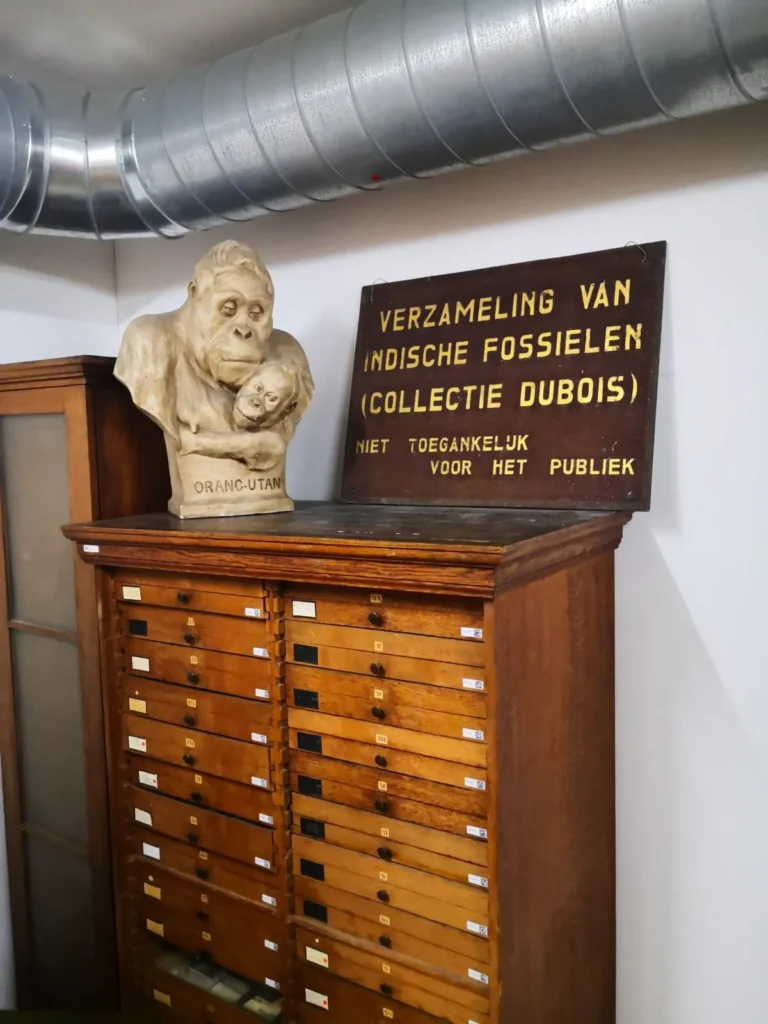
Naturalis Marcel Beukeboom: “We will take time to think of a new story to tell. That story will most likely include references to the evolution and early humans, and may also address colonialism and perhaps even the influence of Dubois. But without his collection, and with everything we have learned, this will be a different story.”
Andreas Roth shows, the real story of the coral regalia does not fit the postcolonial narrative some want to attach to these artefacts. They do not provide a precedent for the return of Benin Bronzes.
Rodney Westerlaken writes: The return of the Dubois Collection: principled restitution, unresolved policy questions: – At what point does scientific heritage become cultural heritage? – Which criteria should govern this classification, and by whom are they determined? - How can restitution frameworks avoid becoming normatively expansive without sufficient conceptual precision?
[ in English and in German ] The Museum der Kulturen Basel is systematically examining its collection for coloniality and highlighting the central importance of collaborating with communities in the Global South.
In April 2026, officials from the Japanese government and the Ainu Association of Hokkaido will travel to Britain to receive four of the five sets of remains, the government said Friday. The locations where the four sets were excavated are known.
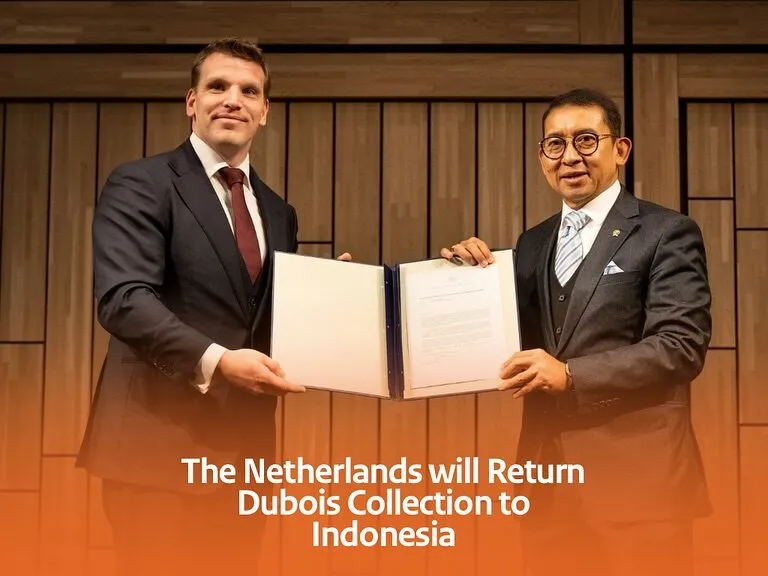
Four important objects from the Dubois collection were handed over to Indonesia on Wednesday 17 December. The handover ceremony took place at the National Museum of Indonesia in Jakarta, which will exhibit the objects.
The Indonesian phrase pasang surut — “the tide in and out” — evokes the continuous movement of people, objects, and ideas across the seas that once linked Europe and the Indonesian archipelago. These currents shaped the emergence of colonial collections but also suggest the possibility of renewed circulation: of knowledge, accountability, and dialogue.
[ in French ] What does decolonization mean when power relations remain unchanged? Anne Wetsi Mpoma invites us to rethink decolonization as a political, epistemic and restorative process — where art becomes a space of resistance, reappropriation and symbolic justice.
Barnaby Philips discovers one more return of a Benin object from the Netherlands and further analyses what went wrong in Benin City: Two days before the aborted viewing of the Museum of West African Art (MOWAA), Oba Ewuare II visited his ally Monday Okpebholo, the governor of Edo State. ‘Please stop the opening of the MOWAA.’
Leah Niederhausen and Nicole L. Immler joined forces with Markus Kooper (Hoachanas Community Library & Archives) and Talita Uinuses (Captain Hendrik Witbooi Auta !Nanseb Foundation) and listened to, archive, and amplify Nama knowledge (Namibia) on and experiences with restitution, reparation, and historical (in)justice.
All too often, the literature on the restitution of colonial cultural objects tends to focus on the public international law (PubIIL) aspects of the debate. With a few notable exceptions, the PubIIL and private international law (PIL) dimensions of the debate are rarely considered together. This article makes the case for a coordinated approach.
Western museums are returning the Benin Bronzes to Nigeria, but a state-of-the-art museum to display them is still a long way off. Alex Marshall saw hundreds of Benin Bronzes while reporting this article in Benin City and Lagos, Nigeria.
In January 2023, an online seminar was held to investigate the Vatican collections, their legal structure and how repatriation might be possible to countries and communities of origin. In particular we looked at the principle of ‘inalienability’ which governs the collections under Vatican civil law, Alexander Herman writes.
This paper explores the challenges of repatriating poorly documented Aboriginal secret-sacred objects—known as tywerrenge—to central Australia. 'No story, but we still want to see them come back. Then people can know them.'
Restitution activist Mwazulu Diyabanza explains why he is taking the law into his own hands. His actions are a calculated act of civil disobedience, executed for maximum political impact without engaging in violence or damaging property.
December 15th, at 4 pm (Lagos time), the International Repatriation Network (IRN) will host an online session exploring what restitution and repatriation mean for diverse communities and stakeholders in Nigeria today.
[ in German ] The Stiftung Preußischer Kulturbesitz will return spiritual objects from Kpando containing human remains to Akpini People in Ghana, and spiritual objects to Australia. Currently, they are in the Ethnological Museum in Berlin.
In an address delivered in Algiers, the Caribbean Community (Caricom), unveiled a comprehensive ten-point plan calling for concrete reparations for the crimes of colonialism. This intervention strongly underscored the necessity of a unified, coordinated effort between Africa and its diaspora to confront centuries-long injustices, restore historical rights, and secure meaningful mechanisms for recognition, compensation, and restitution.
Senegalese economist and thinker Felwine Sarr called for a deep reconsideration of the museum, its history, its functions, and the narratives it upholds as African artworks dispersed across Western museums gradually return to the continent. Africa should rethink museum models.
[ in French ] Marie-Anne Léourier administered a questionnaire focused on these questions to visitors of the permanent collections area of the Quai Branly – Jacques Chirac Museum (MQB).
Open Restitution Africa has published a case study that is centred around 119 cultural belongings from the historic Benin Kingdom. This collection includes intricately cast bronzes, carved ivories and terracotta. They serve dually as both historical artefact and active carriers of spiritual and cultural knowledge, many of which remain relevant in Benin cultural and religious life today.
'Investigating Online Heritage Crime - New Directions, New Technologies, Emerging Markets' offers an introduction to a crucial new field of interest to all heritage researchers.
The Royal Ethiopian Trust announces the acquisition and planned repatriation of a 19th-century gold hairpin belonging to Empress Tiruwork, wife of Emperor Tewodros II of Ethiopia. It is one of thousands of artifacts seized by British troops following the battle of Magdala in 1868.
Through diverse voices, this (open access) Abécédaire rethinks the history of art and museums as an experimental space, transcending disciplinary and geographical boundaries. It offers a fresh, nuanced perspective on contemporary issues in the study of the past while paving new pathways for the future.
[ in Dutch ] Collaborative research between heritage institutions in Europe and heritage communities outside Europe offer a unique opportunity to democratise the production of knowledge about the past, the present ,and the future, writes Katrijn D'Hamers (p. 72 ff).
Africa has renewed its most assertive push yet for historical justice (including restitution), as ministers, jurists, and diplomats gathered in Algiers for a landmark conference on the criminalisation of colonialism.
The documentary Elephants & Squirrels by Swiss filmmaker Gregor Brändli chronicles a Sri Lankan artist’s discovery of looted artefacts in Basel and her mission to return them to Sri Lanka, exposing Switzerland’s uneasy reckoning with its colonial entanglements.
[ in Dutch, in French ] The MAS in Antwerp investigated the provenance of three important cultural objects from its Congolese collection. How did they end up in Antwerp, and what do they mean to Congolese communities today? The results are published in the new publication "On Origin and Future" and incorporated into the permanent exhibition.
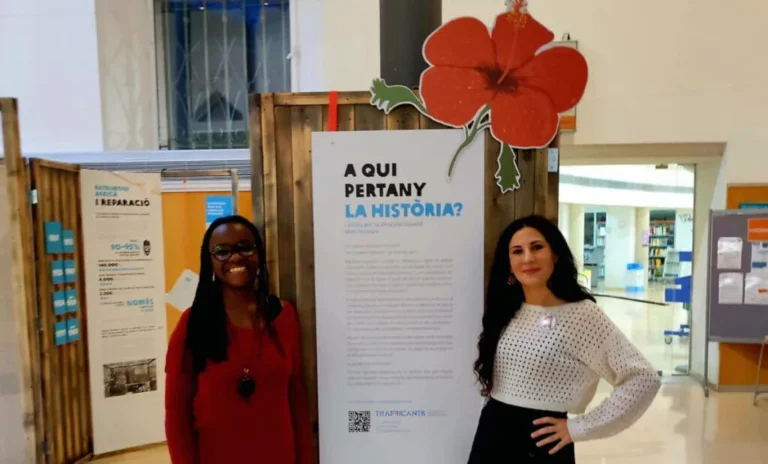
The Catalan project "(Tr)African(t)s. Museums and collections of Catalonia in the face of coloniality" has recently created a travelling exhibition titled “To whom does history belong? Struggles for the decolonization of museums". This exhibition “invites us to reflect on the role of museums in colonial history and to rethink heritage from a critical perspective."
A £1.1million Arts and Humanities Research Council (AHRC) standard grant has been awarded to an international team of scholars, archivists and filmmakers for a project on African film heritage restitution.
The Art of Status: Looted Treasures and the Global Politics of Restitution examines the relationship between looted art and international status, by focusing on the debates about acquisition and restitution of the Parthenon Marbles, Benin Bronzes, and a never before written about collection of Nazi-looted art housed in the National Museum of Serbia.
[ in Dutch ] Time is running out to return the hundreds of human remains collected by soldiers, missionaries and others in Congo, says historian and anthropologist Lies Busselen. The combination of archival and fieldwork in Belgium and Congo continuously encourages us to reflect on the colonial past.
There’s a shift in museums of the global north. They have begun to decolonise. Finally! But the weird thing is the ones who are leading this shift are the descendants of those who stole, murdered, oppressed. Is this one of our blind spots? It is high time to sit in our discomfort, for serious self-examination, and for a shifting of power dynamics.
[ in French ] It was in 2021, after 129 years of plunder by France, that the royal treasure of Abomey was returned to Benin. The restitution of this piece of history is part of a campaign launched by Benin in 2016 to make its heritage the cornerstone of its cultural influence.
This article examines how an eighteenth-century decision to bureaucratize gift exchange continued to disrupt long-standing South Asian protocols of reciprocity and regard well into the twentieth century.
The aim of the project is to reveal and connect all collections of material made in Africa that are held in 32 Scottish museums, including lesser-known as well as better-known ones, and to connect these collections with relevant and interested diaspora and descendant communities.
[ in Spanish ] The work of the two expert committees created by Ernest Urtasun, Minister of Culture, to "overcome and challenge the Eurocentrism" of these two institutions, has concluded after six months with the delivery of two projects outlining concrete guidelines for renewing their museographic narratives.
University collections are more than any others, linked to the definition and transmission of knowledge. The Musée L, UCLouvain's university museum, is launching a new open-access online scientific journal dedicated to university collections and museums: UniMusea – Research and Practices on University Collections.
On November 9th, 2025, as 250 Nigerian and international guests – donors, diplomats, and the heads of national cultural agencies – gathered in Benin City at the new Museum of West African Art’s opening event, protesters in red baseball caps broke into the museum, forcing its closure. Cultural Property News analyses what happen, and why.
Symposium on current debates around the spiritual artifacts collected under colonial or postcolonial conditions and housed in European ethnographic museums. It will be held Dec. 3 and 4 in Groningen with many wonderful scholars and MA and PhD students involved.
Twelve historical artefacts have been formally returned to Ethiopia after being kept by a German family for more than 100 years. The artefacts were y collected in the 1920s by Germany's then-envoy to Ethiopia Franz Weiss and his wife Hedwig.
[ in Dutch] Due to the death of Otto van der Mieden on February 1, 2024, the founder and director of the Puppetry Museum, the museum is closed and the collection is being deaccessioned.
The purpose of this article is to take a closer look at such instances of return of cultural heritage, by particularly focusing on the relationship between the matters of return and the questions of identity and collective memory in this respect. The third part focuses on the question of repatriation of cultural objects removed during the times of colonialism.
Phillip Ihenacho, director and chairman of the Museum of West African Art (MOWAA), has watched the restitution debate unfold with both pride and concern. Pride, because it signals a long-overdue recognition of West Africa’s cultural heritage; concern, because too often the conversation is shaped by Western priorities rather than African ones.
[ in English, in German } Thomas Fues sees many positive elements in the Joint Guidelines. which the federal government, the states and local authority associations adopted on 14 October 2025. They have some good guidelines but challenges remain as well.
Join this event - organised by the Europeana Communicators Community - to hear museum professionals across Brazil and Europe explore issues of repatriation, decolonisation, and representation of Indigenous voices.
Yesterday, RM* published an item about the repatriation by museums in Great Britain of shrunken heads to Ecuador. Lewis McNaught explains that this is easier said than done. Given the particular cultural contexts of tsantsas (both making and taking), the need for further research and analysis have been agreed. According to him, no repatriation requests have been made to date and given the number of different groups involved, any future process is likely to be extremely complicated.
Julien Volper, acurator at the Royal Museum for Central Africa (Tervuren, Belgium), is writing here in a personal capacity: The Dutch restitution of Benin objects, earlier this year, was motivated by Dutch self-interest, both of the government and of the museum that has to let go a collection.
Elias Feroz interviews Dan Hicks: Monuments, museums, and cultural institutions were often created in the image of “militarist realism,” presenting colonialism and enslavement as eternal. Undoing this legacy is not erasing the past but combating a pernicious ideology.
From the crowns of Ethiopian emperors held abroad to the mummified remains of African ancestors still stored in Western institutions, the theft of Africa’s sacred heritage represents a deeper violence. Those which we speak of, are not mere museum exhibits; they are vessels of ancestral power and collective memory. Their continued displacement denies Africa’s children the right to know and connect with their lineage.
Kwame Opoku looks back at the year 2025. Two fragments, one about the Western dedain for looted objects and human remains. The other about a publication of Open Restitution Africa. But first, a positive event.
Cyprus is a much negelected spot in colonial history. This documentary Film trailer by Zimbabwean artist Sithabile Mlotshwa is made possible through a collaboration with historian Paraskevas Samaras and videographer Michalakis Georgiou with contributions and support from Dinos Toumazos, Agora Dialogue, Oz Karahan and others.
Oba Ewuare II today, during a courtesy visit to the Government house spoke explicitly on the proposed plan to build Benin Royal Museum which the past Governor of the state, Mr. Godwin Obaseki converted to EMOWAA and later MOWAA.
It is the final conference of Pressing Matter, in partnership with the Research Center for Material Culture (RCMC) and the Wereldmuseum. Min theme: Rethinking the Restitutionary Moment: What Next? On 27 and 28 November in Leiden. On 26 November, Achille Mbembe will speak in Amsterdam.
In an address at the 2025 Conference of the African Bar Association (AfBA) in Accra, Chief Charles A. Taku of the AfBA Reparations Committee, made an impassioned appeal for what he termed “The Accra Declaration” — a continental demand compelling Europe and the West to pay reparations for the centuries of slavery, colonialism, and cultural theft inflicted upon Africa and its peoples.
The International Seminar on the Return of Cultural Heritage under the auspices of the 2025 Brazil BRICS Presidency will take place on 10 and 11 November and is organized by the University of São Paulo [ USP ].
[ in Dutch ] Last Saturday, the Grand Egyptian Museum (GEM) opened in Cairo. German President Frank-Walter Steinmeier was also in attendance. The world's largest archaeological museum displays more than 100,000 art treasures from Egyptian history, but one important piece is missing: the bust of Queen Nefertiti. It has graced the walls of Berlin for over a century.
Dan Hicks argues that the allegation that his book The Brutish Museums is “part of a trend away from pro-British perspectives” is contextualised and refuted. On the contrary, this reply argues, openness and transparency about the colonial past and present is a key element of the reclamation and
reimagining of Britishness that is unfolding in the 2020s – this unfinished period that the book calls “the decade of returns”.
There is growing debate around the ethics of displaying human remains. Against this background, the Museums Association (MA) has reviewed its Code of Ethics, and questions around storage and display of human remains are a key aspect.
Over 4.250 respondents from Zimbabwe, Ghana, Ethiopia, South Africa, Morocco, Egypt, Nigeria and Mali participated in a survey, expressing that return of artefacts is an essential party of reparations to the continent.
At the G20 meeting, South African Minister for Sport, Arts and Culture, Gayton McKenzie, champions cultural restitution and digital equity at the G20 summit, advocating for a fairer future. Each G20 member state should have a restitution committee.
[ in German ] Berlin Postkolonial, Decolonize Berlin, and Flinn Works welcome the update of the “Joint Guidelines on Dealing with Cultural Property and Human Remains from Colonial Contexts.” Clearer procedures and the establishment of unconditional returns are steps in the right direction. At the same time, the guidelines fall far short of a human rights- and international law-based understanding of restitution and repatriation.
[ in English and in German ] The main focus is on cultural belongings from four Cameroonian communities, the Bakoko, Bamum, Duala, and Maka, whose heritage was absorbed by these institutions during the German colonial era (1884-1919). This should also become a basis for future restitutions.
[ in French ] The Study and Research Centre for Administrative and Political Sciences (CERSA) organizes a conference entitled “Restitutions of cultural heritage: trends, challenges, perspectives” on November 14, 2025 in Paris.
[ in French ] The French government intends to go further with a bill that could become a landmark law in this area. What are the terms of the bill, and why does it potentially represent a historic turning point? Catharine Titi writes....
Former Tanzanian lawmaker and environmental activist Riziki Saidi Lulida argues: 'It was taken from Lindi, from our soil. They carried it piece by piece for more than a hundred kilometers, and some of our people died doing it. But no one in Lindi has ever benefited.'
The British Museum has hosted a lavish fundraiser at 2,000 pounds ($2,668) per ticket, dubbed the "Pink Ball," in the room housing the Parthenon Marbles, igniting fierce criticism and reviving long-standing debates over cultural ethics and colonial restitution. Greek Culture Minister Lina Mendoni condemned as 'provocative indifference'. Here follows a comment by Global Times reporter Chen Xi.
The stolen jewels are also products of a long history of colonial extraction. The sapphires, emeralds, diamonds, pearls, and other gemstones they contained were mined across Asia, Africa, and South America.
[ in German ] The 2025 Guidelines promote dialogue with societies of origin and descendants, interdisciplinary provenance research, and proactive roles for museums, while they acknowledge the cultural, spiritual, and epistemological singularities of each case. They expand on communication channels for restitution requests, specifically notably requiring the consent of the state of origin, and call for a need to streamline procedures and call for an expert advisory body to be established to support restitution efforts. Further details on governance and the body’s specific mandate remain to be defined.
This kick-off seminar, led by Pietro Sullo, discusses the legal status of colonial artefacts from Africa held in European museums, clarifying whether there is a duty to repatriate them. The research hypothesis is that European states have a legal duty to return colonial artefacts acquired without the consent of the communities of origin.
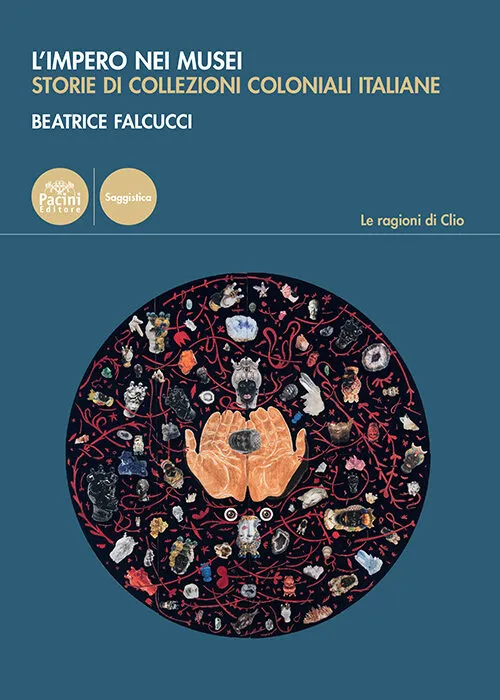
The colonial collections in public museums and the private sector in Italy are not less substantial than elsewhere in Europe. Italy has made some significant returns. Nevertheless, this blog argues that the country is much better at reclaiming its own stolen relics than at accepting the consequences of the investigations into its colonial collections.
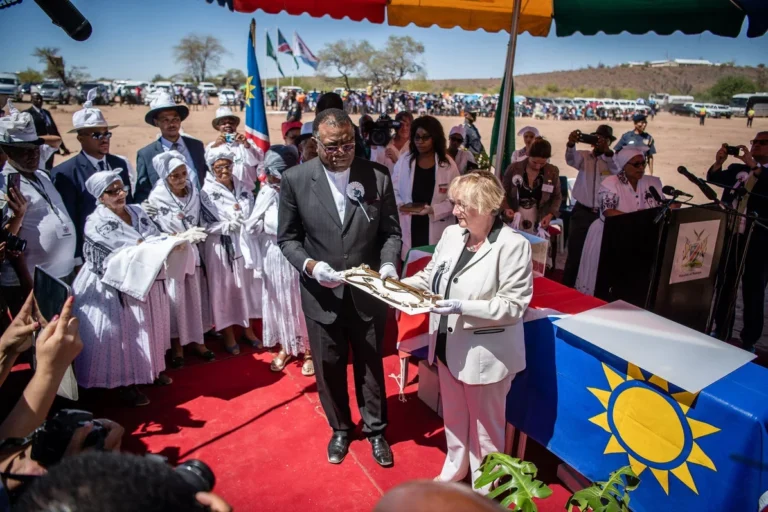
The German state Baden-Württemberg acknowledges its historical responsibility and is committed to provenance research in order to identify and return colonial cultural goods that were acquired unlawfully. The start was in 2019, when Hendrik Witbooi's Bible and whip were returned to Namibia.
[ in Spanish ] The exhibition recovers key moments from the decades of 1880 and 1990, when the first restitutions of human remains and the demands for patrimonial return to our context were produced.
The Hunterian at the University of Glasgow, through the implementing agencies, Iziko Museums of South Africa and the South African Heritage Resources Agency (SAHRA), and in partnership with the Northern Cape Reburial Task Team, have jointly announced the repatriation of ancestral human remains to South Africa.
When tourists tread the halls of Sri Lanka’s national museums or glance over the plaques at sites of historical significance, they are reading stories of the past. But whose? Sri Lankan ethnographer Ganga Rajinee Dissanayaka wonders who made that judgement of what is worth saving, worth memorialising, worth forgetting?
The British Museum has announced that it will be holding a charity ball on 18 October 2025 to collect funds to further, inter alia, its international partnerships. This makes Kwame Opoku having a closer look at it.
The Director of the Museum of Black Civilisations in Dakar Mohamed Abdallah Ly reflects on the urgent need to decolonize cultural institutions, the symbolism of absence, and the politics of restitution. He also discusses efforts to reconnect the museum with diaspora communities and reimagine its role in Africa’s cultural and intellectual future.
This special exhibition is dedicated to a long-overlooked collecting practice: The collection of objects by Catholic and Protestant missionary societies – primarily during the 19th and early 20th centuries.
The public display of artefacts looted by British colonial forces at the new Museum of West African Art was supposed to be the crowning glory of a decades-long restitution effort. What went wrong?
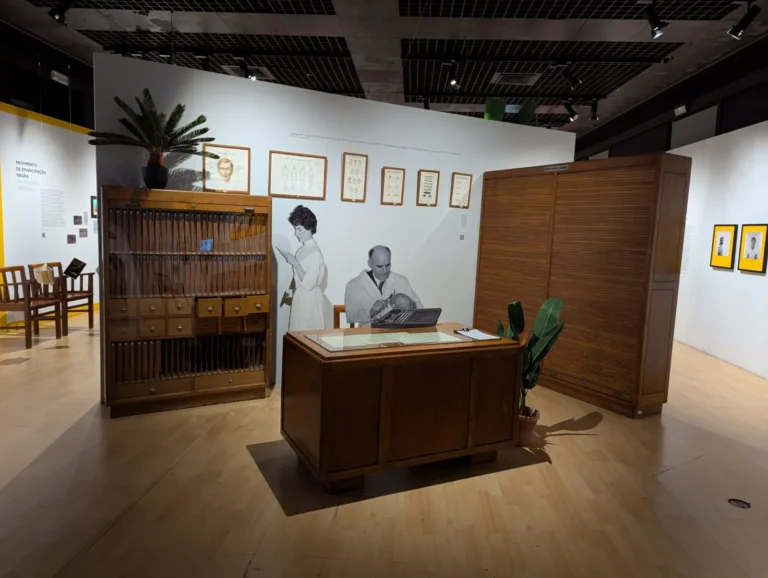
[ in Portuguese ] The exhibition "The Photographic Impulse. (Dis)arrangement of the Colonial Archive" proposes a decolonial reading of the images and scientific objects from geodesy and anthropology expeditions carried out in territories colonized by Portugal.
Doing research in Swiss museums, artist Deneth Piumakshi Veda Arachchige comes across a collection of ancestral remains and artifacts from an indigenous Sri Lankan community. The award-winning documentary can be seen at film festivals in Leipzig and Amsterdam.
Alliance Française Kampala has launched a month-long program, Ethics of Loaning: Strengthening the Discourse on Restitution in Uganda, aimed at involving communities in discussions on the return and ethical management of cultural heritage.
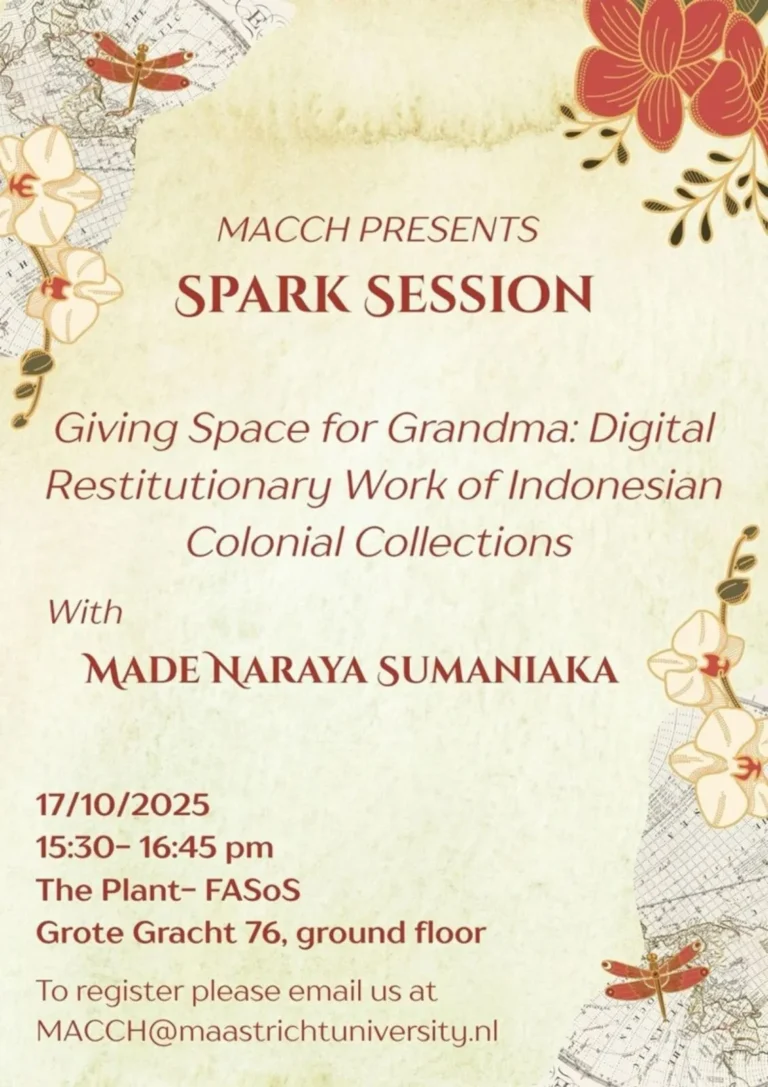
In this Spark Session Made Naraya Sumaniaka presents his thesis work, which recentres community agency by examining how digital spaces enable participation and contestation using the newly established Colonial Collections Datahub and TikTok as case studies.
The Restituting, Reconnecting, Reimagining Sound Heritage (Re:Sound) project invites applications for three short-term research fellowships aimed at scholars, curators, artists, and source community members from Southeast Asia.
This project explores the colonial framework that has shaped our understanding and knowledge of historical objects, focusing on the Lombok Treasures looted from Cakranegara Palace in 1894. Adopting a decolonial perspective, this project reframes these heritage objects as living entities endowed with knowledge and cultural significance, rather than mere relics.
In this exhibition, a group of artists examines how colonialism has shaped the ways museums, archives and other institutions of knowledge are perceived and understood, revealing the (im)material scars imposed by systemic violence.
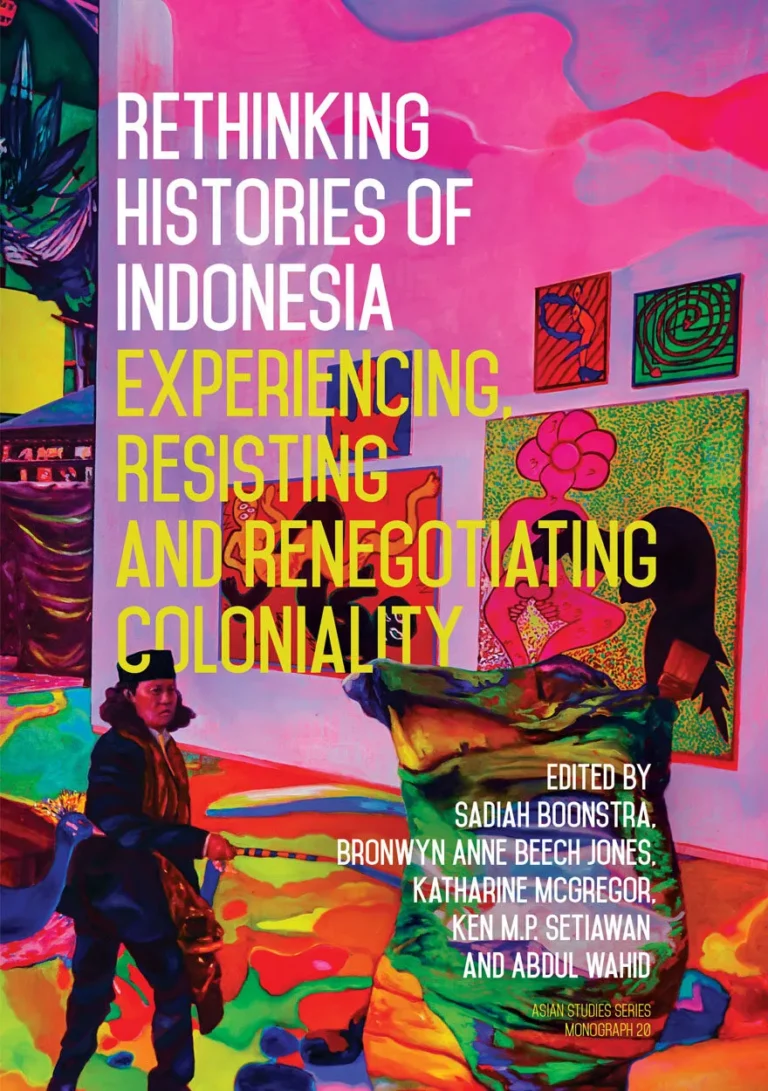
In 'Rethinking Histories of Indonesia - Experiencing, Resisting and Renegotiating Coloniality', editors Sadiah Boonstra and others provide a critical evaluation of histories of Indonesia from the formal period of colonisation to the present day. The volume approaches Indonesian history through the lens of coloniality, or the structures of power and control that underpin colonisation and which persist into the present.
The restitution issue of cultural properties from Japan to South Korea has a long history. Back from a visit to South Korea, Eisei Kurimoto (National Institutes for the Humanities, Japan) concludes that this history still is being characterized by one dominant element: asymmetry. While in South Korea, it is an important national matter, the interest in Japan has been very low. Japanese governments consider it a ‘settled case’ and the issue is rarely publicly argued. To initiate change, joint provenance research projects could cultivate trust and friendship between stakeholders of both countries.
A royal shrine from the Joseon Dynasty (1392-1910), believed to have been removed from Korea nearly a century ago during Japan’s colonial rule, has returned home. Known as Gwanwoldang, the wooden structure was officially transferred to Korea through a bilateral cultural collaboration marking the 60th anniversary of normalized diplomatic ties between the two countries.
HERE is a seminar for new and experienced heritage professionals. The aim is to bring professionals together in order to stimulate knowledge exchange and innovation. HERE is on 10 November in Wereldmuseum Amsterdam.
[ in Dutch ]'Dutch' fossils soon to be seen again in Indonesia: 'Young people here only know the Javaman from textbooks'
Indonesia will soon receive thousands of fossils that are still in museum Naturalis. It is a historic moment for his country, says Indonesian paleontologist Sofwan Noerwidi.
On 26 September 2025, the Dutch government returned 28,000 fossils, including the famous skullcap, a molar, and a thighbone (the so-called Java Man), to Indonesia following an official claim submitted by the Indonesian state in July 2022. They were part of the collection of Naturalis Biodiversity Centre in Leiden. With this, the government followed the advice of the Colonial Collections Committee. Now that the dust about this massive return has begun to settle, it is time for some reflection. I consider the acceptance of the advice of the independent Colonial Collections Committee groundbreaking in several respects.
[ in Dutch ] At the Indonesian Ministry of Culture, they can't count on their luck. The Netherlands returns an important archaeological find to Indonesia. It concerns the skullcap of Dubois, named after the Dutch finder Eugène Dubois. This proved in 1891 that other humanos had existed, which Dubois called the Javamen.
[ in Dutch ] The restitution process of the Dubois collection took an unusually long time. The responsible advisory committee and Naturalis point out the complexity of the case, experts make sharp accusations against the museum.
[ links are in Dutch or in English ] Today, Dutch Minister Moes (Education, Culture and Science) presented a letter to Indonesian Minister Fadli Zon (Culture) announcing this decision. The so-called Dubois collection is now managed by Naturalis Biodiversity Center in the city of Leiden.
[ in English and in German ] Experience to date suggests that the portal has so far been little used by actors from the contexts of origin and other countries of the so-called Global South and their diasporic communities. To shed more light on this issue, we surveyed both the DDB as the provider and German and international researchers as (potential) users in writing.
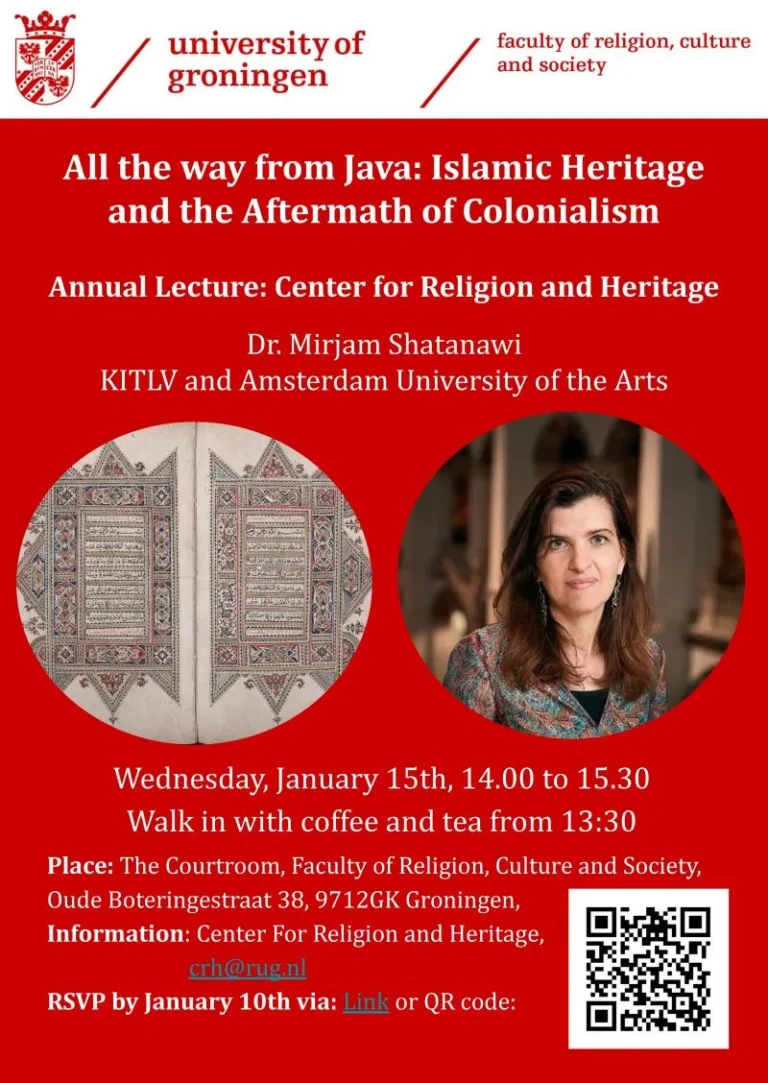
Our third In Conversation considers restitution from an ethnographic perspective. Charlotte Joy will discuss the research for her upcoming book, drawing on interviews and her work with UNESCO, with Mirjam Shatanawi and Katarzyna Puzon. We invite you to join our conversation.
Kulasumb Kalinoe (East Sepik area, Papua New Guinea; currrently James Cook University, Australia) focuses on the collection and removal of cultural material from Papua New Guinea (PNG) during the colonial era. She discusses views among the Papua New Guinean diaspora in Australia on museums and PNG collections, and argues that cultural heritage issues must be addressed before the work of decolonisation can begin.
Ahmad Mohammed writes: Sacred objects, ancestral remains, and ritual artifacts remain estranged from the communities that created and cherished them. This condition is what many scholars and practitioners now identify as cultural heritage alienation: the systematic displacement of heritage from its social, spiritual, and cultural lifeworlds into the frameworks of Western curatorial authority. But community control is crucial.
Windsor Castle’s splendour hides a legacy of colonial loot, from Tipu Sultan’s swords to the Koh-i-Noor, raising debates on restitution and justice, Jan Muhammad Shaikh writes.
More and more colonial looted art is returned to the country of origin by European countries and museums, yet millions of precious sculptures, masks and bronzes still remain in the hands of the former colonizer. In the Netherlands alone, hundreds of thousands of artifacts are involved. Why? 'They claim that we can't take care of it ourselves.'
‘The most valuable Buginese manuscript of La Galigo, is held at Leiden University Library’ in the Netherlands, the university proudly communicates. It has come from Makassar on the Indonesian island of Sulawesi. For the Bugis who live there, it is an essential part of their history. But they have no access to it. A local group with academics, heritage professionals and activists in Makassar has begun to discuss its future. For them the repatriation of meaning is crucial. And this is only possible if the Dutch recognise their responsibility.
Muhammad Nishat Hussain writes: The 100th anniversary of the first formal excavation at Harappa (Punjab, NE Pakistan) is more than a commemoration of a century-old dig. It is an opportunity to reimagine how Pakistan studies and safeguards its past. Since the 1970s the country has tried to regain lost treasures. In vain.
Rohan Fernando emphasises the colonial roots of India’s great contemporary museums and the role of the British in rediscovering India’s past. Muhammad Nishan Hussain [University of Lahore] takes an opposite view and sees them as a tool of colonial control.
Nigeria should establish a bilateral negotiating group with Germany on reparations to pay for its crimes against humanity, comprising the indigenous peoples of Nigeria and other African nations. Not as charity, but as a binding act of justice and a guarantee that such atrocities will never be repeated.
Tilda Gladwell likes to divert your attention from news of war and geopolitical instability for just a moment to an equally pressing issue: the decades-long debate concerning repatriation.
In 2021, the University of Aberdeen returned a looted Benin object to the Oba of Benin, becoming the first UK institution to agree to an unconditional return. Neil Curtis [University of Aberdeen] outlines the process of giving back a pillaged object without a repatriation request being made.
Jongsok Kim wrote this open access book in 2018, but it is still very relevant for our discussion. With legal and historical perspectives. Some case-studies about restitution are noteworthy.
Restitutions of colonial loot by Japan to former colonial possessions? Yes, that has happened and is still happening: manuscripts and objects to South Korea and China, ancestral remains to groups within Japan’s own borders. News about it is quite rare. What is actually known about the colonial collections and restitution practice of this former colonial power in the Far East?
In 2013, the AfricaMuseum near Brussels closed its doors and embarked on a major redesign. The architectural changes must have felt less challenging than the long overdue re-evaluation of the holdings and their presentation. Jeremy Harding reports.
[ in French and in English ] Claimed for decades by Antananarivo, these bones had been taken as trophies by French colonial troops after a deadly attack in 1897 in Ambiky, the former royal capital of Menabe. 'Their absence was an open wound on our island'.
The objects, comprising spears, spear throwers and a club, were collected in the late 19th and early 20th centuries and have been held in the museum’s collection for decades.
The past decade has seen a worldwide tendency to re-examine human remains found in old museum collections. To obtain a full picture of the life history of the individuals under consideration, an anthropological study might be mandated, although this approach is not yet systematic.
According to Darius Spierman, France has begun a significant process of confronting its colonial history. This includes the recent return of human remains to Madagascar and a draft restitution bill.
[ in English, French and Spanish ] From a continental European perspective, islands have long been considered as separated and isolated spaces, disconnected from one another and from the rest of their environment. This special issue of the ICOFOM Study Series rethinks such a perspective on islands by bringing together papers from around the world that draw on alternative views, notably from the Pacific and Caribbean regions concerning oceanic islands.
The conference “Colonial Pasts and Contemporary Search for Justice: Interdisciplinary Perspectives on the Politics of Restitution and Redress for Colonial Violence” brings together experiences from different parts of the world, and perspectives in the field of transitional justice and (post-)colonial studies.
The Japanese civic group, Movement for the Repatriation of Chinese Cultural Properties, urges the Japanese government to return looted Chinese cultural relics, the Chinese Global Times reports. Japan conducted archaeological surveys in China during wartime and later transported their "findings" to Japan under the guise of "academic research."
[ in Dutch ] How are Belgium and the Netherlands dealing with the sensitive issue of returning looted art and researching its colonial origins? An exploration of some treacherous areas in the quagmire of new Dutch and Belgian restitution policy. A discussion between museum director Wayne Modest and activist Nadia Nsayi.
[ French translation ] La France débat actuellement de la création d’un cadre juridique pour la restitution des collections publiques historiques, principalement d’origine coloniale. La Belgique dispose déjà d’une telle loi. Ce court article propose une comparaison entre les deux dispositifs – la loi belge et le projet de loi français – en se concentrant sur trois points :
• l’approche centrée sur l’État,
• le champ d’application,
• la procédure de restitution.
Reclaiming stolen artefacts: Africa’s landmark museum at the heart of global discussion about restitution.
Senegal’s Museum of Black Civilisations is asserting Africa’s right to secure its cultural heritage and tell its own story.
Kwame Opoku writes: The French Minister of Culture presented a legislative text on 30 July to facilitate the restitution of artefacts in French museums by derogating from the principle of inalienability. It will not likely lead to a rush of restitutions from France. Excluding archaeological materials, military materials, and public records eliminates many objects. Archaeological finds from Egypt, Mali, and other African countries, such as those on the ICOM Red Lists, would be excluded.
American firm KoBold Metals' desire to scan the Congolese geological archives is causing embarrassment in Belgium, which holds a large collection inherited from the colonial era. A project for the digitisation of said archives for research purposes backed by EU funding is already underway.
This open access book (only after 10 - 14 days) offers a unique perspective on the return of cultural objects by considering the aftermath of the handover processes.
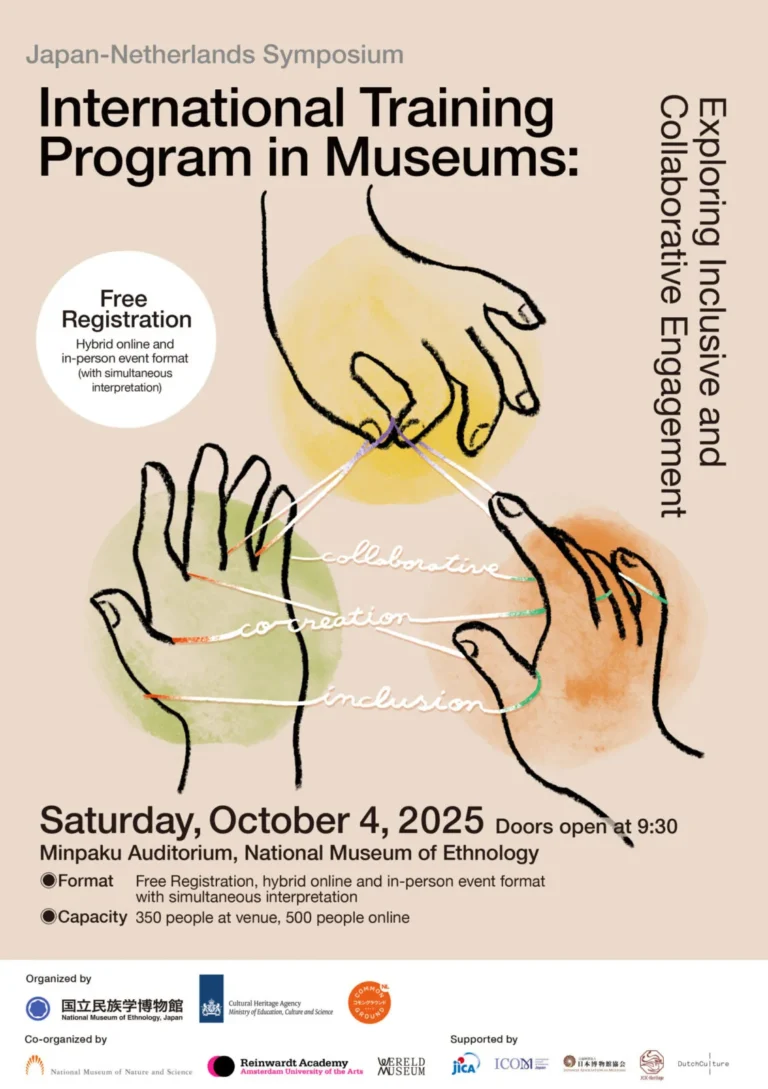
The Japan-Netherlands Symposium International Training Program in Museums: Exploring Inclusive and Collaborative Engagement focuses on international museum training programs conducted by the Netherlands and Japan, exploring new approaches to international museum collaboration that transcend the traditional hierarchy between “trainers” and “trainees.”
This paper is the outcome of joint reflections by the two authors, based in Europe and in Africa. Since the diverse practices of restitution have attracted more attention than certain concepts related to it, this paper addresses this imbalance by focusing on conceptual issues.
The article 'Journey of No Return: The Impact of Looted Heritage on Nigeria’s Cultural Legacy' explores the profound impact of looted heritage on Nigeria’s cultural legacy, highlighting the historical, cultural, and economic implications of the plundered artifacts.
Thomas Fues writes: the German government emphasises its willingness to confront Germany’s colonial history and its consequences. But it remains to be seen whether and how such declarations of intent at the beginning of the legislative period will actually be implemented in the coming years.
Dan Hicks writes: Genuine transparency will require the V&A channelling its resources into creating a truly comprehensive public database of the artefacts, images and archives that it holds.
This call for contributions to Terroirs, African Journal of Social Sciences and Philosophy, aims to give greater consideration to African perspectives by analyzing citizen mobilizations, artistic initiatives, state strategies, and community practices that shape the return of heritage.
[ in English and in French ] The French government has proposed a restitution law. After Belgium, it is the second former European colonial power to do so. Such a law streamlines restitution procedures and offers former colonies more clarity and even legal certainty. This blog discusses the draft-bill and examines whether countries of origin will benefit much from it.
It’s no easy matter resolving the current ethical debate over the retention and exhibition of human remains. But one public collection is asking visitors to cast their vote.
The African Renaissance made restitution central to reclaiming cultural sovereignty. But the reality is that implementation is still shaped by donor-led systems that often bypass African agency and African audiences.
[ in Spanish ] This special issue of Revista Memorias Disidentes shows debates and reflections on restitution, repatriation, return and reburial of ancestors in South America.
In March 2025, Open Restitution Africa co-hosted a two-day gathering with the University of the Western Cape at the Iyatsiba Lab in Cape Town, bringing together African restitution practitioners, researchers and activists to reflect on how lived experience is shaping policy across the continent.
The Indian government has secured the repatriation of ancient gem relics linked to the Buddha’s remains, two months after it halted their auction in Hong Kong. Indian prime minister, Narendra Modi, said the return of the Piprahwa gems after 127 years was “a joyous day for our cultural heritage”.
[ in Dutch ] How do Belgium and the Netherlands deal with the sensitive issue of returning looted art and investigating its colonial origins? What do you see of this in museums and what remains underexposed?
This article about 500 palm-leaf manuscripts, looted during the conquest of Lombok by the Netherlands East Indies in 1894, is especially urgent as the demand for provenance research grows. It helps to better understand the complex historical trajectories of these cultural heritage objects.
Leading academic, Gloria Bell, argues that the Vatican is not only stalling on Pope Francis’ promises of restoring the looted artifacts — but continues to falsely 'refer to everything in their collection as a ‘gift.’
Vanessa Hava Schulmann (Freie Universität Berlin): The stories I will tell you about happened during my work in a Berlin university collection. I was tasked of meeting the deceased whose bones and tissues were stored in those dusty wooden cupboards and figure out how to handle their presence in a dignified way.
The colonial legacy continues to resonate in Portugal, shaping “organized forgetting” of colonial violence. Finding ways to dismantle the real effects of that historical legacy includes restitution of looted collections.
The June 2025 report by a working group of Edinburgh University DECOLONISED TRANSFORMATIONS CONFRONTING THE UNIVERSITY OF EDINBURGH’S HISTORY AND LEGACIES OF ENSLAVEMENT AND COLONIALISM focusses mainly on slavery an its current impact. At the en dit has an interesting recommendation for the university's Anatomical Museum and its 200 skulls.
On 7 July 2025, the French National Assembly has approved the restitution to Ivory Coast of the Djidji Ayôkwê, an important talking drum, stolen in 1916. In the same period, the British Museum came with a statement that it is unwilling to restitute an equally important drum to the Pokomo council of elders in Kenya.
Eight years after French president Emmanuel Macron pledged to return African heritage to the continent, his government has adopted a bill facilitating the deaccession of cultural items plundered from former colonies. The text will be submitted for a vote in the senate on 24 September.
La Galigo, an Bugis text, is poetry, written on palm leaves in Bugis language and is considered to be the most voluminous literary work in the world. But the majority of the manuscripts are stored in Leiden University, The Netherlands.
Ahmad Mohammed writes: While digital repatriation offers an alternative or complementary pathway to physical restitution, its success hinges not only on ethical intent or technological innovation but on the socio-technical infrastructure available to source communities.
The remains of a woman, described as a “non-European skeleton,” were given a full funeral service by Highgate School, the fee-paying secondary in Highgate Village. No relatives could be found.
In a step toward preserving and rediscovering Sri Lanka’s colonial intellectual heritage, the government has greenlit a groundbreaking research project focusing on Dutch-era palm leaf manuscripts of Sri Lankan origin.
Thomas Fues writes: In an historic breakthrough for German restitution policy on colonial contexts, Cameroon’s official Restitution Committee has agreed upon the return of colonially appropriated cultural heritage in September 2025. Four German museums are involved.
[ in Dutch ] Daantje van de Linde delves into the history of a power statue that has been called the face of the World Museum Rotterdam's Africa collection. Her conclusion: case of involuntary loss of possession.
This year’s theme explores the material return, digital reunification, and recontextualization of Philippine artefacts, manuscripts, and sound heritage kept in institutions outside of the Philippines.
Nigeria has received 119 Benin Bronzes from the Netherlands — the largest physical repatriation of looted artefacts since the 1897 British invasion of the Benin Kingdom. According to an expert, some of the pieces date back to between the 14th and 16th century.
Catharine Titi examines the history of a series of objects in the museum's possession that are currently being claimed by their countries of origin and reviews the institution's inadequate response to the repatriation debate.
Mike Rutherford, curator of Zoology and Anatomy at the Hunterian, University of Glasgow, speaks at a conference in Manchester. Case-study: Repatriation Jamaican Giant Galliwasp.
[ in Dutch ] Tervurologie sets its sights on the AfricaMuseum and radically bets on imagination - to think new Tervurens, plural. Not as escape, but as intervention. Not as recovery, but as restart. Not as an answer, but as another question. Tervurologie is an attempt at exorcism.
Proceedings from the seminar Museums, Decolonisation, and Restitution: A Global Conversation, held at Shanghai University on March 20–21, 2023. With 60 experts from 21 countries.
Quoting the recently deceased Kenyan author Ngũgĩ wa Thiong'o on decolonisation of the mind, Kwame Opoku critically analyses a recent interview in The Times with Nicholas Cullinan, the new director of the British Museum.
A diaspora group discovers an object in the Wereldmuseum Amsterdam’s collection that the village of origin in Indonesia dearly misses. As it belongs to the Dutch national collection, its return requires the signature of the minister of Education, Culture and Science. But he only signs if the Indonesian minister of Culture supports the claim. After return, the latter must decide whether to deviate from the policy that returned objects are kept at the Museum Nasional Indonesia in Jakarta. Only then can the object go back to its village of origin. An interim report about a journey whose outcome no one yet knows.
A delegation of Naga elders and leaders, along with representatives from the Forum for Naga Reconciliation (FNR) and Recover, Restore, and Decolonise (RRaD), gathered at the Pitt Rivers Museum (PRM), University of Oxford, to initiate the repatriation of Naga ancestral human remains.
This article postulates that what we have seen in the past decade has been a turning point in memory politics of the colonial past, and it asks whether a new Franco-German paradigm in memory politics has emerged?
Southern Africa is spearheading a transformative shift in the restitution discourse. This shift means reframing restitution as an act of healing, justice, and empowerment for communities still grappling with the enduring scars of historical dispossession.
[ in Portuguese ] A 15-point action plan is the most tangible proposal put forward by the working group in a report on “sensitive heritage” at the University of Coimbra. Among the actions consists are “identifying and systematizing all the ‘sensitive heritage’ of UC”, the adoption of principles on dealing with them, legislation for restitution and the repatriation of a skull collection to Timor Leste.
[ in Italian ] From the dawn of Italian exploration in Africa and throughout the colonial period, objects and samples from overseas came to the Peninsula, finding their way into temporary exhibitions and more than one hundred permanent displays, where they were studied, described and presented to the public.
Dominic Senayah presents an in-depth exploration of reparations using Ghana as a case study. He highlights the multivalent dimensions of reparations and has a set of recommendations.
Minister of Culture Fadli Zon announced significant progress in repatriating Indonesian cultural artifacts from the Netherlands after bilateral talks with the Dutch Colonial Collections Committee (CCC) in Jakarta.
Within the national museum context, the Repatriasi exhibition risks becoming a missed opportunity to critically engage with the afterlives of returned objects, beyond marking their physical return.
Adéwolé Faladé, PhD candidate in History at the Central European University (CEU) in Vienna, highlights and analyzes the traces left by the 26 repatriated artefacts by France to the Republic of Benin in 2021.
In The Art Newspaper, Ben Luke wonders whether museums are ‘guilt tripping’ their visitors and concludes they aren’t doing enough.
Engaging with the difficult histories behind objects has deepened my experiences at cultural institutions — and the fact it is different for everyone is a good thing.
British Culture Secretary Lisa Nandy: “In the arts and creative industries, Britain and India lead the world and I look forward to this agreement opening up fresh opportunities for collaboration, innovation and economic growth for our artists, cultural institutions and creative businesses." (Not a single word about restitution)
Heritage interpretation—the process through which meaning is assigned to the material and immaterial traces of the past—is never a neutral act. It inherently involves questions of power, identity, and authority, writes Ahmad Mohammed.
France will repatriate the skulls of King Toera and two Sakalava warriors to Madagascar, marking the first return of human remains under a new French law passed in 2023.
A European art collector challenged Conan Cheong's commendation of the Dutch Government’s return of the Singhosari stone Bhairava, Nandi, Ganesha and Brahma statues to Indonesia the year before.
The African Union (AU) has said that the Year of Reparations 2025 is about economic liberation and ending Africa’s systemic wealth drain. Onyekachi Wambu writes: 'Restitution is a key part of the agenda. it has been explicitly mentioned in all the AU related reparations meeting I have attended.'
'Deconstructing Dinosaurs - The History of the German Tendaguru Expedition and its finds, 1906-2023' takes a fresh look at the history of the German Tendaguru Expedition (1909–1913), using recently uncovered sources to reveal how Berlin’s Natural History Museum appropriated and extracted 225 tonnes of dinosaur fossils from land belonging to modern-day Tanzania.
Muhammad Nishat Hussain explores how Pakistan has been doubly deprived of its cultural heritage, first through British colonial looting and later through India's post-Partition retention of thousands of artifacts.
Senegalese art historian El Hadji Malick Ndiaye says discussions and decisions about the restitution of African artefacts cannot be dictated by the West. He also discusses inter-Africa repatriations.
In recent years, Southeast Asian countries have had success in lobbying museums, governments and art collectors in the West to return cultural artefacts taken from their lands.
The Tasmanian Aboriginal Centre and The Hunterian at the University of Glasgow have announced the repatriation of a rare shell necklace from The Hunterian collection in Glasgow to its home in Tasmania.
Timor-Leste has a long and complex history of colonial entanglements with the Portuguese, and the number of Portuguese documents related to this is rather big. Their digitalisation will help on both sides.
The British Museum has come under fresh pressure to hand over its Benin Bronzes after the Netherlands returned more than 100 of the artefacts to Nigeria.
The AfricaMuseum in Tervuren near Brussels conserves two mummified persons. Where they came from and how they reached the museum was long shrouded in mystery.
The National Commission for Museums and Monuments (NCMM) with the support of the Federal Ministry of Art, culture , tourism and the creative economy signed a historic management agreement with the Oba of Benin, Omo N’Oba N’Edo Uku Akpolokpolo Ewuare II at the Royal Palace in Benin..
Unlike the British Museum and other UK national museums, the Royal Collection is able to deaccession, provided that this is advised by its trustees and authorised by the monarch. The collection is not owned personally by Charles, but he holds it in trust as sovereign to pass on to his successor.
South Africa's Department of Sports, Arts and Culture is preparing to repatriate human remains which were allegedly stolen from graves in Port Alfred, in the Eastern Cape and other places. They currently are in the US and Europe.
A research project has been conducted with the participation of the museum department and independent researchers regarding 6 such artifacts in the Netherlands and it has been confirmed that all the artifacts were brought from Sri Lanka during the colonial period.
Political turmoil across the continent is hampering plans for national structures to return colonial-era heritage. But the UK, once a laggard, appears to be preparing to review laws
The extensive article 'The ghosts are everywhere, about a museum beset by colonial controversy, difficult finances and the discovery of a thief on the inside.
Tim Maxwell: Repatriating artefacts found underwater could help former colonial powers meet moral obligations to countries they had historically exploited for their transatlantic slave trade.
The Netherlands will physically hand over six Sri Lankan artefacts to Sri Lanka during a two-day event at the Colombo National Museum. All come from the Rijksmuseum Amsterdam, among them is a famous ceremonial cannon of the King of Kandy (captured in 1765).
[ in Dutch ] The problems at the AfricaMuseum in Tervuren are mainly a result of a lack of money. This is what director Bart Ouvry says, who is responding for the first time to the sharp criticism of political scientist and public officer Nadia Nsayi. In a column in De Morgen, she accuses him of toxic behavior, weak leadership and too little eye for diversity.
On August 26, 2016, the Minister of Foreign Affairs and Cooperation of Benin, in a letter to his French counterpart, made an official request calling for the restitution of cultural goods brought back to mainland France by French colonial troops during the conquest of the kingdom of Danhomè. [ in French ]
In 2023, Sri Lanka retrieved six objects from the Netherlands. The hope is that future initiatives will lead to the return of more Sri Lankan artefacts from other countries and even private collectors, fostering a stronger connection between the country and its cultural heritage.
A museum in Limburg has decided not to return five ornamental human skulls taken by missionaries from Papua New Guinea after the local population turned down the offer.
The Missiemuseum in Steyl investigated the origin of the artefacts in the wake of the controversy surrounding a skull from Benin that was sold by an auction house in Amsterdam.
Germany and France will jointly spend €2.1m (£1.8m) to further research the provenance of African heritage objects in their national museums’ collections, which could prepare the ground for their eventual return.
How do we trace the origin of collections? What new insights can be gleaned from these provenances? And what should become of such collections, within and beyond museum walls?
[ in Spanish ] The Spanish Minister of Culture, Ernest Urtasun, has reported to the parliamentarian Commission on Culture about the review of the “colonial framework” carried out in Spanish museums, institutions “anchored in gender or ethnocentric inertia that have often hindered the vision of heritage, the history and artistic legacy”. Conservatives are against.
British Museum and V&A to lend Ghana looted gold and silver. Tristram Hunt, director of the V&A, said the items were the equivalent of “our crown jewels” but added that the three-year was “not restitution by the back door”.
Almost nine decades after it was stolen by Benito Mussolini’s fascist regime, the Italian government has officially returned Ethiopia’s first plane, named Tsehay in honour of the princess daughter of Emperor Haile Selassie.
[ in Dutch ] What to do with the human skulls from Africa or Asia in their collection? The days when this kind of heritage could be easily in museums seem to be over. The call for return to the place of origin is louder and louder. But are they waiting for it there?
[ in French ] Indonesia is pursuing a process of complete repatriation of cultural works looted during the colonial period. By mid-December, 828 objects had been returned by the Netherlands, according to the Indonesian Heritage Agency.
Hundreds of Indonesian artefacts that were in the Netherlands for more than a century - the bulk of which were looted by the Dutch during their colonial rule - are now on display at Indonesia’s National Museum in Jakarta. They are among the latest batch of items returned after a lengthy process involving both countries.
The documentary "The Empty Grave" traces the mission of two families in Tanzania that embark on an emotional journey to reclaim their ancestors’ human remains from German museums.
After almost 70 years in the Africa Museum, the rare Kakungu mask is back in Congo. Despite the festive ceremony at the National Museum, the mask remains the property of Belgium, causing unrest among the Congolese people and the Suku community, where the mask originally came from.
32 Gold and silver items have been sent on long-term loan to Ghana by the Victoria & Albert Museum (V&A) and the British Museum (BM). They were stolen during 19th century conflicts.
With tens of thousands of African artworks in French museums, curators face a huge task in trying to identify which of these were plundered during colonial rule in the 19th and 20th centuries and should be returned.
Felwine Sarr and Bénédicte Savoy discuss what African cultural objects are in French publicly owned collections, why so few have been repatriated and what measures should be taken for restitutions to their countries or communities of origin.
Spain maintains unwavering ownership of the Quimbaya Treasure, dismissing Colombia’s legal and diplomatic efforts to reclaim the pre-Columbian artifacts donated to Queen María Cristina in 1893. Both nations stand at a crossroads over the fate of 122 golden pieces, symbolizing cultural heritage and historical legacies intertwined with colonial conquests.
This reader, edited by Sarah Van Beurden, Didier Gondola and Agnès Lacaille, is the first scholarly work has scrutinized the collections of the Royal Museum for Central Africa in Tervuren (Belgium) as a whole.
There are obvious similarities between the episode in 1874 and 1896 (Asante Kingdom) and 1897 (Benin Kingdom). Both kingdoms have been asking for restitutions for decades. Barnaby Philips explores why is it taking Nigeria so long to put its returned treasures on display?
Conversations between communities and institutions around the world are ramping up, with museums and universities agreeing to return culturally significant items. But in the case of the British Museum, there is one big roadblock.
Beninese President Patrick Talon has an ambitious development plan with culture and heritage at its core. “It is at the end of the old rope that the new one is best woven,” he said recently, citing an old African proverb.
[ in Portuguese ] Portugal has been doing little to develop knowledge on the provenance of its collections that came from former colonies. This can be partly explained by the lack of human and financial resources in archives, museums and universities.
[ in French ] Algeria has made a request for the return of objects that belonged to Emir Abdelkader, a great resistance fighter in the conquest of Algeria in the 19th century, who was defeated in 1847.
Some French parties pressure their country’s authorities to prevent them from responding to the requests submitted by the Algerian-French mixed commission concerning the restitution of some “symbolic” property that France had looted from Algeria during the occupation period.
Kwame Opoku wonders whether loans will be the future status of African objects in western museums. If so, western museums remain in control of what is not theirs.
The British Museum (BM) has an extensive collection of Chinese antiquities. Historically, many assumed that these treasures were obtained through imperialist plunder. However, recent findings by US historian Justin Jacobs present a different narrative, suggesting that a significant number of the artifacts in question were willingly given to the British Museum by Chinese officials.
Over the centuries, a multitude of items – including a cannon of the King of Kandy, power-objects from DR Congo, Benin bronzes, Javanese temple statues, Maori heads and strategic documents – has ended up in museums and private collections in Belgium and the Netherlands by improper means.
In 'The Empty Showcase Syndrome - Tough Questions about Cultural Heritage from Colonial Regions', author Jos van Beurden explores three questions that slow down the restitution process.
In October 2024, a 19th-Century skull from the north-eastern Indian state of Nagaland was up for auction in the UK. The horned skull of a Naga tribesman was among thousands of items that European colonial administrators had collected from the state.
Jamaica will intensify efforts for the repatriation of its cultural and natural heritage artefacts taken from Jamaica by the British and housed in museums and universities in the United Kingdom. The negotiation for the return of a whole repository of artefacts from the Tainosis is ongoing. The country also works on reparations related to the slave trade. Recently, Minister of Culture Olivia Grange received a delegation from churches in the United Kingdom during which the United Reform Church apologised for its role in this trade.
[ in Dutch ] The Dutch city of Rotterdam returns 66 looted objects from the municipal collection to Indonesia. They were looted by the Dutch army. The municipal government chooses to follow the State's return rules.
The Ayôkwé djidji or talking drum, confiscated in 1916 by the French army from the Ebrié community, will be exposed in its home country, but France has yet to pass legislation allowing for it to be formally restituted.
Anmol Irfan, a Muslim-Pakistani journalist, writes: Governments delay the process; museums often answer to wealthy donors. Complexities arise that require each case to be handled individually. But the first step of acknowledging the generational hurt and trauma caused by the removal of these culturally important and sacred artifacts has opened doors to broader solutions on a global scale.
For decades, families in Tanzania have been demanding the return of their ancestors’ human remains from Germany. These ancestors, executed leaders of resistance efforts against German colonial rule, were exhumed from their graves and taken to Germany. Cece Mlay discusses co-producing a new documentary on how their descendants are seeking justice and closure today.
Although there is no overarching framework for the repatriation of human remains at the international level, most repatriation efforts now operate within a more rigorous legal framework at the national and subnational level, which includes national laws and guidelines from public authorities.
Germany was a significant – and often brutal – colonial power in Africa. But this colonial history is not told as often as that of other imperialist nations. A new book called The Long Shadow of German Colonialism: Amnesia, Denialism and Revisionism aims to bring the past into the light. It explores not just the history of German colonialism, but also how its legacy has played out in German society, politics and the media.
In June 2024, 39 artifacts were formally handed back to the government of Uganda by Britain's University of Cambridge. While the return is technically a three-year loan between museums, it is extendable, and could see them remain in their country of origin.
A Mexican delegation is coming to retrieve 84 Mesoamerican axes currently in transit at University de Montreal, underscoring the need to raise public awareness of the looting of archaeological artifacts.
Culture Minister Fadli Zon told lawmakers that the United Kingdom is unwilling to repatriate historical artifacts and other antiquities taken from Indonesia in the 19th century. UK troops, led by Thomas Stamford Raffles, raided the Yogyakarta Palace in June 1812, seizing valuable items, including historic manuscripts.
Katharina Küng from canton Zurich had a headdress that she had received from her mother hanging on her wall for a long time. “We thought it was the padding of an old suit of armour,” Küng says. It wasn’t until a trip to Namibia that she realised – in the Swakopmund Genocide Museum – that it was a traditional Herero headdress.
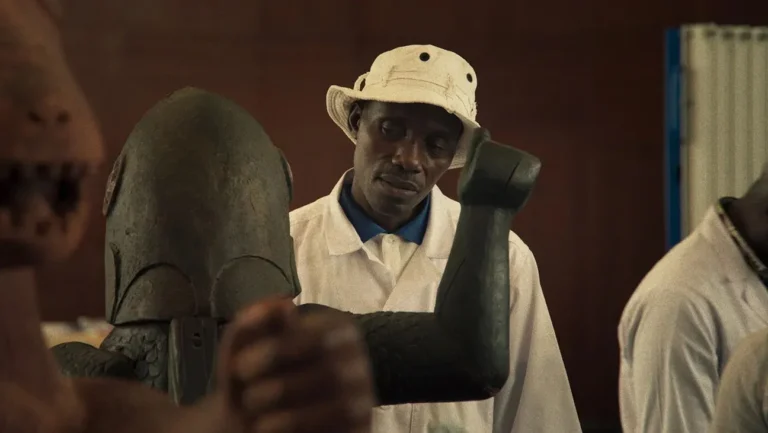
The prize-winning documentary film Dahomey continues to evoke reactions. In ARTnews, Alex Greenberger writes: If the 2016 statement by Andre Frasier that prisons and art institutions are “two sides of the same coin of inequality” seemed provocative eight years ago, it appears only mildly controversial now, at a time when museums are commonly seen as appendages of racist, colonialist, and deeply unfair systems.
The return of artefacts to their countries of origin is not just an act of repatriation, but an opportunity for healing and reconnecting with cultural roots, said Tuuda Haitula, the museum development officer at the Museums Association of Namibia.
A bamboo sunhat that was looted from the Kenyah Badeng people of Sarawak, Borneo, during British-led war expeditions in 1895 and 1896, is returning home. It is the Pitt Rivers Museum's first object to be returned (as opposed to ancestral remains).
Thanks to Deneth Piumakshi Veda Arachchige, the Museum of Cultures and the Natural History Museum in Basel, Switzerland returned a collection of approximately 90 aboriginal artefacts, including human bones and tools, of Sri Lanka’s indigenous population this week.