The British Museum’s attempt to frame its decision to ‘share’ a few colonial-era artefacts with the Chhatrapati Shivaji Maharaj Vastu Sangrahalaya (CSMVS) in Mumbai as a move to ‘decolonise’ its collection has been ridiculed by art historians as a ‘con’. There’s only one way to show contrition: return the stolen goods.
The V&A’s collection includes nearly 200 Ethiopian objects – from metalwork and textiles to photography, manuscripts, and paintings. One of the most exciting outcomes of this research, Molly Judd writes, was uncovering records for objects that had effectively become hidden within the collection.
According to Ruby Satele, a PhD candidate from Sāmoa at the University of Vienna, rematriation involves not only the return of ancestors, but also practices of care while they remain in storage. Her research combines strong theoretical thinking with practical action to challenge power imbalances and promote greater justice in museums and universities.
To commemorate years of diplomatic relation—and sure, with an eye to continued trade—France and Mexico exchanged two ancient manuscripts: the Codex Azcatitlán, and the Codex Boturini.
[in English and Greek] Leading British legal experts have questioned the legality of the UK government’s decision to bar the country’s national museums from deciding independently on the repatriation of cultural objects.
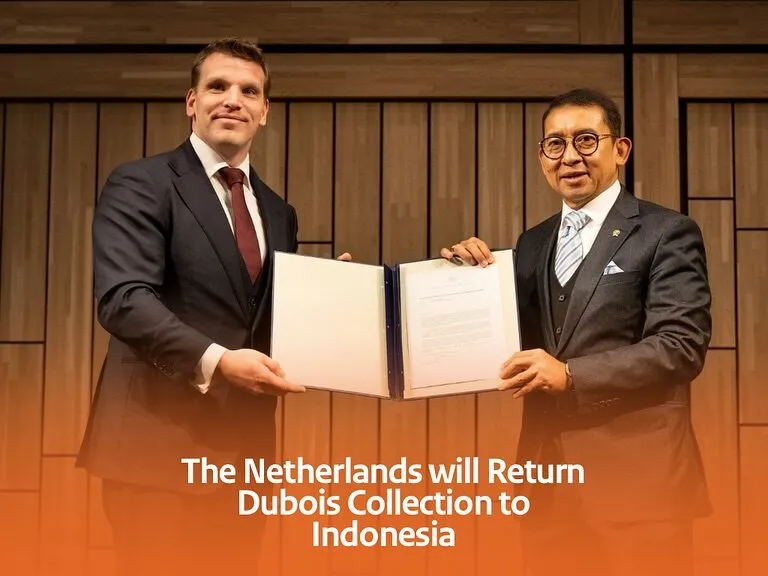
In 2022, the Republic of Indonesia submitted an official application for the collection’s restitution after which the Dutch State Secretary for Culture requested the Colonial Collections Committee to provide advice on this request. In 2025, the Netherlands transferred it to Indonesia. This Blog offers a reflection.
On December 3, 2025, the Pavillon des Sessions at the Louvre reopened its new layout, now called the Galerie des Cinq Continents or Gallery of the Five Continents. In Maria Pia Guermandi’s opinion, the layout continues to express a Western vision that claims to ‘elevate’ other cultures by granting them admission to the sancta sanctorum of European art.
Archaeologist and journalist Mariam Gichan wonders why complicated legal hurdles are sufficient to explain why the fossil hasn’t returned to Tanzania and whether “complicated” becomes a convenient reason for inaction.
[ in French ] The exhibition draws on more than eighty photographs from colonial archives, mainly held at the Royal Museum for Central Africa in Tervuren. But far from a simple presentation of heritage, Boma La Première offers a critical reading of these images.
[ in French ] The AfricaMuseum in Tervuren, Belgium, changed from a ‘museum for colonial propaganda’ and a ‘museum of avoidance’ into one that ‘multiplies voices on colonial history and its persistence’, says historian Yasmina Zian.
‘Time for Papua’ brings different perspectives together: from refined wood carvings and korwar figures to prauw prows and recent film works. You see how creators make history tangible, how objects form relationships, and how a dynamic perception of time clashes with imposed boundaries and economic interests.
This restitution of 107 objects is being recognized as exemplary due to its transparent process and the collaborative approach between the institutions involved. The artifacts, once held in private and public collections in Switzerland, have now been formally transferred to the National Museum of Abidjan.
The Wereldmuseum collection includes 3,647 objects that contain ancestral human remains. Particularly harrowing are the 26 premature and newborn babies preserved in fluid. Together with members of various communities, Manuwi C. Tokai created an altar in the Wereldmuseum Amsterdam to serve as a place of remembrance for the ancestors held in the museum’s collection.
Emeline Smith writes: Long-term loans to former colonies are not restitution. They do not acknowledge historical wrongdoing, nor do they restore agency to source communities. The loan program is a rebranding exercise that preserves colonial power structures while pretending to dismantle them.
[ in Dutch ] After five years, research project Pressing Matter, which dealt with the restitution of colonial collection pieces, ends. De Volkskrant talks to initiator Wayne Modest about the project and its influence on the World Museum.
Andreas Roth shows, the real story of the coral regalia does not fit the postcolonial narrative some want to attach to these artefacts. They do not provide a precedent for the return of Benin Bronzes.
David Abulafia writes: The history of the Rosetta Stone is not simply an Egyptian history. The inscription in three scripts, hieroglyphic, the less formal hieratic script, and classical Greek, is humdrum.
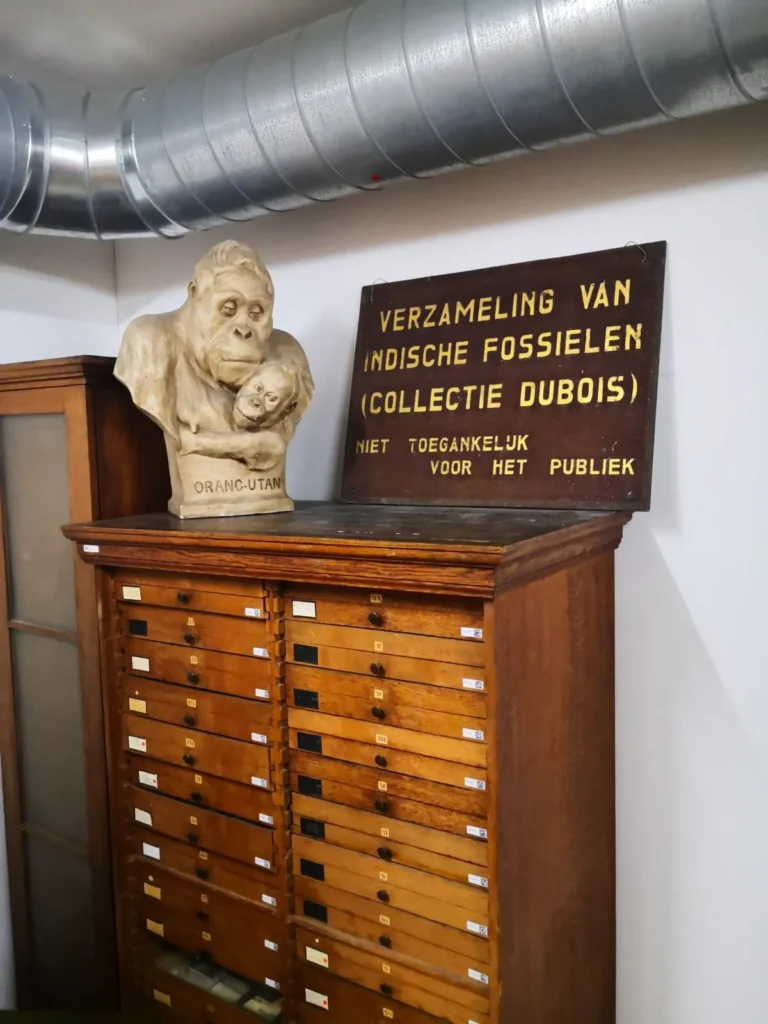
Rodney Westerlaken writes: The return of the Dubois Collection: principled restitution, unresolved policy questions: – At what point does scientific heritage become cultural heritage? – Which criteria should govern this classification, and by whom are they determined? - How can restitution frameworks avoid becoming normatively expansive without sufficient conceptual precision?
Four important objects from the Dubois collection were handed over to Indonesia on Wednesday 17 December. The handover ceremony took place at the National Museum of Indonesia in Jakarta, which will exhibit the objects.
[ in French ] What does decolonization mean when power relations remain unchanged? Anne Wetsi Mpoma invites us to rethink decolonization as a political, epistemic and restorative process — where art becomes a space of resistance, reappropriation and symbolic justice.
Western museums are returning the Benin Bronzes to Nigeria, but a state-of-the-art museum to display them is still a long way off. Alex Marshall saw hundreds of Benin Bronzes while reporting this article in Benin City and Lagos, Nigeria.
In January 2023, an online seminar was held to investigate the Vatican collections, their legal structure and how repatriation might be possible to countries and communities of origin. In particular we looked at the principle of ‘inalienability’ which governs the collections under Vatican civil law, Alexander Herman writes.
Restitution activist Mwazulu Diyabanza explains why he is taking the law into his own hands. His actions are a calculated act of civil disobedience, executed for maximum political impact without engaging in violence or damaging property.
[ in German ] The Stiftung Preußischer Kulturbesitz will return spiritual objects from Kpando containing human remains to Akpini People in Ghana, and spiritual objects to Australia. Currently, they are in the Ethnological Museum in Berlin.
[ in French ] Marie-Anne Léourier administered a questionnaire focused on these questions to visitors of the permanent collections area of the Quai Branly – Jacques Chirac Museum (MQB).
Findings suggest that whilst there is strong support for retaining objects, namely under the guise of guaranteeing access for all peoples, there is also opposition from volunteers who feel that the British Museum is morally obliged to return objects.
[ in Dutch ] Time is running out to return the hundreds of human remains collected by soldiers, missionaries and others in Congo, says historian and anthropologist Lies Busselen. The combination of archival and fieldwork in Belgium and Congo continuously encourages us to reflect on the colonial past.
[ in French ] It was in 2021, after 129 years of plunder by France, that the royal treasure of Abomey was returned to Benin. The restitution of this piece of history is part of a campaign launched by Benin in 2016 to make its heritage the cornerstone of its cultural influence.
This article examines how an eighteenth-century decision to bureaucratize gift exchange continued to disrupt long-standing South Asian protocols of reciprocity and regard well into the twentieth century.
[ in Spanish ] The work of the two expert committees created by Ernest Urtasun, Minister of Culture, to "overcome and challenge the Eurocentrism" of these two institutions, has concluded after six months with the delivery of two projects outlining concrete guidelines for renewing their museographic narratives.
On November 9th, 2025, as 250 Nigerian and international guests – donors, diplomats, and the heads of national cultural agencies – gathered in Benin City at the new Museum of West African Art’s opening event, protesters in red baseball caps broke into the museum, forcing its closure. Cultural Property News analyses what happen, and why.
Have a look at the way Vatican News reported about the return of 62 objects to Canada. No indigenous representatives or objects visible. Only Roman-catholic dignitaries. It is a fairly literal translation of the article.
The Vatican is working with the Canadian Catholic Church to return 62 Indigenous objects, says Gilbert Whiteduck . He is the education director and former chief of the Algonquin community Kitigan Zibi Anishinābeg, in western Quebec.
Julien Volper, acurator at the Royal Museum for Central Africa (Tervuren, Belgium), is writing here in a personal capacity: The Dutch restitution of Benin objects, earlier this year, was motivated by Dutch self-interest, both of the government and of the museum that has to let go a collection.
The theft of the Louvre’s crown jewels has increased calls for the museum to be more transparent about the colonial origins of the treasures it displays. Their routes to Paris run through the shadows of empire, an uncomfortable history that France has only begun to confront.
[ in Dutch ] Last Saturday, the Grand Egyptian Museum (GEM) opened in Cairo. German President Frank-Walter Steinmeier was also in attendance. The world's largest archaeological museum displays more than 100,000 art treasures from Egyptian history, but one important piece is missing: the bust of Queen Nefertiti. It has graced the walls of Berlin for over a century.
Colonial powers have long used museums to collect, display and contain the suffering of subjugated peoples, transforming trauma into spectacle and erasure into curation. Armenia, like so many small nations whose history was stolen, remains entangled in this architecture of memory.
At the G20 meeting, South African Minister for Sport, Arts and Culture, Gayton McKenzie, champions cultural restitution and digital equity at the G20 summit, advocating for a fairer future. Each G20 member state should have a restitution committee.
[ in German ] Berlin Postkolonial, Decolonize Berlin, and Flinn Works welcome the update of the “Joint Guidelines on Dealing with Cultural Property and Human Remains from Colonial Contexts.” Clearer procedures and the establishment of unconditional returns are steps in the right direction. At the same time, the guidelines fall far short of a human rights- and international law-based understanding of restitution and repatriation.
[ in French ] The Study and Research Centre for Administrative and Political Sciences (CERSA) organizes a conference entitled “Restitutions of cultural heritage: trends, challenges, perspectives” on November 14, 2025 in Paris.
[ in French ] The French government intends to go further with a bill that could become a landmark law in this area. What are the terms of the bill, and why does it potentially represent a historic turning point? Catharine Titi writes....
Former Tanzanian lawmaker and environmental activist Riziki Saidi Lulida argues: 'It was taken from Lindi, from our soil. They carried it piece by piece for more than a hundred kilometers, and some of our people died doing it. But no one in Lindi has ever benefited.'
The stolen jewels are also products of a long history of colonial extraction. The sapphires, emeralds, diamonds, pearls, and other gemstones they contained were mined across Asia, Africa, and South America.
[ in German ] The 2025 Guidelines promote dialogue with societies of origin and descendants, interdisciplinary provenance research, and proactive roles for museums, while they acknowledge the cultural, spiritual, and epistemological singularities of each case. They expand on communication channels for restitution requests, specifically notably requiring the consent of the state of origin, and call for a need to streamline procedures and call for an expert advisory body to be established to support restitution efforts. Further details on governance and the body’s specific mandate remain to be defined.
The colonial collections in public museums and the private sector in Italy are not less substantial than elsewhere in Europe. Italy has made some significant returns. Nevertheless, this blog argues that the country is much better at reclaiming its own stolen relics than at accepting the consequences of the investigations into its colonial collections.
The decolonisation of museums worldwide is an unstoppable process. Spain aimed to join the wave of museological decolonisation. In the case of the Canary Islands, this practice presents a series of peculiarities related to their unique historical process.
The public display of artefacts looted by British colonial forces at the new Museum of West African Art was supposed to be the crowning glory of a decades-long restitution effort. What went wrong?
This project explores the colonial framework that has shaped our understanding and knowledge of historical objects, focusing on the Lombok Treasures looted from Cakranegara Palace in 1894. Adopting a decolonial perspective, this project reframes these heritage objects as living entities endowed with knowledge and cultural significance, rather than mere relics.
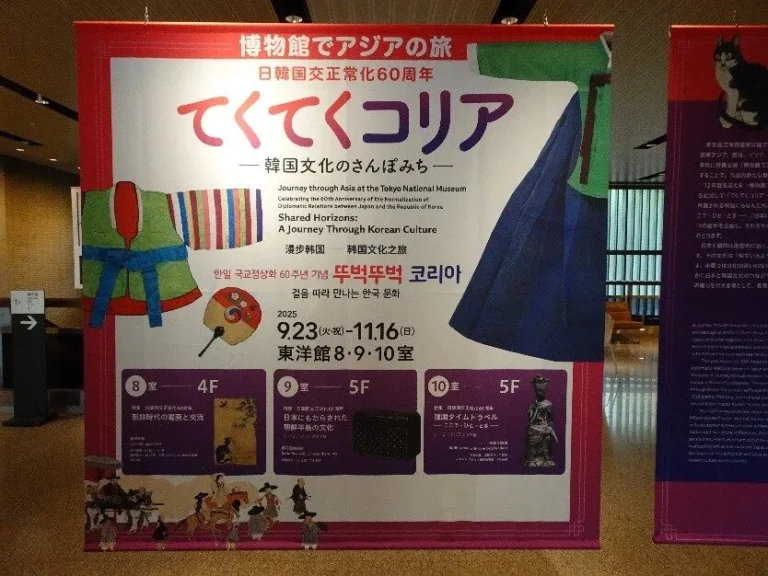
The restitution issue of cultural properties from Japan to South Korea has a long history. Back from a visit to South Korea, Eisei Kurimoto (National Institutes for the Humanities, Japan) concludes that this history still is being characterized by one dominant element: asymmetry. While in South Korea, it is an important national matter, the interest in Japan has been very low. Japanese governments consider it a ‘settled case’ and the issue is rarely publicly argued. To initiate change, joint provenance research projects could cultivate trust and friendship between stakeholders of both countries.
[ in Dutch ]'Dutch' fossils soon to be seen again in Indonesia: 'Young people here only know the Javaman from textbooks'
Indonesia will soon receive thousands of fossils that are still in museum Naturalis. It is a historic moment for his country, says Indonesian paleontologist Sofwan Noerwidi.
On 26 September 2025, the Dutch government returned 28,000 fossils, including the famous skullcap, a molar, and a thighbone (the so-called Java Man), to Indonesia following an official claim submitted by the Indonesian state in July 2022. They were part of the collection of Naturalis Biodiversity Centre in Leiden. With this, the government followed the advice of the Colonial Collections Committee. Now that the dust about this massive return has begun to settle, it is time for some reflection. I consider the acceptance of the advice of the independent Colonial Collections Committee groundbreaking in several respects.
[ in Dutch ] Looted art is a hot issue in the art world. This therefore seems like a good time to return ten pleurists who are now in the Rijksmuseum to Belgium, writes parliamentary lobbyist Marcelo Mooren in this opinion piece.
[ in Dutch ] At the Indonesian Ministry of Culture, they can't count on their luck. The Netherlands returns an important archaeological find to Indonesia. It concerns the skullcap of Dubois, named after the Dutch finder Eugène Dubois. This proved in 1891 that other humanos had existed, which Dubois called the Javamen.
[ in Dutch ] The restitution process of the Dubois collection took an unusually long time. The responsible advisory committee and Naturalis point out the complexity of the case, experts make sharp accusations against the museum.
[ links are in Dutch or in English ] Today, Dutch Minister Moes (Education, Culture and Science) presented a letter to Indonesian Minister Fadli Zon (Culture) announcing this decision. The so-called Dubois collection is now managed by Naturalis Biodiversity Center in the city of Leiden.
Hugh Johnson-Gilbert and Alexander Herman write: It has long been the view in the UK that national museums are restricted by law from repatriating collection objects. But will legislation passed three years ago, the Charities Act 2022, point the way ahead?
More and more colonial looted art is returned to the country of origin by European countries and museums, yet millions of precious sculptures, masks and bronzes still remain in the hands of the former colonizer. In the Netherlands alone, hundreds of thousands of artifacts are involved. Why? 'They claim that we can't take care of it ourselves.'
Rohan Fernando emphasises the colonial roots of India’s great contemporary museums and the role of the British in rediscovering India’s past. Muhammad Nishan Hussain [University of Lahore] takes an opposite view and sees them as a tool of colonial control.
Jongsok Kim wrote this open access book in 2018, but it is still very relevant for our discussion. With legal and historical perspectives. Some case-studies about restitution are noteworthy.
In 2013, the AfricaMuseum near Brussels closed its doors and embarked on a major redesign. The architectural changes must have felt less challenging than the long overdue re-evaluation of the holdings and their presentation. Jeremy Harding reports.
[ in French and in English ] Claimed for decades by Antananarivo, these bones had been taken as trophies by French colonial troops after a deadly attack in 1897 in Ambiky, the former royal capital of Menabe. 'Their absence was an open wound on our island'.
According to Darius Spierman, France has begun a significant process of confronting its colonial history. This includes the recent return of human remains to Madagascar and a draft restitution bill.
[ in Dutch ] How are Belgium and the Netherlands dealing with the sensitive issue of returning looted art and researching its colonial origins? An exploration of some treacherous areas in the quagmire of new Dutch and Belgian restitution policy. A discussion between museum director Wayne Modest and activist Nadia Nsayi.
[ French translation ] La France débat actuellement de la création d’un cadre juridique pour la restitution des collections publiques historiques, principalement d’origine coloniale. La Belgique dispose déjà d’une telle loi. Ce court article propose une comparaison entre les deux dispositifs – la loi belge et le projet de loi français – en se concentrant sur trois points :
• l’approche centrée sur l’État,
• le champ d’application,
• la procédure de restitution.
Kwame Opoku writes: The French Minister of Culture presented a legislative text on 30 July to facilitate the restitution of artefacts in French museums by derogating from the principle of inalienability. It will not likely lead to a rush of restitutions from France. Excluding archaeological materials, military materials, and public records eliminates many objects. Archaeological finds from Egypt, Mali, and other African countries, such as those on the ICOM Red Lists, would be excluded.
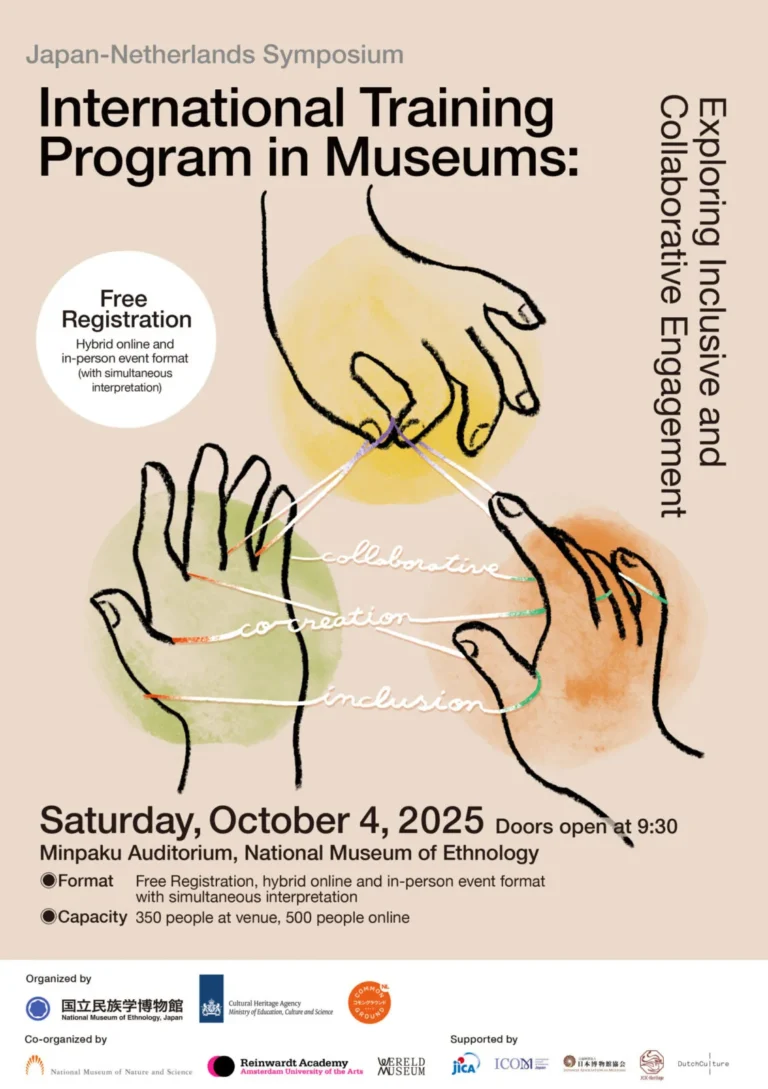
The Japan-Netherlands Symposium International Training Program in Museums: Exploring Inclusive and Collaborative Engagement focuses on international museum training programs conducted by the Netherlands and Japan, exploring new approaches to international museum collaboration that transcend the traditional hierarchy between “trainers” and “trainees.”
Thomas Fues writes: the German government emphasises its willingness to confront Germany’s colonial history and its consequences. But it remains to be seen whether and how such declarations of intent at the beginning of the legislative period will actually be implemented in the coming years.
Dan Hicks writes: Genuine transparency will require the V&A channelling its resources into creating a truly comprehensive public database of the artefacts, images and archives that it holds.
[ in English and in French ] The French government has proposed a restitution law. After Belgium, it is the second former European colonial power to do so. Such a law streamlines restitution procedures and offers former colonies more clarity and even legal certainty. This blog discusses the draft-bill and examines whether countries of origin will benefit much from it.
Paul Dailey (Guardian Australian columnist) writes: Bodies and body parts have long been part of collections of imperial plunder over the years – but museums must understand that attitudes have moved on.
[ in Spanish ] This special issue of Revista Memorias Disidentes shows debates and reflections on restitution, repatriation, return and reburial of ancestors in South America.
[ in Dutch ] How do Belgium and the Netherlands deal with the sensitive issue of returning looted art and investigating its colonial origins? What do you see of this in museums and what remains underexposed?
Leading academic, Gloria Bell, argues that the Vatican is not only stalling on Pope Francis’ promises of restoring the looted artifacts — but continues to falsely 'refer to everything in their collection as a ‘gift.’
Vanessa Hava Schulmann (Freie Universität Berlin): The stories I will tell you about happened during my work in a Berlin university collection. I was tasked of meeting the deceased whose bones and tissues were stored in those dusty wooden cupboards and figure out how to handle their presence in a dignified way.
The colonial legacy continues to resonate in Portugal, shaping “organized forgetting” of colonial violence. Finding ways to dismantle the real effects of that historical legacy includes restitution of looted collections.
On 7 July 2025, the French National Assembly has approved the restitution to Ivory Coast of the Djidji Ayôkwê, an important talking drum, stolen in 1916. In the same period, the British Museum came with a statement that it is unwilling to restitute an equally important drum to the Pokomo council of elders in Kenya.
Eight years after French president Emmanuel Macron pledged to return African heritage to the continent, his government has adopted a bill facilitating the deaccession of cultural items plundered from former colonies. The text will be submitted for a vote in the senate on 24 September.
France's parliament approves returning to Ivory Coast a "talking drum" that colonial troops took from the Ebrie tribe in 1916, in the latest boost to the repatriation of colonial spoils.
High-profile figures, including the former UK Prime Minister Liz Truss, have written a letter criticising what it claims is an “accelerating” campaign to return the Parthenon Marbles from the British Museum to Greece.
Thomas Fues writes: In an historic breakthrough for German restitution policy on colonial contexts, Cameroon’s official Restitution Committee has agreed upon the return of colonially appropriated cultural heritage in September 2025. Four German museums are involved.
The path to true restitution requires more than symbolic gestures, demanding that Britain repeal its obstructive laws, France accelerate its glacial restitution process, and all former colonial powers establish transparent frameworks for repatriation.
Nigeria has received 119 Benin Bronzes from the Netherlands — the largest physical repatriation of looted artefacts since the 1897 British invasion of the Benin Kingdom. According to an expert, some of the pieces date back to between the 14th and 16th century.
Catharine Titi examines the history of a series of objects in the museum's possession that are currently being claimed by their countries of origin and reviews the institution's inadequate response to the repatriation debate.
'Mobile Heritage' explores how diverse digital technologies have allowed for new types of mobilities and introduced a novel set of practices, interventions, and politics for heritage collections, archives, exhibitions, entertainment, conservation, management, commerce, education, restitution, activism, and regulation. With a case-study about digitalised ancient manuscripts from Ethiopia in the British Library.
Quoting the recently deceased Kenyan author Ngũgĩ wa Thiong'o on decolonisation of the mind, Kwame Opoku critically analyses a recent interview in The Times with Nicholas Cullinan, the new director of the British Museum.
A diaspora group discovers an object in the Wereldmuseum Amsterdam’s collection that the village of origin in Indonesia dearly misses. As it belongs to the Dutch national collection, its return requires the signature of the minister of Education, Culture and Science. But he only signs if the Indonesian minister of Culture supports the claim. After return, the latter must decide whether to deviate from the policy that returned objects are kept at the Museum Nasional Indonesia in Jakarta. Only then can the object go back to its village of origin. An interim report about a journey whose outcome no one yet knows.
According to the Greek newspaper Kathimerini, the Greek Government and the British Museum have made substantial headway in discussions regarding the Parthenon Sculptures.
Minister of Culture Fadli Zon announced significant progress in repatriating Indonesian cultural artifacts from the Netherlands after bilateral talks with the Dutch Colonial Collections Committee (CCC) in Jakarta.
Within the national museum context, the Repatriasi exhibition risks becoming a missed opportunity to critically engage with the afterlives of returned objects, beyond marking their physical return.
Pope Francis promised to return artifacts to communities in Canada, but several years on, they remain in the Vatican’s museums and storage vaults. Recently, Canadian Prime Minister Mark Carney discussed the return in a meeting with Canadian Catholic Cardinals.
Tamara Lanier, who sued the school in 2019 over daguerreotypes of her enslaved ancestors held in its museum, called the outcome “a turning point in American history.”
Adéwolé Faladé, PhD candidate in History at the Central European University (CEU) in Vienna, highlights and analyzes the traces left by the 26 repatriated artefacts by France to the Republic of Benin in 2021.
In The Art Newspaper, Ben Luke wonders whether museums are ‘guilt tripping’ their visitors and concludes they aren’t doing enough.
Engaging with the difficult histories behind objects has deepened my experiences at cultural institutions — and the fact it is different for everyone is a good thing.
The director of the British Museum, Nicholas Cullinan, has ruled out any move towards allowing restitution from its collections as he focuses instead on fostering global collaboration.
The exhibition explores the current debate surrounding collections gathered during the colonial period and the question of restitution. Visitors not only learn about the provenance of cultural objects but also to reflect on ownership, value, and the ethical implications of a colonial history that continues to resonate in museum collections today. [ English version and Dutch version ]
British Culture Secretary Lisa Nandy: “In the arts and creative industries, Britain and India lead the world and I look forward to this agreement opening up fresh opportunities for collaboration, innovation and economic growth for our artists, cultural institutions and creative businesses." (Not a single word about restitution)
The Natural History Museum in London hosted a formal ceremony on 10 April 2025 with Traditional Custodians from Queensland communities to mark the return of 36 First Nations ancestors.
[ in French ] France Culture interviews historian Benjamin Storashares about some of the issues with the restitution of documents and objects that were looted during the 1950's war of independence of Algeria.
A 1000-year-old statue of the Boddhisattva Guan Yin lives in The British Museum. When it emerges that the statue was stolen from its original home, the museum attempts to deflect both the public response and controversial repatriation claims from the Chinese government.
This gold crown with stunningly delicate filigree belonged to Emperor Tewodros II, the King of Kings of Abyssinia. It was the most remarkable artefact looted during the British Army’s 1868 siege of Maqdala, the king’s hilltop fortress capital.
Pope Francis died on April 20 at 88, marking the end of an epoch for the Catholic Church and the beginning of its search for the next spiritual leader, who will also become proprietor of the Vatican’s library and vast art collection.
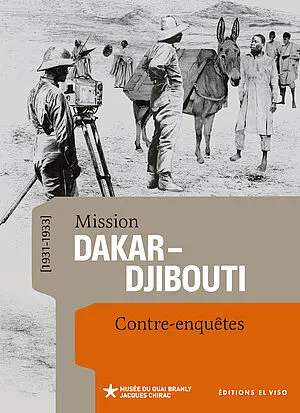
The Paris museum has invited African researchers to study the archives of the expedition, which took place between 1931 and 1933, and to carry out field studies to retrace the conditions of the undercover raid on artifacts.
France will repatriate the skulls of King Toera and two Sakalava warriors to Madagascar, marking the first return of human remains under a new French law passed in 2023.
A European art collector challenged Conan Cheong's commendation of the Dutch Government’s return of the Singhosari stone Bhairava, Nandi, Ganesha and Brahma statues to Indonesia the year before.
Algeria submitted a list of items held by France since the colonial era in order to restore them as part of the joint memory committee to look into that historical period.
'Deconstructing Dinosaurs - The History of the German Tendaguru Expedition and its finds, 1906-2023' takes a fresh look at the history of the German Tendaguru Expedition (1909–1913), using recently uncovered sources to reveal how Berlin’s Natural History Museum appropriated and extracted 225 tonnes of dinosaur fossils from land belonging to modern-day Tanzania.
US President Donald Trump has signed an executive order targeting the Smithsonian Institution, which operates more than 20 museums and research centres visited by millions yearly in Washington DC and New York City. It also affects the Smithsonian's restitution policy. J.D. Vance will lead the purge.
The British Museum has welcomed a new slate of trustees, including Dr. Tiffany Jenkins, an academic and author staunchly opposed to returning stolen antiquities like the Parthenon Marbles.
A ceremony took place in the Leiden World Museum around the restitution of the heritage of the Ysleta del Sur Pueblo tribe. It is the first time the Netherlands has returned objects to the United States. „The healing process can now begin.”
Timor-Leste has a long and complex history of colonial entanglements with the Portuguese, and the number of Portuguese documents related to this is rather big. Their digitalisation will help on both sides.
The workshop “People, Objects and Ideas Circulation: Transnational Entanglements between Brazil and Germany”, held in the context of the 200th anniversary of German-speaking people’s immigration to Brazil, offered a fresh perspective to reflect upon the relations between Brazil and Germany.
The British Museum has come under fresh pressure to hand over its Benin Bronzes after the Netherlands returned more than 100 of the artefacts to Nigeria.
The volume offers new findings on the historical and current significance of artifacts and highlights the current dialogue with partners from Nigeria and the diaspora, reflecting on the methods of cooperative research and the future of the objects currently kept in Swiss collections.
The desire of Pope Francis to right a wrong has led to the official return to Greece from the Vatican of three ornately carved fragments that once adorned the Parthenon.
Art historian Nana Oforiatta Ayim criticises Western voices for still dominating the restitution discourse, ‘whether they are directors, academics or curators. She rarely hears the voices from whom the objects were taken.
The AfricaMuseum in Tervuren near Brussels conserves two mummified persons. Where they came from and how they reached the museum was long shrouded in mystery.
At the request of Nigeria, the Netherlands returns 119 ‘Benin Bronzes’ to Nigeria, 113 from the National Collection and six owned by the Rotterdam municipality. [Later this week, RM* will add the relevant links].
[ in German, in English ] The German government has again defended the return of the Benin bronzes to Nigeria. It was good and right to return them without conditions. Nigeria can decide where they stay, said the parliamentary state secretary in the foreign office, Müntefering, in the Bundestag.
In the late 1800s, Andreas Reischek, an Austrian scientist, robbed Māori graves and plundered Māori artefacts for his private collection. More than 140 years later, officials of the Austrian government have been repatriating what Reischek looted.
Germany had hoped that by returning 20 Benin Bronzes to Nigeria last year it was “healing the wounds” of colonialism. But when it emerged that ownership of the repatriated objects will pass to the king of Benin rather than the Nigerian state, Berlin found itself facing a public relations nightmare.
The report offers an overview of the restitutions and claims processed in the Netherlands until recently, and the legal framework in which they took place.
The State-centric discourse that surrounds Indonesia’s cultural heritage protection and repatriation policies impede locally-led activism related to cultural heritage.
[ in German, English and French ] German museums of world cultures hold 40,000 objects from Cameroon, more than the entire African collection of the British Museum, according to a new study, presented by Bénédicte Savoy (Technische Universität, Berlin) and Albert Gouaffo (University of Dschang).
This article explores the ownership of cultural objects within national and traditional customary law in Suriname, with the aim to provide a legal context to the issue of claims for the return of some of these cultural objects from the Netherlands.
In Switzerland, the decolonization of ethnological and historical museums and collections is in progress. This is true in practice, especially by federally funded provenance research projects and by single restitutions of human remains and colonial objects.
A long bloody and painful colonisation of Indochina by the French should lead to more antiques to be identified and repatriated in the future.
It will be difficult to get a true handle on just how much the nation has been plundered.
The German government says it wants to confront the legacy of its colonial rule in Africa. But it is still failing to address issues such as its brutal repression of the Maji Maji uprising in Tanzania.
When Sylvie Vernyuy Njobati saw the sacred statue of her Nso people for the first time, she was shaking. "I was seeing... our founder... our mother locked up in some glass container. And for 120 years, she's been yelling out. She needs to be back home," she told the BBC's The Comb podcast.
Known only as A01392 in the records of the Grassi Museum in Saxony, now the life mask of a Ngāti Toa tupuna has returned to his whenua and people as a taonga.
Germany has handed over to Colombia two masks made by the Indigenous Kogi people that had been in a Berlin museum’s collection for more than a century, another step in the country’s restitution of cultural artifacts as European nations reappraise their colonial-era past. They may have health risks.
The Austrian government aims to propose legislation governing the restitution of objects in national museums acquired in a colonial context by March 2024.
The Bill of 3 July 2022 to recognize the alienability of goods linked to the Belgian State’s colonial past and to determine a legal framework for their restitution and return (“the Restitution Bill”) puts Belgium at the forefront of international restitutions of colonial collections.
A research project has been conducted with the participation of the museum department and independent researchers regarding 6 such artifacts in the Netherlands and it has been confirmed that all the artifacts were brought from Sri Lanka during the colonial period.
Much ink has been spilled on the Parthenon marbles, mostly on the ethical and cultural merits of their repatriation. But what has generally not been considered are the legal merits of their return in light of contemporary international law.
Objects from the Wereldmuseum Leiden collection to be returned to indigenous tribe in the US. This item contains the announcement by the Dutch government, the report by the Dutch advisory Committee Colonial Collections and reactions from local news stations in El Paso, Texas.
Jakarta welcomes the Dutch returns. ‘The return is part of a broader agreement between Indonesia and the Netherlands in 1975. That deal, though, faced many obstacles in its implementation, said Sri Margana, a member of Indonesia’s Repatriation Committee and professor of history at Gadjah Mada University in Yogyakarta.
[ in English and in Dutch ] The Indonesian Repatriasi Commission and Naturalis will work together to explore how the importance of the Homo erectus fossils from the Dubois collection can best be safeguarded for Indonesia, the Netherlands and the rest of the world.
A YouGov poll, commissioned by the Parthenon Project, suggests the majority of Brits would back returning the sculptures to Greece in a "cultural partnership".
The Koh-i-Noor diamond, a 106-carat gem that is part of Britain's crown jewels, has been back on public display after initially being absent at Charles III's coronation. The diamond was gifted to Queen Victoria after Britain's East India Company formally annexed the Kingdom of Punjab in 1849.
One of the most preserved among the eleven remaining mantles of the Tupinambá native people will definitely return to Brazil. By the end of 2023, the treasure made with red feathers of the scarlet ibis will leave the ethnographic collection of the Nationalmuseet, the National Museum of Denmark, and will join the collection of the National Museum in Rio de Janeiro.
Joint research on the 1868 Maqdala expedition led us to question assumptions about the legacy of empire in museums and to scrutinise unexpected connections in the history of museum collections.
Emails leaked to BBC News claim the British Museum was alerted by Ittai Gradel, an antiquities dealer, to items being sold on eBay in 2021, but that it ignored the report.
Political turmoil across the continent is hampering plans for national structures to return colonial-era heritage. But the UK, once a laggard, appears to be preparing to review laws
The extensive article 'The ghosts are everywhere, about a museum beset by colonial controversy, difficult finances and the discovery of a thief on the inside.
Creative pursuits in Spain face the challenge of purging the country’s colonial vision, critically reviewing its relationship with the Americas and overcoming a gender bias. + Pedro Antonio Cano, a 7-foot man from South America
Since 2017, Berlin's Museum of Prehistory and Early History has been carrying out research on around 1,100 skulls from what was known as German East Africa.
This is how the difficulties of the colonial past should be negotiated. First, begin with the object and not the politics. Museums cannot absolve the crimes of colonialism and they should not be mobilised to assist contemporary geopolitical objectives.
A project to investigate the origins of human skulls taken from the former colony of German East Africa has concluded that nearly all are the remains of people from the same colonized region
[ in French or in English ] Provenance research into non-Western heritage in Europe has become a must in the field of museology and cultural policy. Yet no scientific work has yet examined the collections of the Royal Museum for Central Africa in Tervuren (Belgium) in their entirety.
The Netherlands will physically hand over six Sri Lankan artefacts to Sri Lanka during a two-day event at the Colombo National Museum. All come from the Rijksmuseum Amsterdam, among them is a famous ceremonial cannon of the King of Kandy (captured in 1765).
Among the most intriguing objects in the British Museum is the Asante Ewer, a bronze jug made in England for Richard II in the 1390s, which somehow ended up in West Africa.
In 'The Parthenon Marbles Dispute', Alexander Herman examines the entire contentious history of the Parthenon marbles from their creation up to the famous restitution debate of the present day.
When the southwestern jungles of Colombia were rediscovered by Spanish colonizers in the 18th century, looters arrived looking for gold. Scientists eventually followed to survey, study, and inventory the site.
‘I’m a strong believer that trustees of museum collections should have autonomy over those collections, and be able to make the case whether they should retain them within the UK or loan them to other museums around the world – or indeed begin a conversation around restitution and repatriation.’
British Museum chair George Osborne (and Lord Cameron) criticise Sunak over Parthenon marbles. Osborne says the row gave the Labour Party a line of attack. Rishi Sunak opened the door to a ‘devastating line of attack’ from Labour by snubbing his Greek counterpart, PM
[ in Dutch ] The problems at the AfricaMuseum in Tervuren are mainly a result of a lack of money. This is what director Bart Ouvry says, who is responding for the first time to the sharp criticism of political scientist and public officer Nadia Nsayi. In a column in De Morgen, she accuses him of toxic behavior, weak leadership and too little eye for diversity.
It might seem impossible to hurt the feelings of a 3,000-year-old corpse, but woke museum chiefs have stopped using the word 'mummy' to describe the remains of ancient Egyptians, all in the name of 'respect'.
Human remains held in French public collections and less than 500 years old, can now be returned to their countries of origin by a decision of the prime minister.
[ in French and in Dutch ] Although it is accepted that human remains are out of trade and therefore should not be sold, practice shows that this happens anyway.
Tony Blair considered a “long-term loan” of the Parthenon Marbles to Greece in the hope of support for a London 2012 Olympic Games bid, bypassing the issue of ownership.
A museum in Limburg has decided not to return five ornamental human skulls taken by missionaries from Papua New Guinea after the local population turned down the offer.
The Missiemuseum in Steyl investigated the origin of the artefacts in the wake of the controversy surrounding a skull from Benin that was sold by an auction house in Amsterdam.
In 1863, Emperor Tewodros II of Abyssinia took a British consul hostage; five years later, the British sent a punitive expedition. This military expedition shaped later campaigns in Sudan and West Africa in the1890s. What was new for Maqdala was the inclusion of a member of staff from the British Museum.
Princess royals Ncedisa Maqoma and Princess Mamtshawe Zukiswa Kona of the Xhosa nation saw in Dublin, for the first time, their ancestor Chief Maqoma’s sacred warrior’s stick, looted and brought to Ireland 150 years ago.
Germany and France will jointly spend €2.1m (£1.8m) to further research the provenance of African heritage objects in their national museums’ collections, which could prepare the ground for their eventual return.
How do we trace the origin of collections? What new insights can be gleaned from these provenances? And what should become of such collections, within and beyond museum walls?
[ in Spanish ] The Spanish Minister of Culture, Ernest Urtasun, has reported to the parliamentarian Commission on Culture about the review of the “colonial framework” carried out in Spanish museums, institutions “anchored in gender or ethnocentric inertia that have often hindered the vision of heritage, the history and artistic legacy”. Conservatives are against.
British Museum and V&A to lend Ghana looted gold and silver. Tristram Hunt, director of the V&A, said the items were the equivalent of “our crown jewels” but added that the three-year was “not restitution by the back door”.
Almost nine decades after it was stolen by Benito Mussolini’s fascist regime, the Italian government has officially returned Ethiopia’s first plane, named Tsehay in honour of the princess daughter of Emperor Haile Selassie.
[ in French ] Indonesia is pursuing a process of complete repatriation of cultural works looted during the colonial period. By mid-December, 828 objects had been returned by the Netherlands, according to the Indonesian Heritage Agency.
Hundreds of Indonesian artefacts that were in the Netherlands for more than a century - the bulk of which were looted by the Dutch during their colonial rule - are now on display at Indonesia’s National Museum in Jakarta. They are among the latest batch of items returned after a lengthy process involving both countries.
Rachel Ama Asaa Engmann of the Christiansborg Archaeoogical Heritage Project helps to understand how the agreement with one American and two British museums was reached.
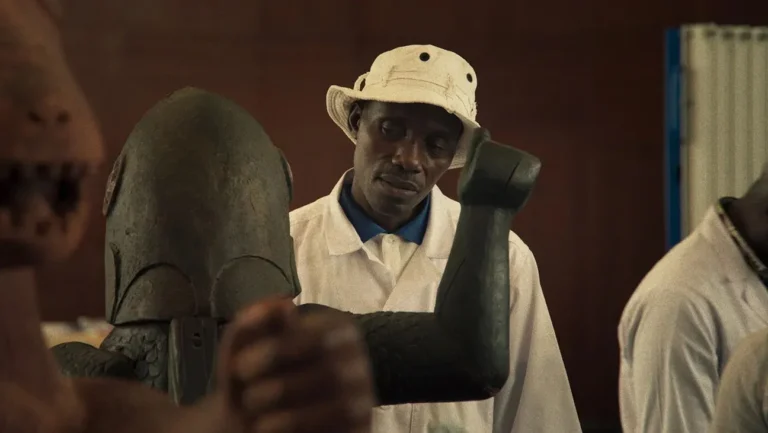
In Mati Diop’s film Dahomey, which premiered at the Berlin film festival, the director documents the 2021 journey of 26 treasures that the commander of French forces in Senegal looted from the royal palace of the kingdom of Dahomey, part of modern-day Benin, in 1890.
The BM is tackling an influx of social media trolls from Chile, who have flooded the museum’s Instagram posts calling for the return of a moai statue, one of the stone monuments from Easter Island.
Over the past several weeks, museums across the United States have been covering up and removing displays of Native American ancestors and cultural objects.
Fifty-four years ago, Ghanaian Nii Kwate Owoo was granted access to the storage facilities of the British Museum. The result was You Hide Me – a 40-minute film depicting Owoo and his colleague discovering an enormous volume of colonial objects hidden away in the institution’s basement.
A commission of French and Algerian historians created to reconcile colonial difficulties has agreed proposals for the exchange of archives, remains and artefacts.
Two British museums, the British Museum (BM) and the Victoria and Albert Museum (V&A) have agreed to return to Asante/Ghana respectively 15 and 17 looted objects. It is, however, a loan.
If you came here for a vicious takedown or a strident defence of Tristram Hunt’s position on “colonialism and collecting”, you might be slightly disappointed.
Some 17,000 human remains are said to be in the collections of German museums and universities. It's often no longer clear how they ended up in Germany. Colonialists committed horrific crimes.
The wars of 1845–72 were described by James Belich as ‘bitter and bloody struggles, as important to New Zealand as were the Civil Wars to England and the United States’. The conflict’s themes of land and sovereignty continue to resonate today.
Two great granddaughters of a Sakalava king, who was beheaded in 1897 by colonial troops, publicly addressed the French ambassador, asking him to speed up the repatriation of their ancestor’s skull.
An indigenous Mexican nation, the Nahñu people in the central Mexican state of Hidalgo, has written to the Assemblée Nationale in France seeking the return of its codex, arguing that the centuries-old manuscript describes traditions it still continues.
As a result of the Netherlands’ colonial past, parts of the history of countries, communities and individuals across the world are being held in archives currently located in the Netherlands. These archives might not be in the right place.
After almost 70 years in the Africa Museum, the rare Kakungu mask is back in Congo. Despite the festive ceremony at the National Museum, the mask remains the property of Belgium, causing unrest among the Congolese people and the Suku community, where the mask originally came from.
A 200-year-old wampum belt has spent much of its existence at the Vatican’s museums, across the ocean and thousands of kilometres away. Last year, the belt, made by Algonquin, Nipissing and Mohawk peoples in 1831, was returned to Canada for 51 days – for a brief appearance at a Montreal museum in the fall – before it was sent back the vaults of the Vatican. In 2023, nothing was returned, a Timeline reveals.
A group of 11 sacred Ethiopian altar tablets, which the museum acknowledges were looted by British soldiers after the Battle of Maqdala in 1868, have never been on public display and are considered to be so sacred that even the institution’s own curators and trustees are forbidden from examining them.
Taco Dibbits: “Like many people I used to think of restitution as a solution — politically, certainly. If you just give something back, then that’s done with, finished. But now I think it’s only the beginning.".
The British Museum (‘BM’) has a collection of 224 objects from or likely from Cambodia, which were acquired across a period spanning from the end of the nineteenth century to the beginning of the twenty-first century. In this figure BM’s collection of banknotes, coins and medals from Cambodia is not included.
32 Gold and silver items have been sent on long-term loan to Ghana by the Victoria & Albert Museum (V&A) and the British Museum (BM). They were stolen during 19th century conflicts.
Chief Charles Taku has made an impassioned call for the “urgent and unconditional restitution of the Bangwa Queen in Dapper Foundation in France, the Bangwa King in Metropolitan Museum in New York, USA and the cultural heritage artefacts which are in the National Ethnological Museum in Berlin and Municipal Museums in Germany, in the Netherlands and other parts of the world.”
Felwine Sarr and Bénédicte Savoy discuss what African cultural objects are in French publicly owned collections, why so few have been repatriated and what measures should be taken for restitutions to their countries or communities of origin.
Spain maintains unwavering ownership of the Quimbaya Treasure, dismissing Colombia’s legal and diplomatic efforts to reclaim the pre-Columbian artifacts donated to Queen María Cristina in 1893. Both nations stand at a crossroads over the fate of 122 golden pieces, symbolizing cultural heritage and historical legacies intertwined with colonial conquests.
This reader, edited by Sarah Van Beurden, Didier Gondola and Agnès Lacaille, is the first scholarly work has scrutinized the collections of the Royal Museum for Central Africa in Tervuren (Belgium) as a whole.
Ghanaians flocked to the Manhyia Palace Museum in Kumasi, the capital of Asante region, to welcome the 32 items home. "This is a day for Asante. A day for the Black African continent. The spirit we share is back," said Asante King Otumfuo Osei Tutu II.
The fact that the government and elected representatives are unable to reach a consensus on large restitutions raises questions about the future of a framework bill designed to facilitate such transfers, writes columnist Michel Guerrin.
Omo N’ Oba N’ Edo, Oba of Benin, has taken custody of two looted royal stools from the German government, symbolising a significant step in the right direction.
Lewis McNaught investigates why the British Museum, which already has the authority to return a collection of Tabots (sacred objects) to Ethiopia, is failing to comply or explain why it won't return the Tabots.
Beninese President Patrick Talon has an ambitious development plan with culture and heritage at its core. “It is at the end of the old rope that the new one is best woven,” he said recently, citing an old African proverb.
In response to a request by the Mexican government, the Netherlands has decided to return a human skull which is part of the Dutch State Collection of Wereldmuseum Leiden to Mexico. The Ministry of Culture has handed over the skull to the Mexican embassy in The Hague.
[ in French ] Algeria has made a request for the return of objects that belonged to Emir Abdelkader, a great resistance fighter in the conquest of Algeria in the 19th century, who was defeated in 1847.
At a United Nations meeting, Turkey’s spokesperson denied that the Scottish diplomat who took them, Lord Elgin, had permission from the then-ruling Ottoman Empire. “We are not aware of any document legitimizing this purchase,” Zeynep Boz of the Turkish Culture Ministry told the UNESCO committee that oversees restitution cases.
Some French parties pressure their country’s authorities to prevent them from responding to the requests submitted by the Algerian-French mixed commission concerning the restitution of some “symbolic” property that France had looted from Algeria during the occupation period.
In the German Historical Institute London (GHIL) podcast interview, Kokou Azamede, Associate Professor at the Department of German Studies at the University of Lomé tells about restitution in his country and the role of communities.
Popular British actor and writer Stephen Fry has compared Lord Elgin’s removal of the Parthenon sculptures from Greece to Nazi Germany stealing the Arc de Triomphe during the occupation of France.
David Guido Pietroni, Italian publisher, film, and music producer, offers an overview of the BM’s history, not only of its large collections of artworks, antiquities, and collectibles, but also of its large collections of controversies: colonial loot, Nazi-looted art works, stolen and lost objects, and links with big business.
In the colonialist moves to collect human remains, and the desire to demonstrate grandeur and strength, many soldiers relied on racist and blood-thirsty narratives to rationalize their cruel actions.
The British Museum (BM) has an extensive collection of Chinese antiquities. Historically, many assumed that these treasures were obtained through imperialist plunder. However, recent findings by US historian Justin Jacobs present a different narrative, suggesting that a significant number of the artifacts in question were willingly given to the British Museum by Chinese officials.
Alexander Herman: When Prime Minister Justin Trudeau met with Pope Francis last month, he raised the issue of reconciliation with First Nations, and urged the pope to return Indigenous cultural artifacts from the Vatican collections to communities in Canada. This request came at a tense time.
The Parthenon Marbles, Rosetta Stone and Benin Bronzes are just some of the ‘contested objects’ in the British Museum (BM). The Marbles are ‘not going to be on the prime minister’s agenda. His focus will be on support for Ukraine and the urgent need for a ceasefire in Gaza.’ They remain ‘a matter for the BM, and the government has no plans to change the law to permit a permanent move of the Parthenon Sculptures.’ But the BM has more contested collections.
Keir Starmer reiterates support for British Museum reaching deal with Greek PM. “The mood music has completely changed,” said one source close to the negotiations.
In a lengthy contribution, Kwame Opoku wonders how long the Ovaherero must wait for justice and reparation for the German genocide? He extensively quotes a press release of the Ovaherero Traditional Authority-Ouhonapare uo Mananeno uo Vaherero. Part of it is about repatriation.
More than 128,000 Native American ancestors and 4.5 million sacred objects have been identified in collections across museums, universities and government agencies. Those numbers don't include more than an estimated 90,000 ancestors and 700,000 associated funerary objects that have not yet been identified in collections.
It is seven years since President Emmanuel Macron of France announced his revolutionary plan to return African heritage to the continent. But following his declaration in Burkina Faso in November 2017 that “African heritage can’t just be in European private collections and museums”, the restitution journey has been arduous.
The project, running until March 2025, highlights objects associated with the ship Saida. His Majesty's Ship Saida was built in 1878 and sailed from the main naval harbour of the Austro-Hungarian monarchy in Pula, Croatia. From 1884 to 1897, ship's doctors and other crew members collected objects, partly on behalf of the museum, during four so-called training voyages.
[ in German ] The draft law on the return of cultural property from colonial contexts has been shelved for the time being. It did not meet with the approval of the ruling Österreichische Volkspartei ÖVP (Austrian People’s Party).
Egypt has launched an international petition to repatriate the 3,400-year-old bust of Queen Nefertiti from Berlin, marking the latest effort in its long-standing campaign to reclaim its stolen artefacts.
The Ayôkwé djidji or talking drum, confiscated in 1916 by the French army from the Ebrié community, will be exposed in its home country, but France has yet to pass legislation allowing for it to be formally restituted.
A sacred cloak that had been in the holdings of the National Museum of Denmark for more than 300 years was returned to Indigenous leaders in Brazil. The nearly six-foot-long cloak was constructed using 4,000 scarlet ibis feathers. It was taken from the Tupinambá people during Portuguese colonial rule.
From this contribution by BBC correspondent Adaobi Tricia Nwaubani: Kenneth C Murray, a British colonial art teacher, was a key figure in Nigeria’s museum history. Murray was invited to Nigeria at the request of Aina Onabolu, a European-trained Yoruba fine artist who convinced the colonial government to bring qualified art teachers from the UK to Nigerian secondary schools and teacher training institutions.
For decades, families in Tanzania have been demanding the return of their ancestors’ human remains from Germany. These ancestors, executed leaders of resistance efforts against German colonial rule, were exhumed from their graves and taken to Germany. Cece Mlay discusses co-producing a new documentary on how their descendants are seeking justice and closure today.
The enduring controversy surrounding the Parthenon Sculptures, one of the world’s most prominent cultural property disputes, may see significant progress in 2025, according to The Economist’s The World Ahead 2025 report.
Although there is no overarching framework for the repatriation of human remains at the international level, most repatriation efforts now operate within a more rigorous legal framework at the national and subnational level, which includes national laws and guidelines from public authorities.
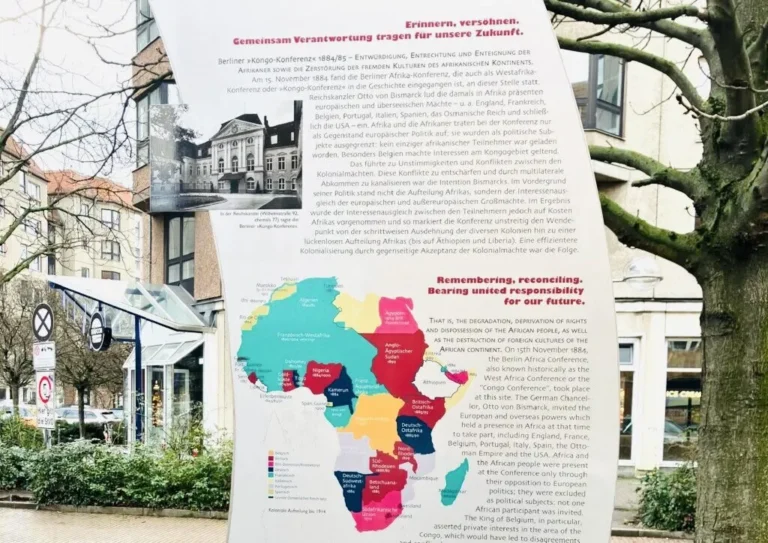
2024 marks the 140th anniversary of the start of the historic Berlin West Africa Conference of 1884/85. Germany is working hard to come to terms with its colonial history, including restitution.
Germany was a significant – and often brutal – colonial power in Africa. But this colonial history is not told as often as that of other imperialist nations. A new book called The Long Shadow of German Colonialism: Amnesia, Denialism and Revisionism aims to bring the past into the light. It explores not just the history of German colonialism, but also how its legacy has played out in German society, politics and the media.
Exactly 130 years ago, the World Exhibition took place in Antwerp. For that occasion, 144 Congolese were exhibited at the KMSKA. Seven Congolese died. The AfricaMuseum, which has a similar colonial history in Tervuren, organizes an online MuseumTalk about the memory and commemoration of this tragedy. The speakers are a researcher, an activist and an artist.
Conference Sensitive Legacy in University Collections: Adaptation and Restitution, organized by the ANU Centre for European Studies in collaboration with The Urban Memory Foundation and the University of Wroclaw, Poland.
Culture Minister Fadli Zon told lawmakers that the United Kingdom is unwilling to repatriate historical artifacts and other antiquities taken from Indonesia in the 19th century. UK troops, led by Thomas Stamford Raffles, raided the Yogyakarta Palace in June 1812, seizing valuable items, including historic manuscripts.
The prize-winning documentary film Dahomey continues to evoke reactions. In ARTnews, Alex Greenberger writes: If the 2016 statement by Andre Frasier that prisons and art institutions are “two sides of the same coin of inequality” seemed provocative eight years ago, it appears only mildly controversial now, at a time when museums are commonly seen as appendages of racist, colonialist, and deeply unfair systems.
Thanks to Deneth Piumakshi Veda Arachchige, the Museum of Cultures and the Natural History Museum in Basel, Switzerland returned a collection of approximately 90 aboriginal artefacts, including human bones and tools, of Sri Lanka’s indigenous population this week.
[ in Dutch ] In colonial times, thousands of human remains ended up in Dutch museums. Soon, Moluccan activists will bring back 15 skulls single-handedly.
In July 2020, the Australian Government announced the introduction of the RoCH program with funding until June 2024. The research and community work continued and at the end of this period RoCH identified 383 overseas collecting institutions holding 126,000+ Aboriginal and / or Torres Strait Islander cultural heritage items.
Algeria has made a request for the return of objects that belonged to Emir Abdelkader, a great resistance fighter in the conquest of Algeria in the 19th century, who was defeated in 1847.
The Department of Antiquities of the State of Libya and the Cleveland Museum of Art have announced an agreement in principle for the transfer of a Ptolemaic statue of a man to the State of Libya.
Advisory reports from the Colonial Collections Committee on objects for which restitution has been requested by Indonesia. The provenance reports have been added as an appendix.
The “De Grote Indonesië Tentoonstelling” at De Nieuwe Kerk in Amsterdam has faced scrutiny due to its display of seven Buddha heads, allegedly from the Borobudur, lacking contextualisation.